




Boa Vista, Cape Verde: Beaches, Dunes and Sea Turtles – The Complete Guide
Where Sahara-like dunes meet the open Atlantic, one of Africa's most untouched island landscapes waits to be explored at your own pace.
Boa Vista is Cape Verde's easternmost island, sitting roughly 450 kilometres off the coast of Senegal in the central Atlantic. Covering approximately 620 square kilometres, it is the archipelago's third-largest island and arguably its least developed. Saharan dust occasionally drifts across its flat interior, where sand dunes can rise to 30 metres, and its coastline holds some of the longest uninterrupted beaches in the Atlantic basin. For loggerhead sea turtles, it is one of the most important nesting grounds in the world.
What Makes Boa Vista Feel Different from the Rest of Cape Verde?
Most visitors arriving in Cape Verde land on Sal, the archipelago's most developed tourist island. Sal has good infrastructure, reliable restaurants and a well-worn tourism circuit. Boa Vista, roughly 70 kilometres to the south, operates at a different register entirely. The landscape is flatter, drier and more severe. The dunes are taller. The beaches are longer and almost entirely empty outside a narrow stretch near the capital, Sal Rei.
Sal Rei itself is a small town of whitewashed colonial-era buildings, a central square shaded by tamarind trees, and a working fishing harbour where brightly painted boats return each morning. It does not feel designed for tourism, and that is precisely its appeal. Locals outnumber visitors, restaurants serve fresh catch at plastic tables, and the pace of daily life runs slower than the trade winds that shape the dunes outside town.
Boa Vista is not quieter than Sal by accident. It is quieter because the landscape demands it. The desert does not invite crowds, and the beaches are too vast to ever feel full.
The island receives approximately 300 days of sunshine per year, with average temperatures ranging from 22°C in January to 29°C in August. The northeast trade winds, known locally as the harmatão, blow consistently from November through May, making the island a reliable destination for kitesurfers and windsurfers. Outside those months, the winds ease and the sea surface calms, which corresponds with the loggerhead sea turtle nesting season from June through October.
What Are the Best Beaches in Boa Vista, Cape Verde?
Boa Vista has more beach per resident than almost any island in the Atlantic. The coastline runs to approximately 55 kilometres, and large sections of it see no human activity on any given day. The beaches differ substantially from one another in character, accessibility and atmosphere.
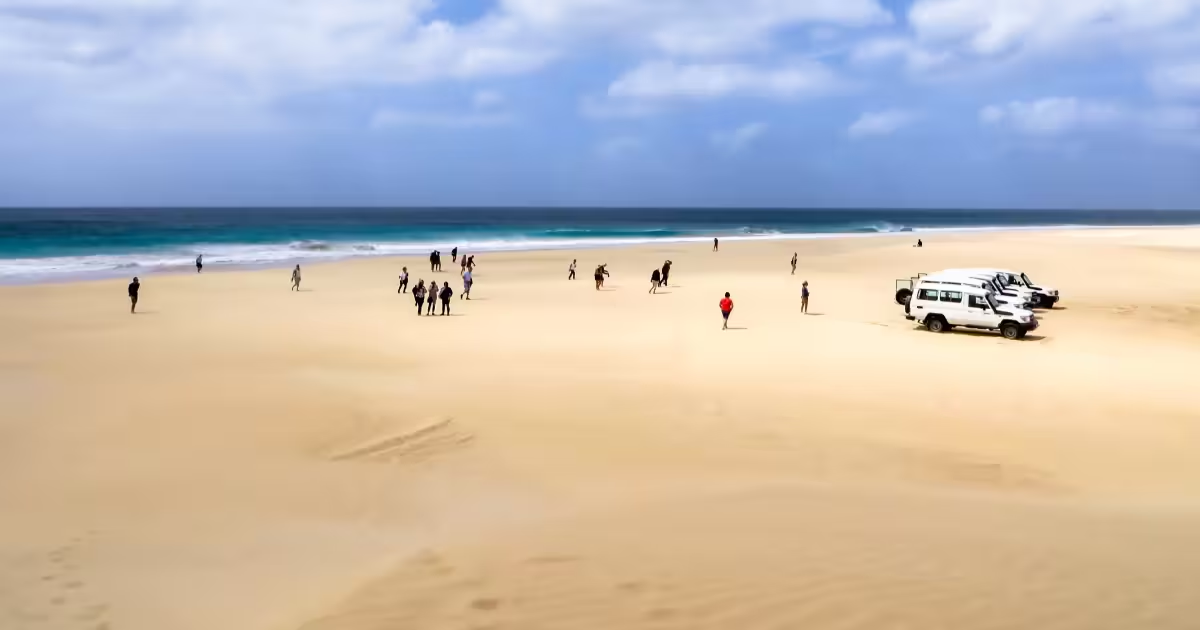
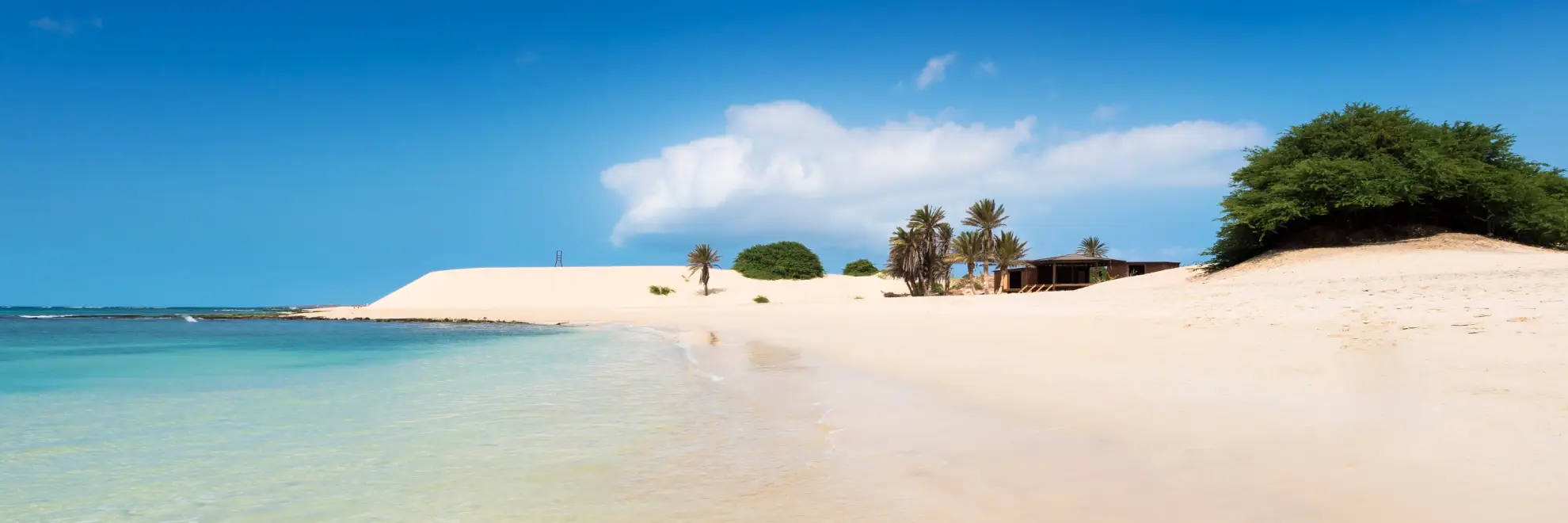
Santa Monica Beach is the island's most-referenced landmark, and for good reason. Stretching roughly 20 kilometres along the southwestern coast, it is one of the longest uninterrupted beaches in Cape Verde. The sand is powder-fine and pale, the water ranges from pale turquoise in the shallows to deep blue further out, and the dunes behind the beach form a natural boundary that prevents any development from intruding on the view. Reaching Santa Monica requires a 4x4 vehicle or an organised tour; the track from Sal Rei takes approximately 45 minutes and passes through desert scrubland. The effort is the point.
Praia de Chaves lies roughly 8 kilometres north of Sal Rei and is more accessible than Santa Monica. Two large resort complexes sit behind it, including the RIU Karamboa, but the beach itself is wide enough that even during peak season it rarely feels crowded. The dunes immediately north of Chaves are among the most photogenic on the island, particularly in the late afternoon when the low sun throws long shadows across the ridgelines.
Varandinha Beach, on the island's southern tip, is significantly more difficult to reach and rewards the journey with sea caves carved into basalt cliffs, wild Atlantic surf and a near-total absence of other visitors. The rock formations here are dramatic and the light at midday turns the water an unusually deep shade of green.
Praia de Atalanta, on the eastern coast, is best known for the Cabo Santa Maria shipwreck, a 90-metre cargo vessel that ran aground in 1968 and now sits rusting in the shallows, half-swallowed by sand. The wreck has become one of Boa Vista's most-photographed subjects, and the combination of corroded steel, Atlantic waves and empty desert coast creates a genuinely cinematic setting.
Other beaches worth noting include Estoril Beach near Sal Rei, the most convenient for a short walk from town; Curralinho, a sheltered cove popular with local fishermen; and Cruz Beach, a quieter stretch that sees very little tourist traffic outside organised tours.
Standing on Santa Monica Beach on a weekday in October, with the dunes at your back and nothing ahead but 20 kilometres of empty sand and open water, it becomes easy to understand why some travellers never quite recover from Boa Vista.
What Is the Viana Desert and Why Does It Matter?
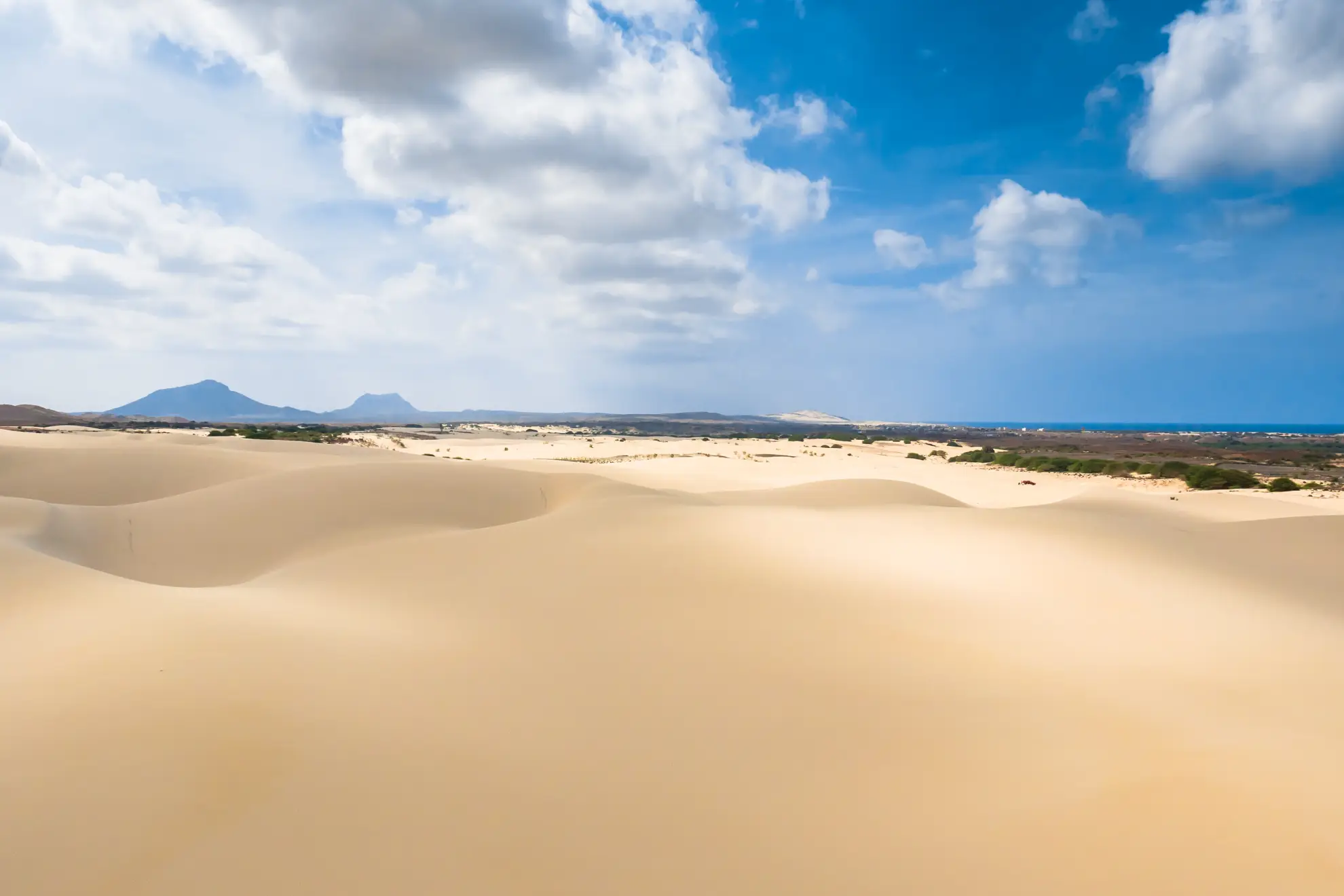
The Viana Desert occupies the island's interior, covering several square kilometres of wind-sculpted dunes and flat sand plains. It is not technically a desert in the strictest climatic sense, but the landscape is visually indistinguishable from parts of the Sahara. Dunes shift constantly under the trade winds, occasionally swallowing the tracks of vehicles that passed only hours before. The silence in the Viana interior is complete enough to be disorienting.
The highest points of the dune field, known as Morro de Areia, reach approximately 30 metres and offer an unobstructed view across the sand to the Atlantic on three sides. At sunset, the light on the dunes shifts through amber, copper and deep red in the space of twenty minutes. This is the most popular location on the island for sandboarding, though the sport requires a degree of commitment given the walk back up after each run.
Quad bike tours from Sal Rei typically include the Viana Desert as a centrepiece, crossing the dunes before continuing to remote beaches and fishing villages. The combination of ocean approach and desert interior in a single half-day journey is one of the things that makes Boa Vista unlike anywhere else in the Atlantic islands. The Canary Islands have dunes at Maspalomas, but nothing on the scale or in the isolation that Boa Vista offers.
The desert also provides habitat for the Cursorius cursor, or cream-coloured courser, a ground-nesting bird that breeds on the flat sand plains and is found across North Africa and the Macaronesian islands. Birdwatchers visiting between March and May have reasonable chances of spotting this species without leaving the island's road network.
When Can You See Sea Turtles in Boa Vista?
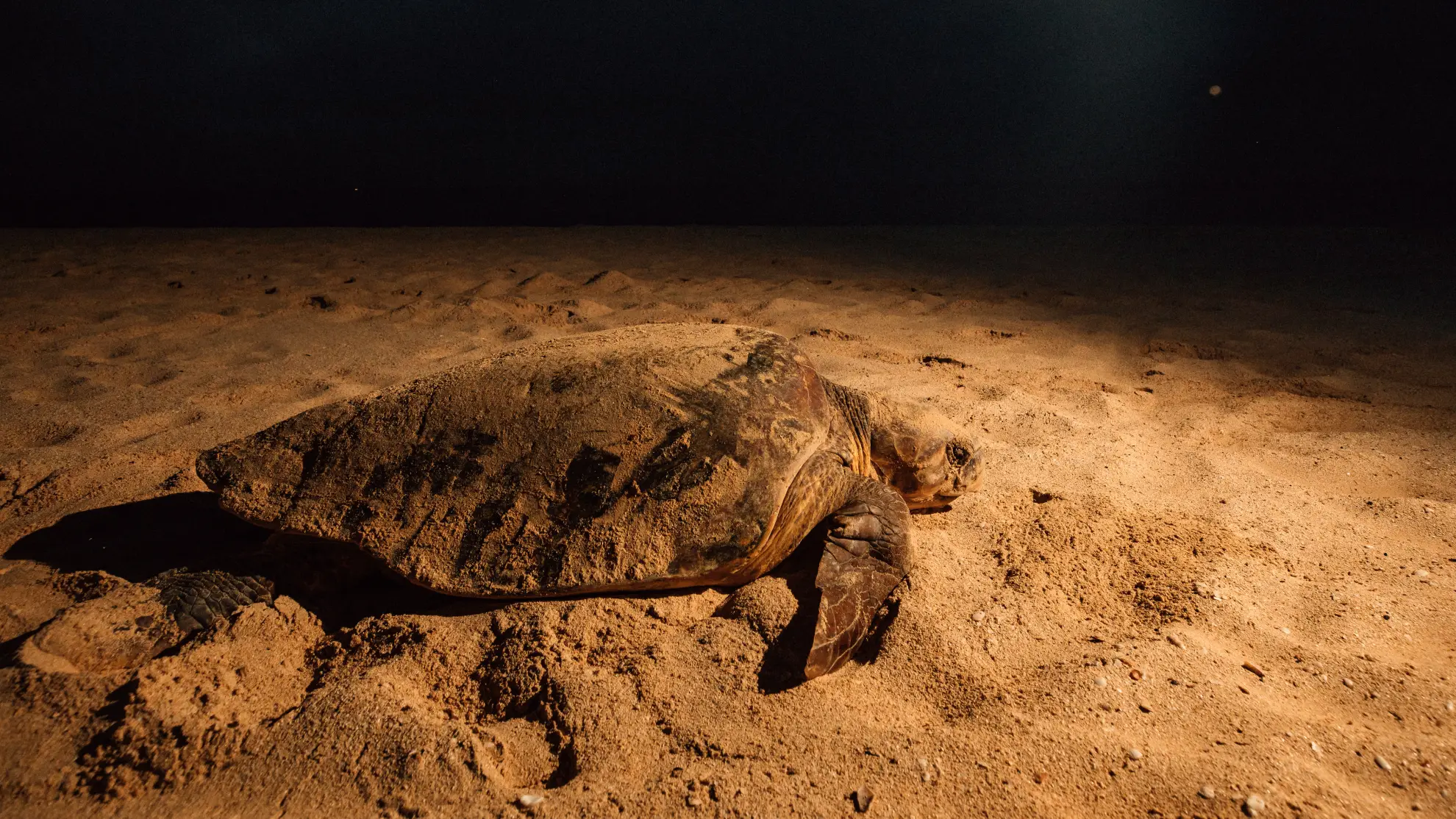
Boa Vista hosts one of the largest nesting populations of Caretta caretta, the loggerhead sea turtle, in the eastern Atlantic. Researchers estimate that between 3,000 and 5,000 females nest on the island's beaches each year, making it one of the three most significant loggerhead nesting sites in the world alongside beaches in Florida and the Mediterranean coast of Cyprus.
The nesting season runs from late June through October, with peak activity in August and September. During this period, females emerge after dark to dig nests in the sand above the high-tide line, lay clutches of approximately 120 eggs and return to the sea before dawn. Hatchlings emerge roughly 60 days after laying and make their way to the water in a process that can take several nights per clutch.
The primary nesting beaches are Ervatão Beach on the eastern coast, Ponta Cosme and João Barrosa. Ervatão is considered the most important single nesting beach in Cape Verde and is protected by national law as part of the Boa Vista Marine Protected Area established in 2009. Access after dark is restricted and managed by licensed conservation organisations including Projecto Biodiversidade, which has been monitoring nesting activity on the island since 2007.
Turtle-watching excursions operate under strict protocols. Certified guides lead small groups to nesting beaches after dark. Visitors are required to maintain a distance of at least five metres from any nesting female, no flash photography is permitted, torchlight is kept to an absolute minimum and voices must remain low throughout. These rules exist because artificial light and noise can cause females to abort nesting attempts and return to the sea without laying, a behaviour known as a false crawl.
The experience of watching a 90-kilogram loggerhead turtle emerge from the Atlantic, move slowly up a dark beach and begin to nest is one of the most affecting wildlife encounters available anywhere in the Atlantic region. The fact that the same beaches also need to be protected from light pollution, off-road vehicles and unregulated tourist access is something that responsible operators take seriously, and visitors should choose only certified, licensed guides for turtle excursions.
How Do You Get Around Boa Vista and Plan Practical Travel?
Boa Vista is served by Aristides Pereira International Airport, located approximately 4 kilometres from Sal Rei. Direct charter and scheduled flights operate from several European cities including Lisbon, London Gatwick and Amsterdam, with journey times of approximately four hours from continental Europe. Inter-island flights from Santiago and Sal take between 30 and 50 minutes and are operated by Binter Cabo Verde.
Within the island, public transport is limited to shared taxis operating on fixed routes between Sal Rei and the villages of Rabil, João Galego and Fundo das Figueiras. For reaching Santa Monica Beach, the Viana Desert, Varandinha or Ervatão, a 4x4 vehicle is essential. Rental cars with four-wheel drive are available in Sal Rei, but the road network outside the main settlements consists largely of unmarked sand tracks. For first-time visitors, joining an organised tour is both more practical and more informative than self-driving.
The best time to visit for beach weather and water sports falls between December and April, when the northeast trade winds provide reliable conditions for kitesurfing and windsurfing at beaches near Sal Rei and Praia de Chaves. June through October is the turtle nesting season and also coincides with the calmer sea period, making it preferable for snorkelling and boat tours. Air temperatures remain warm throughout the year, rarely dropping below 20°C even in the coolest months.
Visitors should pack windproof layers for evenings and desert excursions, high-factor sunscreen appropriate for reflected light off sand and water, polarised sunglasses, and footwear that can handle both fine sand and rocky volcanic terrain. Camera gear benefits from protection against salt air and fine dust, both of which are persistent in the Boa Vista environment.
In terms of safety, Boa Vista presents no particular risks beyond those common to all remote beach environments. The Atlantic currents on exposed beaches, particularly Santa Monica and Varandinha, can be strong, and swimming should be treated with appropriate caution. The island's crime rate is low and Sal Rei is navigable safely at any hour.
Recommended Tours and Experiences in Boa Vista
Ready to explore Boa Vista beyond the resort beach? Browse the full selection of certified guides, 4x4 circuits and catamaran experiences on ToursXplorer and book with operators who know the island's remote corners firsthand.
Click hereWhere to Stay in Boa Vista: From Resorts to Local Guesthouses
Accommodation in Boa Vista divides fairly cleanly into two categories: large all-inclusive resort complexes concentrated along Praia de Chaves and Praia da Boa Esperança, and smaller independent options in and around Sal Rei.
The RIU Karamboa and the Iberostar Club Boa Vista are the two dominant resort properties, both situated directly on beach frontage north of Sal Rei. Both offer pools, restaurants and structured activities, and both operate largely as self-contained environments. They suit couples and families looking for reliable infrastructure and direct beach access, and they are among the best-reviewed all-inclusive properties in the Cape Verde archipelago.
For travellers wanting more contact with the island's daily life, Sal Rei is the obvious base. The town has a small but functional selection of boutique hotels and guesthouses within walking distance of the harbour, the central square and several reliable local restaurants. Staying in Sal Rei makes it easier to arrange independent tours, hire local guides and eat at establishments where the menu reflects what arrived on the fishing boats that morning.
Budget travellers and those planning longer stays of two weeks or more will find self-catering apartments and eco-focused guesthouses available in Sal Rei and the village of Rabil, approximately 4 kilometres inland. Rabil is quieter than Sal Rei, has a colonial-era church dating to the 18th century and is the starting point for several walking routes through the desert interior.
Regardless of accommodation type, all visitors should be aware that water and electricity supplies on Boa Vista can be intermittent. Desalination provides most of the island's fresh water, and power outages, while uncommon, do occur. Packing a small torch and a portable charger is practical advice for any length of stay.
Suggested Itineraries: How to Spend 5 or 7 Days in Boa Vista
5-Day Boa Vista ItineraryDay 1: Arrive at Aristides Pereira International Airport, settle into accommodation in Sal Rei, walk the harbour front and eat at a local restaurant near the central square. Day 2: Full-day 4x4 or guided tour to Santa Monica Beach and the Viana Desert, departing early morning to make the most of the light. Day 3: Morning snorkelling or boat tour from Sal Rei harbour, afternoon at Estoril Beach within walking distance of town. Day 4: Guided tour to the eastern coast including the Cabo Santa Maria shipwreck at Praia de Atalanta, with a stop at a traditional fishing village. Day 5: Final morning at Praia de Chaves before transfer to the airport.
7-Day Boa Vista Slow Travel ItineraryA seven-day stay allows time to absorb the island without rushing between attractions. Days 1 and 2 follow a similar pattern to the five-day itinerary, establishing a base in Sal Rei and covering the main desert and beach circuit. Days 3 and 4 can be given over to water sports, snorkelling and a catamaran trip, which typically includes a lunch stop in open water and occasional sightings of bottlenose dolphins (Tursiops truncatus) in the waters north of the island. Day 5 is best reserved for a visit to Varandinha Beach on the southern tip, a journey that takes approximately one hour each way by 4x4. If visiting between June and October, Day 6 should include an evening turtle-watching excursion to Ervatão Beach with a certified guide from Projecto Biodiversidade or an equivalent licensed operator. Day 7 allows for a return to any beach that merited longer attention, or simply a slow morning in Sal Rei before departure.
ToursXplorer's Boa Vista listings include options that fit both itinerary lengths, from single-day circuits to the comprehensive seven-day adventure package combining ATV, catamaran and 4x4 routes. Browsing the full Boa Vista tour collection on ToursXplorer is a useful starting point when building an itinerary around specific interests.
Why Responsible Tourism Matters in Boa Vista
Boa Vista's natural environment is both its primary asset and its most significant vulnerability. The loggerhead turtle nesting beaches are protected by national legislation, but enforcement depends substantially on visitor behaviour and the choices travellers make when selecting tour operators. Unlicensed guides, off-road driving on nesting beaches and artificial lighting after dark all have documented negative effects on nesting success rates.
The coral reefs and seagrass beds in the waters around Boa Vista support species including the Aluterus scriptus (scrawled filefish) and juvenile Caretta caretta turtles using the area as a developmental habitat. Anchor damage and boat traffic in unmanaged areas represent ongoing pressures that responsible operators attempt to mitigate by using designated mooring points.
On land, the desert ecosystem is fragile. Tyre tracks across the Viana Desert dunes take years to recover, and unregulated quad biking outside established routes disturbs the nesting habitat of ground-breeding birds including the cream-coloured courser. Staying on marked tracks, travelling with licensed operators and avoiding protected zones after dark are the most practical contributions any visitor can make.
Supporting locally owned guesthouses and restaurants in Sal Rei also matters. The island's economy depends heavily on tourism, but the distribution of that income between international resort chains and local families is not equal by default. Choices around where to eat, stay and book tours have a direct and measurable effect on the local community.
Turtle nesting season in Boa Vista runs from late June through October. Book your certified turtle-watching excursion early through ToursXplorer to secure a place with a licensed conservation guide on Ervatão Beach.
Frequently Asked Questions
The most notable beaches in Boa Vista are Santa Monica Beach, a 20-kilometre stretch on the southwestern coast accessible only by 4x4; Praia de Chaves, 8 kilometres north of Sal Rei with large dunes behind it; Varandinha, on the southern tip with sea caves and rock formations; and Praia de Atalanta, home to the 1968 Cabo Santa Maria shipwreck. Each requires different levels of access and suits different travel styles.
The loggerhead sea turtle, Caretta caretta, nests on Boa Vista beaches from late June through October, with peak nesting activity in August and September. Night-time guided tours operate from licensed operators during this period on beaches including Ervatão, Ponta Cosme and João Barrosa. Strict observation rules apply: no flash photography, minimum five-metre distance from nesting females, and very limited torch use.
Boa Vista and Sal suit different types of travellers. Sal is more developed with more restaurants, nightlife and a wider range of accommodation. Boa Vista has longer and emptier beaches, the Viana Desert interior, and is home to one of the Atlantic's most important sea turtle nesting grounds. Travellers prioritising nature, space and a quieter pace generally prefer Boa Vista; those wanting more infrastructure and convenience tend to prefer Sal.
Boa Vista is served by Aristides Pereira International Airport, approximately 4 kilometres from Sal Rei. Direct charter and scheduled flights operate from Lisbon, London Gatwick and Amsterdam, with journey times of around four hours. Inter-island connections from Sal and Santiago are available via Binter Cabo Verde and take between 30 and 50 minutes. The island does not have ferry connections from Europe.
The Viana Desert is an interior dune field covering several square kilometres in the centre of Boa Vista island. Dunes reach up to 30 metres at the highest point, known as Morro de Areia, and shift continuously under the northeast trade winds. The landscape is visually similar to parts of the Sahara and is used for sandboarding, quad biking and sunset excursions. Most organised island tours include a stop in the Viana Desert.
Yes. Boa Vista's consistent northeast trade winds from November through May make it one of Cape Verde's most reliable destinations for kitesurfing and windsurfing. Kite schools operate near Sal Rei and Praia de Chaves. Outside the wind season, from June through October, calmer seas make conditions better for snorkelling, boat tours and catamaran sailing. Bottlenose dolphins are regularly spotted in waters north of the island on catamaran excursions.