





Best Time to See Whales in the Azores: A Seasonal Sighting Guide
A species-by-season guide to the Azores migration corridors, resident pods, and the windows when each baleen giant is most likely offshore.
The Azores archipelago sits at the crossroads of three major Atlantic migration corridors, placing it among the most productive whale watching destinations in the Northern Hemisphere. Resident and migratory cetaceans mean the question is rarely whether you will see whales, but which whales you will encounter and in what numbers, depending on the month you choose to visit.
Why Does the Azores Produce Such Consistent Whale Sightings Year-Round?
The nine islands of the Azores sit on the Mid-Atlantic Ridge, a 16,000-kilometre submarine mountain chain that creates dramatic underwater topography and forces cold, nutrient-rich water upwards in a process called upwelling. These nutrient-rich upwellings concentrate squid, fish, and krill in densities that attract cetaceans from both sides of the Atlantic. The waters around São Miguel, Faial, and Pico drop to more than 1,000 metres within a few kilometres of the coast, providing deep-diving species with direct access to prey without travelling far from shore.
Sperm whales (Physeter macrocephalus), known locally as cachalotes, exploit these deep canyons year-round. Resident pods of common dolphins (Delphinus delphis), bottlenose dolphins (Tursiops truncatus), and Risso's dolphins (Grampus griseus) have similarly established permanent territories in Azorean waters. Licensed operators can explain recent local sightings, but seasonal presence does not establish the probability of seeing an animal on a particular departure.
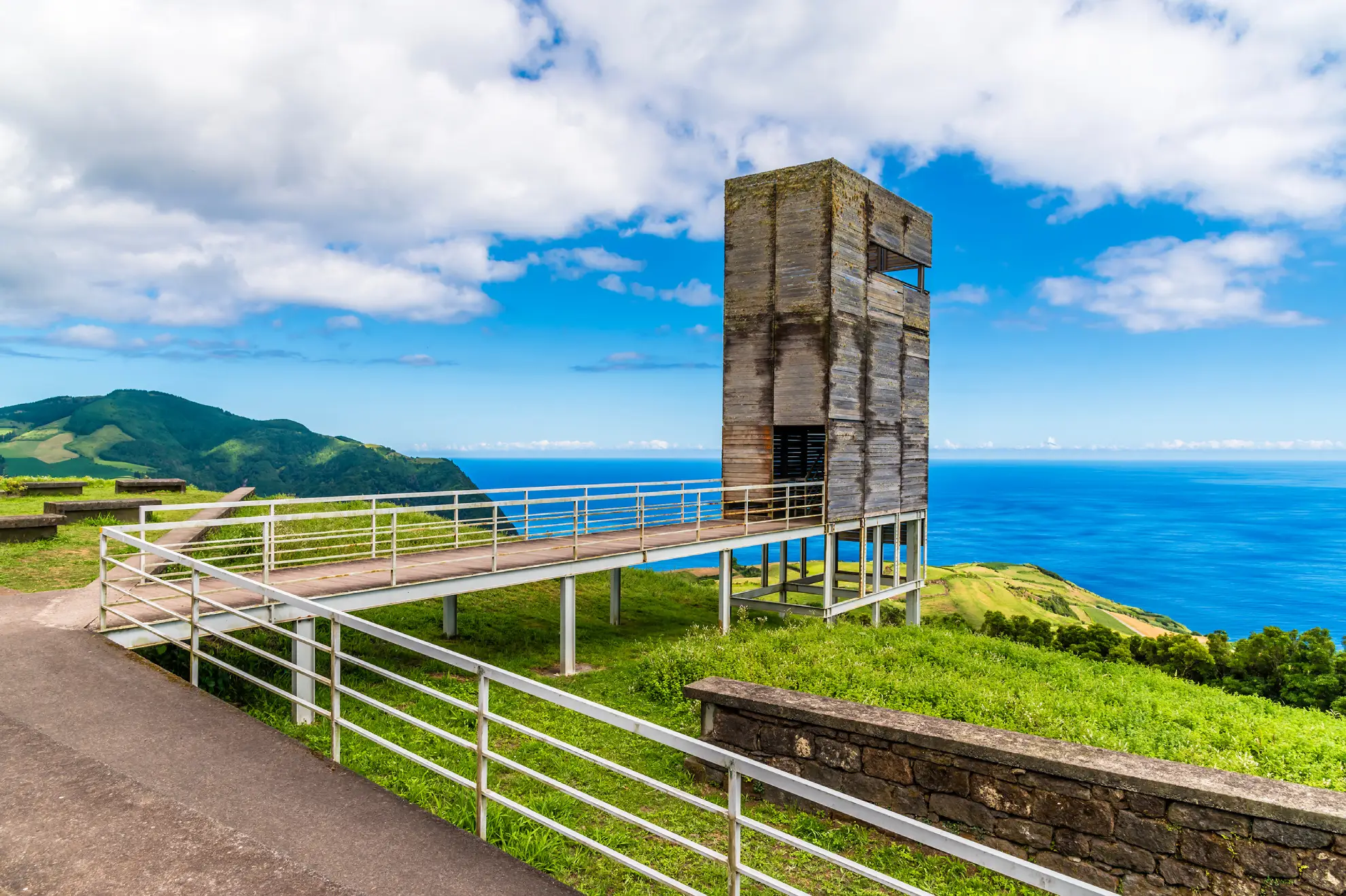
A further structural advantage is the network of historic land-based lookouts called vigias. Originally built by 19th-century whalers to spot sperm whales for commercial hunting, which peaked between the 1850s and the 1980s, these stone towers now serve licensed spotters who radio GPS coordinates directly to tour boats. Land-based vigias also support whale watching in Madeira. In the Azores, they help crews search for animals, but visibility and weather still affect what can be seen.
What Is the Spring Golden Window and Which Giant Whales Pass Through?
April, May, and June represent what marine biologists classify as the peak migration transit season for large baleen whales in the Azores. During these three months, blue whales (Balaenoptera musculus), fin whales (Balaenoptera physalus), and sei whales (Balaenoptera borealis) move along the North Atlantic migration corridor that passes directly over the Azores Platform before heading to summer feeding grounds further north near Iceland and the Norwegian Sea. The Azores can serve as a feeding stopover along the migration route.
Blue whale sighting frequency peaks sharply in April and May. These animals, the largest species ever to have existed on Earth at up to 30 metres in length, are present in Azorean waters primarily to feed on concentrations of krill before the longer crossing north. The timing and likelihood of an encounter vary by year, island and individual trip. Fin whales, the second-largest species at up to 27 metres, overlap with blue whales from late March through May. Sei whales, a more pelagic species, typically appear slightly later, with peak abundance in May and June.
Spring can offer blue whale encounters, but sea conditions and local sightings vary. Keep a spare day for weather-related changes and ask about recent observations near the selected departure point.
When Do Sperm Whales Peak and What Is the Best Month to Target Them?
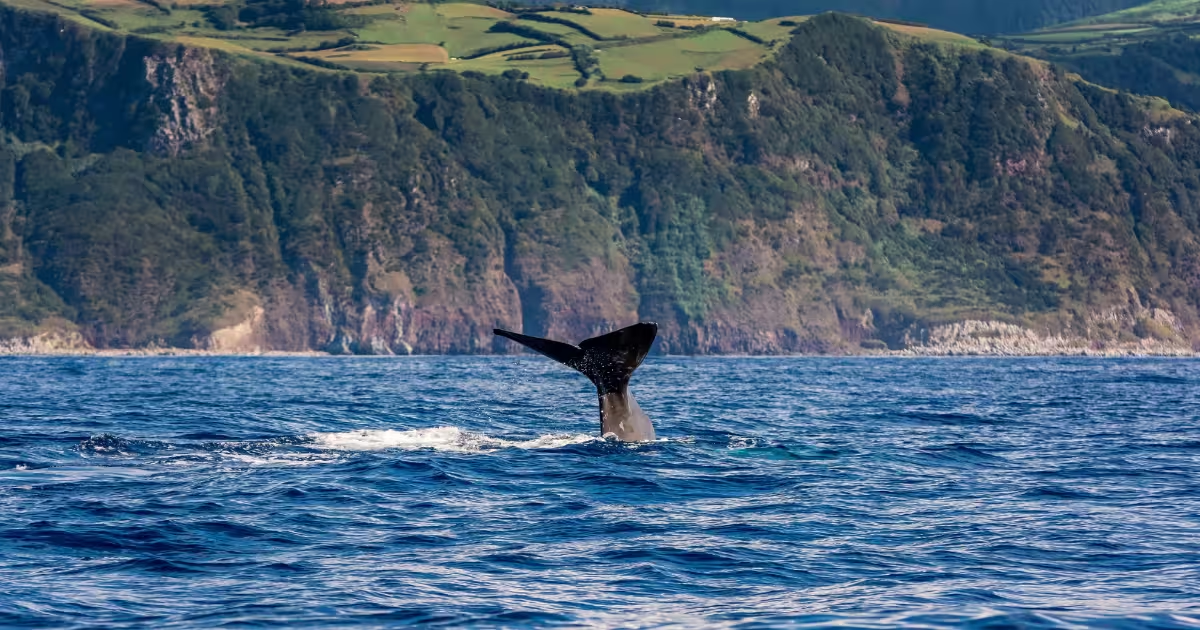
Sperm whales are the anchor species of Azores whale watching because they are present throughout the year. Family groups composed of females and calves maintain permanent home ranges around Faial, Pico, and São Miguel. Adult males undertake longer excursions but return seasonally. When operators advertise year-round whale watching in the Azores, the sperm whale is the species underwriting that promise.
Sighting probability for sperm whales runs at High from April through October and at Medium from November through March. The winter reduction in sighting success is not driven by whale absence but by weather: North Atlantic depressions between November and March generate swells regularly exceeding 3 metres, causing weather-related trip cancellations. Travellers weighing the winter gamble should budget for at least five to seven days in the archipelago to absorb potential cancellations.
For travellers specifically asking when is the peak season for sperm whales in São Miguel, June through September is a popular period, but sperm whales are present throughout the year. This window combines resident pod stability with calmer seas, longer daylight hours that allow morning and afternoon departures, and the highest average surface activity, including tail-lobbing and breaching, possibly linked to social behaviour within matriarchal groups.
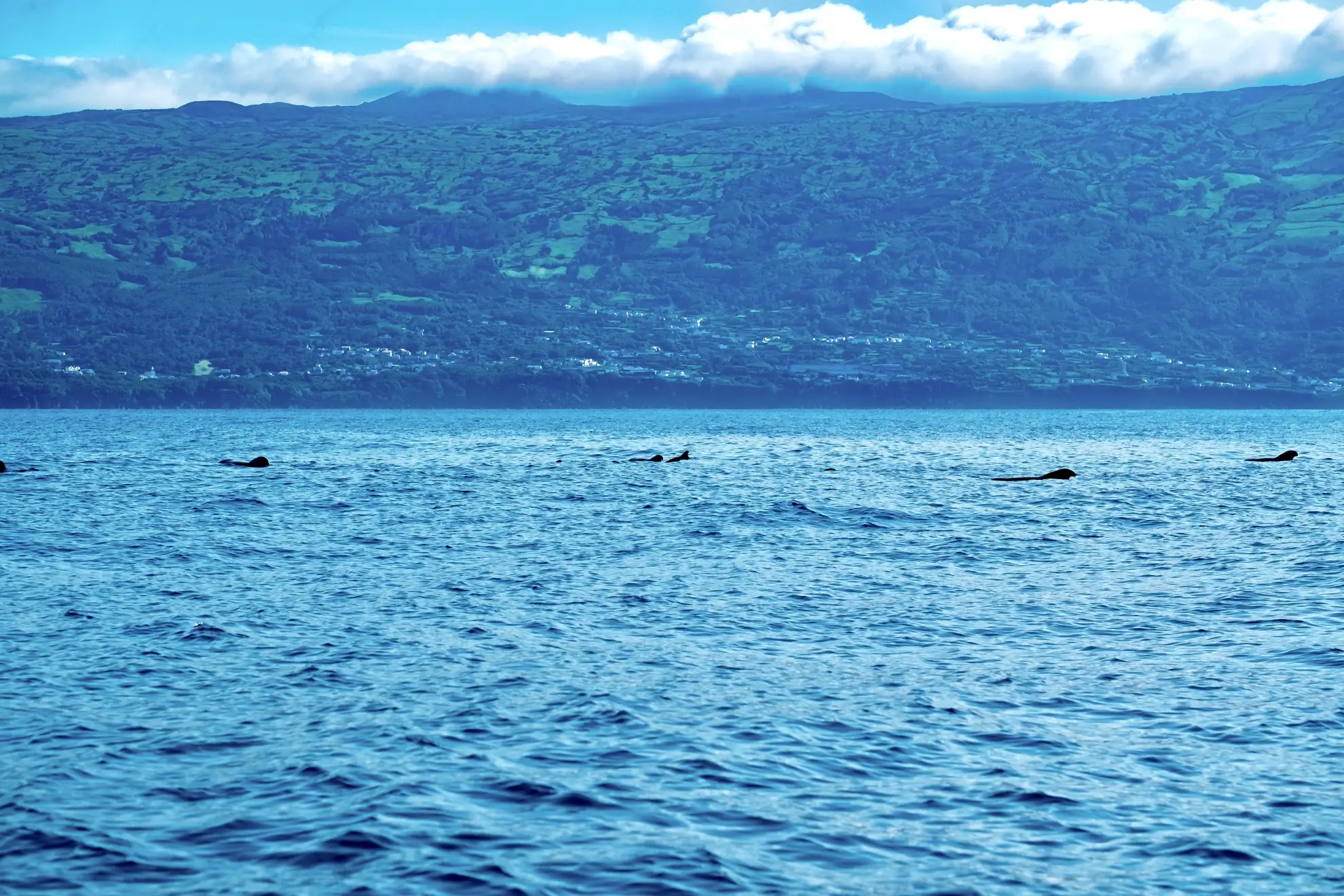
Pilot whales (Globicephala macrorhynchus) follow a complementary pattern. Short-finned pilot whales are most reliably encountered from July through September, when pods of 20 to 100 individuals are regularly sighted within 10 nautical miles of Ponta Delgada. Atlantic spotted dolphins (Stenella frontalis) reach peak abundance in the same window, making July to September the season operators call the Family Window for its combination of calm conditions and high pod activity.
How Do Sea Conditions Affect Sighting Quality and Motion Sickness Risk?
The Azores lie in the North Atlantic, in a transitional zone between the subtropical high-pressure belt to the south and the mid-latitude westerly storm track to the north. This geography produces calm, predictable conditions from approximately late May through September and progressively rougher seas from October through April, with the most severe weather concentrated in December through February.
Sea conditions vary by day, departure coast and season. Travellers prone to motion sickness should check the current forecast and ask the operator about the vessel and route, rather than rely on a fixed wave-height average or a month alone.
ToursXplorer lists tours operating from multiple Azorean ports, and the half-day format available for São Miguel departures is specifically suited to passengers who want to limit exposure time while still targeting sperm whales. Booking a half-day tour rather than a full-day excursion also reduces total time at sea and lowers motion sickness risk without eliminating sighting opportunity, given that sperm whales are regularly located within 5 to 8 nautical miles of the Ponta Delgada coastline.
Whale Watching and Dolphin Tours in the Azores
Browse all whale watching and dolphin tours in the Azores on ToursXplorer and filter by month, duration, and species focus to match your travel window.
Click hereSpecies Sighting Probability by Season: A Practical Reference
The outline below describes seasonal presence for five species. It is a planning aid, not a measured probability for an individual departure.
Sperm Whale (Physeter macrocephalus) Sperm whales are present throughout the year; sightings on any trip depend on local conditions.
Blue Whale (Balaenoptera musculus) — Spring: High. Summer: Low. Autumn: Low. Winter: Low.
Fin Whale (Balaenoptera physalus) — Spring: High. Summer: Low. Autumn: Low. Winter: Low.
Sei Whale (Balaenoptera borealis) Sei whales are seasonal visitors, with sightings varying by island and time of year.
Short-finned Pilot Whale (Globicephala macrorhynchus) Pilot whale sightings vary by season and island; ask about recent local observations.
Seasonal presence does not guarantee an encounter. Daily weather, visibility, prey availability and where the boat can operate all affect what is seen.
ToursXplorer recommends pairing this seasonal outline with real-time operator briefings on arrival in Ponta Delgada, where local captains update species presence weekly based on the most current vigia reports. Conditions and recent sightings can change from week to week.
Choosing Between the Giant Season and the Family Season
The central planning decision for most travellers is whether to prioritise the spring Giant Season (April through June) or the summer Family Season (July through September). Both windows deliver high sighting rates, but the species profiles and sea conditions differ enough to warrant a deliberate choice rather than defaulting to convenience.
The Giant Season offers opportunities for blue whale and fin whale encounters, although sightings also occur outside it, species whose sheer scale cannot be replicated by any summer alternative. Average whale length during spring transits runs to 22 to 30 metres for blue whales and 18 to 27 metres for fin whales. However, spring departures carry a higher weather cancellation risk, and passengers should hold flexible return tickets and plan a minimum of four nights on São Miguel to ensure at least two or three viable departure windows.
The Family Season trades baleen giants for higher frequency encounters with pilot whales, spotted dolphins, and resident sperm whale family groups in benign sea states. Children and first-time ocean travellers tend to find July and August departures more comfortable. The swim-with-dolphins format is also most reliably offered during this window, as calmer waters extend the viable weather window for in-water activities. For whale watching from Ponta Delgada specifically, July and August are the months when both morning and afternoon departures run most consistently without cancellation.
Travellers who can travel in late May find a natural overlap between the two seasons: the tail end of the spring baleen migration coincides with improving sea states and the gradual increase in pilot whale and dolphin pod presence. Late May can be a useful compromise, but no single month is best for every species or guarantees an encounter. ToursXplorer listings for this period reflect the full range of available formats, from half-day sperm whale tours to full-day combination itineraries with lunch.
Frequently Asked Questions
Blue whales use Azorean waters during seasonal movements, and research has documented feeding behaviour during spring migration. This does not establish a fixed percentage chance for a commercial departure in May; ask the operator about recent sightings.
Sperm whales are present year-round off São Miguel, but peak sighting frequency and surface activity occur from June through September. During this window, resident matriarchal pods are most active near the surface, departures may benefit from calmer conditions, but remain subject to the daily forecast and operator availability. Winter weather can cancel trips, even when sperm whales are present.
July and August often offer suitable conditions for whale watching, but check the forecast for the selected departure coast. Mid-June to late September is the broader low-motion window. Passengers with high motion sensitivity should choose a half-day tour format, which limits total sea time to three to four hours while still targeting resident sperm whales within 5 to 8 nautical miles of Ponta Delgada.
Yes, whales are present in the Azores in winter, primarily resident sperm whales and common dolphins. The main challenge from November through March is weather: North Atlantic depressions regularly produce swells exceeding 3 metres, causing weather-related cancellations. Travellers visiting in winter should book accommodation flexibly and plan a stay of at least five to seven nights to maximise the chance of completing a tour.
São Miguel is the most accessible island for whale watching, with multiple licensed operators departing from Ponta Delgada marina and the largest vigia spotter network in the archipelago. Faial and Pico are also highly regarded, particularly for sperm whales, and the channel between those two islands is one of the most studied cetacean habitats in the Atlantic. São Miguel suits first-time visitors due to direct flight connections and the highest volume of tour departures.
Guided in-water dolphin encounters are offered by licensed operators from São Miguel and are legal within strict regional cetacean protection regulations. The best window is July through September, when calmer seas extend viable weather windows for in-water activities and Atlantic spotted dolphins reach peak abundance near São Miguel. Common and bottlenose dolphins are also encountered year-round, though in-water sessions are more frequently cancelled in spring and autumn due to swell conditions.