White-sand beaches on one set of islands. An active volcano you can walk into on another. Cape Verde doesn’t ask you to choose a single identity — but you still need to know which version of it is yours.
Most island destinations sell you one thing. Cape Verde sells you two things on completely separate islands, and the ten islands of the archipelago are different enough from each other that visiting Boa Vista and visiting Fogo in the same week is less like visiting the same country twice and more like being transported between two different planets. One is flat, sandy, turquoise, and built for lying still. The other has a 2,829-metre active volcano that last erupted in 2014 and whose caldera floor is inhabited by a wine-producing community living between two volcanic cones. Same archipelago. Radically different holidays.
The beach holiday and the adventure holiday in Cape Verde are not competing options in the way they might be somewhere else. They draw on entirely different islands, different infrastructure, different physical demands, and different temperaments. Understanding which one you actually want — or which combination of both makes sense for your trip — is the most useful decision you can make before you book flights.
This guide separates the two versions clearly: what each delivers, which islands belong to each, which experiences are exclusive to one or the other, and the seven questions that will tell you, honestly, which kind of Cape Verde traveller you are.
Cape Verde’s beach holiday exists on the flat eastern islands, and it is built around a specific combination: extraordinary beaches, warm reliable sunshine, and an Atlantic Ocean that is simultaneously wild and accessible. The beaches of Sal and Boa Vista are genuinely among the finest in the Atlantic region — not just competent holiday beaches, but places with the colour and clarity of the Indian Ocean and the temperature of the Mediterranean in summer, delivered in a setting that still feels remote and slightly unlikely.
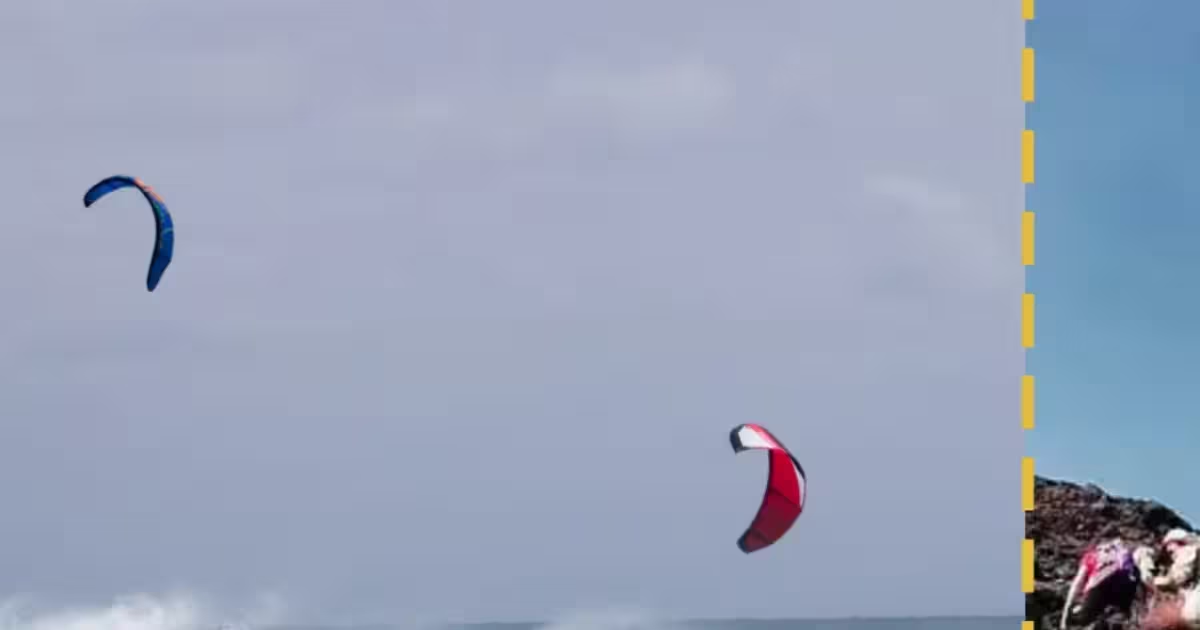
Santa Maria Beach on Sal is the most familiar name: a long arc of white sand behind a small town with a real fishing community at one end and resort hotels at the other. The water here is shallow enough for children at low tide and deep enough for serious snorkelling within fifty metres of the shore. The afternoon trade winds produce textbook kitesurfing conditions in the bay, and several schools operate on the beach year-round. Chaves Beach on Boa Vista is different in character — longer, wilder, largely undeveloped, backed by dunes rather than hotels, and with a silence that Sal’s more resort-oriented atmosphere cannot replicate.
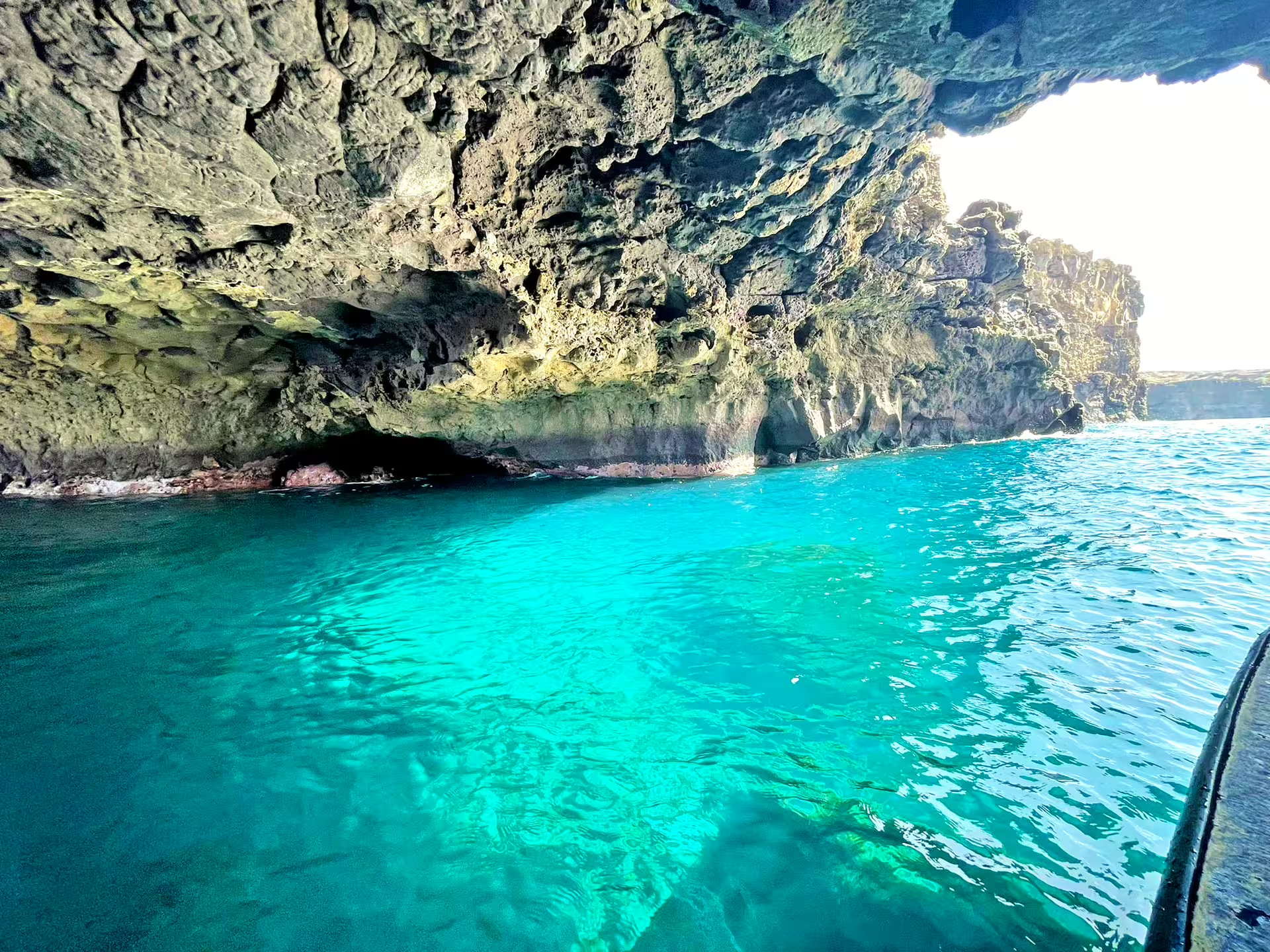
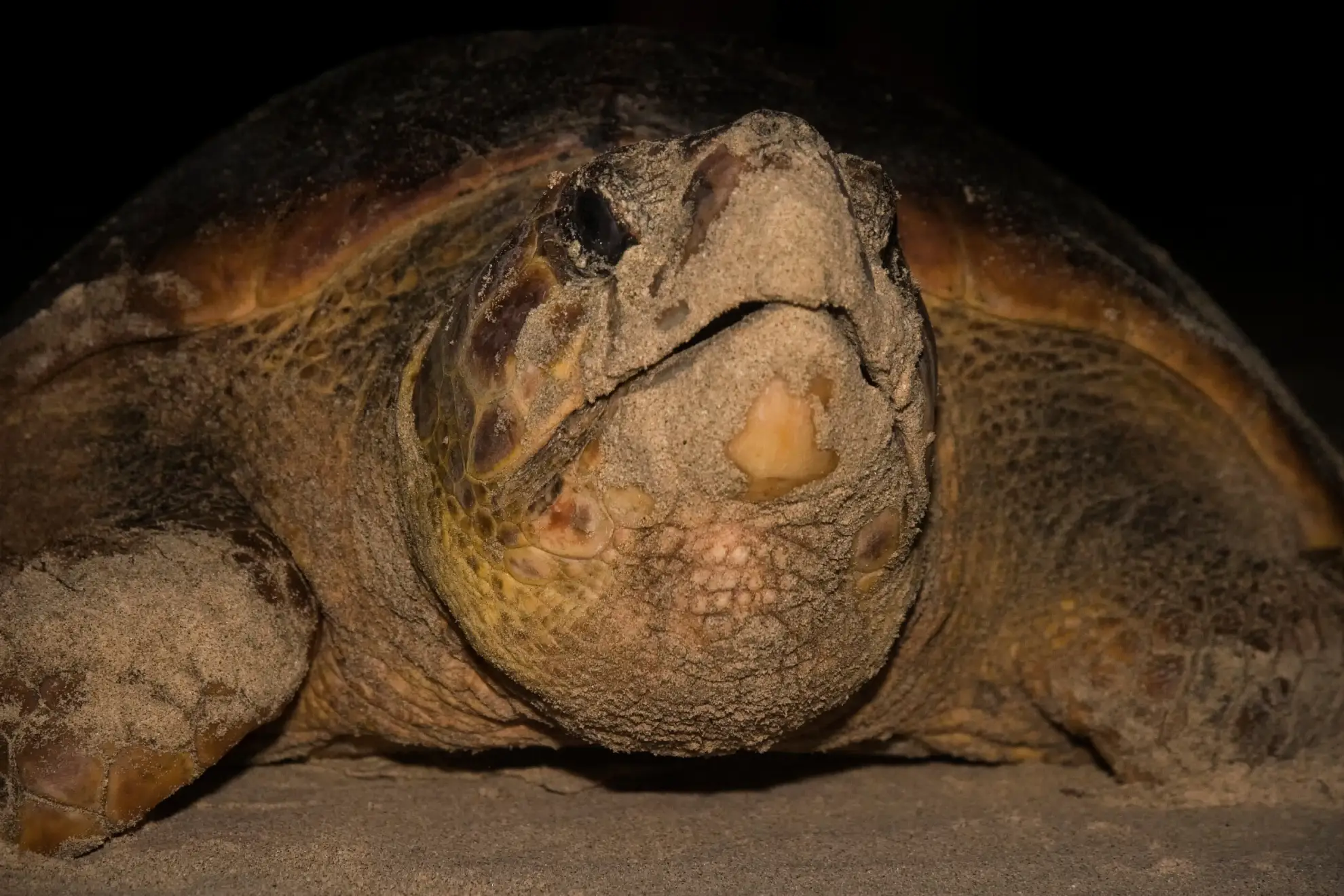
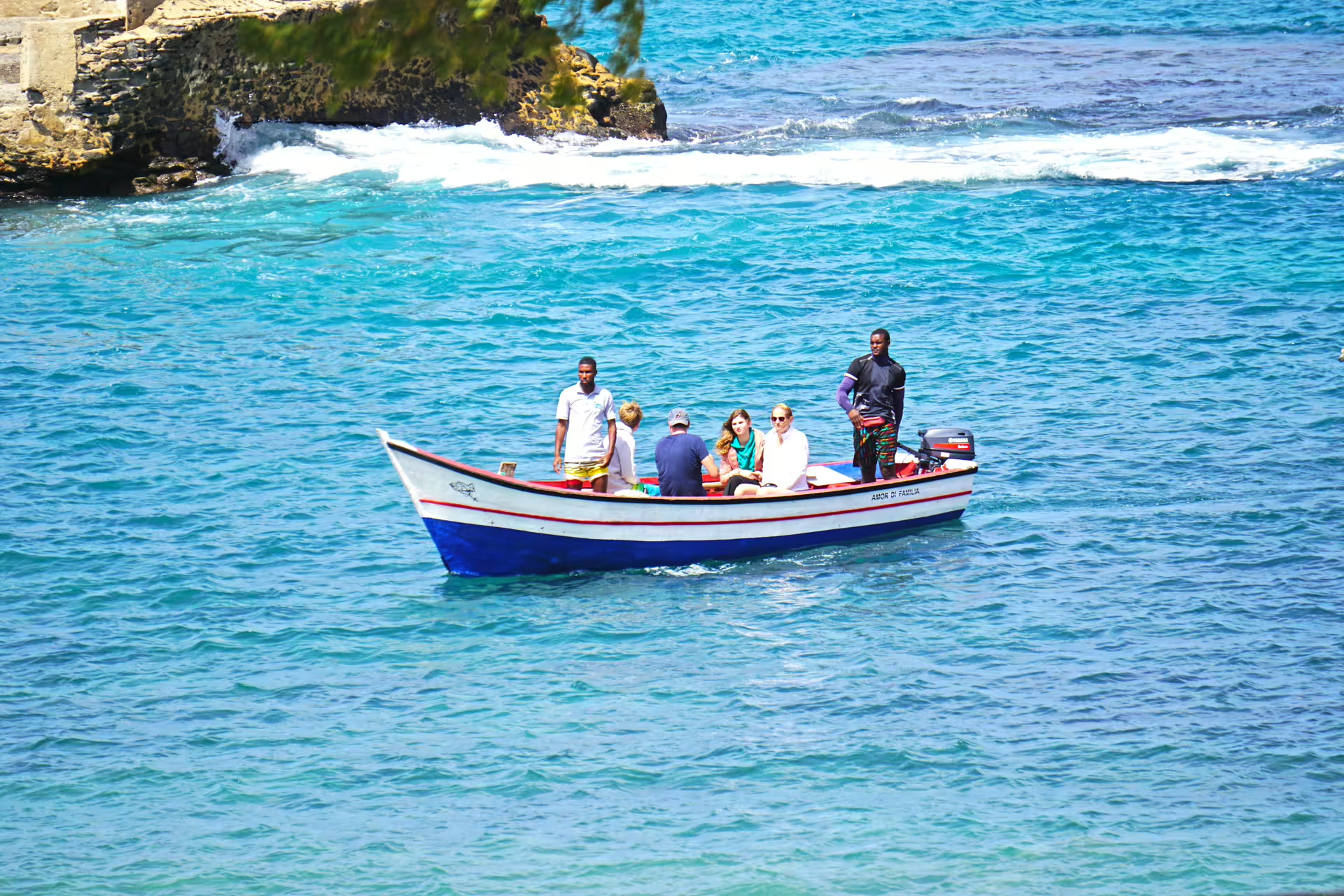
But the Cape Verde beach holiday is not passive. The Atlantic here is one of the most biodiverse marine environments in the tropics: sea caves, submerged rock arches, reef walls, shipwrecks, and a resident population of loggerhead sea turtles that use these beaches as their primary nesting ground. Boat trips along the coast — exploring caves, snorkelling in clear water, finishing with a barbecue on a beach accessible only from the sea — are the activities that lift the Cape Verde beach experience beyond simply lying on sand. The turquoise-lit interior of a sea cave, reached from a small boat in conditions that make the water look lit from below, is a specific and memorable kind of beautiful.
For divers, Cape Verde offers conditions that are consistently underrated on the international scuba circuit. Visibility regularly exceeds 25 metres in the dry season; the water temperature of 21–22°C in winter is cold by Caribbean standards but produces a clarity rarely available in warmer seas. Shark Bay on Sal, the Remo Wreck, and the offshore seamounts near São Vicente are intermediate to advanced dive sites. Beginners can get PADI certified in the calm, shallow bays of Santa Maria within three to four days.
One thing the Cape Verde beach holiday is not: consistently calm. The trade winds that make the island famous for kitesurfing can be startling in their strength — 25 to 40 km/h in the afternoon on exposed beaches between December and March is normal. If you are planning a beach holiday that requires stillness and shade, plan for a sheltered bay rather than an exposed northern beach, and expect to move to a windward position for photography and relaxed lounging in the afternoons.
✓ Some of the Atlantic’s most spectacular white-sand beaches (Sal, Boa Vista)
✓ Warm, clear ocean — excellent visibility for snorkelling and diving
✓ World-class kitesurfing and windsurfing on consistent trade winds
✓ Sea caves and coastline boat trips for active beachgoers
✓ Direct flights from major European cities — easy to reach
✓ Well-developed resort infrastructure — hotels, restaurants, water sports schools
✓ Sea turtle nesting in summer (Jun–Oct) for an unforgettable night experience
✗ Trade winds can be strong in the afternoons — not always calm beach conditions
✗ Flat terrain — no dramatic scenery beyond the beach itself
✗ Sal and Boa Vista can feel like resort bubbles — limited cultural depth
✗ Some areas over-developed relative to other Cape Verde islands
✗ Not a hiking destination — very limited walking terrain
The adventure version of Cape Verde is built on the western islands, and it is one of the most genuinely impressive adventure travel destinations in the Atlantic region — better than its international reputation currently suggests. The geography is extreme: active volcanoes, ridges that drop 1,500 metres to the sea, valleys so steep that the local population travels them on foot along paths that precede the colonial road network by centuries. This is not adventure as theme park. It is adventure as landscape.
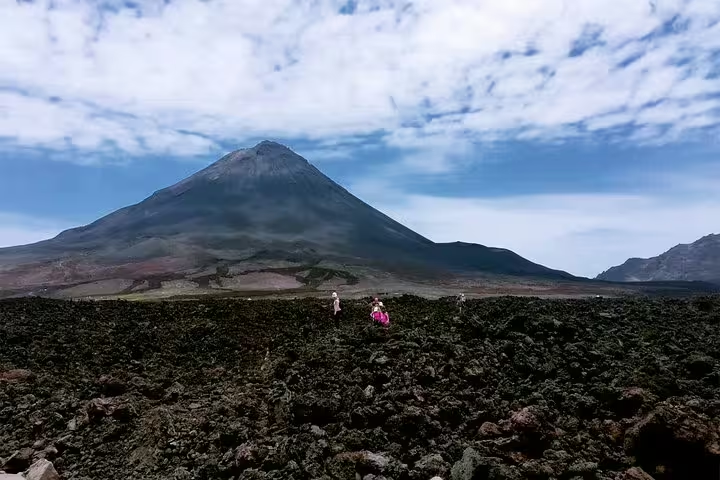
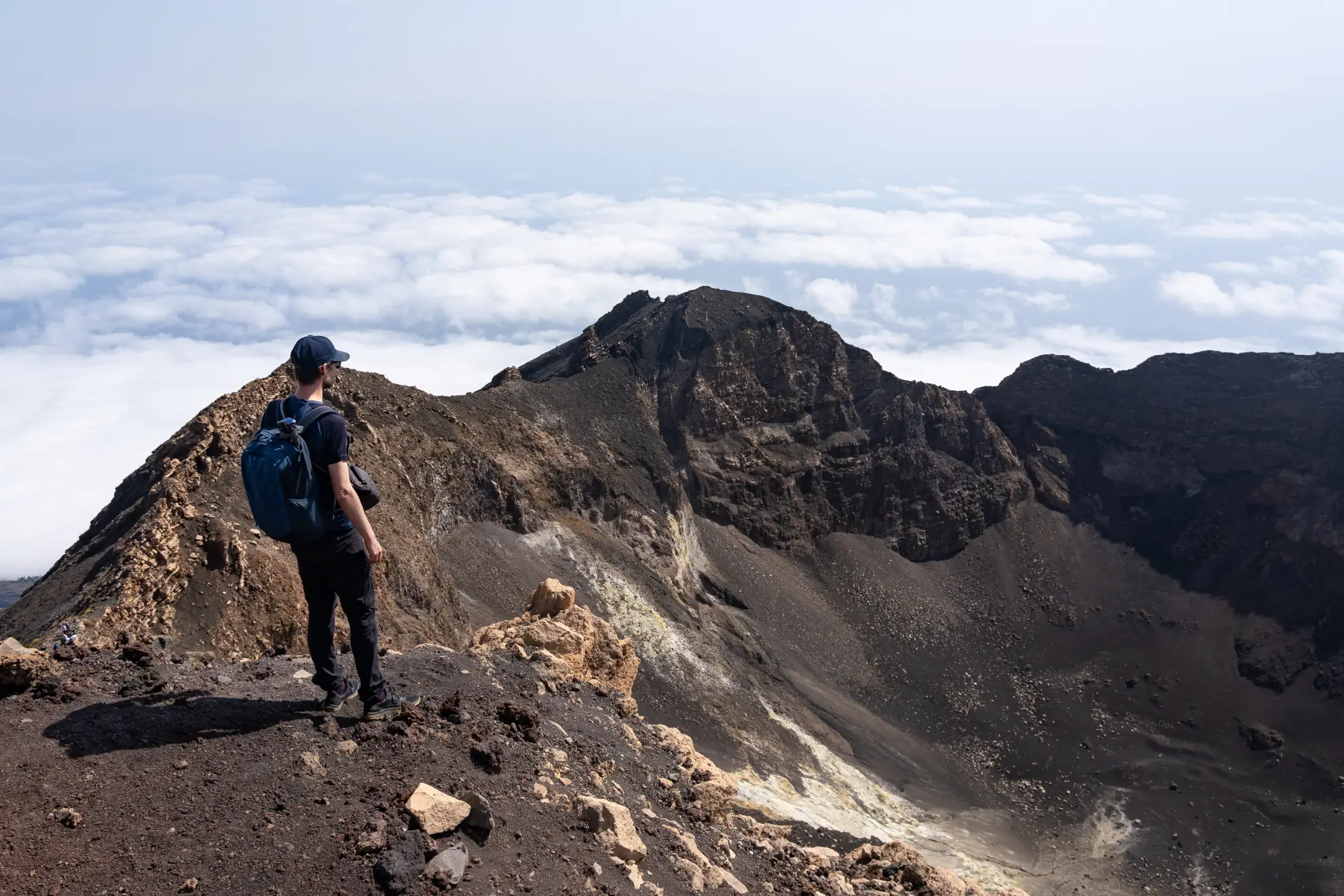
Fogo is the centrepiece. Pico do Fogo rises 2,829 metres from the ocean and is surrounded, at its base, by the Chã das Caldeiras: a flat volcanic plain inside the ancient outer crater where a small community of farmers grows wine grapes and coffee in soil that is, in part, the material of the 2014 eruption. The lava flow from that eruption destroyed part of the village and was subsequently partially built over — the community returned rather than relocated. Standing in Chã das Caldeiras and looking up at the active secondary cone while the residents go about their daily lives produces a specific, disorienting feeling: the normalisation of a landscape that would be a disaster zone anywhere else.
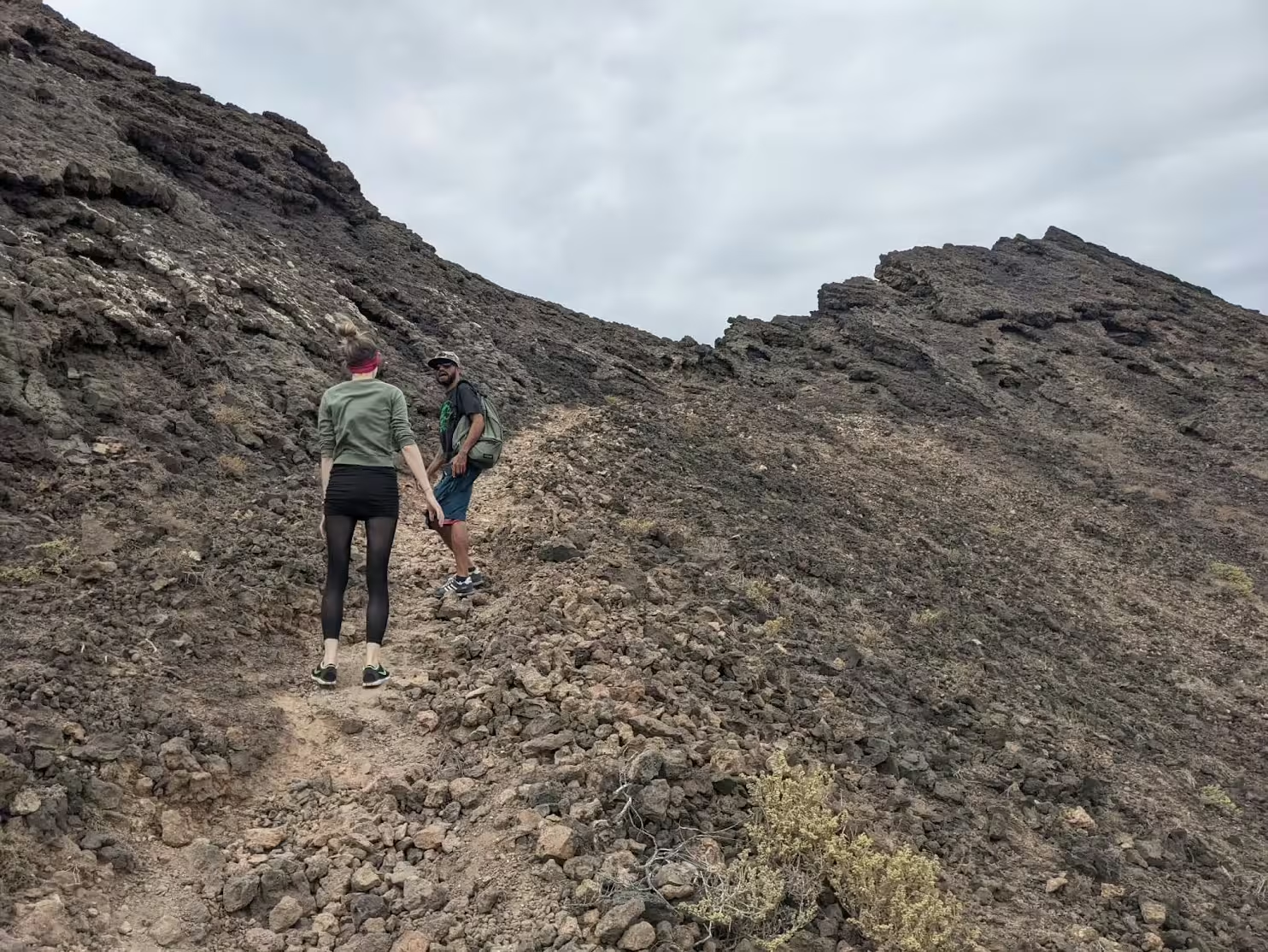
The summit ascent from the caldera floor takes three to four hours at a steady pace. The lower section climbs through old lava fields on a clear path; the upper section involves steep volcanic scree that requires concentration and effort. At the crater rim the views are vertiginous — the caldera below, the surrounding ocean, the silhouette of the other islands on clear days. The guided descent on loose volcanic material is fast and, once you accept the instability underfoot, almost exhilarating. Most people who complete the summit describe it as among the most memorable days of their travelling life.
Santo Antão is the other major adventure island — different from Fogo in character but equally compelling. The island’s topography is dominated by deep ribeiras (river valleys) carved from volcanic basalt and ridges that reach above 1,500 metres into cloud forest. The trails here were built by the island’s residents before any road infrastructure existed, and many remain unchanged: stone-paved paths that descend from ridge to valley through terraced cultivation, past villages accessible only on foot, with views that change composition every fifty metres. The hike from Pico da Cruz to Ribeira Grande is commonly cited as one of the finest walking days in West Africa.
São Vicente offers a more accessible entry point to Cape Verde’s volcanic adventure landscape. The Volcano Viana crater hike traverses the edge of an extinct crater above Mindelo, with panoramic views across the island’s lunar landscapes — and the city below — within a manageable three-hour guided walk. This is the right choice for travellers who want a taste of Cape Verde’s volcanic drama without committing to a full-day summit climb.
✓ Pico do Fogo summit — an active volcano you can walk into, in a day
✓ Chã das Caldeiras caldera — possibly the most surreal inhabited landscape in the Atlantic
✓ Santo Antão ridge and valley trails — among West Africa’s finest walking terrain
✓ São Vicente crater hikes — accessible volcanic drama for all fitness levels
✓ Authentic local culture — Mindelo’s music scene, village life, Creole food
✓ Far fewer tourists than beach islands — trails feel genuinely remote
✓ Dramatic photography — lava fields, crater rims, cloud forest, Atlantic panoramas
✗ No beach holiday infrastructure — limited resort hotels on Fogo and Santo Antão
✗ Requires physical fitness — Pico do Fogo is a serious multi-hour climb
✗ Inter-island logistics more complex — no direct flights from Europe to Fogo
✗ Cloud cover on summits can obscure views — weather more variable than eastern islands
✗ Limited tourist services — booking activities in advance is important
The most useful way to choose is to be honest with yourself about seven questions. These are not trick questions — there are no wrong answers. They are just an honest diagnostic for which version of Cape Verde will actually make you happy.
→ At the end of a day in the sun you want to be horizontal, not vertical
→ The phrase “easy boat trip” sounds more appealing than “summit crater”
→ You are travelling with children, elderly family, or friends with limited mobility
→ You want a genuine rest and will feel guilty about “wasting” good weather on a hike
→ Kitesurfing, scuba diving, or snorkelling is part of your plan
→ You prefer a hotel with a pool to a guesthouse with a mountain view
→ Watching a sea turtle nest on a moonlit beach is your kind of adventure
→ You will be restless after two days on a sun lounger
→ Standing inside a volcano crater sounds like the point of the trip, not a detour from it
→ You already have hiking boots in your luggage
→ Guesthouses and local restaurants interest you more than resort hotels
→ You want to come home with stories rather than a tan
→ Cultural depth — music, food, village life — is part of what you travel for
→ You would rather arrive somewhere with fewer tourists and work harder to get there
Sal and Boa Vista have mature package holiday markets. You can book a beach holiday there through any major tour operator or online travel agency and arrive to find infrastructure waiting for you. Fogo and Santo Antão are different: accommodation is limited, activities require advance booking, and arriving without a plan means frustration. Use a specialist Cape Verde tour operator or book guided activities through ToursXplorer before you depart — especially for the Pico do Fogo summit, which requires a guide by regulation and whose booking slots can fill well in advance in peak season.
Most visitors who do Pico do Fogo treat the summit as the destination and the caldera floor as the starting point. In practice, Chã das Caldeiras — the flat volcanic plain inside the outer crater — is worth a full day in its own right. Staying overnight in one of the small guesthouses on the caldera floor gives you the summit in the morning and the rest of the day exploring the lava fields, tasting the volcanic-soil wine at one of the family cellars, and watching the light change on the cone as the afternoon progresses. It is a more complete experience than a day trip from Praia, and the caldera at dawn, in silence, with no one else around, is extraordinary.
The ferry between São Vicente and Santo Antão (one of the most-travelled inter-island routes) takes approximately 50 minutes and crosses a channel that can be rough, particularly during summer months. In the dry season the crossing is usually comfortable. The ferry between Santiago and Fogo takes 2.5 to 3 hours and crosses more open water — some travellers find this crossing significantly uncomfortable in higher sea states. An inter-island flight (30–45 minutes) is often the better choice for Fogo, especially if time is limited or sea conditions are uncertain.
Beach kit and hiking kit overlap less than you might expect. The Cape Verde beach holiday requires light clothing, sandals, a wetsuit or thin rash vest for water sports, and sun protection rated for strong Atlantic UV. The adventure holiday requires sturdy hiking shoes or boots, warm layers for high altitude (the Pico do Fogo crater rim at 2,829 metres is cold even in January), a daypack, and trekking poles if you use them (the descent on loose scree is significantly easier with poles). If you are doing both, pack both — do not assume your hiking shoes will substitute for beach footwear or vice versa.