




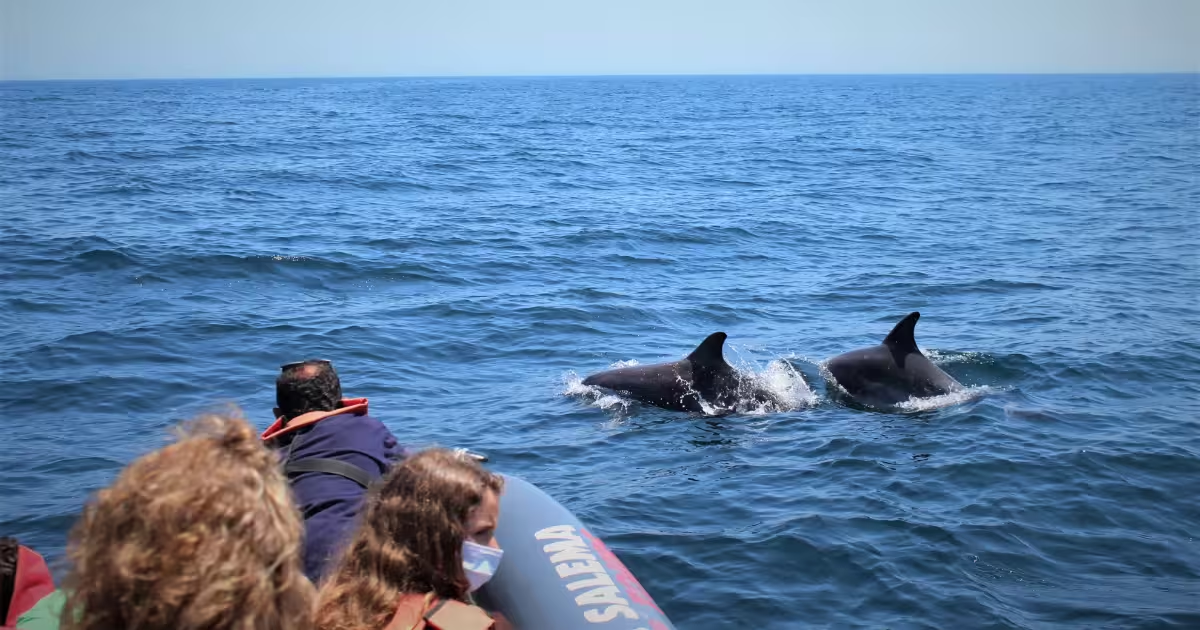
Dolphin Watching Algarve: Best Spots, Seasons & Tours
From Albufeira to Sagres, the Algarve coast offers year-round encounters with wild dolphins in the Atlantic Ocean.
The Algarve coast stretches roughly 155 kilometres along southern Portugal, where the cool, nutrient-rich waters of the Atlantic support a resident and migratory population of cetaceans year-round. Boat tours departing from Albufeira, Lagos, Portimão, and Sagres regularly encounter Common Dolphins and Bottlenose Dolphins, with sighting rates reported above 90 percent during peak season. For families, couples, and wildlife photographers, these excursions represent one of southern Europe's most accessible marine wildlife experiences.
Why Is the Algarve One of Europe's Best Dolphin Watching Destinations?
The Algarve sits at the southwestern edge of continental Europe, where the Atlantic Ocean meets the mouth of the Mediterranean. This positioning creates a convergence of water masses, bringing cold, upwelled currents from the north into contact with warmer coastal waters. That temperature contrast drives high concentrations of fish, which in turn attract cetaceans throughout the year.
The seabed off the Algarve drops sharply beyond the continental shelf, providing deep-water habitat within a short boat journey from shore. Departure points such as Sagres and Lagos can reach productive feeding grounds within 20 to 30 minutes. The combination of accessible depth and abundant prey makes sightings frequent rather than exceptional.
"The Algarve's position at the junction of Atlantic upwelling systems and Mediterranean-influenced coastal waters creates one of the most biologically productive marine zones in Western Europe." — Marine ecology consensus, peer-reviewed cetacean survey literature
Sighting rates compiled across licensed operators consistently exceed 90 percent between April and October, and operators running winter tours still report encounters on approximately 70 to 75 percent of departures. This reliability is what distinguishes the Algarve from many other European whale-watching destinations, where seasonal access is more limited.
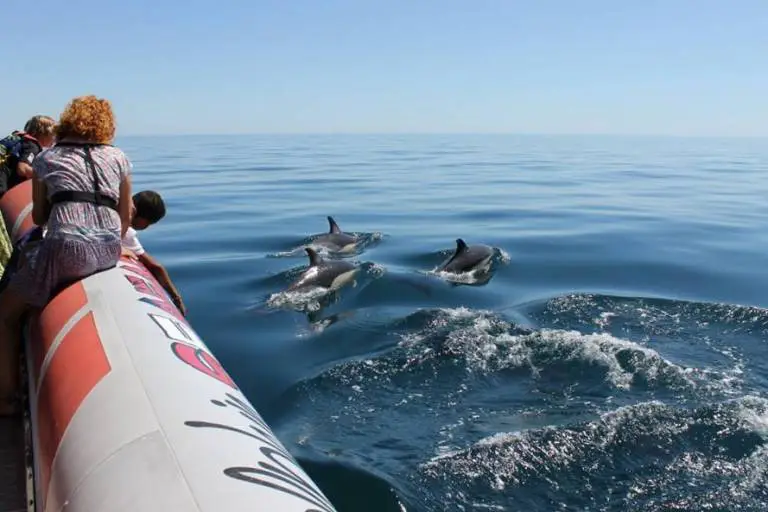
Where Are the Best Places for Dolphin Watching in the Algarve?
Each of the Algarve's main departure towns offers a slightly different experience, shaped by coastal geography, water conditions, and the type of vessel operators run. The table below summarises the key differences at a glance.
| Departure Location | Tour Variety | Scenic Coastline | Dolphin Sighting Potential | Best For |
|---|---|---|---|---|
| Albufeira | Excellent | High | Very High | First-time visitors |
| Lagos | Very Good | Excellent | High | Scenic cruises |
| Portimão | Good | Very Good | High | Families |
| Sagres | Good | Outstanding | High | Wildlife enthusiasts |
Albufeira is the Algarve's busiest resort town and offers the largest concentration of dolphin tour operators. Multiple daily departures make it the most convenient option for visitors staying along the central coast. The marina at Albufeira serves as the main embarkation point, with both shared RIB and catamaran options available.
Lagos, located approximately 35 kilometres west of Portimão along the N125 road, is favoured for its dramatic limestone cliff formations. Tours from Lagos frequently combine dolphin watching with visits to the Ponta da Piedade rock arches and, further east, the Benagil Cave. Group sizes tend to be smaller here, which suits travellers who prefer a quieter on-water experience.
Portimão is positioned near the mouth of the Arade River and offers direct access to deeper Atlantic waters. The town's marina, Marina de Portimão, is one of the largest on the southern coast and supports a range of licensed operators. Fast RIB excursions from Portimão can reach open-water dolphin habitats within 15 to 20 minutes.
Sagres occupies the southwestern tip of Portugal, near Cabo de São Vicente, the most southwesterly point of continental Europe. The exposed Atlantic position means sea conditions can be more variable, but the marine biodiversity is notably high. Sagres tours are particularly well suited to wildlife enthusiasts willing to accept slightly rougher water in exchange for encounters with species less commonly seen closer to shore.
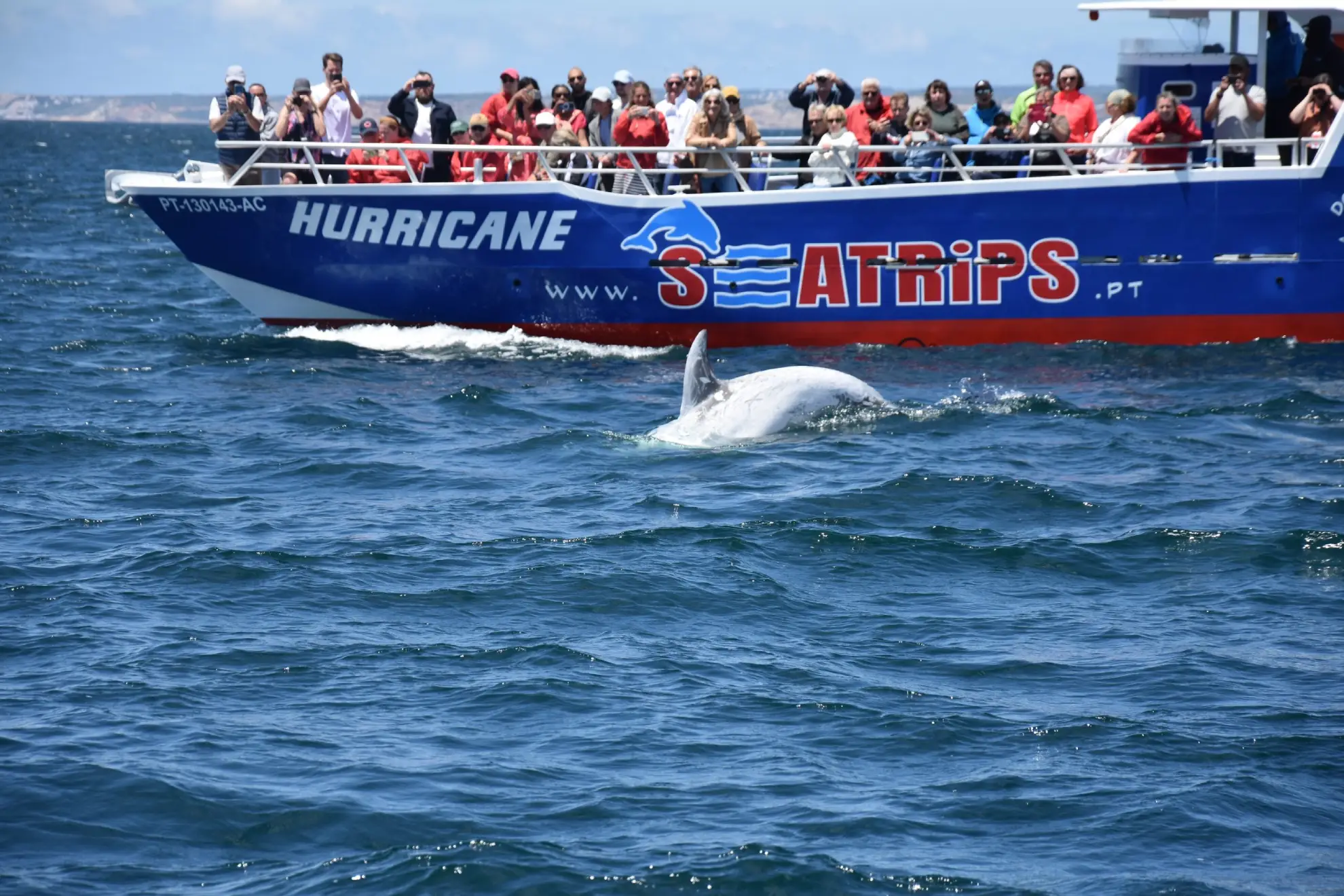
What Dolphin Species Can You Expect to See?
The Algarve's Atlantic waters support five cetacean species that are regularly encountered on guided boat tours, plus occasional visitors that appear less predictably.
Common Dolphin (Delphinus delphis) is the species most frequently sighted on Algarve tours. Highly social, they travel in pods that can number from a few individuals to several hundred. They are known for bow-riding behaviour, approaching vessels closely and surfing the pressure waves at the bow, which makes for clear viewing from the boat deck.
Bottlenose Dolphin (Tursiops truncatus) is the second most commonly encountered species. Larger than the Common Dolphin, typically measuring 2.5 to 3.8 metres in length, they tend to be found in smaller groups and are often seen closer to the coast. Some pods maintain semi-resident ranges along the Algarve shoreline.
Striped Dolphin (Stenella coeruleoalba) appears in deeper offshore waters and is occasionally seen during tours from Sagres and Lagos. Their characteristic blue, white, and grey lateral stripe pattern makes them identifiable at a distance.
Risso's Dolphin (Grampus griseus) is a less frequent sighting, associated with deeper submarine canyon habitats. Adults are typically heavily scarred from social interactions with other individuals. Sightings are considered a bonus on any Algarve tour.
"Documenting cetacean encounters through citizen science platforms like Happywhale and ORCA contributes directly to long-term population monitoring of Atlantic dolphins." — Cetacean conservation researchers
Whale sightings, while not the primary focus of Algarve tours, are recorded periodically. Fin Whale (Balaenoptera physalus), the second-largest animal on Earth, passes through the region on seasonal migrations, particularly in late winter and early spring. Minke Whale (Balaenoptera acutorostrata) and Sperm Whale (Physeter macrocephalus) are also recorded occasionally in deeper offshore waters.
When Is the Best Time for Dolphin Watching in the Algarve?
The Algarve's Mediterranean-influenced climate means boat tours operate comfortably across all twelve months, though the experience varies by season. The table below outlines the main differences.
| Season | Sea Conditions | Crowds | Wildlife Activity | Overall Recommendation |
|---|---|---|---|---|
| Spring (Mar–May) | Good | Low | High | Excellent |
| Summer (Jun–Aug) | Excellent | High | Very High | Excellent |
| Autumn (Sep–Nov) | Very Good | Moderate | High | Excellent |
| Winter (Dec–Feb) | Variable | Low | Moderate | Good |
Spring (March to May) brings warming water temperatures, increasing fish populations, and a noticeable uptick in cetacean activity near shore. Tour frequency increases through April as operators return to full schedules. Visitor numbers remain well below the summer peak, meaning more availability and generally smaller groups on the water.
Summer (June to August) is peak season across the Algarve. Sea conditions are typically the calmest of the year, with the Atlantic swells reduced by anticyclonic pressure systems. Dolphin sighting rates are at their highest, and tours run multiple times daily from all major departure points. Advance booking is strongly recommended during July and August.
Autumn (September to November) is widely considered the most rewarding period by regular visitors. Water temperatures remain warm from the summer, sea conditions are generally settled, and the departure of the main tourist wave means less pressure on boat capacity. September in particular combines high sighting probability with comfortable weather.
Winter (December to February) sees reduced tour schedules, but operators in Albufeira, Lagos, and Portimão continue to run departures when conditions permit. Sighting rates drop compared to the warmer months but remain meaningful, around 70 to 75 percent. For travellers with flexible itineraries, a winter dolphin tour offers a notably different, quieter perspective on the Algarve coast.
How Much Do Dolphin Tours Cost in the Algarve in 2026?
Pricing across the Algarve's dolphin watching market varies according to vessel type, group size, and duration. The following ranges reflect typical 2026 pricing from licensed operators.
Standard shared tours on larger vessels, typically catamarans or open RIBs carrying 10 to 20 passengers, are priced between approximately 35 and 55 euros per adult. These tours usually last 2 to 3 hours and include a naturalist guide or experienced skipper. Children's prices are typically 50 to 60 percent of the adult rate.
Premium small-group tours, capped at 6 to 12 participants and often accompanied by a qualified marine biologist, range from 55 to 90 euros per person. The smaller group size allows for a more educational experience and greater flexibility in following dolphin pods.
Private charters for exclusive use of a vessel cost between 350 and 800 euros for the full boat, depending on the operator, vessel type, and duration. Private tours are popular with families, couples celebrating special occasions, and wildlife photographers who want full control of positioning on the water.
Combined tours that include both dolphin watching and a visit to Benagil Cave or other coastal sea caves typically add 10 to 20 euros to the standard shared tour price. These combination trips last 3 to 4 hours and represent good value for visitors who want to cover multiple highlights in a single excursion.
How Can You Make the Most of a Dolphin Watching Tour?
A few practical steps significantly improve the quality of the experience on the water. Morning departures, typically between 09:00 and 11:00, coincide with calmer sea states and tend to see dolphins in more active feeding behaviour near the surface. Afternoon tours also produce sightings, but swell tends to build slightly as the day progresses.
Layered clothing is advisable even in summer, as the open Atlantic can feel noticeably cooler at boat speed than it does on land. Sunglasses reduce glare off the water, making it easier to spot dorsal fins at distance. Binoculars are useful for watching behaviour before the boat approaches, though most Common Dolphin pods will approach vessels of their own accord.
Travellers who are prone to motion sickness should take appropriate remedies at least 30 minutes before departure, as even calm Atlantic conditions involve a degree of vessel movement. Operators provide briefings on responsible wildlife watching, including the requirement to maintain a minimum approach distance of 50 metres from cetaceans under Portuguese maritime regulations enforced by the Instituto Português do Mar e da Atmosfera (IPMA).
Choosing a licensed operator is the most important single decision a visitor can make. Licensed operators are regulated under European Union Habitats Directive provisions and Portuguese national legislation governing cetacean watching activities, and they are required to file encounter reports that contribute to scientific monitoring of the region's dolphin populations.
Guided Combination Tours: Caves and Dolphins
Private Wildlife Charters
Dedicated Dolphin Watching Excursions
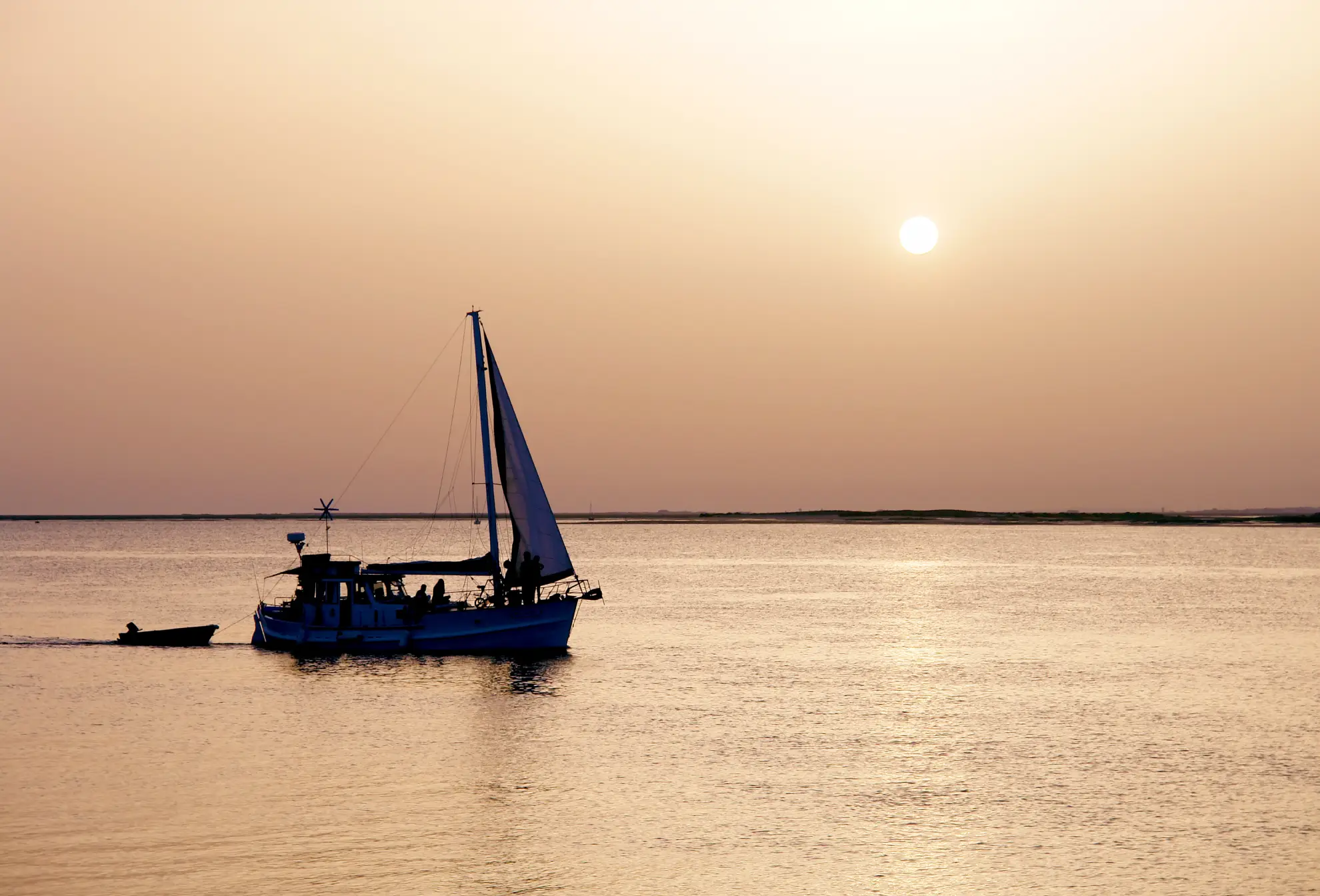
Sunset and Estuary Dolphin Tours
Browse all Algarve dolphin tours on ToursXplorer and secure your spot before peak-season availability fills up.
Browse all Algarve tours on ToursXplorerResponsible Dolphin Watching in the Algarve
Portugal's maritime regulations, enforced by the Instituto Português do Mar e da Atmosfera (IPMA), require commercial dolphin watching vessels to maintain a minimum approach distance of 50 metres from cetaceans and to limit time spent with any single pod to 30 minutes. These rules exist to minimise disturbance to feeding and socialising behaviour, particularly for pods with calves present.
Feeding wild dolphins is prohibited and counterproductive: animals that associate boats with food become boat-dependent and are at greater risk of vessel strike. Reputable operators briefing passengers on this point before departure is a reliable indicator of a well-run excursion.
Sustainable tourism certification schemes, including those administered through the Global Sustainable Tourism Council (GSTC) framework, are increasingly adopted by Algarve operators. When booking, look for operators who file cetacean encounter reports with research institutions such as the Centro de Ciências do Mar (CCMAR) at the University of Algarve in Faro, as this data supports long-term population monitoring.
ToursXplorer lists only operators who hold current Portuguese maritime licences and comply with national cetacean-watching legislation. Checking licence status before booking any wildlife tour is straightforward via the IPMA's public operator registry.
Planning Your Algarve Dolphin Tour: Practical Summary
Most dolphin tours in the Algarve last between 2 and 4 hours. Shared group tours typically carry 8 to 20 passengers, while private charters accommodate 4 to 10 people depending on vessel size. Morning slots between 09:00 and 12:00 are generally preferred by operators for their calmer sea conditions, though afternoon departures remain productive through the summer months.
Faro Airport (FAO), the main international gateway to the Algarve, is located approximately 35 kilometres from Albufeira, 80 kilometres from Lagos, and 65 kilometres from Portimão via the A22 Via do Infante motorway. All four main departure towns are accessible by public transport, with regional bus services operated by EVA Transportes connecting the coastal route.
Advance booking through a platform like ToursXplorer is recommended from May onward, as popular departure times sell out two to three weeks in advance during July and August. Cancellation policies vary by operator; most offer full refunds for cancellations made 48 hours or more before the scheduled departure, subject to weather conditions assessed by the skipper on the morning of the tour.
Ready to book? ToursXplorer lists licensed dolphin watching departures from Albufeira, Lagos, Portimão, Sagres, and Faro with real-time availability.
Frequently Asked Questions
Yes, for most visitors. Licensed operators in Albufeira, Lagos, Portimão, and Sagres report sighting rates above 90 percent between April and October. Common Dolphins regularly approach boats, making encounters close and prolonged. Tours typically last 2 to 4 hours and combine wildlife watching with scenic coastal scenery, offering good value relative to comparable marine wildlife experiences elsewhere in Europe.
Between April and October, sighting success rates across licensed Algarve operators consistently exceed 90 percent. During winter months from December to February, rates drop to approximately 70 to 75 percent due to more variable sea conditions and seasonal shifts in prey distribution. No operator can legally guarantee sightings, but many offer partial refunds or return vouchers when no cetaceans are encountered.
Albufeira has the widest choice of operators and daily departures, making it the most practical base for first-time visitors. Lagos suits travellers who want to combine dolphin watching with scenic cave tours along the limestone coastline. Portimão is well placed for families, with fast access to deep-water habitat. Sagres, near Cabo de São Vicente, offers the greatest marine biodiversity but with more exposed Atlantic conditions.
Yes, most operators welcome children from around age 3 to 5 upward, depending on the vessel type. Catamarans and larger RIBs provide the most stable platform for young passengers. Children's ticket prices are typically 50 to 60 percent of the adult rate. Operators with a marine biologist on board, such as the Portimão tour listed on ToursXplorer, tend to offer structured commentary well suited to older children and teenagers.
No operator can legally guarantee wild animal sightings. However, sighting rates in the Algarve are among the highest in Western Europe for commercial cetacean tours. Many operators offer a return voucher or partial refund if no dolphins are seen. The terms vary by company, so check the specific cancellation and no-sighting policy before booking.
Beyond Common and Bottlenose Dolphins, Algarve tours occasionally encounter Striped Dolphin, Risso's Dolphin, and seasonal whale species including Fin Whale and Minke Whale. Loggerhead Sea Turtles are sighted periodically in warmer months. The Ria Formosa Natural Park, accessed from Faro, also supports large populations of wading birds including Flamingos, Spoonbills, and Little Egrets alongside marine mammal encounters.