




What Dolphin Species Can You Spot in the Algarve?
A species-by-species guide to the cetaceans of southern Portugal's Atlantic waters, with seasonal sighting tips and responsible tour advice.
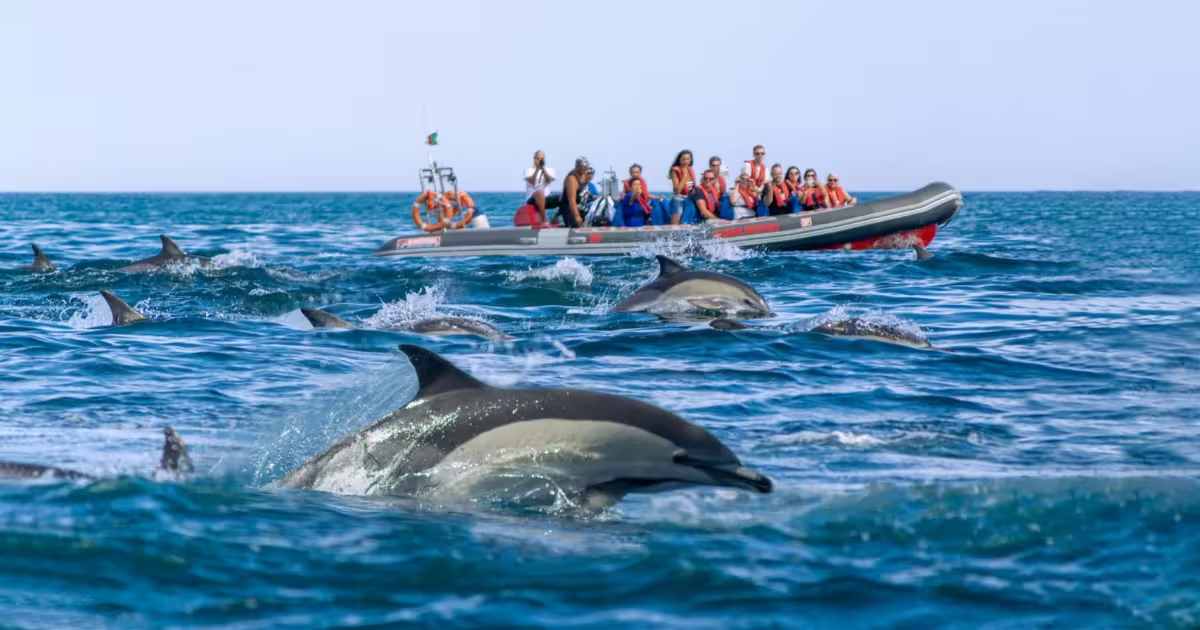
The Algarve coast, stretching roughly 155 kilometres along southern Portugal, sits where the cooler nutrient-rich waters of the Atlantic meet the warming influence of the Mediterranean. This convergence sustains dense fish populations and, in turn, attracts at least four resident or regularly visiting dolphin species. Pods are encountered year-round, making the region one of Europe's most reliable destinations for dolphin watching from a boat.
Why Is the Algarve a Hotspot for Dolphin Watching?
Three interlinked factors explain the Algarve's reputation among European dolphin-watching destinations: ocean dynamics, food availability, and coastal geography.
Atlantic Ocean Conditions
The Algarve faces the open North Atlantic and benefits from seasonal upwelling events, particularly along the western Cape Vicentina coast near Sagres. Upwelling draws cold, oxygen-rich water from depth to the surface, creating a nutrient column that supports plankton blooms and, ultimately, the sardines, mackerel, and squid that dolphins depend on. Water temperatures typically range from 15°C in winter to 23°C in late summer, remaining hospitable for cetaceans throughout the year.
Rich Marine Food Sources
The Algarve sits within the Lusitanian biogeographic province, a transition zone where Atlantic and Mediterranean species overlap. Sardina pilchardus (the European sardine) and Engraulis encrasicolus (European anchovy) form the base of the food web that sustains dolphin populations. Tuna migration corridors passing south of the Algarve in summer draw dolphins further offshore, where striped and Risso's dolphins are more frequently encountered.
Marine biologists working with the Portuguese Institute for the Sea and Atmosphere (IPMA) have documented stable cetacean populations off the Algarve for over two decades, describing the region as a critical habitat corridor between the Atlantic and the western Mediterranean.
Year-Round Sighting Opportunities
Unlike whale-watching routes in the Azores or Madeira, which peak sharply in spring and summer, the Algarve offers meaningful dolphin encounters in every month of the year. Common and bottlenose dolphins are present year-round, while striped dolphins appear more reliably from June to September and Risso's dolphins are encountered in cooler offshore waters primarily in winter and early spring.
Which Dolphin Species Live Off the Algarve Coast?
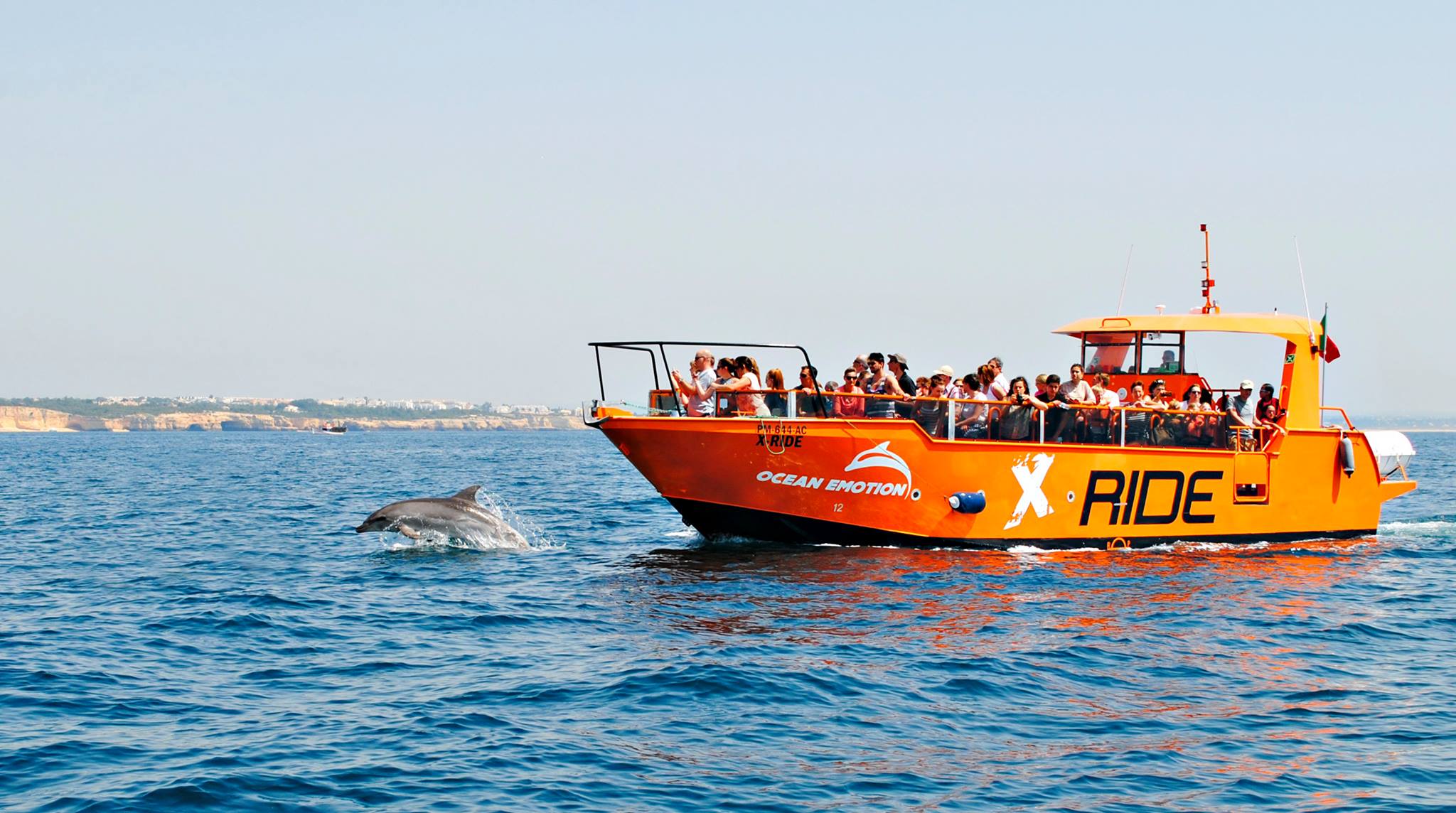
Four species account for the overwhelming majority of sightings documented by tour operators and researchers working between Lagos and Faro.
Common Dolphin (Delphinus delphis)
The common dolphin is the species most frequently sighted from Algarve tour boats. Adults reach 1.7 to 2.4 metres in length and are immediately recognisable by their distinctive hourglass pattern, a pale yellow patch on the forward flank and a white section towards the tail, against a dark grey back and white belly. They travel in schools that often number between 20 and 200 individuals, though super-pods exceeding 1,000 animals have been recorded further offshore. Common dolphins are fast, acrobatic swimmers and readily approach vessels to bow-ride, making them a consistent highlight for passengers on half-day tours departing from Lagos and Albufeira.
Bottlenose Dolphin (Tursiops truncatus)
Bottlenose dolphins are the second most commonly sighted species and the one most widely recognised by travellers from documentaries and aquarium encounters. Adults range from 2 to 4 metres and weigh between 150 and 650 kilograms, making them substantially larger than common dolphins. Their uniformly grey colouration and curved, sickle-shaped dorsal fin are the key identification features. Bottlenose dolphins tend to form smaller, more stable social groups called communities, and the same individuals are regularly re-identified off the Algarve over successive years by researchers using photo-identification of dorsal fin notches. Tourists particularly value encounters with bottlenose dolphins because the animals often remain close to boats for extended periods.
Research published in the journal Aquatic Mammals identified a community of approximately 30 bottlenose dolphins with a core range centred on the waters between Portimão and Albufeira, with some individuals resighted across multiple seasons.
Striped Dolphin (Stenella coeruleoalba)
Striped dolphins are primarily offshore animals and are encountered less predictably from standard half-day tour routes. Adults measure 1.8 to 2.5 metres and carry a bold blue-grey and white body with a dark stripe running from the eye to the anal area, giving the species its common name. They are fast, energetic swimmers and tend to form groups of 25 to 100 individuals. Sightings increase noticeably between June and September when warmer surface temperatures push them closer to the continental shelf. Tours departing from Sagres or on full-day excursions venturing further west have the highest probability of encountering striped dolphins.
Risso's Dolphin (Grampus griseus)
Risso's dolphins are the most distinctive of the four species and arguably the most striking up close. Adults grow to between 2.6 and 3.8 metres and, uniquely among the Algarve's regular cetaceans, become progressively paler and more heavily scarred as they age. The scarring results from social interactions with other Risso's dolphins and from the suckers of squid, their primary prey. Mature individuals can appear almost entirely white with a dense map of scratches across the body. Risso's dolphins prefer deeper offshore waters and are encountered less frequently than common or bottlenose dolphins, but sightings off the western Algarve between October and March are documented each year.
The table below summarises the key identification and sighting characteristics of the main species found off the Algarve.
| Species | Likelihood of Sighting | Typical Habitat | Key Characteristics |
|---|---|---|---|
| Common Dolphin | Very High | Coastal and offshore waters | Hourglass colouration, highly acrobatic, large pods |
| Bottlenose Dolphin | Very High | Coastal waters | Larger body, curved dorsal fin, stable social groups |
| Striped Dolphin | Moderate | Offshore waters | Bold dark stripe from eye to flank, fast swimmer |
| Risso's Dolphin | Low to Moderate | Deep offshore waters | Scarred pale-grey body, blunt rounded head |
| Pilot Whale (occasional) | Low | Deep Atlantic waters | Dark colouration, bulbous head, large social pods |
What Other Marine Mammals Can Be Seen Off the Algarve?
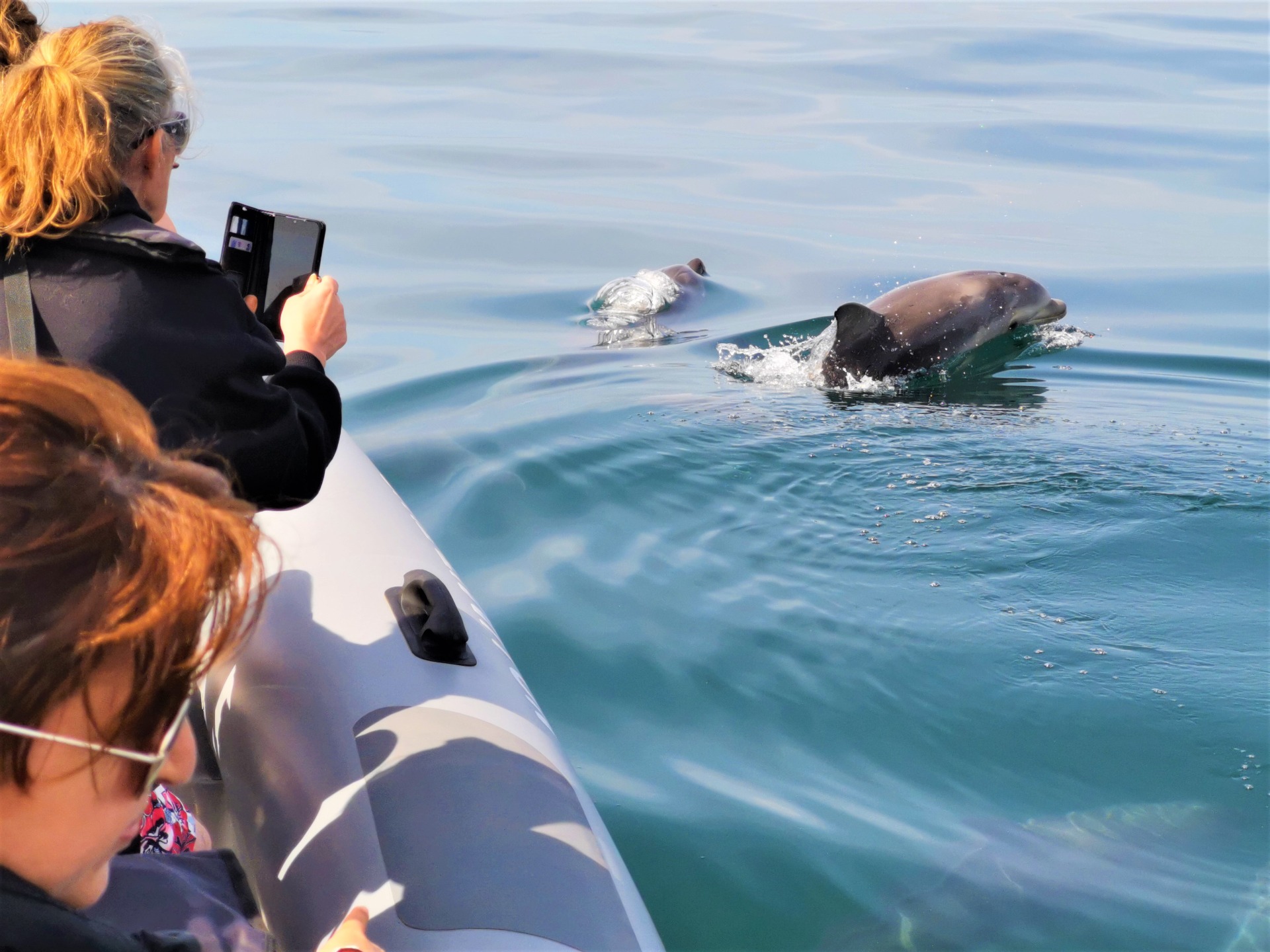
Beyond the four primary dolphin species, the deeper Atlantic waters off the Algarve coast receive seasonal visitors that, while rare, are documented by operators and researchers each year.
Pilot whales (Globicephala macrorhynchus, the short-finned pilot whale, and occasionally Globicephala melas, the long-finned pilot whale) travel in cohesive social groups of 10 to 30 animals. Their dark colouration and bulbous melon-shaped head distinguish them from dolphins. Sightings are most likely on full-day tours heading 20 to 30 kilometres offshore, particularly in autumn.
Minke whales (Balaenoptera acutorostrata) pass through Algarve waters during their spring and autumn migrations. Adults reach 7 to 10 metres. They surface infrequently and do not bow-ride, making encounters brief, but their size creates a lasting impression. Sightings are rare from standard tour routes and more likely on dedicated whale-watching trips departing from Sagres, closest to the open Atlantic.
Orcas (Orcinus orca) are documented in Algarve waters but remain genuinely rare. The Iberian Peninsula hosts a small population of approximately 35 to 40 orcas that follow bluefin tuna migrations through the Strait of Gibraltar between May and August. Occasional individuals or pairs have been sighted as far west as Sagres. These encounters are unplanned and cannot be relied upon.
Sperm whales (Physeter macrocephalus) are sometimes recorded in the deep-water canyon systems off the Algarve's western coast, particularly in winter, though sightings from recreational tour boats are rare.
Where Are the Best Places for Dolphin Watching in the Algarve?
Departure location influences both the species encountered and the type of coastal scenery experienced during a tour.
Lagos sits at the western end of the central Algarve and gives quick access to the Ponta da Piedade headland with its distinctive sandstone stack formations. Common and bottlenose dolphins are regularly sighted within 5 to 10 kilometres of the marina. The proximity of deeper water makes occasional striped dolphin encounters possible. Lagos is also the closest departure point for tours combining Benagil Cave with dolphin watching.
Albufeira, located roughly 45 kilometres east of Lagos, is the Algarve's busiest resort town and the departure hub for a large number of dolphin-watching tours. The waters immediately offshore are well-established common and bottlenose dolphin territory. The limestone sea caves between Albufeira and Armação de Pêra add a secondary attraction to many departures.
Portimão sits at the mouth of the Rio Arade estuary, approximately 18 kilometres east of Lagos. It offers access to both the Benagil cave system and open Atlantic waters where dolphin pods are regularly encountered. The marina is well-equipped for commercial boat tours.
Vilamoura Marina, the largest private marina in Portugal with approximately 1,000 berths, is the departure point for tours heading into the central Algarve dolphin zones. Its offshore waters between Vilamoura and Faro are considered highly reliable for common dolphin sightings.
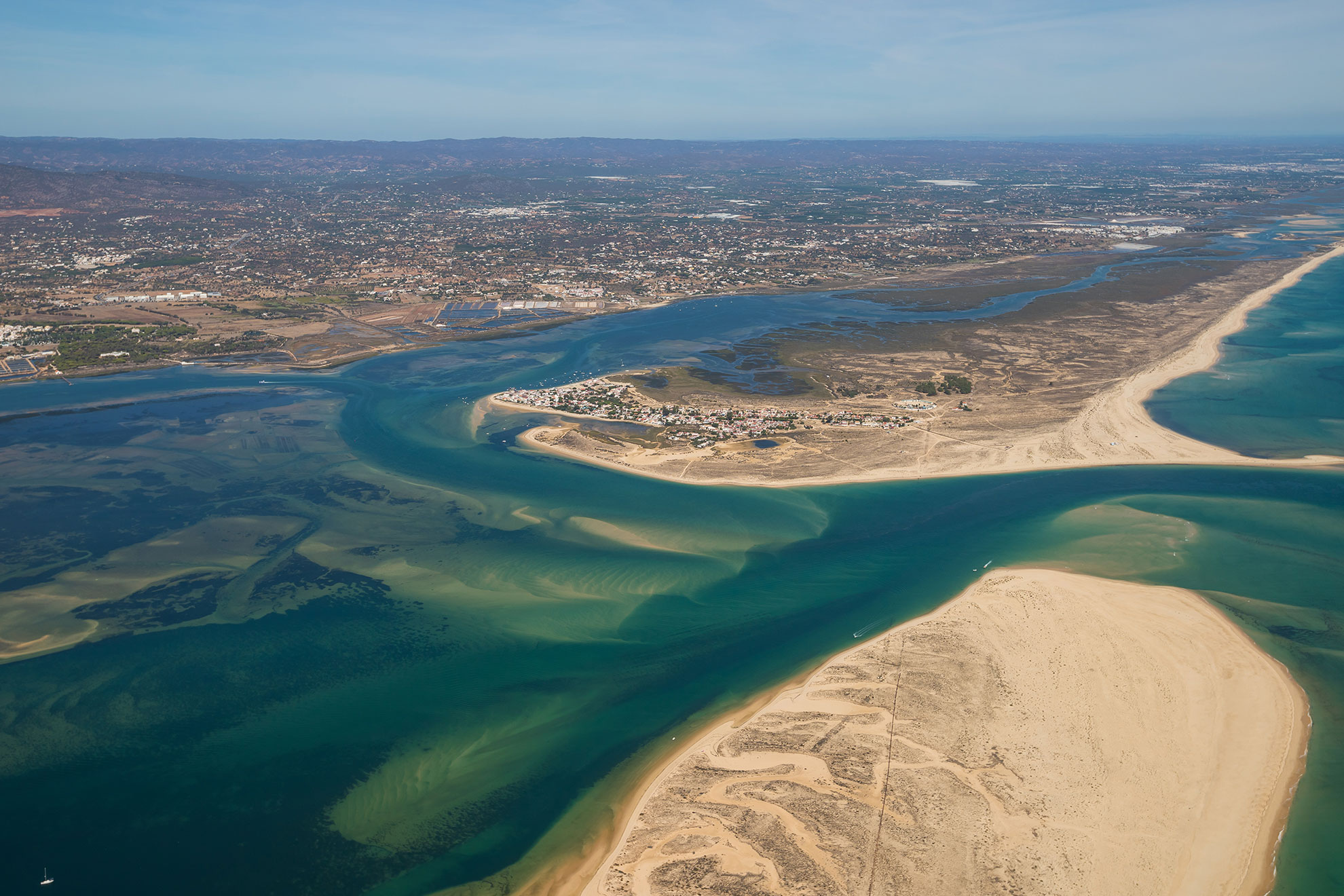
Faro and Ria Formosa offer a distinct experience. The Ria Formosa Natural Park, a 60-kilometre lagoon system designated as a protected natural park in 1987, provides calmer inshore waters. Bottlenose dolphins enter the lagoon channels seasonally and are observed from smaller rigid inflatable boats navigating the shallow passages between barrier islands.
Sagres, at Portugal's southwestern tip near Cabo de São Vicente, provides the closest access to open Atlantic waters and is the optimal base for anyone specifically hoping to encounter striped dolphins, pilot whales, or migratory species.
When Is the Best Time of Year to See Dolphins in the Algarve?
Dolphin activity in the Algarve follows seasonal patterns in water temperature, fish migration, and weather conditions, each of which affects both sighting probability and the practicality of a boat tour.
Spring (March to May) is considered by experienced operators to be one of the most productive periods. Water temperatures rise from around 15°C to 18°C, sardine schools move inshore, and common dolphins are observed in large, active pods close to the coast. Sea conditions are generally good, with calmer winds than winter. Spring also overlaps with minke whale migration periods.
Summer (June to August) is peak tourism season and the period with the highest volume of tours operating. Sighting rates for common and bottlenose dolphins remain very high. Striped dolphins become more accessible as warmer water pushes them toward the shelf edge. The main limitation is increased boat traffic in popular areas, though ethical operators maintain respectful distances regardless of demand.
Autumn (September to November) combines warm sea temperatures (still above 20°C in September) with reduced tourist volume. Pilot whale sightings are marginally more likely. Common dolphin pods remain active and easy to locate following tuna and mackerel schools. Many experienced wildlife observers consider September and October the optimum balance of conditions and crowd levels.
Winter (December to February) sees the lowest visitor numbers and some days of rough seas that cancel tours. However, the dolphins remain present. Risso's dolphins are proportionally more likely in winter. Tours run on suitable weather days and operators often provide smaller, more attentive groups. Water clarity is typically at its best in winter months.
How to Watch Dolphins Responsibly in the Algarve
Portugal's maritime authorities and environmental agencies have established guidelines for cetacean-watching vessels that reputable operators follow. Travellers can reinforce responsible practice by choosing operators who adhere to these standards.
Under Portuguese Decree-Law 263/81 and subsequent cetacean-watching guidelines, vessels must maintain a minimum distance of 50 metres from dolphins and 100 metres from larger cetaceans such as pilot whales. Boats must approach at low speed from the side rather than head-on, and must not obstruct an animal's path or separate mothers from calves.
When comparing operators, look for those who limit passenger numbers (typically 12 to 50 depending on vessel type), employ qualified marine biologists or trained naturalist guides, participate in citizen science data collection programmes, and do not pursue animals that show avoidance behaviour.
ToursXplorer lists only operators who meet responsible wildlife-watching criteria. The platform's dolphin tours page for the Algarve includes notes on vessel type, guide qualifications, and conservation commitments for each departure, allowing travellers to make an informed choice before booking.
Passengers can contribute to conservation by recording the date, location, species, and approximate pod size of any sighting and submitting observations to the Portuguese cetacean research network CETUS, which accepts public data via its website.
Dolphin Watching Tours Departing Across the Algarve
Browse all Algarve dolphin watching tours on ToursXplorer and compare departure points, vessel types, and guide credentials before you book.
Browse all Algarve tours on ToursXplorerPlanning Your Dolphin Watching Trip: Practical Advice
Most Algarve dolphin-watching tours run for between 2 and 3.5 hours. Half-day departures typically leave in the morning, when sea conditions are calmest and dolphin feeding activity is highest. Afternoon slots are available on most routes but afternoon winds, particularly the prevailing northwesterly (nortada) from June to August, can increase wave height and occasionally cause cancellations.
Booking in advance is advisable from June through August when popular departures from Albufeira, Lagos, and Vilamoura sell out several days ahead. In the shoulder season (April, May, September, October) same-day or next-day availability is usually possible.
Seasickness is worth factoring into planning. Tours departing from Faro through the Ria Formosa operate in sheltered lagoon waters and are the most suitable option for travellers who are sensitive to motion. Open-water tours from Lagos and Portimão cross more exposed Atlantic swells. Over-the-counter antihistamine-based seasickness remedies taken 30 minutes before boarding are effective for most passengers.
Children are welcome on nearly all listed tours, and operators typically provide life jackets in all sizes. Most vessels have a shaded seating area and an onboard toilet. Bringing a layer of warm clothing is advisable even in summer, as conditions on the water are cooler than onshore temperatures suggest.
ToursXplorer's Algarve dolphin tours search page allows filtering by departure town, making it straightforward to find tours that match your base location, whether that is Lagos, Albufeira, Portimão, Vilamoura, or Faro.
The Conservation Status of Algarve Dolphins
The common dolphin (Delphinus delphis) is currently classified as Least Concern on the IUCN Red List globally, but certain northeastern Atlantic subpopulations have experienced documented declines linked to bycatch in fishing gear and prey depletion. Portugal is a signatory to ACCOBAMS (the Agreement on the Conservation of Cetaceans of the Black Sea, Mediterranean Sea and Contiguous Atlantic Area), which provides the regulatory framework for dolphin-watching vessel conduct and bycatch reduction measures.
The bottlenose dolphin (Tursiops truncatus) is similarly classified as Least Concern globally but the inshore Algarve community is small enough that individual mortality events are biologically significant. Tour operators who participate in photo-identification programmes contribute directly to the population monitoring efforts conducted by Portuguese universities and IPMA.
Striped dolphins in the Mediterranean faced a significant mortality event in 1990 to 1992 caused by morbillivirus, with an estimated 1,000 animals dying along Iberian coasts. The northeastern Atlantic population has since recovered. Climate change-related shifts in prey distribution are considered the primary emerging threat to all Algarve cetacean species by current researchers.
Travellers choosing responsible operators through platforms such as ToursXplorer support an economic model in which dolphins are more valuable as living wildlife than as bycatch, a straightforward conservation incentive that has measurable effects on local fishing and tourism practice.
Frequently Asked Questions
The common dolphin (Delphinus delphis) is the species most frequently sighted off the Algarve. It is recognisable by its distinctive hourglass colouration, yellow and white on the flanks, and travels in pods of 20 to 200 animals. It is observed year-round from tour boats departing Lagos, Albufeira, Portimão, and Vilamoura.
Yes. Common and bottlenose dolphins are present in Algarve coastal waters throughout all twelve months. Striped dolphins are more likely from June to September. Winter tours operate on weather-permitting days and often offer smaller group sizes. No month is entirely without dolphin activity, though rough winter seas occasionally cancel departures.
September and October offer a strong combination of warm sea temperatures (above 20°C), high dolphin activity following summer fish migrations, and significantly lower tourist volumes than July and August. Spring months, particularly April and May, are also considered excellent by local operators due to calm seas and active common dolphin pods.
No ethical operator guarantees wild animal sightings. However, sighting rates reported by established Algarve tour operators consistently exceed 90 percent across the main season. Most operators offer a partial refund or a complimentary rebooking on a future tour in the rare event that no dolphins are sighted during a trip.
Pilot whales (Globicephala species) are occasionally encountered on full-day offshore tours, particularly in autumn. Minke whales (Balaenoptera acutorostrata) pass through during spring and autumn migrations. Orcas (Orcinus orca) are rare but documented between May and August following bluefin tuna. Sperm whales have been recorded in deep offshore canyons west of Sagres.
Lagos and Albufeira are the most active hubs, with frequent departures and well-established dolphin zones within 10 kilometres offshore. Portimão and Vilamoura are also reliable. Faro offers a unique inshore experience through the Ria Formosa lagoon, while Sagres provides the best access to offshore species including striped dolphins and pilot whales.