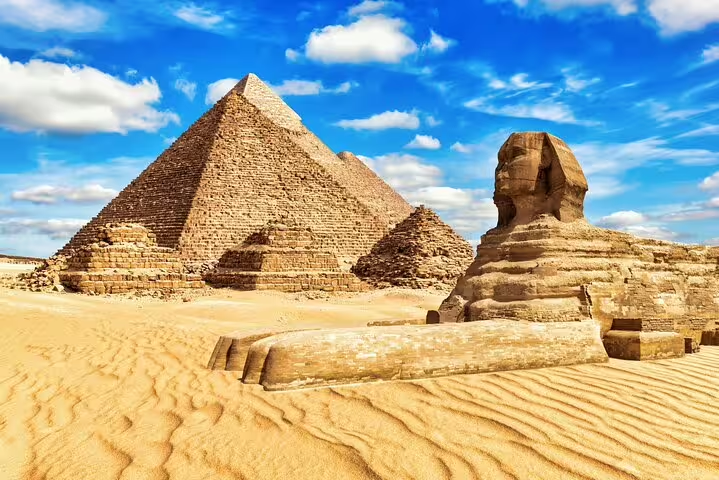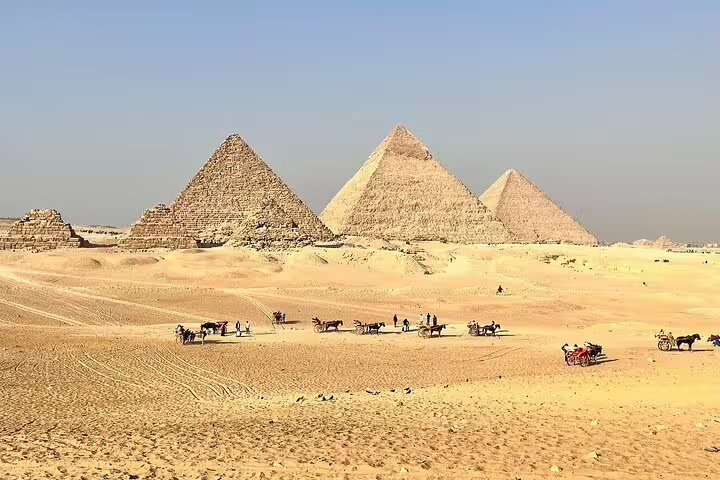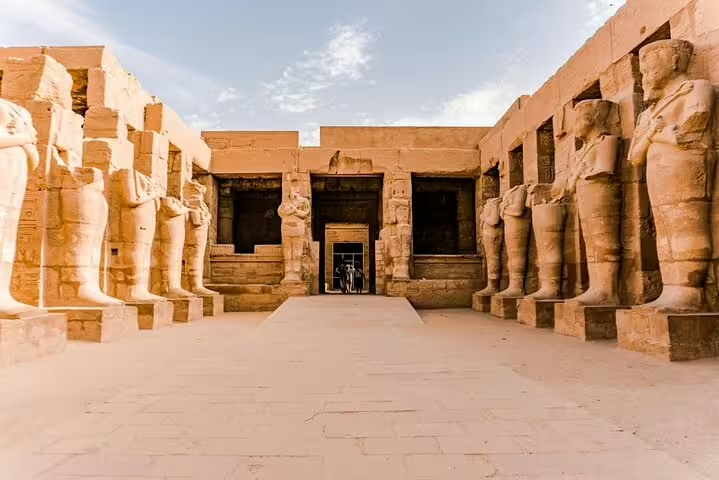
Archaeological site visits represent the pinnacle of cultural exploration, offering a profound connection to the foundations of human history. These experiences are far more than mere walks through old stone structures; they are immersive journeys into the daily lives, spiritual beliefs, and engineering marvels of ancient civilizations. From the towering pyramids of Giza to the mist-shrouded peaks of Machu Picchu tours, the atmosphere of these destinations is defined by a sense of awe and timelessness. Travelers are drawn to the "vibe" of silent stone corridors and sun-bleached plazas that once served as the beating hearts of empires.
A core reason why archaeological site visits are a must-visit category is their ability to provide tangible context to our shared human story. Whether you are navigating the intricate layout of Pompeii tours or standing before the rose-red facades of Petra visits, you are witnessing the physical endurance of culture. For many, archaeological tourism is an intellectual and spiritual reset, allowing one to step away from the fast-paced modern world and reflect on the rise and fall of societies that shaped our present.
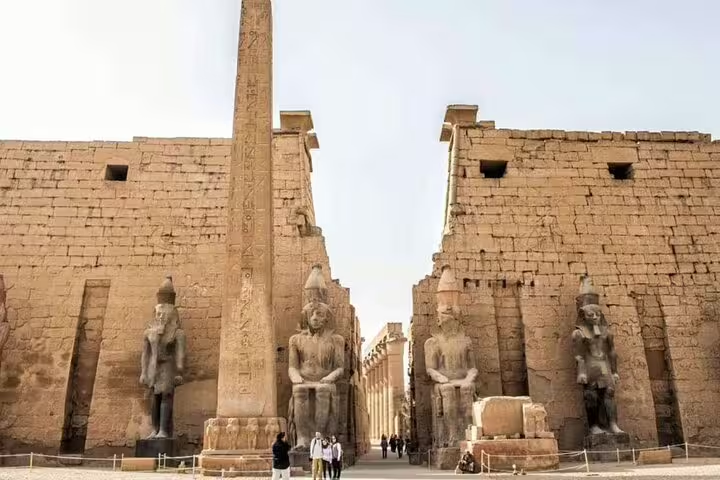
This strategy of cultural heritage travel leads to a deeper understanding of our world. By engaging with ancient ruins tours, visitors support the preservation of fragile environments while gaining access to expert narratives. Through guided archaeology tours, the silent stones begin to speak, revealing the secrets of astronomical alignments, social hierarchies, and artistic mastery. Each visit is an opportunity to witness the survival of heritage against the passage of millennia.
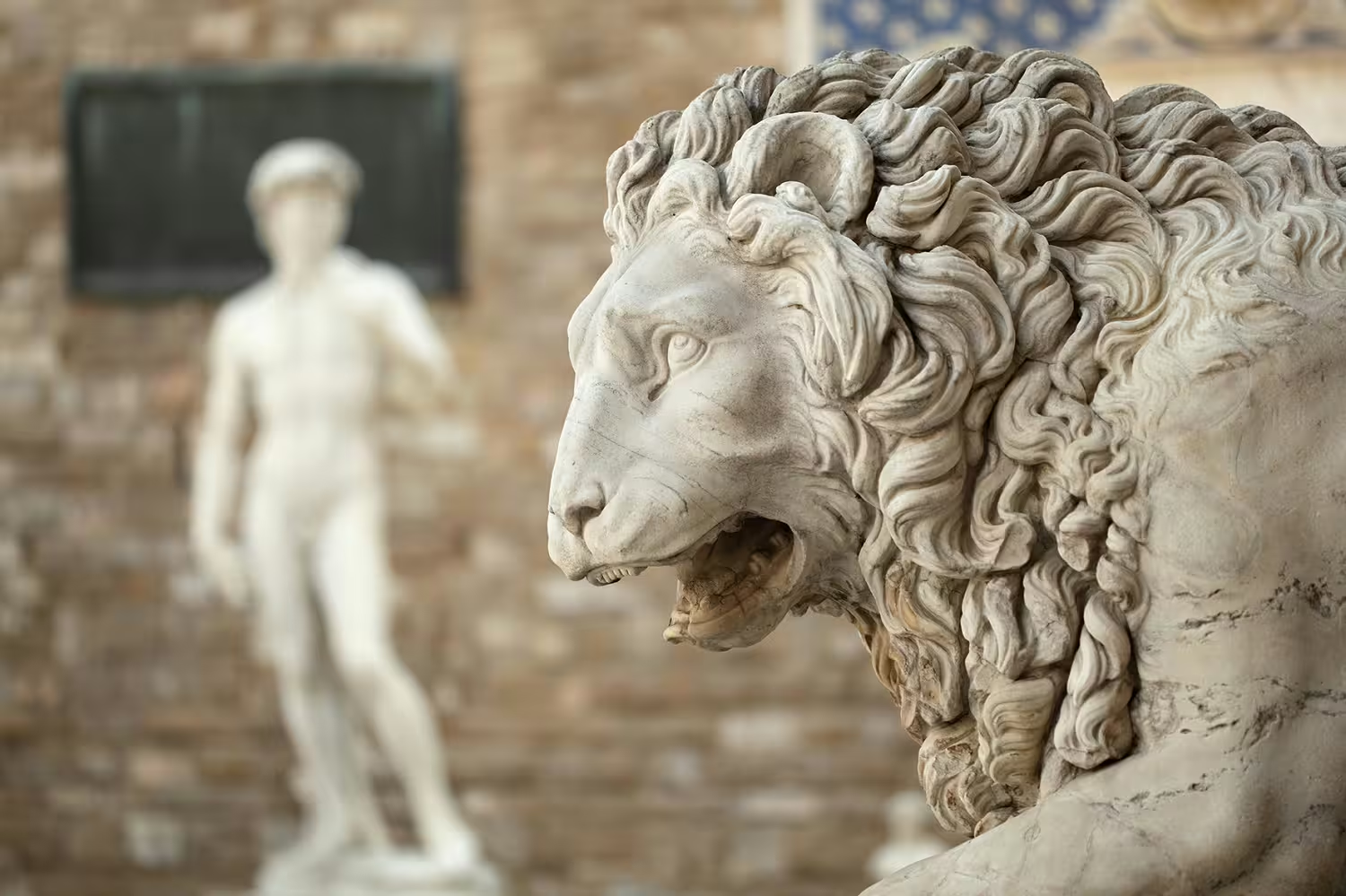
The heritage of archaeological tourism is rooted in the human instinct to preserve and understand the past. Historically, the formal study of these sites began with the "Grand Tours" of the 18th century, but it has evolved into a sophisticated global discipline focused on sustainable heritage travel. These sites are the physical archives of ancient civilizations, representing milestones in architecture, urban planning, and artistic expression. The architectural evolution seen in Roman ruins or Greek ruins demonstrates a mastery of proportion and durability that continues to influence modern construction.
These locations are often designated as UNESCO World Heritage sites because they contain "Outstanding Universal Value." For instance, Angkor Wat tours reveal the world's largest religious monument, a feat of Khmer engineering that integrated complex water management with spiritual symbolism. Similarly, Mayan ruins and Inca ruins show a sophisticated understanding of solar cycles and mountain terrace farming. These ancient monuments matter to their respective regions not only as tourist draws but as symbols of national identity and historical resilience. The meticulous preservation of historical ruins ensures that the genius of our ancestors remains visible to future generations.
Most major archaeological site visits are located in remote or rural areas that were once strategic centers. While sites like the Roman Forum are in city centers, others require travel to high altitudes or desert plains. Access is typically managed via designated heritage trails, and many are served by regional transport hubs or specialized shuttle buses.
Ticketing for top-tier sites varies, but generally ranges from 15 to 60 EUR/USD depending on the location and inclusion of archaeological museums. Reservation_Required is increasingly common for UNESCO World Heritage sites to manage visitor flow and ensure responsible tourism. Booking windows of 2 to 4 weeks are recommended for the most popular landmarks.
A typical ancient ruins tours experience lasts between 3 to 6 hours. Opening_Hours usually follow a sunrise-to-sunset pattern, though some sites offer night visits. The Best_Seasons are generally spring and autumn, avoiding the extreme heat of summer and the erosion risks of heavy winter rains.
Modern sustainable heritage travel initiatives are improving accessibility. While temple ruins often feature uneven terrain, many archaeological site visits now provide wooden boardwalks, ramps, and lifts in visitor centers. Facilities typically include archaeological museums, shaded rest areas, and accessible toilets.
🗿 UNESCO World Heritage Sites: Visit the most significant landmarks on earth, protected for their universal cultural value.
🏛️ Guided Archaeology Tours: Engage with expert historians who bring ancient civilizations to life through storytelling.
🏺 Archaeological Museums: View recovered artifacts and treasures in climate-controlled galleries adjacent to the excavation sites tours.
🗺️ Heritage Trails: Walk the original roads used by ancient citizens, from Roman basalt stones to Incan mountain paths.
🌅 Ancient Monuments at Sunrise: Experience the spiritual power of these sites in the quiet morning light, often the best time for photography.
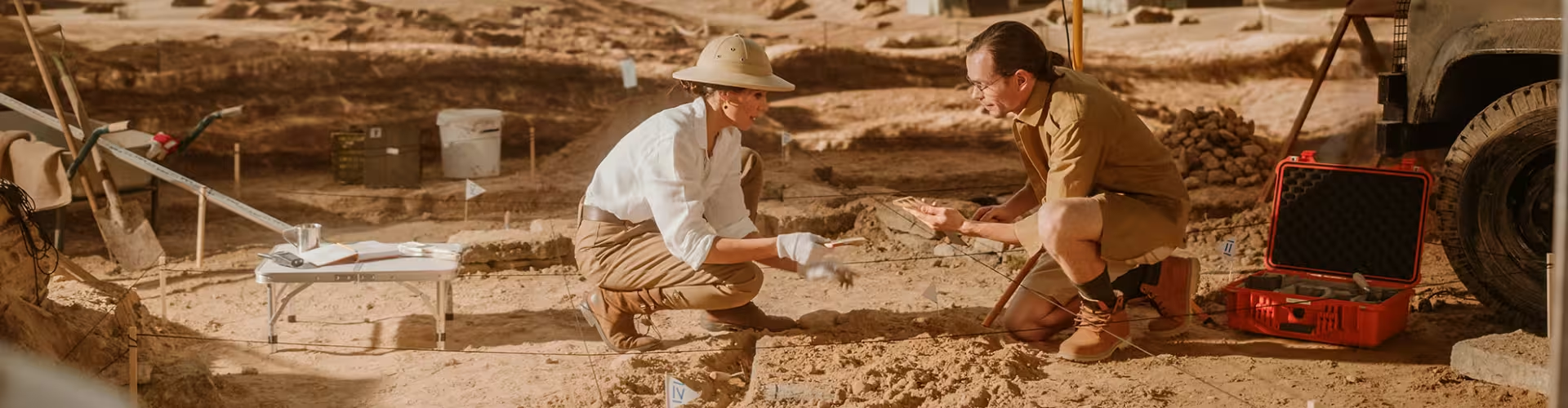
🔍 Active Excavation Sites: Witness the ongoing work of researchers as they uncover new layers of history in real-time.
A typical visit to an archaeological site visits location begins at the visitor center, where maps and historical context are provided. The flow usually moves from the periphery into the central plazas or sacred precincts. As you walk through historical ruins, it is important to look up at the lintels and friezes, where the most intricate carvings often remain. To avoid the biggest crowds, arrive at the gates the moment they open or choose late-afternoon slots when the tour buses depart.
The best photo spots are often found at the highest accessible point of the site, providing a panoramic view of the layout. In places like Machu Picchu tours, the "Guardhouse" offers the iconic postcard view. During your ancient ruins tours, move slowly and allow the scale of the temple ruins to settle in. Following the heritage trails ensures you see the site in the logical order intended by its original builders, moving from public spheres into private or religious spaces.
A strict dress code is often required at sites that are still considered sacred; ensure shoulders and knees are covered. Regarding age_notes, these sites are generally family friendly, though strollers can be difficult on uneven stones; child carriers are a better option. An "hidden" detail most miss is the acoustic design of ancient amphitheaters or the subtle drainage systems that have kept these ancient monuments standing for thousands of years.
Local Heritage Museums: These houses smaller, fragile artifacts that cannot be left at the open-air archaeological site visits.
Traditional Craft Villages: Many communities near Inca ruins or Mayan ruins still practice ancient weaving and pottery techniques.
Botanical Gardens: Often located near cultural heritage travel sites to showcase the flora that ancient civilizations used for food and medicine.
This guide to archaeological site visits was crafted by Toursxplorer.com to provide travelers with expert-led insights for an unforgettable visit to the world's most significant historical landmarks.
How do I find responsible archaeology travel experiences? Look for operators that emphasize responsible tourism and sustainable heritage travel by employing local guides and following "no-trace" principles at excavation sites tours.
Are skip-the-line tickets worth it for ancient ruins tours? Absolutely. For high-traffic UNESCO World Heritage sites, skip-the-line options save hours of waiting in the sun, allowing more time for the actual exploration.
Can I visit archaeological sites with limited mobility? Many archaeological site visits are becoming more accessible with ramps and electric carts, though it is best to check the specific facilities for temple ruins before booking.
What is the best way to learn about ancient civilizations during a visit? Booking guided archaeology tours with a certified historian is the most effective way to understand the complex social and political context of the ruins.
Do I need a permit for photography whale watching at these sites? While personal photography is usually free, professional equipment or tripods often require a special permit from the local heritage authority to protect the historical ruins.