





Explore Trier: A Beautiful City Walk with Audio and GPS Guide
Two thousand years of Roman legacy, medieval heritage, and living culture — all at your own pace.
This Trier city walking tour guides you through one of Germany's oldest and most historically layered cities, combining real-time GPS navigation with an audio guide that brings every landmark to life. From the towering Porta Nigra to the birthplace of Karl Marx, the route covers the full sweep of Trier's remarkable past in around two hours.
Trier sits at a crossroads of Roman, medieval, and early modern history, and this walk reflects that depth at every turn. The audio commentary draws on specific historical detail — dates, people, and events — rather than generic descriptions, giving you genuine context for what you are seeing.
The route is designed for a wide range of visitors, from families with children to solo travelers and history enthusiasts. The pace is relaxed, the path is straightforward, and the GPS keeps you on track without requiring any prior knowledge of the city.
Tour Highlights
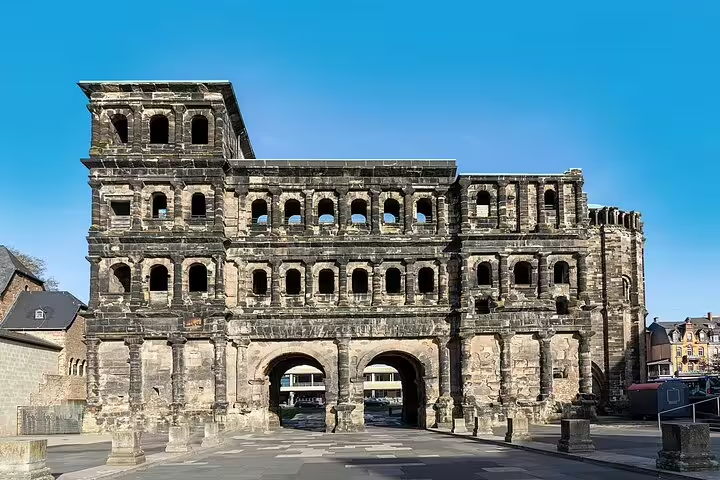
Walk through the Porta Nigra, a Roman city gate that survived because a medieval hermit made it his home and was later declared a saint.
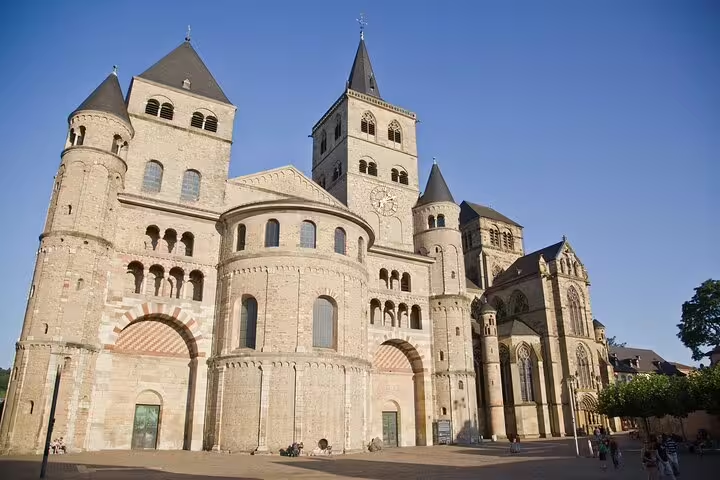
Visit the Dom, the oldest episcopal church in Germany, whose core dates to a fourth-century Roman basilica and was once the largest church north of the Alps.
Explore the Hauptmarkt, a central square with half-timbered houses and a market cross that has stood since 958 AD, marking a moment of Norman disruption in the city's history.
Discover the Kaiserthermen, the largest Roman bathhouse complex in Trier, built in the fourth century and later dismantled during the Middle Ages.
Stand at the birthplace of Karl Marx, now a permanent museum dedicated to the philosopher and economist whose writings shaped modern political history.
Examine the Frankenturm, a Romanesque residential tower from around 1100, built using techniques deliberately borrowed from the Roman construction still visible across the city.
Explore the Museum Simeonstift, which holds the original medieval market figures and the authentic market cross of 958, housed in a monastery built around a hermit's cell.
Tour Itinerary
Begin at Trier's iconic Roman city gate, part of a defensive wall that once stretched more than six kilometers around the city. The gate survived because the hermit Simeon chose to live here in the eleventh century; after his canonization, the site became a place of pilgrimage and the gate was converted into a double church.
The Simeonstift monastery, built around Simeon's hermitage, now houses a museum with exhibitions spanning the early modern period to the twentieth century, including the original medieval market figures. Steps away, the Hauptmarkt displays a copy of the 958 market cross — the original is held in the Simeonstift — and is lined with half-timbered buildings that define the square's character.
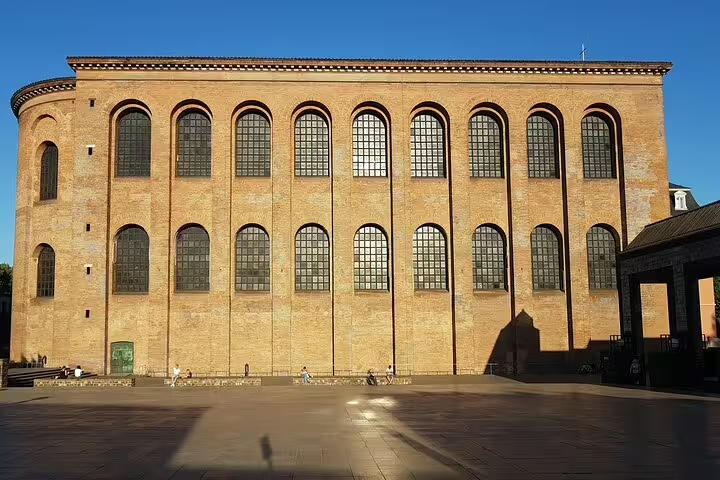
The Dom's core is a Roman basilica from the fourth century, possibly built on the site of the palace of Helena, mother of Emperor Constantine, and the original Roman brickwork is still visible on the exterior. Beside it stands the Liebfrauenkirche, one of the oldest Gothic churches in Germany, built in the thirteenth century with a richly decorated west facade.
The Kaiserthermen are the largest of Trier's three Roman bathhouse complexes, built in the fourth century AD. These facilities once offered bathing, sports, and massage services, and the remains give a clear impression of the scale of Roman civic life in the city.
The house where Karl Marx was born in 1818 is preserved as a permanent museum exploring his life and the impact of his works, including Das Kapital and The Communist Manifesto. Marx's influence on socialist and communist thought makes this one of the most visited sites in Trier.
The Frankenturm, built around 1100, is a well-preserved Romanesque residential tower whose construction clearly imitates the Roman masonry techniques still abundant in Trier at that time. Named after Franco von Senheim rather than the Frankish tribe, it later served as a residence for servants of the archbishop.
What Is Included
Included
- Audio guide with detailed commentary for each stop
- Real-time GPS navigation throughout the route
- Access to all outdoor and public landmark locations
- Self-guided format with flexible start times
Not Included
- Museum entrance fees (Simeonstift, Karl Marx Haus, Kaiserthermen)
- Food, drinks, or personal expenses
- Transport to or from the starting point
- Printed materials or physical guide
Important Information
Ready to Explore Trier?
Start your self-guided audio walk through one of Germany's most historically significant cities and discover over two thousand years of history at your own pace.
Book Now