





Private One Day Tour in Luxor: Karnak, Valley of the Kings and the West Bank
A curated private journey through the ancient capital of the New Kingdom, guided by a dedicated Egyptologist.
This private Luxor day tour offers an immersive, fully guided experience across the most significant monuments of ancient Thebes, from the vast temple complex of Karnak to the royal tombs carved deep into the limestone cliffs of the Valley of the Kings. Travel in a private, air-conditioned vehicle at your own pace, accompanied by a specialist Egyptologist throughout the day.
Luxor preserves a concentration of pharaonic heritage unmatched anywhere on Earth. The sites visited on this itinerary span more than a thousand years of continuous civilization, from the height of the New Kingdom to the final centuries of ancient Egyptian rule.
The west bank of the Nile reveals a carefully planned funerary landscape, where the placement of tombs, temples, and colossal statues followed precise cosmological logic. The east bank, anchored by Karnak, functioned as the political and religious heart of an empire that extended from sub-Saharan Africa to the Levant.
A midday lunch break at a local restaurant allows time to rest before continuing to the east bank monuments, ensuring the full experience remains manageable and rewarding rather than rushed.
Tour Highlights
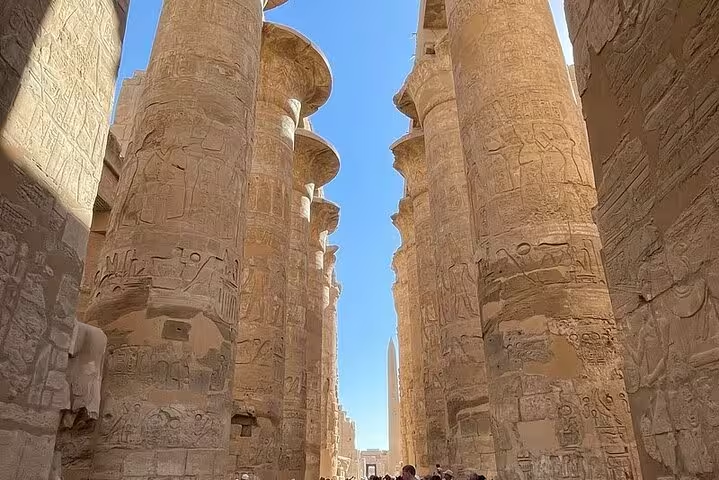
Explore Karnak Temple Complex, the largest religious structure ever built, developed over 1,500 years by successive pharaohs of the New Kingdom.
Descend into three royal tombs in the Valley of the Kings, including those of Ramesses III, Ramesses VI, and Merenptah, with optional access to Tutankhamun's tomb.
Visit the mortuary temple of Hatshepsut at Deir al-Bahari, one of the most architecturally refined structures from ancient Egypt.
Stand before the Colossi of Memnon, the twin seated statues that once guarded the entrance to Amenhotep III's funerary temple.
Walk through Luxor Temple, oriented toward Karnak and built to host the great Opet Festival, one of ancient Egypt's most important religious celebrations.
Travel exclusively in a private, air-conditioned vehicle with a dedicated Egyptologist guide throughout the entire day.
Enjoy a midday lunch break at a local restaurant between the west and east bank visits.
Itinerary
Begin on the west bank of the Nile with a visit to the Valley of the Kings, the burial ground chosen by the pharaohs of the New Kingdom for its natural pyramid-shaped peak, sacred to the funerary goddess Hathor. Enter three royal tombs, including those of Ramesses III, Ramesses VI, and Merenptah, whose exquisitely painted sunk-relief walls remain remarkably well preserved. An optional visit to the tomb of Tutankhamun, the only royal tomb from the valley discovered relatively intact in 1922, is available for an additional entrance fee.
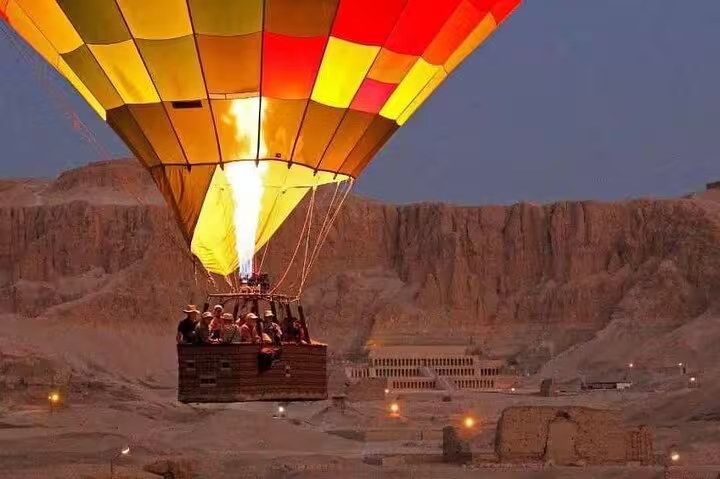
Proceed to the mortuary temple of Hatshepsut, known as Djeser-djeseru, designed by the chief steward Senenmut and positioned directly across the Nile from Karnak Temple. Hatshepsut ruled Egypt for approximately 20 years during the 18th Dynasty, overseeing a period of economic prosperity and ambitious building activity. The temple's colonnaded terraces rise dramatically against the cliffs of the Theban hills.
Stop at the Colossi of Memnon, two massive seated statues of Amenhotep III that once stood at the entrance of his now-destroyed funerary temple, completed around 1350 BC. Partially damaged by an earthquake in 27 BC, the statues were later restored during the Roman period. They remain among the most recognizable monuments on the west bank.
Take a break at a local restaurant before crossing to the east bank to continue the tour. This rest period is built into the itinerary to ensure a comfortable pace throughout the day.
Visit the Karnak Temple Complex, the largest temple complex ever constructed, developed over 1,500 years by generation after generation of pharaohs. During the New Kingdom, it served simultaneously as a religious center, treasury, administrative hub, and royal palace. Its collection of temples, sanctuaries, pylons, and processional avenues constitutes an architectural record of ancient Egyptian civilization with no equivalent.
Conclude the day at Luxor Temple, known in antiquity as Ipet-resyt, oriented toward Karnak rather than the conventional east-west axis because it served as the destination for the annual Opet Festival procession. During this celebration, the statues of Amun, Mut, and Khonsu were transported from Karnak along a sphinx-lined processional way to visit the resident deity Amenemopet. The temple dates to the 18th Dynasty, with additions made by subsequent rulers including Ramesses II and later, Alexander the Great.
What Is Included
Included
- Private air-conditioned vehicle for all transfers
- Private licensed Egyptologist guide for the full day
- Entrance fees to Valley of the Kings (3 tombs)
- Entrance to Temple of Hatshepsut
- Entrance to Karnak Temple Complex
- Entrance to Luxor Temple
- Lunch at a local restaurant
- Hotel pickup and drop-off in Luxor
Not Included
- Optional entrance to the tomb of Tutankhamun (extra charge)
- Personal expenses and gratuities
- Drinks and beverages not specified
- Travel insurance
Important Information
Reserve Your Private Luxor Day Tour
Secure your place on this private, expert-guided journey through ancient Thebes. Availability is limited to ensure a personalized experience for every group.
Book Now