
Walking Tour in Rome Around the Spanish Steps
Follow Rome's legendary streets at your own pace, guided by audio and GPS through centuries of history.
This Rome walking tour leads you through some of the most storied streets and squares in the ancient city, connecting iconic landmarks with lesser-known gems in a single two-hour route. Designed for independent travelers, it uses GPS and audio guidance so you can explore at your own rhythm. The experience suits all levels of fitness and requires no prior knowledge of Roman history.
The route passes through a concentrated corridor of Roman history, from the theatrical grandeur of Piazza Navona to the mathematical precision of the Pantheon. Along the way, you will encounter Baroque fountains, Renaissance columns, and sacred churches that have shaped the city's identity over two millennia. Each stop is anchored in specific historical context delivered directly through the audio guide.
Self-guided audio tours offer a distinct advantage: you control the pace, pause when something captures your attention, and revisit stops without pressure. This format is particularly well suited to Rome, where the density of monuments rewards slow, curious exploration. The tour is rated easy and is accessible to travelers of most mobility levels.
Tour Highlights
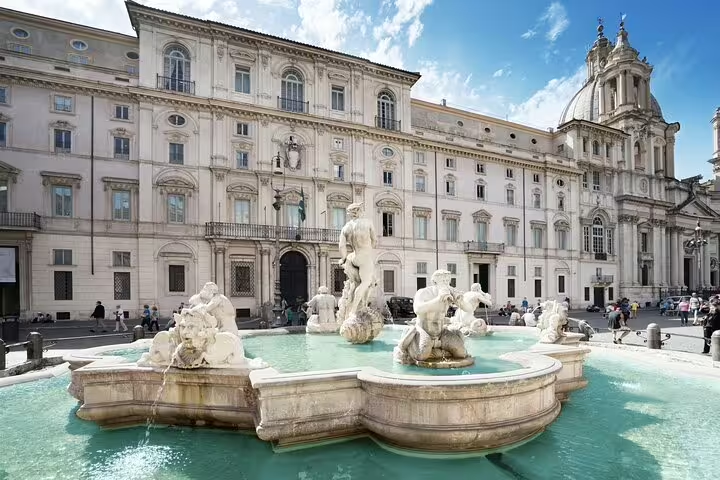
Explore Piazza Navona, built on the foundations of a first-century Roman stadium that once seated 30,000 spectators.
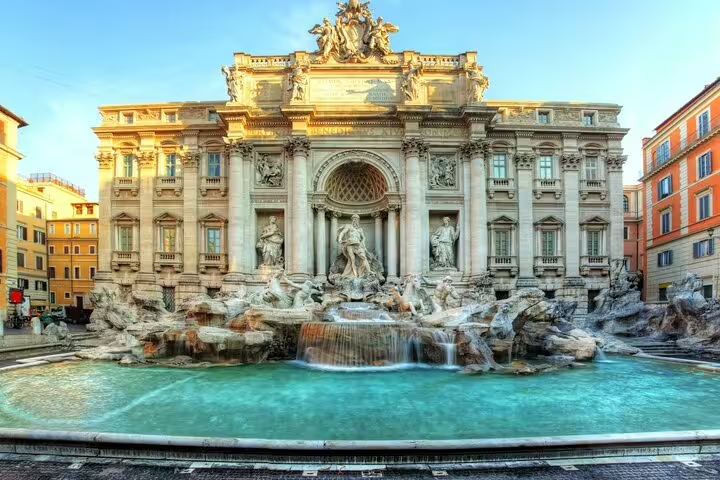
Stand before the Trevi Fountain, where 80 million litres of water flow daily past the sea god Oceanus and his winged horses.
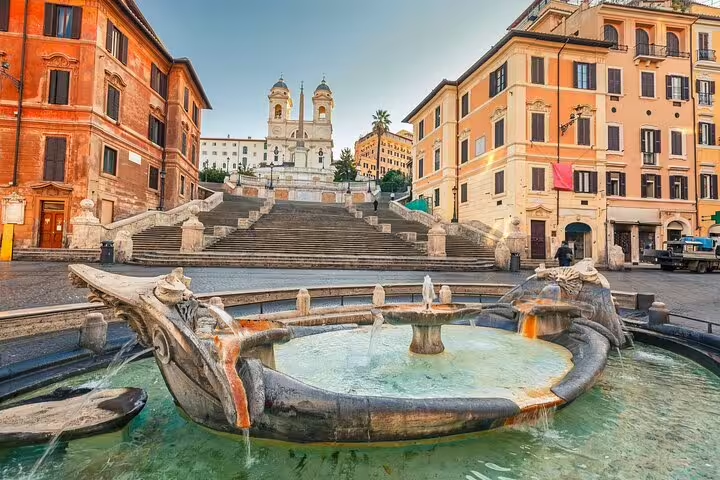
Climb the 135 travertine steps of the Spanish Steps, one of Rome's most celebrated late Baroque cityscapes.
Discover the optical illusion inside Sant'Ignazio Church, where a painted ceiling mimics a full dome with remarkable precision.
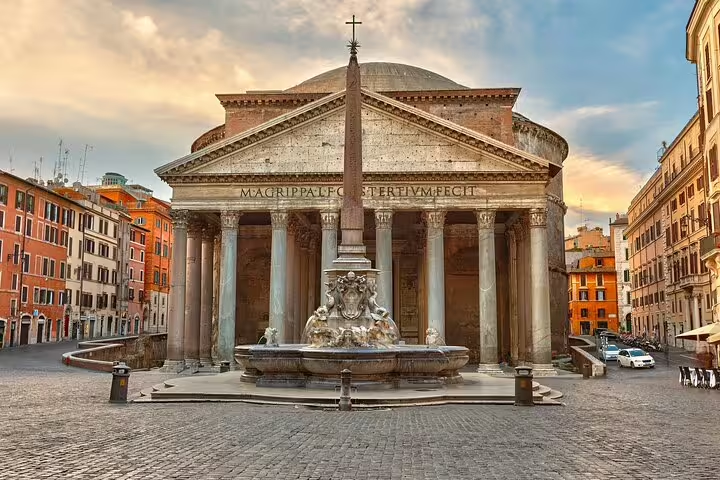
Enter the Pantheon, a structure from 27 BC that remains the best-preserved monument of Roman antiquity in the world.
Examine the Column of Marcus Aurelius, whose spiraling bas-relief narrates the emperor's military campaigns like an ancient comic strip.
Visit the Column of the Immaculate Conception, where the Pope lays a floral tribute each year on December 8th.
Tour Itinerary
The tour begins at one of Rome's most celebrated public squares, built directly over the stadium commissioned by Emperor Domitian around 100 AD. The oval shape of the piazza reflects the original track layout, and the foundations of surrounding buildings still rest on ancient stadium walls. The church of Sant'Agnese in Agone dominates one side, while a passageway at the square's head reveals the original stadium entrance.
The route continues to the Spanish Steps, 135 travertine steps connecting Piazza di Spagna to the Trinità dei Monti church on the Pincio hill. Despite their name, the steps have no direct connection to Spain beyond their proximity to the Spanish embassy at number 57 on the square. The steps are considered a prime example of late Baroque urban design in Rome.
The Trevi Fountain marks the confluence of three ancient roads and channels 80 million litres of water daily through its elaborate sculptural programme. The central figure of Oceanus stands on a shell-shaped chariot drawn by winged horses, flanked by representations of the four seasons above. The coin-throwing tradition, performed with eyes closed and right hand over the left shoulder, is said to guarantee a return to Rome.
The Column of Marcus Aurelius, erected around 200 AD, winds a bas-relief narrative of the emperor's wars against the Marcomanni and Sarmatians across twenty spiral revolutions. A short walk leads to Sant'Ignazio Church, a Baroque building named after Ignatius of Loyola, founder of the Jesuit order. Standing on the coloured stone at the centre of the nave reveals a painted ceiling that creates a convincing illusion of a dome that was never actually built.
The tour concludes at the Pantheon, originally constructed in 27 BC by Marcus Agrippa and restored by Emperor Hadrian around 120 AD. The building is composed of a classical temple porch and a vast rotunda, and remains the most intact structure from Roman antiquity. A Roman saying holds that anyone who leaves Rome without seeing the Pantheon will return as a donkey — a testament to its enduring cultural weight.
What Is Included
Included
- GPS-guided audio tour access
- Detailed audio commentary at each landmark
- Digital route map for self-navigation
- Coverage of all major stops on the itinerary
Not Included
- Entry fees to any monuments or churches
- Food and beverages
- Hotel pickup or drop-off
- Gratuities
Important Information
Book Your Rome Walking Tour
Secure your spot on this GPS and audio guided walk through Rome's most iconic landmarks and discover the city's layered history at your own pace.
Book Now