Castelli e Miti Greci: da Crotone a Isola Capo Rizzuto
Tracing three thousand years of history — from Pythagorean mathematics to Aragonese fortresses — along the Ionian coast of Calabria.
This full-day guided itinerary takes you through the layered history of Crotone and Isola Capo Rizzuto, two destinations on the Ionian coast where ancient Greek civilization, Norman rule, and Aragonese architecture have left remarkable traces on the landscape and the culture.
Crotone was one of the most influential cities of Magna Graecia, producing philosophers, athletes, and thinkers whose legacy endures to this day. A local expert guide brings that heritage to life across the city's monuments, museum, and historic streets, offering context that no guidebook can fully replicate.
The afternoon shifts to the protected coastal environment of Isola Capo Rizzuto, where the sea meets ruins and fortifications that span centuries. The day concludes with a genuine understanding of why this corner of Calabria has drawn settlers, conquerors, and scholars for millennia.
Tour Highlights
Visit the National Archaeological Museum of Crotone, home to artifacts from one of Magna Graecia's most powerful cities.
Explore the Casa di Pitagora and the Giardino di Pitagora, sites linked to the legendary mathematician and philosopher who lived in Crotone.
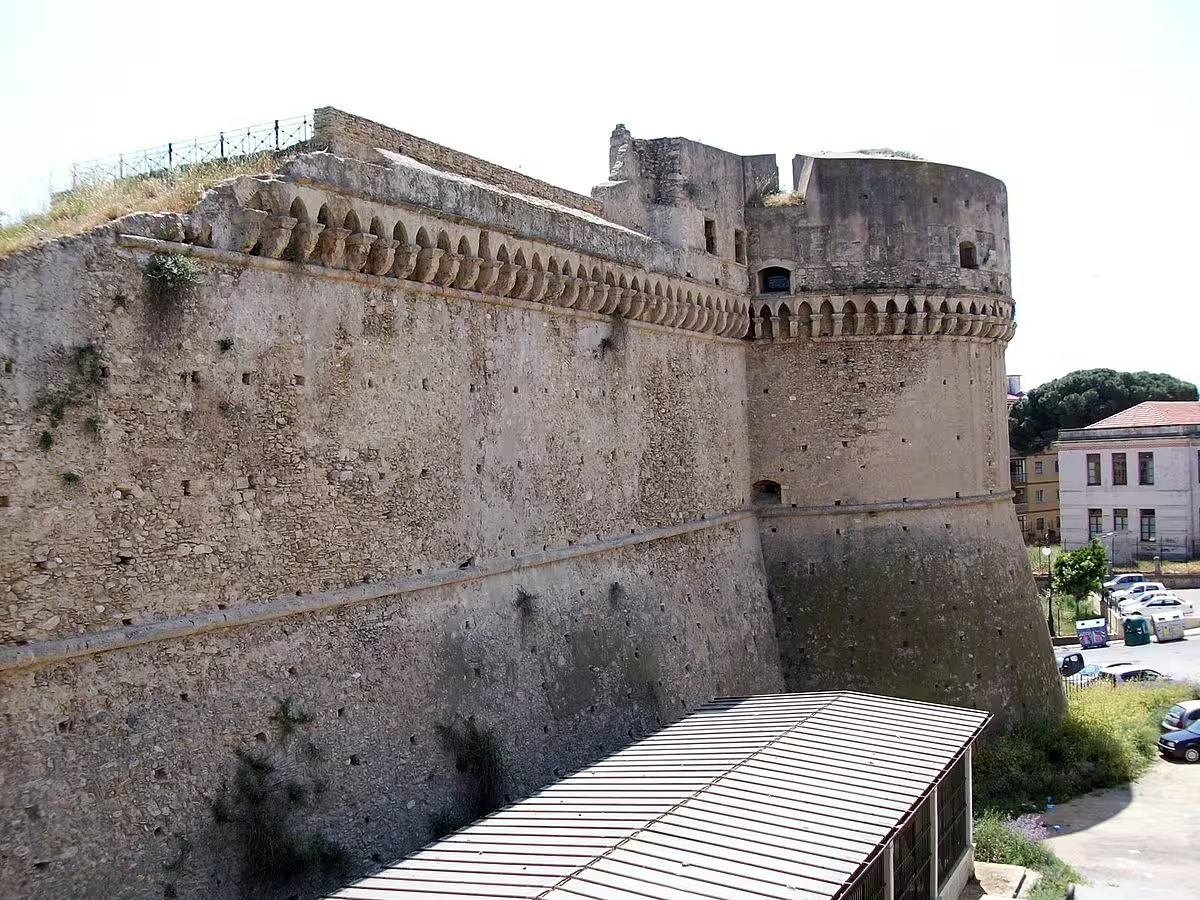
Tour the Castello di Carlo V, a powerful coastal fortification built to defend the city against Ottoman raids in the sixteenth century.
Discover the Area Marina Protetta di Capo Rizzuto, one of the largest marine protected areas in Italy, rich in biodiversity and dramatic coastline.
See the Aragonese Fortress of Le Castella, a striking island castle rising directly from the sea at Isola Capo Rizzuto.
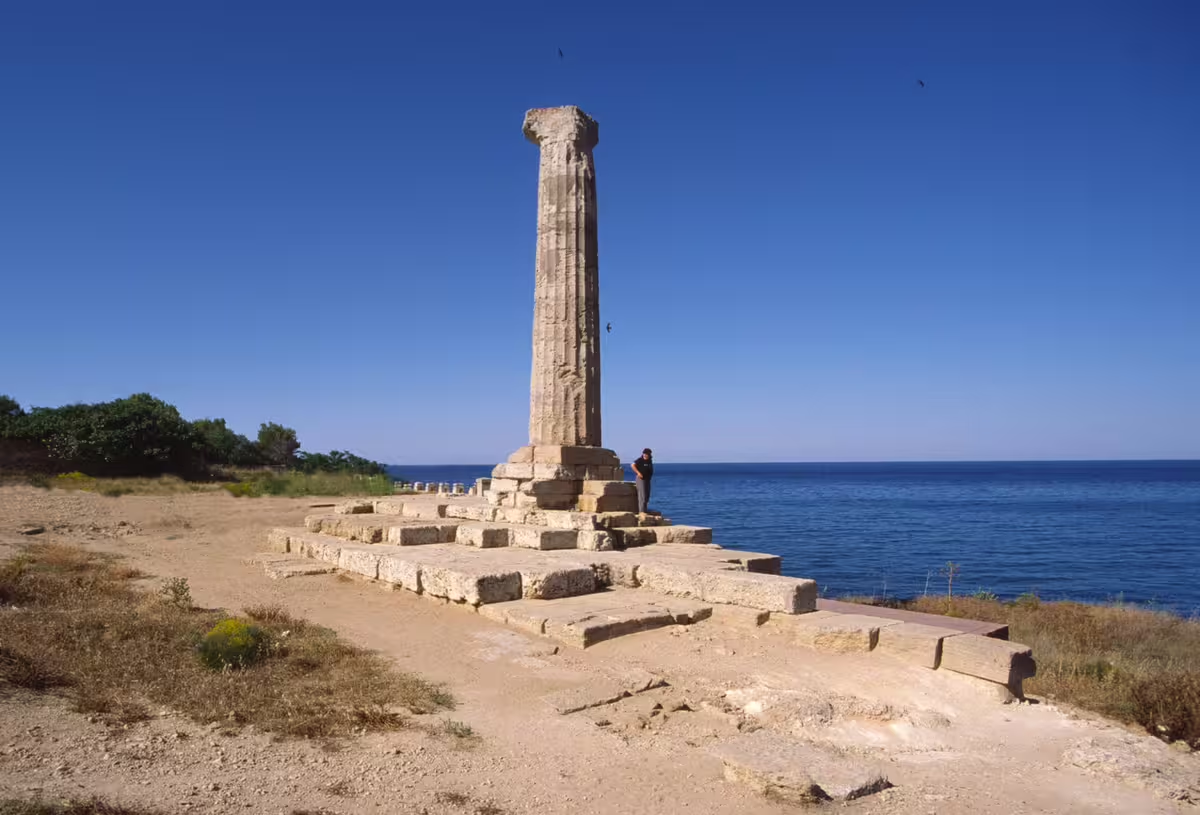
Walk among the ruins of the Santuario di Hera Lacinia at Capo Colonna, once one of the most sacred Greek sanctuaries in the western Mediterranean.
Enjoy a traditional lunch featuring local Calabrian products included in the tour, reflecting the genuine flavors of the Ionian coast.
Itinerary
The day begins with a guided walk through Crotone's historic center, taking in the Capperina district, Monte Sublime, and Palazzo Zurlo. The guide introduces the city's role as a hub of Magna Graecia, connecting the urban landscape to its ancient past.
A full visit to the National Archaeological Museum reveals the material culture of ancient Kroton, including sculpture, ceramics, and votive offerings recovered from surrounding sites. Admission and guided visit are included.
The group visits the imposing Castello di Carlo V overlooking the harbor, followed by the Cattedrale and the Church of the Immacolata, which together illustrate the city's evolution from Greek colony to medieval and Renaissance settlement.
A midday break features a meal built around authentic Calabrian ingredients, served as part of the included tour package. This offers both rest and an opportunity to experience the regional food culture firsthand.
The afternoon moves to Capo Colonna, where the solitary standing column of the Sanctuary of Hera Lacinia marks one of the most evocative Greek sacred sites in Italy. The promontory also falls within the boundaries of the Marine Protected Area.
The final stop is the Aragonese Fortress of Le Castella, a well-preserved island stronghold connected to the mainland by a narrow causeway. The guide provides historical context spanning its Greek origins through its later military role under Aragonese rule.
What Is Included
Included
- Local expert guide for the full 8-hour tour
- Entrance fees to the National Archaeological Museum of Crotone
- Traditional lunch with local Calabrian products
- Guided visit to all listed monuments and sites
- Visit to the Marine Protected Area of Capo Rizzuto
Not Included
- Personal travel insurance
- Transport to and from the starting point
- Additional food, drinks, or personal expenses
- Entrance fees not explicitly listed as included
Important Information
Reserve Your Place on This Tour
Secure your spot on this guided journey through ancient Calabria and discover the stories that shaped the western Mediterranean world, from Greek philosophers to Aragonese kings.
Book Now