




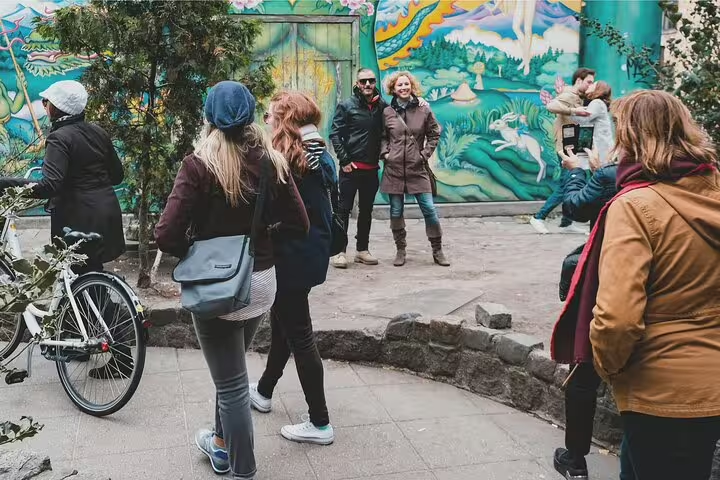
Copenhagen Alternative Private Tour: Vesterbro & Christianshavn
From a former red-light district to an 800-resident micronation, discover Copenhagen's offbeat soul in a single half-day.
This Copenhagen alternative private tour takes you beyond the postcard highlights and into the neighborhoods that define the city's real character. With a local private guide by your side, you will explore Vesterbro and Christianshavn over nearly four hours, uncovering layers of social history, architectural curiosity, and genuine community life.
Vesterbro was once home to factory workers crowded into single-room apartments, later became Scandinavia's largest red-light district, and has since transformed into one of the most sought-after areas in the Danish capital. The journey through its streets reveals a neighborhood that has reinvented itself without erasing its past.
Christianshavn offers an entirely different atmosphere: cobblestone lanes lined with 17th-century warehouses, a baroque church with a spiral staircase you can climb, and the world-famous self-governed community of Christiania, established in 1971 on former military land. Together, these two districts paint a picture of Copenhagen that most visitors never get to see.
Tour Highlights
Walk Istedgade, once Scandinavia's largest red-light district and a key refuge for the Danish resistance during World War II.
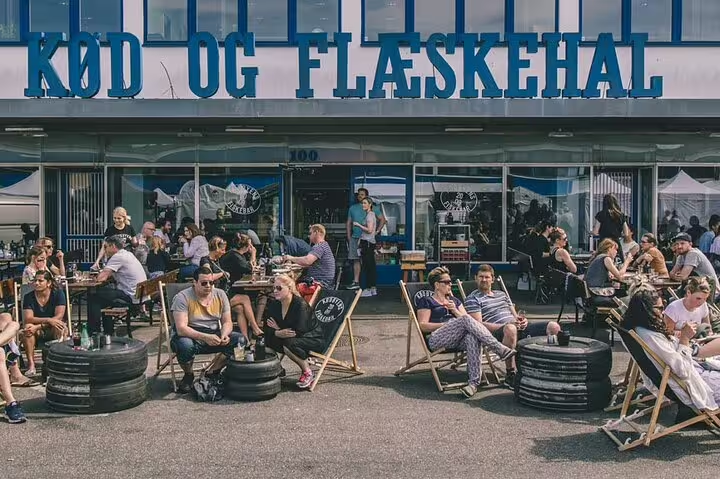
Explore the historic Meatpacking District, a revitalized industrial zone dating to 1879, now buzzing with galleries, restaurants, and nightlife.
Cross the 115-metre Knippelsbro drawbridge, built in 1937, connecting central Copenhagen with the island of Christianshavn.
Visit the Baroque Church of Our Saviour, famed for its twisted external spiral staircase and its active parish of around 8,000 residents.
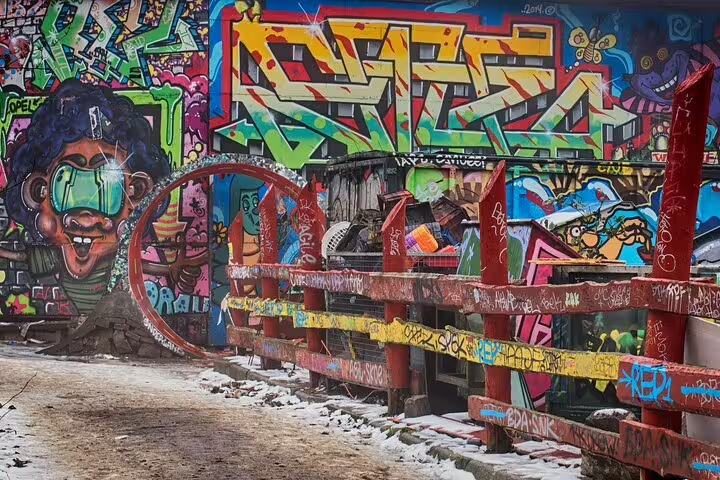
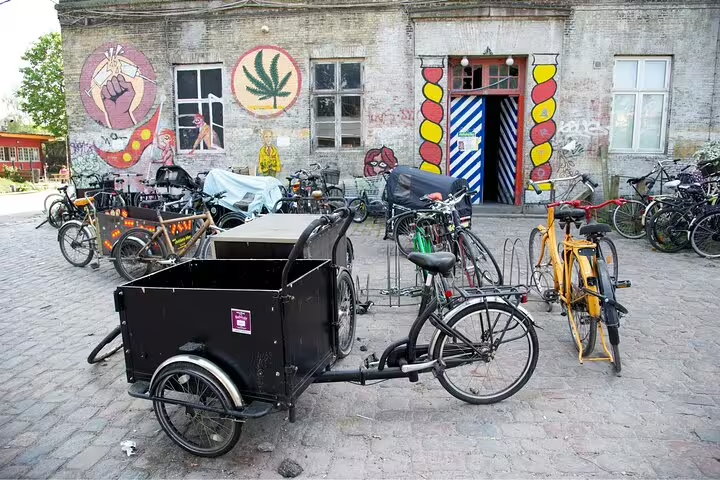
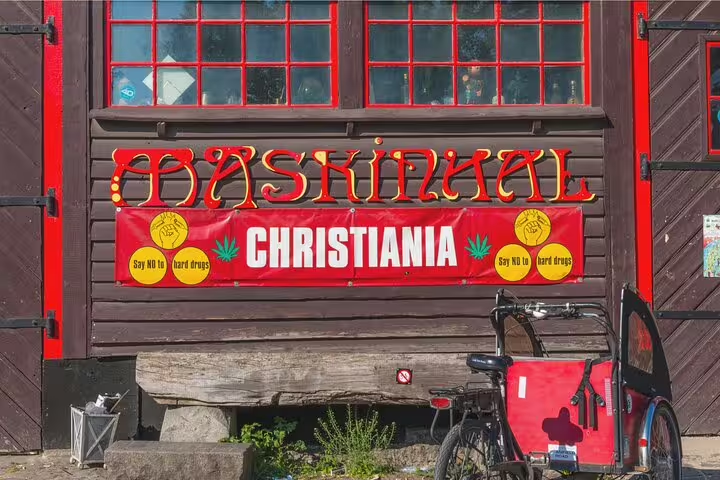
Step inside Christiania, the partially self-governed neighborhood of roughly 1,000 residents spread across 34 hectares of former army land, Copenhagen's second most visited attraction.
See the Shooting Range Wall, a castle-like bullet trap built to protect Istedgade traffic from 19th-century military exercises nearby.
Discover Wilders Plads, a quiet canal-side square with a timber-framed sailmaker's house from 1736 and one of Copenhagen's most exclusive marinas.
Tour Itinerary
Your guide leads you through the historic layout of Vesterbro, beginning with streets that date to the mid-1800s and buildings listed in the Danish register of protected sites. You will hear how Istedgade, named after the 1850 Battle of Isted, served as a corridor of resistance during World War II, with Stjerne Radio broadcasting BBC transmissions from inside the neighborhood as early as 1942.
A castle-like wall between Skydebanehaven and Istedgade stands as one of the neighborhood's most unusual architectural remnants, constructed to stop bullets from the Royal Danish Army's shooting range from reaching the street. Nearby Saxogade tells the story of the early 1950s housing protests, when workers living ten to a single room demanded better conditions for their families.
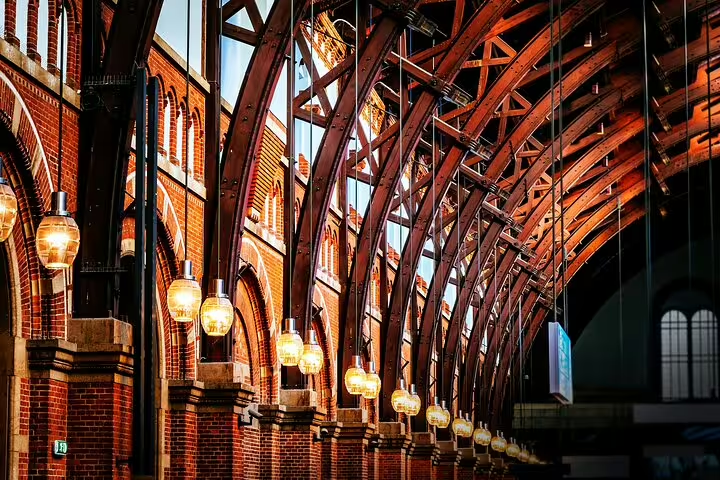
The tour continues into Copenhagen's former livestock and hay market, an area that has shifted from industrial slaughterhouse to one of the city's most dynamic creative quarters. The main exhibition hall, built in 1891 with a capacity for 1,600 heads of cattle, now anchors a district filled with galleries, independent restaurants, and late-night venues.
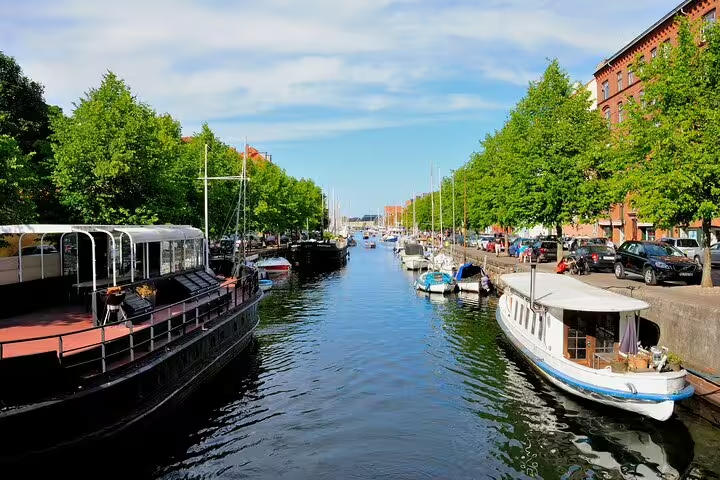
Crossing the 1937 drawbridge brings you onto the island of Christianshavn, created by Christian IV in 1617 as a fortified district protecting the capital from Swedish attack. The cobblestone streets, rococo church of Sankt Annae, and warehouses dating to the 1700s and 1800s make this one of the most visually distinctive corners of Copenhagen.
The baroque Church of Our Saviour, completed in its current form in the 18th century, is a living parish church recognized internationally for its external spiral staircase that wraps around a twisted spire. From here the route winds toward Wilders Plads, a former busy market square now transformed into a peaceful waterfront spot, anchored by a two-story timber-framed house built in 1736 as a sailmaker's workshop.
The tour culminates in Christiania, the partially self-governed community established in 1971 when a group of activists occupied abandoned military grounds covering 34 hectares. With around 1,000 permanent residents and half a million visitors per year, it is the second most visited sight in Copenhagen after Tivoli, and a living experiment in alternative urban community life.
What's Included & Excluded
Included
- Private local guide for the full duration
- 3 hours and 45 minutes of guided exploration
- Insight into Vesterbro's social and wartime history
- Visit to the Meatpacking District
- Walking route through Christianshavn and Christiania
- Lunch in a classic Danish restaurant (Full Option only)
Not Included
- Hotel pick-up or drop-off
- Entrance fees to any paid attractions
- Meals and drinks (unless Full Option selected)
- Gratuities for the guide
Important Information
Reserve Your Private Tour
Secure your spot on this private guided walk through two of Copenhagen's most compelling and underexplored neighborhoods, with a local expert who knows every corner of the city.
Book Now