Your Own Amsterdam: The Art Underground
Fourteen million passengers a year walk past these stories — now it is your turn to stop and listen.
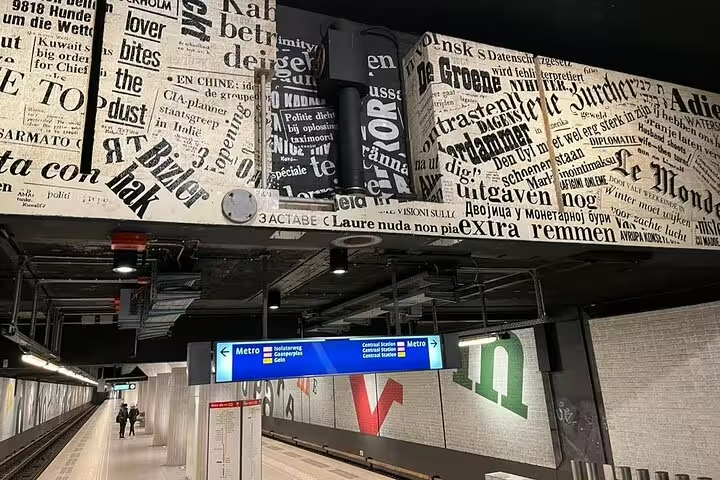
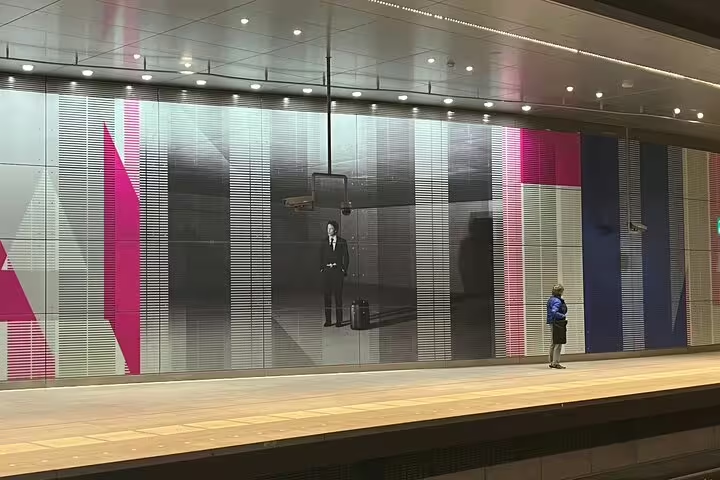
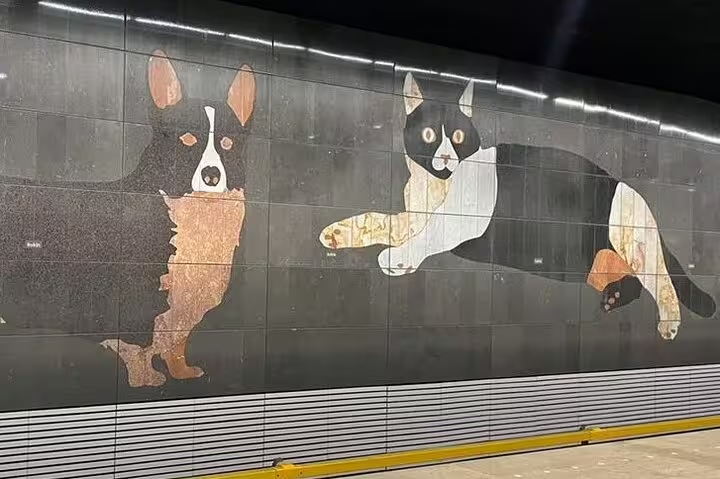
This Amsterdam underground art tour takes curious travellers through two of the city's most visually and historically compelling metro routes, where commissioned artworks line the walls of stations that most commuters never truly see.
Each station along the route doubles as a gallery and a document of Amsterdam's layered identity — from its centuries-old archaeological record to the social battles fought over the very tunnels you walk through today.
The tour connects themes of colonial history, urban ecology, architectural heritage, and popular culture, weaving them into a two-hour journey that feels more like a detective story than a standard city walk.
Amsterdam's metro was not built without controversy. The construction of the first lines in the 1970s and 1980s triggered fierce resistance from local communities, and the art installed in these stations reflects the tensions, negotiations, and eventual reconciliations that followed. That history is still alive in the tiles, mosaics, and embedded objects beneath your feet.
Tour Highlights
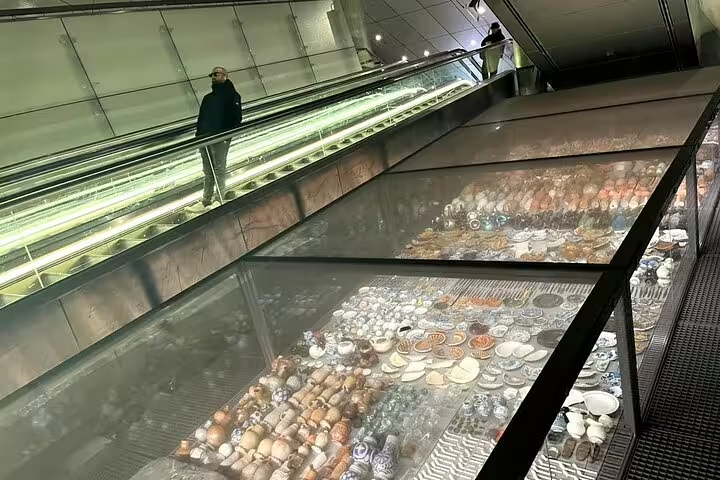
Discover archaeological finds at Rokin Station, some dating back more than 2,000 years, recovered during metro construction.
Explore artworks at Vijzelgracht that celebrate popular Dutch music from the twentieth century.
Learn about the Amsterdam School architectural movement at Noorderpark and its lasting influence on urban design.
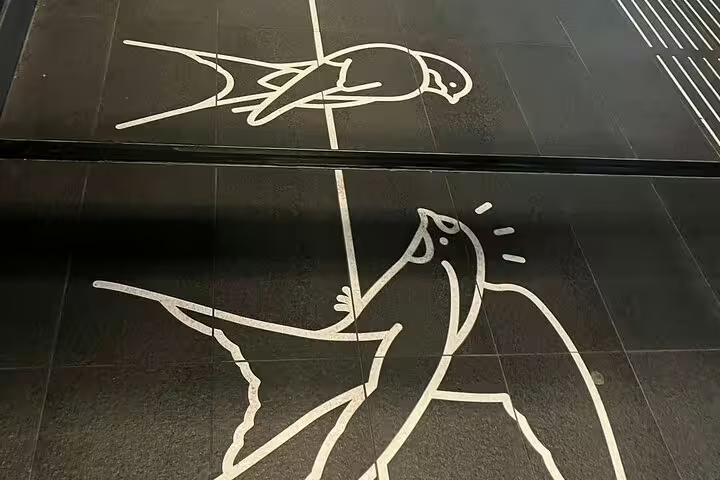
Encounter public art in Amsterdam Noord that reflects the area's local ecosystem, flora, and fauna.
Understand how the controversial metro construction of the 1980s shaped community resistance and city planning to this day.
Trace Amsterdam's connections to tulip mania, the Dutch East India Company, and colonial history through station art.
Travel two of the most architecturally and artistically distinct metro routes in a single guided experience.
Itinerary
At Rokin, the station floor and walls display genuine archaeological objects excavated during construction, some more than 2,000 years old. These fragments open conversations about Amsterdam's earliest inhabitants, its trading past, and the layers of life buried beneath its modern streets.
The artwork here pays tribute to popular Dutch music of the twentieth century, turning a functional transit stop into an audio-visual archive of cultural memory. It is one of the more playful and unexpected stops on the route.
This older station stands as a direct witness to the community battles sparked by metro construction in the 1970s and 1980s. The guide explains how local resistance influenced urban policy and why those events still shape how Amsterdam manages public space today.
The design language at Noorderpark references the Amsterdam School, a modernist architectural movement that defined much of the city's social housing and public infrastructure in the early twentieth century. Its legacy in contemporary design is still visible across the city.
The final stretch moves into Noord, where public artworks respond to the neighbourhood's natural environment — its waterways, green corridors, and native species. It is a fitting close to a journey that has moved from archaeology to ecology in two hours.
What Is Included
Included
- Professional guided walking tour through selected metro stations
- Contextual storytelling covering art, history, architecture, and urban ecology
- Route covering both the modern and the oldest metro lines
- Small group format for a personalised experience
Not Included
- Metro tickets or public transport cards
- Food and beverages
- Hotel pick-up or drop-off
- Gratuities for the guide
Important Information
Ready to Go Underground?
Secure your place on this one-of-a-kind journey through Amsterdam's metro art network before spaces fill up.
Book Now