


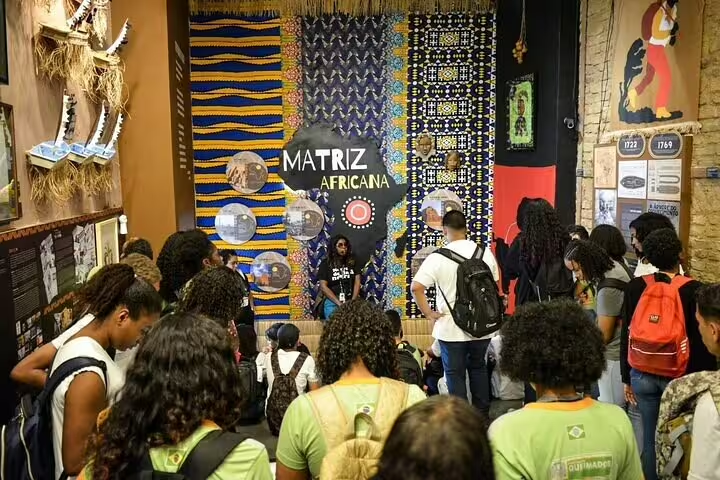

Group explores Afro-Brazilian culture at Matriz Africana exhibit in Rio's Little Africa tour.
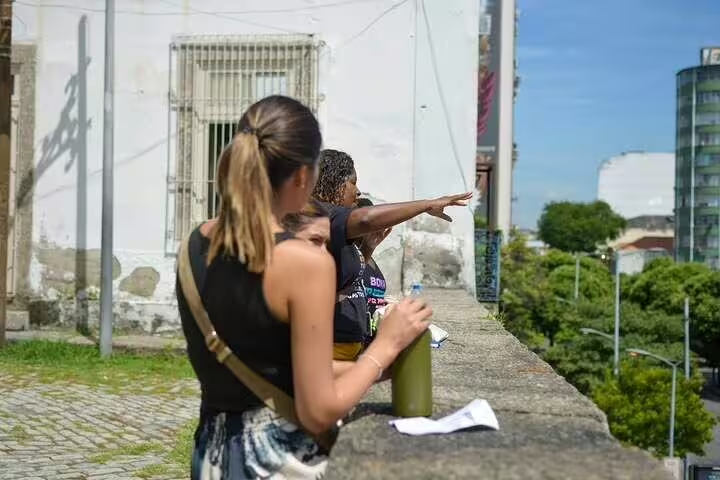
Tourists enjoy scenic view and cultural insights during Little Africa Rio walking tour.
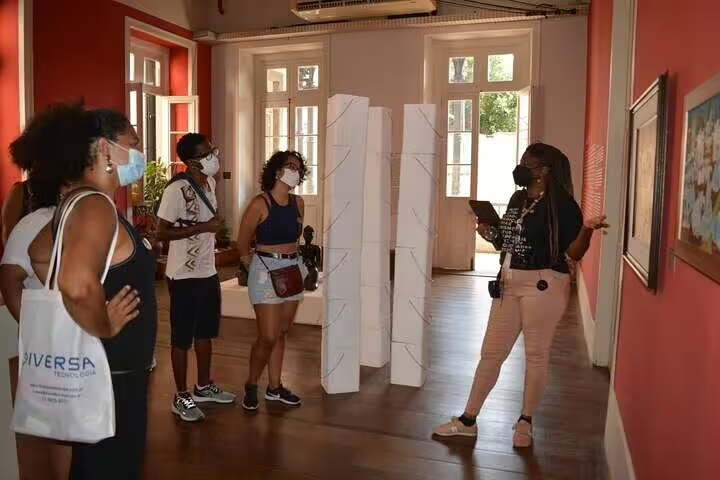
Visitors engage with Afro-Brazilian art guided tour in a vibrant Rio gallery in Little Africa.
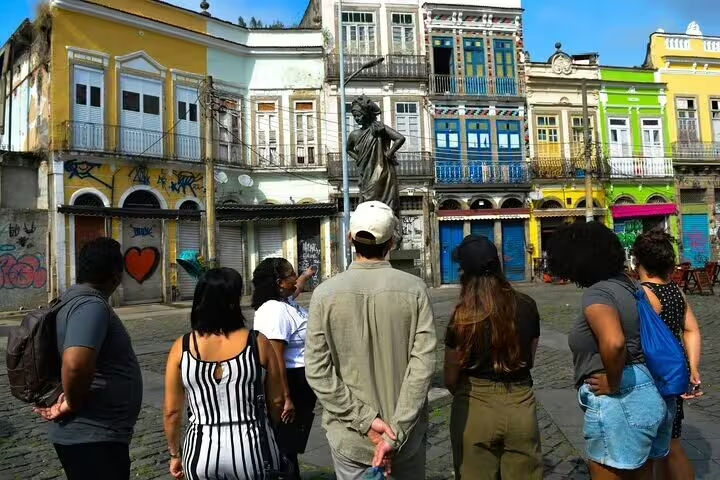
Tourists admire historic Afro-Brazilian architecture in Rio's Little Africa, highlighting vibrant cultural heritage.
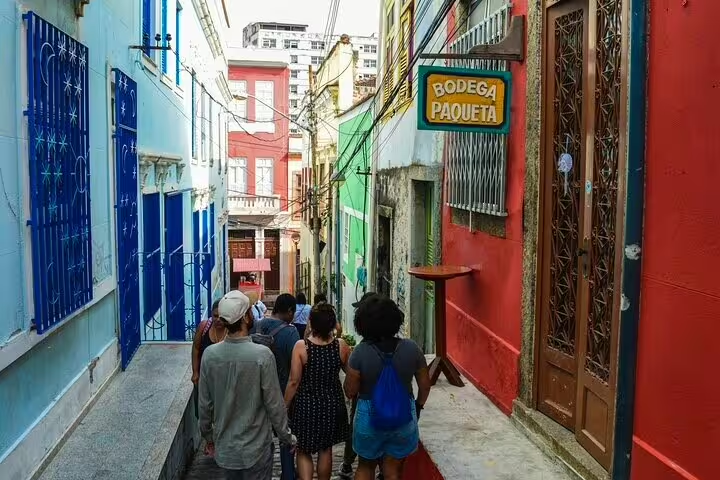
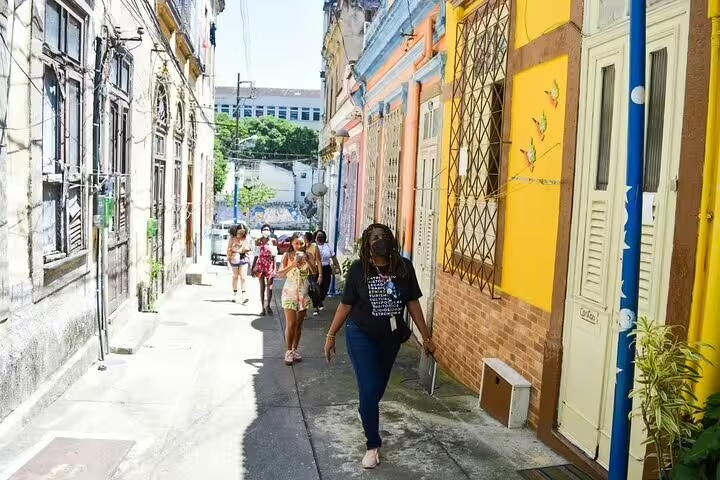
Visitors explore colorful streets of Little Africa in Rio, showcasing vibrant Afro-Brazilian culture and heritage.
Tour group strolls through colorful alleys of Rio's Little Africa, experiencing rich Afro-Brazilian cultural heritage.
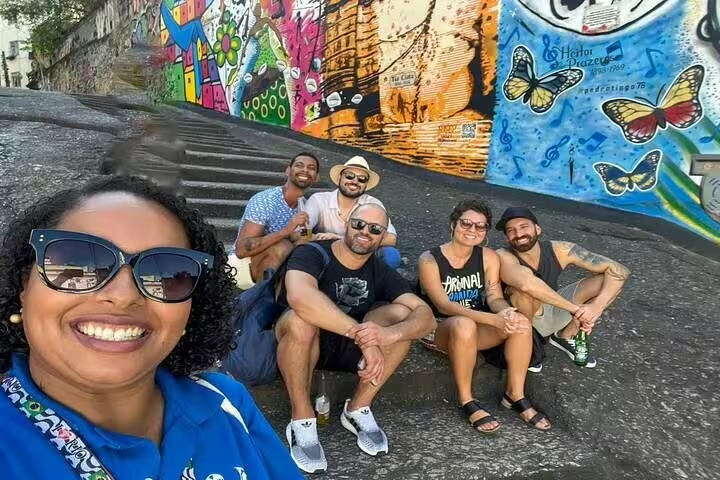
Group of tourists enjoying vibrant street art in Rio's Little Africa, highlighting Afro-Brazilian culture and heritage.
Modern tram passing through historic arches in Rio's Little Africa, showcasing urban exploration on Afro-Brazilian tours.
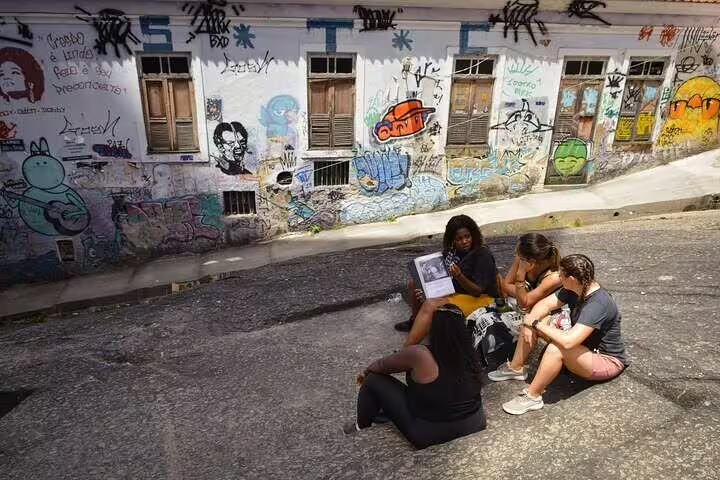
Tour guide discussing Afro-Brazilian history with visitors against a backdrop of colorful graffiti in Rio's Little Africa.
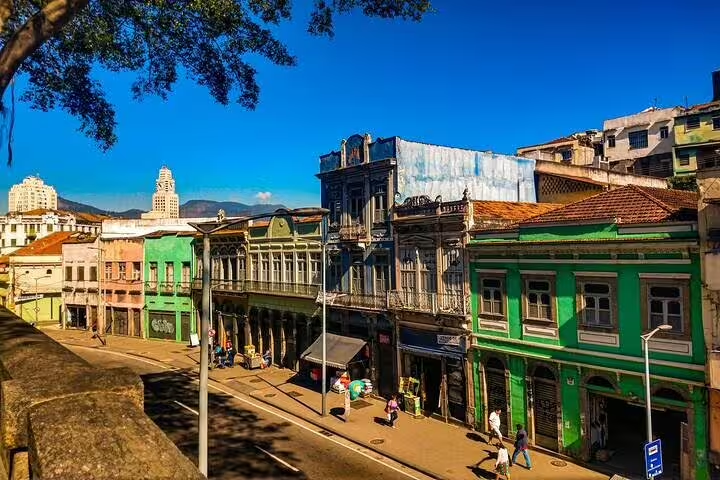
Colorful colonial buildings line the streets of Little Africa, Rio, showcasing vibrant Afro-Brazilian heritage.
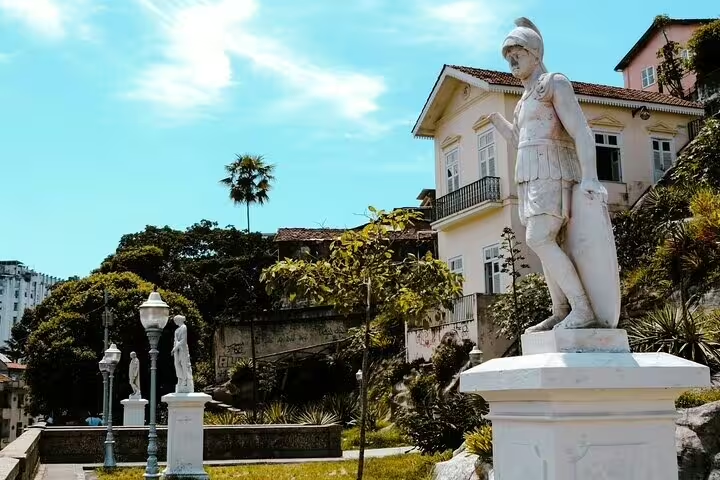
Historic statue and charming architecture in a lush garden setting, highlighting Afro-Brazilian culture in Rio.
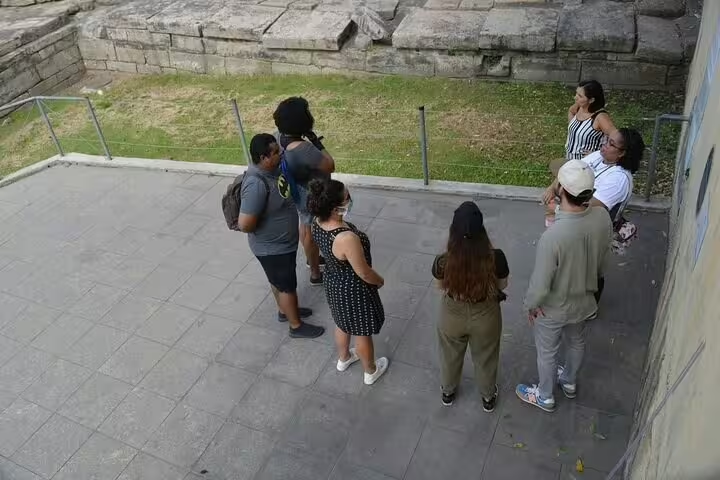
Group of tourists exploring Afro-Brazilian heritage in Little Africa, Rio, with ancient stone ruins in the background.
Listing ID : 23828

Activity

Duration3 hours 30 minutes
Group SizeSmall Group
Starts AtSanta Rita Church, Largo de Santa Rita, Rio de Janeiro
LanguagesEnglish
Cultural Walking Tour — Rio de Janeiro

Little Africa Unveiled: Vibrant Afro-Brazilian Heritage in Rio

A journey through the hidden histories and living culture of Afro-Brazilian Rio


This Afro-Brazilian heritage walking tour traces the layered, often overlooked stories of the communities whose labor, creativity, and resilience shaped the very foundations of Rio de Janeiro. Spanning 3.5 hours on foot, it connects landmark sites that testify to both the hardships and the enduring contributions of Black Brazilians across centuries.

The route moves through neighborhoods where colonial-era infrastructure still stands alongside living cultural practices — from sacred religious spaces to the street corners where samba took root. Each stop offers context that extends well beyond what appears in conventional city guides.

This tour is designed for travelers who want to engage with Brazilian history on its own terms. Guides draw on primary sources, oral traditions, and academic research to present narratives that are honest, nuanced, and grounded in the experiences of the communities themselves.

The difficulty level is easy, making it accessible to a broad range of participants. Comfortable footwear is recommended as portions of the walk cover cobblestoned streets and mild inclines.

Tour Highlights

Visit Santa Rita Church, built on the site of Rio's first burial ground for enslaved people, a sobering and architecturally significant colonial landmark.

Explore the Museum of History and Afro-Brazilian Culture (MUHCAB), where artifacts, artworks, and documents illuminate the African diaspora's role in shaping Brazil.

Learn about the Pretos Novos Cemetery and its role as one of the most significant burial sites for enslaved Africans during the transatlantic slave trade era.

Discover Pedra do Sal, widely recognized as the birthplace of samba, a historic gathering site for Afro-Brazilian communities in the port zone.

Walk through the Suspended Garden of Valongo, a remarkable urban space created during Rio's Belle Epoque beautification era in the early twentieth century.

Stroll along Beco Joao Inacio, a narrow historic lane in Lapa lined with century-old houses and distinctive stone pavements.

Admire Mosaico Hilario Jovino, a large-scale tile mosaic that serves as a vivid piece of public art honoring Afro-Brazilian cultural identity in the Lapa neighborhood.

Itinerary

1
Santa Rita Church — Largo de Santa Rita

The tour opens at this colonial and baroque church, constructed on the grounds of the first cemetery for enslaved people in Rio. The building's intricate ornamentation and religious artwork exist in direct tension with the history beneath it, making it a powerful starting point for the day's themes.

2
Museum of History and Afro-Brazilian Culture (MUHCAB)

This institution is dedicated to preserving and promoting the heritage of Afro-Brazilians through curated collections of artifacts, artworks, and historical documents. It also supports ongoing research into the African diaspora's contributions to Brazilian society and national identity.

3
Pretos Novos Cemetery and the Valongo Wharf Area

The Instituto Pretos Novos (IPN) anchors this section, centered on a burial ground used for enslaved Africans during the colonial period. The Valongo Wharf, through which an estimated one million enslaved Africans passed between the late eighteenth and early nineteenth centuries, is among the most significant sites related to the transatlantic slave trade in the Americas.

4
Suspended Garden of Valongo and Lapa Streets

This garden emerged during the Pereira Passos administration's urban reform period and represents an early effort to reshape the port zone's public landscape. Nearby, Beco Joao Inacio offers a contrast — a narrow, steep street preserving the architectural texture of nineteenth-century Rio alongside the colorful Mosaico Hilario Jovino.

5
Pedra do Sal

The final landmark is one of the most culturally resonant sites in the city. Pedra do Sal served as a central gathering place for Afro-Brazilian communities and is recognized as the origin point of samba. The site remains active today as a meeting place for music, conversation, and community.

What Is Included

Included

  • Professional licensed guide specialized in Afro-Brazilian history
  • Entrance to MUHCAB museum
  • Guided access to the Instituto Pretos Novos
  • All site visits along the curated route

Not Included

  • Food and beverages
  • Personal travel insurance
  • Gratuities for the guide
  • Transportation to and from the meeting point

Important Information

Please review the details below before booking to ensure this experience is the right fit for your group.
Duration
3 hours and 30 minutes. The pace is relaxed and the route is rated easy, with flat terrain and some cobblestone sections.
Meeting Point
The tour begins at Santa Rita Church, located in Largo de Santa Rita in central Rio de Janeiro. Look for the guide near the main entrance of the church.
What to Bring
Comfortable walking shoes suitable for cobblestone streets, sun protection, a refillable water bottle, and a light layer depending on weather conditions.
Cancellation Policy
Please refer to the booking platform for the applicable cancellation terms. Most tours offer a full refund with sufficient advance notice.
Accessibility
The route is rated easy. Some sections include narrow streets and uneven cobblestone surfaces. Participants with significant mobility limitations should contact the operator before booking.
Age Range
Suitable for participants of all ages. Children are welcome and the content is presented in an informative and age-appropriate manner throughout.

Reserve Your Spot

Spaces on this walking tour are limited to maintain an intimate group experience. Secure your place to explore the Afro-Brazilian heritage that shaped Rio de Janeiro.

Book Now


Frequently Asked Questions

Where does the tour start?
The tour begins at Santa Rita Church in Largo de Santa Rita, a central and easily accessible location in Rio de Janeiro. Participants should arrive at the main entrance of the church at the designated time.
How long does the tour last?
The tour lasts approximately 3 hours and 30 minutes. The pace is relaxed and designed to allow time for questions and reflection at each stop.
Is this tour suitable for children?
Yes, the tour welcomes participants of all ages. Guides present historical content in a thoughtful and accessible manner, including for younger visitors.
What is the physical difficulty level?
The tour is rated easy. Most of the route is flat, though some sections pass over cobblestoned streets and mild inclines in the Lapa neighborhood. Comfortable walking shoes are advised.
What topics does the tour cover?
The tour addresses the history of slavery in Brazil, the origins of samba, the Vaccine Revolt, Afro-Brazilian religious traditions, and the ongoing legacy of Black communities in shaping Rio's identity and culture.
Is Pedra do Sal included in the route?
Yes, Pedra do Sal is the final landmark on the tour. It is considered the birthplace of samba and remains a culturally active site in the port zone of Rio de Janeiro.
Afro-Brazilian CultureRio de Janeiro Walking TourBlack History BrazilSamba OriginsSlavery HistoryPedra do SalValongo WharfCultural HeritageLapa NeighborhoodLittle Africa RioMUHCAB MuseumHistorical Walking Tour
Last updated: June 2025 | Product ID: little-africa-rio-afrobrazilian-heritage

Activity

Availability

You can book up to the start time, as long as there are places remaining. Book now to guarantee your spot.

Additional Information

Physical: Wheelchair Not accessible

Duration

4 hours

Languages

English - Speaking Guide

Additional Information

Electronic. Show the voucher on your phone.

Cancellation Policy

Select Date

Meeting Point

Complete Operator information, including local telephone numbers at your destination, are included on your Confirmation Voucher. Our Product Managers select only the most experienced and reliable operators in each destination, removing the guesswork for you, and ensuring your peace of mind.

Activity Site

Complete Operator information, including local telephone numbers at your destination, are included on your Confirmation Voucher. Our Product Managers select only the most experienced and reliable operators in each destination, removing the guesswork for you, and ensuring your peace of mind.

Reviews

Share this experience

Check Availability

Select Participants

  • Adult
    Age 10 - 120
    0

Select Participants

Select Date

Select Time
logoBlack

Extraordinary experiences,
beautifully gifted

dreamimg
Nearby Icon