A journey through millennia of pharaonic legacy along the Nile corridor
This 2-day itinerary takes you from Luxor southward to Aswan and beyond, culminating at the iconic Abu Simbel temples, two of the most celebrated monuments of ancient Egypt. Along the route, you will encounter landmarks that span the breadth of pharaonic history, from meticulously preserved cult temples to modern feats of hydraulic engineering.
The first day moves at a measured pace through Edfu and Kom Ombo before arriving in Aswan. Each stop reveals a distinct chapter of Egyptian religious life, with temples dedicated to gods as varied as the falcon-headed Horus, the crocodile deity Sobek, and the revered goddess Isis.
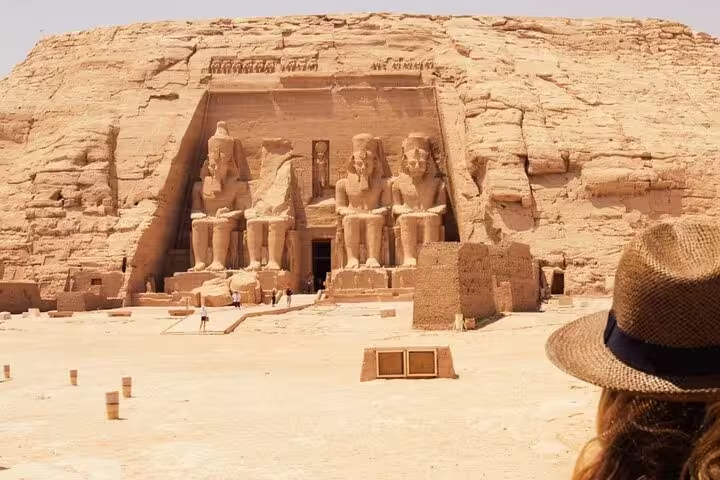
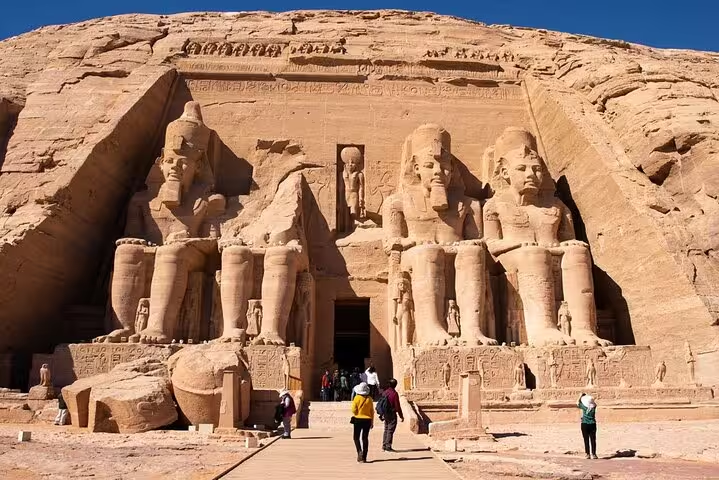
Day two begins well before sunrise with a convoy journey deep into Nubia. The twin temples carved into the sandstone cliffs at Abu Simbel represent both the architectural ambition of Ramesses II and a remarkable 20th-century achievement in international heritage preservation.
Tour Highlights
Walk through the Temple of Edfu, the best-preserved cult temple in Egypt, dedicated to the falcon god Horus.
Explore the double-entrance Temple of Kom Ombo, uniquely shared between the deities Sobek and Haroeris.
Visit the Aswan High Dam, an engineering landmark completed in the 1960s that reshaped the flow of the Nile.
Examine the Unfinished Obelisk in Aswan, a rare window into the stone-cutting methods of ancient Egyptian craftsmen.
Stand before the Great Temple of Ramesses II at Abu Simbel, aligned with the sun twice a year in a feat of ancient astronomy.
Visit the Temple of Queen Nefertari at Abu Simbel, one of the few Egyptian temples constructed to honor a royal consort.
See the relocated Philae Temple on Agilkia Island, saved through a UNESCO-led international rescue effort.
Itinerary
1
Luxor to Edfu — Temple of Horus
Your guide meets you at your Luxor hotel for the southward drive to Edfu. The Temple of Edfu, dedicated to the falcon god Horus, is widely regarded as the most completely preserved cult temple in Egypt and provides vivid insight into the religious rituals of the Ptolemaic period.
2
Kom Ombo — The Double Temple
A short drive south brings you to the hillside sanctuary of Kom Ombo, perched above the Nile with commanding views. The temple's dual design serves two gods simultaneously: the crocodile-headed Sobek on one side and the falcon-headed Haroeris on the other, a rare arrangement in ancient Egyptian architecture.
3
Aswan — High Dam, Unfinished Obelisk & Philae Temple
Arriving in Aswan, you visit three distinct landmarks: the High Dam, an Unfinished Obelisk that was abandoned after a crack appeared during quarrying, and the island temple of Philae, consecrated to the goddess Isis and relocated stone by stone to avoid the rising waters of Lake Nasser. Overnight in Aswan.
4
Abu Simbel — Temples of Ramesses II & Nefertari
An early pre-dawn departure from Aswan precedes the convoy journey to Abu Simbel near the Sudanese border. The Great Temple of Ramesses II and the adjacent Temple of Queen Nefertari were cut entirely from the living rock, then carefully dismantled and reassembled on higher ground in the 1960s to protect them from the rising waters of Lake Nasser.
5
Return to Luxor
After lunch at a local restaurant in Aswan, you transfer back to your hotel in Luxor, concluding the 2-day tour. The return journey follows the Nile Valley northward through the same landscape that shaped one of the ancient world's most enduring civilizations.
What Is Included
Included
Private round-trip transfers from your Luxor hotel
Professional licensed English-speaking guide throughout
Entry fees to all mentioned temples and sites
Lunch on Day 1 (Luxor to Aswan leg)
Box breakfast and lunch on Day 2 (Abu Simbel day)
One night hotel accommodation in Aswan
All service charges and taxes
Not Included
International or domestic flights
Personal travel insurance
Gratuities for guides and drivers (optional)
Personal expenses and souvenirs
Meals not specified in the itinerary
Drinks with included meals
Important Information
Please read the following details carefully before booking to ensure a smooth and comfortable experience on this tour.
Duration
2 days and 1 night. Day 2 involves a very early start from Aswan; guests should be prepared to depart well before dawn for the Abu Simbel convoy.
What to Bring
Lightweight, modest clothing to respect temple dress codes; comfortable walking shoes; sunscreen and a hat; a refillable water bottle; and a valid passport or ID for the Abu Simbel checkpoint.
Cancellation Policy
Cancellation terms are set by the operator. Please review the full policy at the time of booking and retain your confirmation for reference.
Accessibility
Several temple sites involve uneven stone surfaces and steps. The tour is rated easy overall, but guests with significant mobility limitations should contact the operator prior to booking.
Age Range
Suitable for all ages. Children are welcome; parents should ensure appropriate sun protection and hydration for younger travelers given the desert climate.
Reserve Your Place on This Tour
Spaces on this 2-day journey from Luxor to Abu Simbel are limited. Secure your seat today and travel through three millennia of Egyptian history with an expert guide by your side.
Is this tour suitable for first-time visitors to Egypt?▼
Yes. The itinerary is rated easy in difficulty and requires no prior knowledge of Egyptian history. The licensed guide provides context at each site throughout both days.
Why does the Abu Simbel day start so early?▼
Abu Simbel is located approximately 280 km south of Aswan and vehicles must travel as part of an organized police convoy that departs before dawn. Arriving early also helps visitors explore the temples before midday heat.
What is the significance of the Abu Simbel temples?▼
Built by Ramesses II circa 1264 BCE, the two temples were carved directly into a sandstone cliff face. In the 1960s, they were dismantled and moved to higher ground in a UNESCO-coordinated operation to protect them from Lake Nasser following completion of the Aswan High Dam.
What meals are provided during the tour?▼
A box breakfast is provided by the Aswan hotel on Day 2, and lunch is included on both days. Breakfast on Day 1 and all beverages are not included unless otherwise specified by the operator.
How is the Temple of Kom Ombo different from other Egyptian temples?▼
The Temple of Kom Ombo is unique in that its entire layout is duplicated — it has two entrances, two sanctuaries, and two sets of halls, each dedicated to a separate deity: the crocodile god Sobek and the falcon god Haroeris. This double design is not found in any other major Egyptian temple.
Is the Philae Temple accessible by water?▼
Yes. Philae Temple is located on Agilkia Island in the Nile, and visitors reach it by short motorboat from a nearby landing stage. The boat transfer is typically included in the site entry arrangements handled by your guide.
Abu SimbelLuxor to AswanTemple of EdfuKom Ombo TemplePhilae TempleAswan High DamRamesses IIEgypt Heritage TourNile ValleyAncient EgyptUNESCO World HeritageEgypt Small Group Tour
This tour operates in Upper Egypt, covering a 500-km corridor along the Nile Valley between Luxor (Luxor Governorate) and Abu Simbel (Aswan Governorate), passing through the temple towns of Edfu and Kom Ombo. Key landmarks include the Temple of Edfu (Idfu), the Temple of Kom Ombo, the Aswan High Dam, the Unfinished Obelisk, Philae Temple on Agilkia Island, and the twin rock-cut temples of Abu Simbel near the Sudanese border. The route follows the West Bank of the Nile southward through the Eastern Sahara Desert region. Abu Simbel is located within the Abu Simbel - Aswan Biosphere Reserve and is a UNESCO World Heritage Site. Travelers depart from Luxor, Egypt's open-air museum city, and return after visiting sites spanning the New Kingdom, Ptolemaic, and modern eras of Egyptian history.
Region: Upper Egypt | Country: Egypt | Destinations: Luxor, Edfu, Kom Ombo, Aswan, Abu Simbel | Governorates: Luxor Governorate, Aswan Governorate | Landmark Types: Pharaonic Temples, UNESCO Heritage Sites, Modern Infrastructure | Historical Periods: New Kingdom (Ramesses II era), Ptolemaic Period, 20th Century | Tour Type: Multi-day Cultural Heritage Tour | Difficulty: Easy | Duration: 2 Days 1 Night
Gift more than a trip
Extraordinary experiences, beautifully gifted
Give the joy of travel with a ToursXplorer Gift Card. Perfect for every occasion.