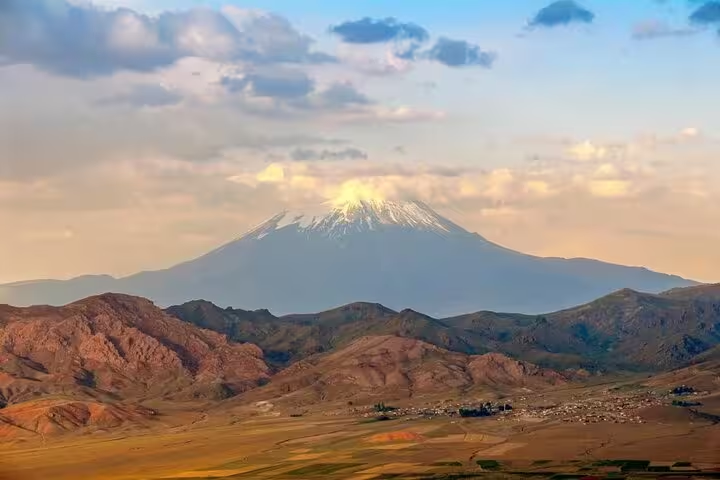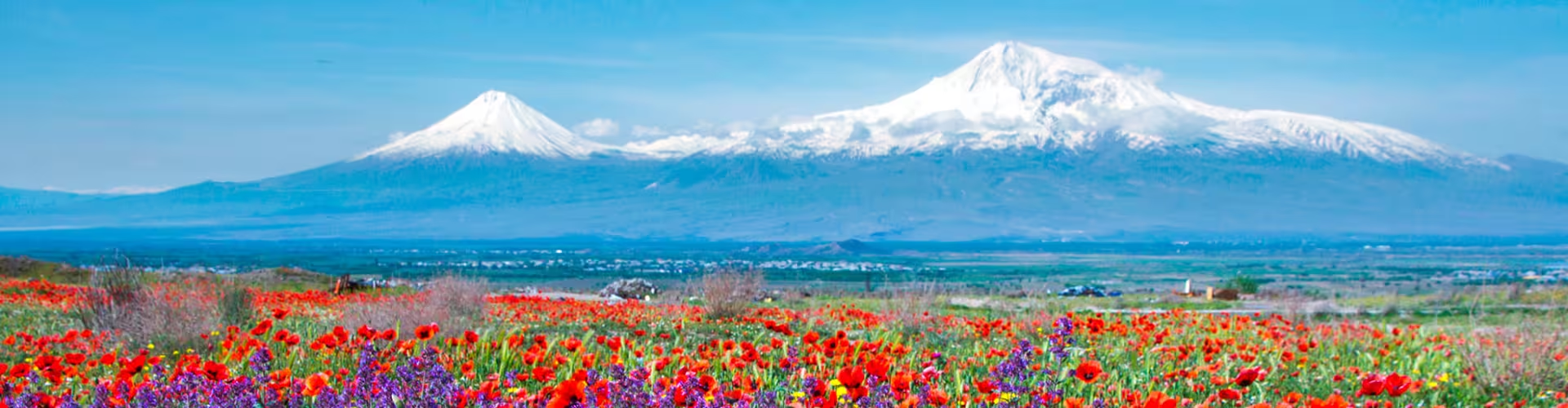

Mount Ararat is one of the most iconic and symbolically charged peaks in the world, rising dramatically from the Anatolian plateau in eastern Turkey near the borders of Armenia and Iran. Standing at 5,137 metres above sea level, it is the highest point in Turkey and a dormant stratovolcano of extraordinary geological significance. For millennia, this mountain has inspired pilgrims, explorers, and adventurers drawn by its mythological resonance, alpine beauty, and sheer physical challenge.
Mount Ararat is located in the Igdir Province of eastern Turkey, close to the town of Dogubayazit, which serves as the primary base for climbers and visitors. The mountain has two summits: Greater Ararat (Buyuk Agri) at 5,137 metres and Lesser Ararat (Kucuk Agri) at 3,896 metres. The surrounding landscape is a sweeping volcanic plain, largely devoid of trees above lower elevations, giving way to glaciers near the summit. The nearest major city is Erzurum, approximately 290 kilometres to the west.
The optimal trekking season runs from late May through early September. July and August offer the most stable weather conditions at high altitudes, though temperatures can still drop sharply at night. Spring visits reveal wildflowers on the lower slopes, while autumn brings crisp air and dramatic cloud formations. Winter ascents are technically demanding and reserved for highly experienced mountaineers.
Turkey uses the Turkish Lira (TRY). Dogubayazit is a budget-friendly base: guesthouses are affordable, and local meals are inexpensive. Climbing permits, mandatory guide fees, and agency packages represent the most significant costs, typically ranging from 800 to 1,500 USD for a full guided ascent. ATMs are available in Dogubayazit, though carrying cash is advisable for remote areas.
Summit Greater Ararat: The crown jewel of any visit is attempting the ascent of Greater Ararat. The standard route from the Eli camp takes three to four days round trip and passes through alpine meadows, lava fields, and glacial terrain. Climbers must be physically fit and acclimatised. Practical Tip: Book a licensed guide and agency well in advance, as permits require government approval and processing time.
Explore Ishak Pasha Palace: Perched on a rocky outcrop six kilometres east of Dogubayazit, this 18th-century semi-ruined palace is one of the most spectacular examples of Ottoman-era architecture in eastern Turkey. The palace blends Persian, Armenian, Georgian, and Ottoman styles in a breathtaking hilltop setting. Practical Tip: Visit at sunset when the warm light illuminates the stonework and the silhouette of Ararat fills the background.
Trek the Lower Slopes: Non-climbers can enjoy rewarding day hikes on the mountain's lower flanks without requiring a summit permit. The terrain around 2,000 to 2,500 metres offers stunning views of the Ararat plain and the border regions. Wildflowers, volcanic rock formations, and sweeping vistas reward those who venture above the base. Practical Tip: Hire a local guide even for lower-slope hikes, as trails are unmarked and the terrain can be disorienting.
Visit the Meteor Crater Lake: Located on the slopes of Lesser Ararat, this small but striking crater lake is a geological curiosity. The vivid blue-green water set against the stark volcanic landscape makes for memorable photography. Practical Tip: The track to the lake requires a 4x4 vehicle or a moderate hike from the road.
Discover the Noah's Ark Formation: The Durupinar site, roughly 27 kilometres south of Dogubayazit, is a naturally occurring geological formation that has attracted significant debate and curiosity as a possible resting place of Noah's Ark. Regardless of one's views on its origins, the formation is visually compelling. Practical Tip: Combine the visit with a stop at the Kurdish village of Uzengili nearby for a cultural exchange.
Experience the Dogubayazit Bazaar: The town's central market offers a vivid window into everyday life in this remote corner of Turkey. Spices, dried fruits, regional textiles, and local crafts fill the stalls. The atmosphere is lively and genuinely local. Practical Tip: Bargaining is expected and welcomed; approach with patience and good humour.
Photography at the Ararat Plain: The vast, flat agricultural plain surrounding the mountain provides unobstructed panoramic views, particularly striking at dawn and dusk. The mountain seems to float above the plain in early morning mist, creating extraordinarily photogenic conditions. Practical Tip: Position yourself on the Iranian or Armenian border road viewpoints for the most dramatic compositional angles.
Begin the morning with a visit to Ishak Pasha Palace, arriving early to beat the midday heat and secure good photographs. Proceed to the Durupinar Noah's Ark formation before lunch in Dogubayazit. In the afternoon, drive to a lower-slope viewpoint for unobstructed views of the mountain. End the day with a walk through the local bazaar and dinner at a traditional kebab house.
Day one follows the highlights itinerary above. Day two begins with an early departure for an acclimatisation hike on the lower slopes, reaching 2,500 metres for panoramic views. Day three can be dedicated to a full-day excursion to the Meteor Crater Lake on Lesser Ararat, followed by an evening exploring Dogubayazit's cultural sites. Those with more time can extend to a four-day summit attempt with a licensed agency.
Kebab: Eastern Turkish kebabs, particularly lamb and minced meat varieties, are the backbone of the local dining scene. Served with flatbread and roasted vegetables, they are hearty and satisfying after a day of hiking. Order at any lokanta (traditional eatery) in Dogubayazit.
Pide: Turkish flatbread topped with minced meat, cheese, or egg is a staple meal. It is affordable, filling, and widely available. Ask for it fresh from the oven for the best experience.
Corbasi (Soup): Lentil and lamb soups are commonly served for breakfast and lunch in eastern Turkey. They are warming and nourishing, ideal before or after outdoor activities.
Ayran: This cold, salted yoghurt drink is the quintessential Turkish accompaniment to any meal. It is refreshing, light, and helps with digestion at altitude.
Van Kahvalti (Breakfast Spread): The region is close to Van and shares its famous breakfast culture: multiple cheeses, honey, clotted cream, olives, herbs, and eggs served collectively. A full Van-style breakfast is a deeply pleasurable ritual. Seek it out at guesthouses in Dogubayazit.
Baklava: Pistachio-laden pastry soaked in syrup is widely available and provides a welcome sugar boost. Local bakeries often make it fresh daily.
Cay (Tea): Turkish black tea served in tulip-shaped glasses is the social lubricant of eastern Turkey. Accept every offered glass: it is a gesture of hospitality and a gateway to local conversation.
The nearest major airport is in Agri, with limited domestic connections from Istanbul and Ankara. Many travellers fly into Erzurum or Van and then take a long-distance bus or private transfer to Dogubayazit. Direct buses from Van take approximately three hours. Local minibuses (dolmus) connect Dogubayazit with nearby villages and attractions. Renting a 4x4 vehicle in Dogubayazit is strongly recommended for accessing trailheads, crater lakes, and the Durupinar site.
Lake Van: Roughly three to four hours by road, Lake Van is Turkey's largest lake and a stunning inland sea of alkaline water. The ancient Armenian church of Akdamar Island is a major cultural landmark. A full-day or overnight trip is highly recommended.
Agri City: The provincial capital lies about 90 kilometres west and offers a larger commercial centre with additional accommodation and dining options. It serves as a useful transit hub.
Gurbulak Border Region: The Turkish-Iranian border crossing at Gurbulak is approximately 35 kilometres from Dogubayazit and offers a fascinating glimpse into cross-border trade and cultural exchange, though formal crossing requires appropriate visas.
Tendürek Volcano: Located between Dogubayazit and Van, this lesser-known dormant volcano features dramatic highland scenery and is largely off the tourist trail, offering solitude and raw natural beauty.