
Build your dream
experience

More to know about Ani
Ani Travel Guide
Snapshot
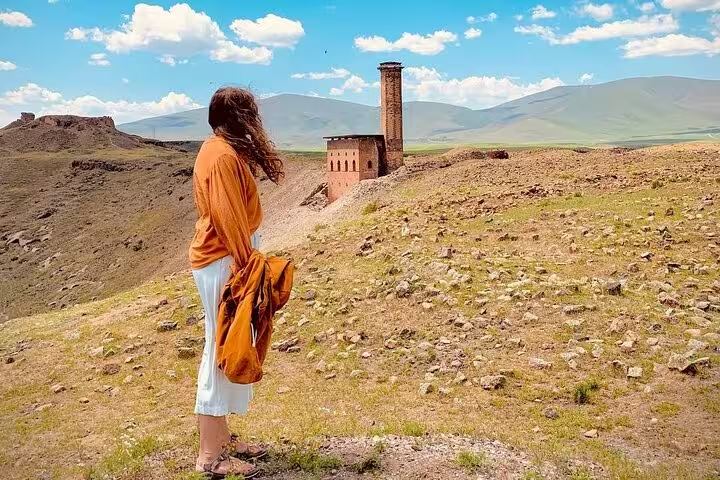
Ani is one of the most hauntingly beautiful archaeological sites in the world, a ruined medieval city perched on a windswept plateau in eastern Turkey near the Armenian border. Once the glittering capital of the Bagratid Armenian kingdom, this ghost city reached a population of over 100,000 at its peak in the 10th and 11th centuries. Today, its crumbling churches, fortified walls, and silent cathedrals rise from the steppe like a frozen moment in history, offering visitors an unforgettable encounter with a lost civilization.
Geography and Logistics
Orientation
Ani sits approximately 45 kilometers east of Kars, in northeastern Turkey's Kars Province, directly along the Turkish-Armenian border. The site occupies a dramatic triangular plateau bounded by deep river gorges on two sides, which historically served as natural fortifications. The nearest city with full traveler infrastructure is Kars, which serves as the gateway and overnight base for most visitors.
When to Go
The best time to visit is between May and October, when weather conditions are mild and the site is fully accessible. Spring brings wildflowers across the plateau, adding color to the ancient stonework. Winters are harsh, with heavy snowfall frequently closing access roads between November and March.
Budget and Currency
Turkey uses the Turkish Lira (TRY). The site entrance fee is modest and budget-friendly, typically under 100 TRY. Kars itself is an affordable city, with guesthouses, local restaurants, and transport options catering to budget and mid-range travelers. Credit cards are accepted in Kars hotels and larger establishments, but carry cash for local taxis and site fees.
Essential Things to Do
Cathedral of Ani (Surp Asdvadzadzin)
This magnificent structure, built between 989 and 1001 AD, is the crown jewel of the ruins. Its soaring Armenian stone arches and ribbed vaulting are considered pioneering examples of Gothic architectural principles, predating European Gothic by over a century. The cathedral's nave, though roofless, still conveys a breathtaking sense of scale and spiritual grandeur.
Practical Tip: Visit early in the morning for the best light and fewer crowds.
Church of St. Gregory of the Illuminator (Tigran Honents)
Built in 1215 by a wealthy Armenian merchant, this church retains some of the finest surviving medieval frescoes in the region. The interior murals depict scenes from the life of Christ and the Virgin Mary in vivid, expressive detail. The exterior stonework also features intricate relief carvings that reward close inspection.
Practical Tip: Bring a small torch or flashlight to better appreciate the fresco details inside.
The City Walls and Citadel
The double fortified walls of Ani stretch for over a kilometer and remain impressively intact in sections. The citadel, perched at the tip of the plateau above the Akhurian River gorge, offers panoramic views into Armenia. Walking along the ramparts gives a visceral sense of the city's former defensive might.
Practical Tip: Wear sturdy footwear as the terrain around the walls is uneven and rocky.
Church of the Redeemer (Surp Prkich)
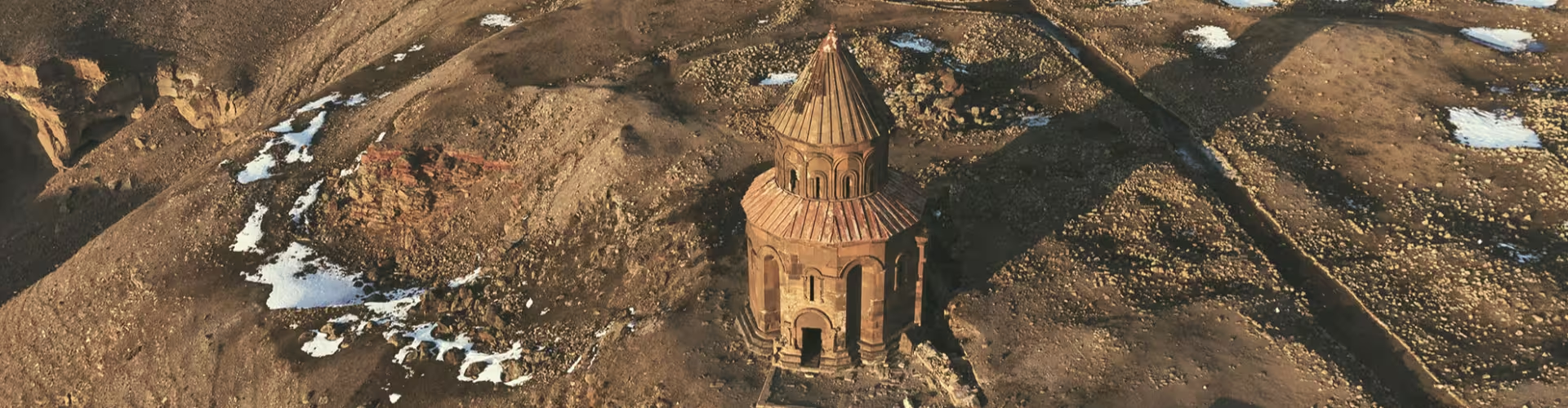
Originally a complete rotunda church built in 1035, half of this structure famously collapsed during an earthquake, leaving a dramatic half-standing silhouette against the sky. The remaining section displays exquisite interlaced stone carvings around the doorways and windows. It is one of the most photographed images associated with the site.
Practical Tip: Visit at golden hour for extraordinary photography opportunities.
Silk Road Caravanserai
Located near the city entrance, this large Seljuk-era caravanserai dates from the 13th century and once served merchants traveling the Silk Road. The structure's vaulted interior halls and courtyard layout offer insight into the commercial life that sustained Ani's cosmopolitan population. It is often overlooked by visitors rushing to the churches but is well worth exploring.
Practical Tip: Ask your guide to identify the different phases of construction visible in the stonework.
Zoroastrian Fire Temple
This small but historically significant structure is believed to be a pre-Christian Zoroastrian temple, pointing to Ani's layered religious history before Armenian Christianity took hold. Its circular plan and distinctive stonework set it apart from the surrounding Christian architecture. It is a subtle but powerful reminder of the city's deep multicultural roots.
Practical Tip: Look for the carved decorative bands near the base of the walls.
Kars Castle and Museum
While technically in the nearby city rather than the ruins themselves, Kars Castle and the Kars Museum are essential companions to an Ani visit. The museum holds artifacts excavated from the site, including ceramics, coins, and architectural fragments. The castle provides sweeping views over the city and surrounding steppe landscape.
Practical Tip: Visit the museum before heading to the ruins to build historical context.
Curated Itineraries
The Highlights (1 Day)
Depart Kars early by taxi or tour minibus to arrive at the site at opening time. Begin at the main gate and walk directly to the Cathedral, then loop through the Church of St. Gregory, the Church of the Redeemer, and the Silk Road Caravanserai. End at the citadel for gorge views before returning to Kars for lunch and an afternoon visit to the city museum.
Deep Dive (2 to 3 Days)
On day one, follow the highlights itinerary above but at a slower pace, spending extended time sketching, photographing, or simply sitting with each monument. On day two, explore Kars city in depth, visiting the Russian Orthodox church, the castle, the covered bazaar, and sampling local Kars honey and kashar cheese. On day three, consider a day trip to nearby Sarikamis or the Cildur Lake region to balance the archaeological intensity with natural landscapes.
Flavors of Ani
The culinary scene in and around the Kars region reflects a rich blend of eastern Anatolian and historically Armenian-influenced traditions. While there are no restaurants at the ruins themselves, Kars offers several excellent options.
Kars Kashari: A distinctive aged yellow cheese produced in the Kars region, often compared to Gruyere. It is sold throughout the local market and makes an excellent edible souvenir.
Kars Honey: The plateau's wildflower meadows produce some of Turkey's finest honey. Look for it at local markets and roadside sellers near Kars.
Cag Kebab: A horizontal spit-roasted lamb kebab originating from the Erzurum region nearby. It is sliced to order and served in flatbread with fresh vegetables.
Piti: A slow-cooked lamb and chickpea stew served in individual clay pots, reflecting Caucasian culinary influences common in this border region.
Gozeleme: Thin flatbreads filled with cheese, potato, or spinach and cooked on a griddle, widely available at casual eateries and market stalls throughout Kars.
Ayran: A cold, salted yogurt drink that pairs perfectly with the region's grilled meats and is available at virtually every local restaurant.
Navigation and Transport
The primary gateway to the ruins is Kars, accessible by domestic flights from Istanbul and Ankara, or by the famous Dogu Express train from Ankara, which is a popular journey in itself. From Kars, visitors reach the site by taxi, which typically costs between 200 and 350 TRY for a return trip including waiting time. Organized day tours from Kars hotels are widely available and often include a guide. There is no public bus service directly to the ruins. Driving a rental car from Kars is straightforward via a well-marked road. The site has a small parking area at the entrance gate.
Beyond the Center: Day Trips
Sarikamis: Located about 55 kilometers south of Kars, this mountain resort town is known for its pine forests, Ottoman-era Russian architecture, and winter skiing. In summer, it offers pleasant hiking and cool temperatures as a contrast to the open plateau.
Cildur Lake: A large, shallow volcanic lake east of Kars, known for its flamingo populations in spring and early summer. The surrounding wetlands are a haven for birdwatchers and nature photographers.
Dogubeyazit and Mount Ararat: Further south in Agri Province, the legendary peak of Mount Ararat dominates the landscape alongside the Ishak Pasha Palace, a spectacular 18th-century Ottoman-Kurdish palace built into a clifftop. It makes for a long but rewarding day trip or an extended overnight extension.
Erzurum: Roughly 200 kilometers southwest of Kars, Erzurum is a major eastern Anatolian city with a well-preserved old quarter, including the striking twin-minaret Cifte Minareli Medrese and the Ulu Cami mosque, offering a deeper immersion in Seljuk and Ottoman heritage.
{{check-circle}} Insider Tips for Travellers
- Book your Kars accommodation and any guided tours well in advance during peak summer months, as quality options fill quickly.
- The site can feel very exposed and windy even in summer; bring a light jacket regardless of the season.
- Hiring a local licensed guide at the site entrance adds significant depth to the experience, as many structures lack detailed on-site signage.
- Photography is permitted throughout the site, but always be respectful of any active conservation or restoration work in progress.
- Bring your own water and snacks, as facilities at the ruins are extremely limited.
- The border with Armenia is visible from parts of the site; stay within marked visitor areas and follow all official guidance from site staff.
- Consider purchasing Kars kashar cheese and local honey at the Kars market before your departure as gifts or provisions for onward travel.
- Allow at least three to four hours minimum at the ruins to explore without feeling rushed.
Frequently Asked Questions
- How do I get to the ruins from Kars?
- The most practical option is to hire a taxi from Kars city center, which costs approximately 200 to 350 TRY for a return trip with waiting time. Organized day tours from hotels are also available and often include a licensed guide.
- Is there an entrance fee?
- Yes, there is a modest entrance fee payable at the site gate. The fee is typically under 100 TRY and is subject to change, so verify current prices locally before your visit.
- How much time should I spend at the site?
- Ani covers a significant area of approximately 100 hectares. Most visitors spend between three and five hours exploring the main monuments comfortably. History enthusiasts and photographers may wish to allow a full day.
- Is the site suitable for children and elderly visitors?
- The terrain across Ani is largely unpaved and uneven, with loose stones and exposed edges near the gorge. It is manageable for reasonably mobile visitors but can be challenging for very young children, elderly travelers, or those with limited mobility.
- What is the best time of year to visit?
- The optimal window is May through September, when weather is warm and access roads are reliably open. Late spring offers wildflowers across the plateau, while early autumn provides cooler temperatures and golden light ideal for photography.
Ani is a UNESCO World Heritage Site located in Kars Province, northeastern Turkey, on the Turkish-Armenian border. Once the capital of the Bagratid Armenian kingdom with a population exceeding 100,000, the city flourished between the 10th and 11th centuries before being devastated by Mongol invasions and earthquakes. The site preserves remarkable examples of medieval Armenian, Seljuk, and Georgian architectural traditions, and remains one of the most significant and atmospheric archaeological destinations in the South Caucasus region.
Archaeological Site, Medieval History, Eastern Turkey, Armenian Heritage, UNESCO World Heritage, Silk Road, Kars Province