Explore Tours


Build your dream
experience

More to know about Erzurum
Erzurum Travel Guide
Snapshot
Erzurum is one of Turkey's most captivating highland cities, sitting at over 1,800 metres above sea level in the heart of Eastern Anatolia. This ancient city blends Seljuk and Ottoman heritage with a rugged mountain landscape that draws history lovers and adventure seekers alike. Whether you come for the medieval architecture, the skiing slopes of Palandoken, or the slow-paced cultural charm, Erzurum delivers an experience unlike anywhere else in Turkey.
Geography and Logistics
Orientation
The city sits on a high plateau surrounded by the Palandoken Mountains to the south and vast steppe to the north and east. The historic core is compact and walkable, centred around Cumhuriyet Caddesi and the iconic twin minarets of the Cifte Minareli Medrese. The ski resort of Palandoken is just a short drive from the city centre, making the city a rare combination of cultural hub and winter sports destination.
When to Go
Winters are long and harsh, with heavy snowfall from November through March, making it ideal for skiers. Spring (April to June) brings milder temperatures and blooming highland meadows, perfect for sightseeing. Summer (July to August) is warm and relatively dry, the best season for comfortable cultural exploration. Autumn offers crisp air and golden landscapes with far fewer tourists.
Budget and Currency
Turkey uses the Turkish Lira (TRY). Erzurum is generally more affordable than western Turkish cities, with budget accommodation, local eateries, and public transport all priced very reasonably. Credit cards are accepted in hotels and larger restaurants, but carrying cash is advisable for bazaars and smaller establishments. ATMs are widely available in the city centre.
Essential Things to Do
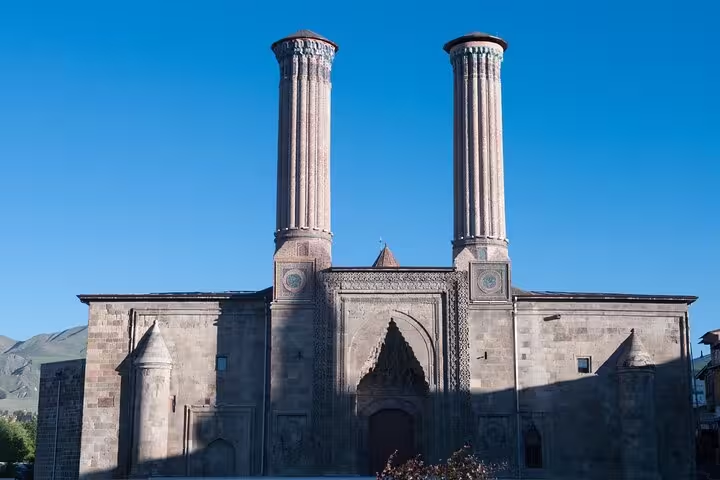
Cifte Minareli Medrese: This 13th-century Seljuk theological school is the city's most photographed landmark, featuring two towering fluted minarets and an ornately carved portal. The courtyard offers a peaceful retreat and a window into medieval Islamic architecture. The building was commissioned by the Ilkhanid princess Hunat Hatun and remains a masterpiece of Anatolian Seljuk stonework. Practical Tip: Visit in the morning for the best light on the carved facade and fewer visitors.
Erzurum Citadel (Kale): Perched on a rocky hill above the city, this Byzantine-era fortress was expanded by subsequent rulers including the Ottomans. A clock tower rises from the battlements, offering panoramic views of the city and surrounding mountains. The interior houses a small mosque and a cemetery with ancient tombstones. Practical Tip: Climb to the top of the clock tower for the best elevated view of the city.
Yakutiye Medrese: Built by the Mongol Ilkhanid governor Cemaleddin Yakut in the 14th century, this medrese is distinguished by its blue-tiled minaret and intricate relief carvings. Today it serves as the Turkish and Islamic Arts Museum, housing a collection of Anatolian artifacts. The architecture fuses Mongol and Seljuk influences in a rare and striking way. Practical Tip: Combine this visit with the nearby Three Tombs for a full Seljuk heritage walk.
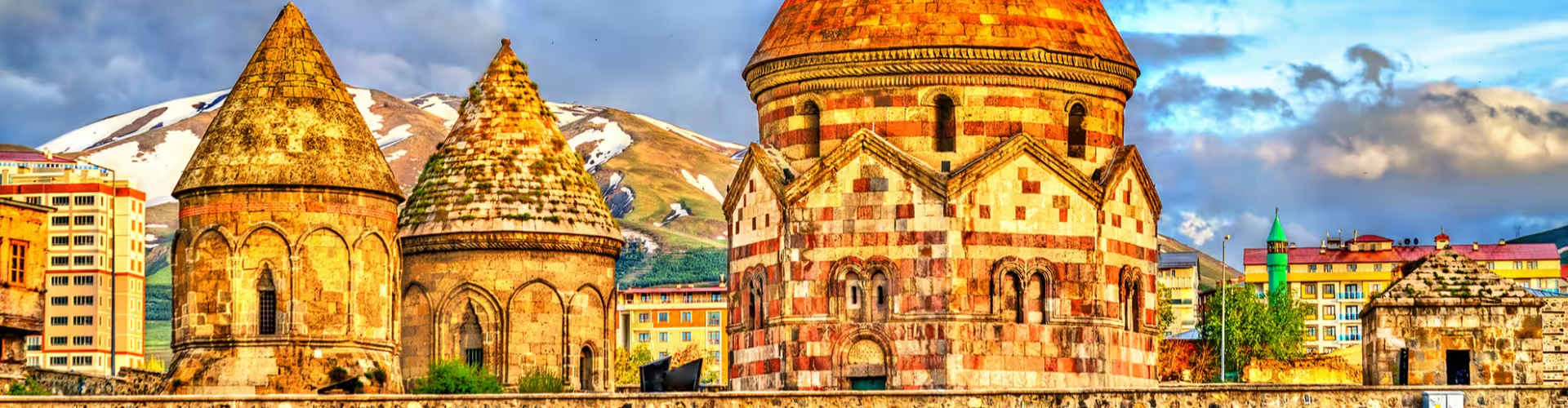
Three Tombs (Uc Kumbetler): These cylindrical stone mausoleums date to the 12th and 13th centuries and are among the finest examples of Seljuk funerary architecture in Turkey. Each tomb features a different decorative style, from geometric carvings to blind arcading. The site stands quietly in the middle of the city, often overlooked by casual visitors. Practical Tip: Visit at dusk when the stone glows warmly in the fading light.
Palandoken Ski Resort: One of Turkey's premier ski destinations, Palandoken offers runs suitable for all levels, with a vertical drop exceeding 1,600 metres. The resort is equipped with modern lifts, hotels, and equipment rental facilities. Snow conditions are reliable from December through March due to the high altitude. Practical Tip: Book accommodation on the slopes directly to avoid the daily commute from the city during peak ski season.
Erzurum Bazaar (Rustem Pasha Caravanserai): This 16th-century Ottoman caravanserai now houses shops selling the famous Oltu stone, a jet-black gemstone unique to the region. The bazaar atmosphere is authentic and unhurried, with artisans still crafting jewelry and prayer beads by hand. It is an excellent place to find a genuinely local souvenir. Practical Tip: Bargain respectfully and buy directly from craftsmen for the best quality and price.
Lala Mustafa Pasha Mosque: This graceful Ottoman mosque dates to the 16th century and reflects classical Ottoman architectural style with its single dome and elegant minaret. The interior is serene and well-maintained, with fine tilework and calligraphy. It is an active place of worship, so dress modestly when visiting. Practical Tip: Visit outside prayer times for a quiet interior experience.
Curated Itineraries
The Highlights (1 Day)
Start the morning at the Cifte Minareli Medrese and the Three Tombs, taking time to appreciate the Seljuk stonework. Move on to Yakutiye Medrese before lunch, then explore the Rustem Pasha Caravanserai and Oltu stone workshops in the afternoon. End the day with a climb to the Citadel at sunset for sweeping views over the city.
Deep Dive (2 to 3 Days)
Day one covers the core Seljuk and Ottoman monuments in the city centre. Day two is dedicated to Palandoken, whether skiing in winter or hiking the mountain trails in summer. On day three, venture out to the Tortum Waterfall and Tortum Lake to the north, returning via the Ishak Pasha Palace region or the Coruh Valley. This itinerary balances culture, nature, and adventure in equal measure.
Flavors of Erzurum
Cag Kebabi: The city's most iconic dish, this horizontally stacked lamb kebab is sliced to order and served on a skewer with flatbread and grilled vegetables. It differs entirely from the vertical donner kebab found elsewhere in Turkey. Order it at a dedicated cag kebab restaurant for the authentic experience.
Kadayif Dolmasi: A unique local dessert of shredded wheat pastry stuffed with walnuts and soaked in syrup. It is crispy on the outside and rich on the inside, best enjoyed warm with a glass of tea.
Erzurum Manti: The local version of Turkish dumplings, these are smaller and denser than those found in central Turkey, served with yogurt, butter, and dried mint. They are a staple of home cooking and local restaurants.
Kavut: A traditional porridge-like dish made from roasted flour, butter, and honey, often eaten for breakfast. It is warming, filling, and deeply rooted in the pastoral culture of Eastern Anatolia.
Ayran: The cold, salted yogurt drink is the preferred accompaniment to almost every meal here. Locally made ayran has a thicker consistency and sharper taste than commercial versions.
Turkish Tea: Served endlessly in tulip-shaped glasses, tea is the social currency of the city. Accept offers of tea in shops and bazaars as it is a genuine gesture of hospitality, not a sales tactic.
Navigation and Transport
The city has a functional municipal bus network and shared minibuses (dolmus) that connect most neighbourhoods. Taxis are affordable and easy to flag down on main streets. The city centre is compact enough to explore on foot once you are based near the historic core. For Palandoken, a short taxi or dolmus ride from the centre will suffice. The main intercity bus terminal (otogar) connects the city to Ankara, Istanbul, and other eastern cities with frequent overnight services. Erzurum Airport (ERZ) operates domestic flights to Istanbul and Ankara, making it accessible for time-limited travellers.
Beyond the Center: Day Trips
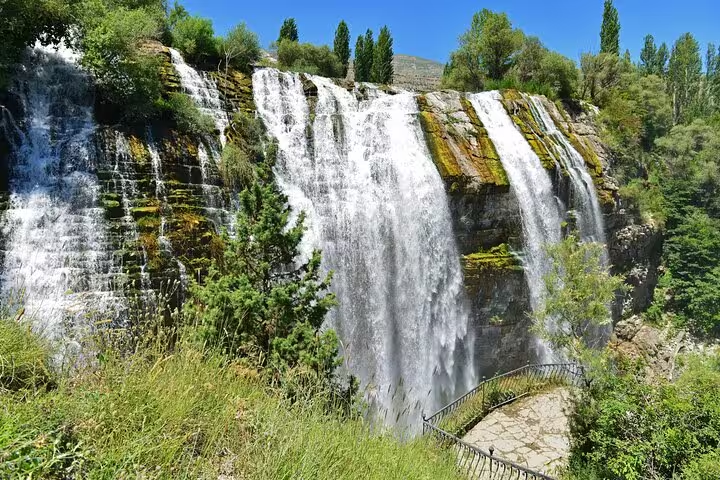
Tortum Waterfall and Lake: Located about 85 kilometres north, Tortum is one of Turkey's most impressive natural cascades, fed by the turquoise waters of Tortum Lake. The drive through the Coruh Valley is scenic and dramatic. Visit in spring or early summer when water levels are at their highest.
Ishak Pasha Palace (Dogubayazit): A stunning semi-ruined Ottoman palace perched on a clifftop near the Iranian border, roughly 200 kilometres east. The palace combines Ottoman, Persian, and Armenian architectural styles. It is best combined with a view of Mount Ararat on a clear day.
Oltu and Oltu Stone Workshops: The town of Oltu, about 100 kilometres north, is the source of the famous jet-black oltu stone. Visiting the workshops here gives context to the crafts sold in the city bazaars. The surrounding canyon scenery is also worth the journey.
{{check-circle}} Insider Tips for Travellers
- Pack layers regardless of season. Temperatures can drop sharply after sunset even in summer at this altitude.
- The city observes conservative social norms. Dress modestly, especially near mosques and in traditional neighbourhoods.
- Book ski accommodation well in advance for the December to February peak season, as Palandoken fills quickly.
- Most historic sites are free or charge minimal entry fees. A full day of sightseeing costs very little.
- English is not widely spoken outside hotels and tourist sites. Learning a few Turkish phrases will be warmly appreciated.
- Try to visit the bazaar on a weekday morning when artisans are actively working and the atmosphere is most authentic.
- If travelling by intercity bus, overnight sleeper services are efficient and save on accommodation costs.
Frequently Asked Questions
- What is Erzurum best known for?
- Erzurum is best known for its Seljuk and Ottoman heritage, particularly the Cifte Minareli Medrese, and for the Palandoken ski resort, one of Turkey's finest winter sports destinations.
- Is Erzurum safe for tourists?
- The city is considered safe for travellers. It is a conservative and close-knit community where hospitality toward visitors is deeply valued.
- When is the best time to ski in Erzurum?
- The best skiing conditions are from December through March, when reliable snowfall and cold temperatures keep the Palandoken slopes in excellent condition.
- How do I get to Erzurum from Istanbul?
- Erzurum is accessible from Istanbul via direct domestic flights (approximately 2 hours) or by overnight intercity bus (around 18 to 20 hours).
- What is the local specialty food of Erzurum?
- Cag Kebabi is the most celebrated local dish, a horizontally spit-roasted lamb kebab unique to the region and widely regarded as one of Turkey's great regional specialties.
Erzurum is a high-altitude city located in Eastern Anatolia, Turkey, situated at over 1,800 metres above sea level on a plateau surrounded by the Palandoken Mountains. It serves as the cultural, historical, and economic centre of the eastern highlands, known for its Seljuk and Ottoman architectural heritage, harsh continental climate, and proximity to major ski infrastructure. The city connects travellers to remote landscapes including the Coruh Valley, Tortum Waterfall, and the Iranian border region near Dogubayazit.
Eastern Anatolia, Turkey, High-Altitude City, Winter Sports Destination, Seljuk Heritage, Cultural Travel, Adventure Tourism