
Pena Palace sits at 529 metres above sea level, visible from much of the Lisbon coastline on clear days.
Byron called it his 'glorious Eden.' He wasn't wrong.
Sintra: A Field Guide to Portugal's Most Layered UNESCO Landscape
Thirty minutes from Lisbon, the Serra de Sintra holds more royal palaces, esoteric gardens, and Romantic-era follies per square kilometre than almost anywhere else in Europe.
UNESCO inscribed the Cultural Landscape of Sintra in 1995, recognising not just its individual monuments but the interplay between human ambition and a genuinely unusual microclimate — Atlantic moisture funnelled against the Serra creates a forest lush enough to feel sub-tropical in midsummer. The result is a place where nine centuries of Portuguese royal taste are stacked, layer upon layer, across a few hillside kilometres.
The village of Sintra proper is compact, its historic centre wedged between the Palácio Nacional — whose twin conical chimneys have dominated the skyline since the 15th century — and the steep lanes leading upward through eucalyptus and fern. From the centre, roads spiral out to Pena Palace, the Moorish Castle, Monserrate, and Quinta da Regaleira. Each demands time on its own terms. Visitors who attempt all four in a single unsupported afternoon tend to finish exhausted and underinformed, having spent most of their energy on logistics rather than context.
"I have seen the most beautiful country in the world, and I have seen Sintra. Sintra is more beautiful." — Lord Byron, letter to his mother, 1809
What Byron encountered was a landscape already ancient by his standards: Moorish fortifications from the 8th century, a royal palace used as a summer residence since at least the 1200s, and a Romanticist building culture that would, within decades of his visit, produce Pena Palace and Monserrate in their current forms. The UNESCO designation captures that continuity — this is not a theme park assembled around a single monument, but a living palimpsest of taste, power, and ecology.
How to Choose the Right Way In
The standard day-tripper's approach — Lisbon Rossio station to Sintra by train, then bus 434 to Pena — works, but it concentrates crowds and removes any ability to pace yourself or reach sites beyond the central circuit. Guided formats offer more flexibility than they might seem: a private vehicle unlocks Cabo da Roca (the westernmost point of continental Europe), the Sintra-Cascais Natural Park coastline, and the lesser-visited Convento dos Capuchos, none of which are on the standard bus route. A focused walking tour, on the other hand, gets into the symbolic detail of Quinta da Regaleira's initiation well in a way that a full-day itinerary rarely can.
Full-Day Tours from Lisbon
Tuk Tuk & Group Day Trips
Not sure which format suits your itinerary? Browse all available Sintra tours and filter by group size, duration, and included sites.
View all Sintra tours →Going Deeper: Walks, Food, and the Village Itself
Most visitors arrive with their eyes fixed on the hilltop palaces and leave without spending meaningful time in the historic centre below. Sintra's old town — the Vila Velha — is a working UNESCO-listed settlement with its own layers: the Palácio Nacional at its heart, a grid of lanes lined with 19th-century villas, pastry shops selling travesseiros and queijadas (the latter a cheese-and-egg tart whose recipe hasn't changed substantially since the 18th century), and a market culture tied to the local agricultural belt. A walking or food-focused tour reorients the visit around this human geography.
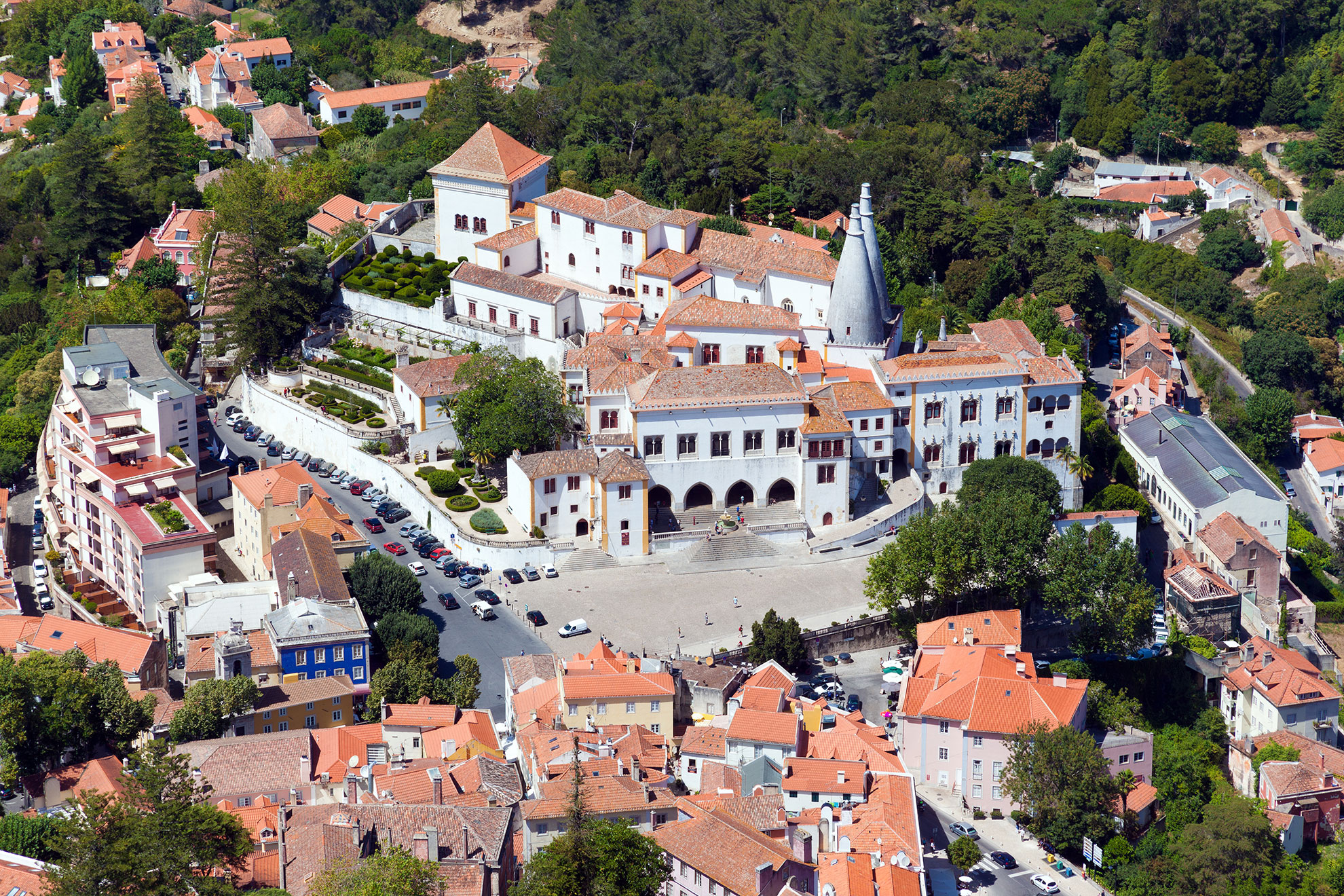
The Vila Velha's lanes are walkable in under an hour — but a guide unlocks the context behind the tilework, the confectionery, and the surviving manor houses.
Quinta da Regaleira deserves particular attention on foot. Built between 1904 and 1910 for the eccentric millionaire António Augusto Carvalho Monteiro, the estate is dense with Masonic and Rosicrucian symbolism — the initiation well (poço iniciático) descends nine levels in a spiral staircase that emerges via underground tunnels at the garden lake. Its meaning is debated by scholars; a walking guide who knows the iconography makes the site legible in a way that signage alone cannot.
"Sintra is not a place you understand on the first visit. Each monument is a door, and most people only knock on one or two." — Local heritage guide, interviewed for this piece
Focused Walks & Food Experiences
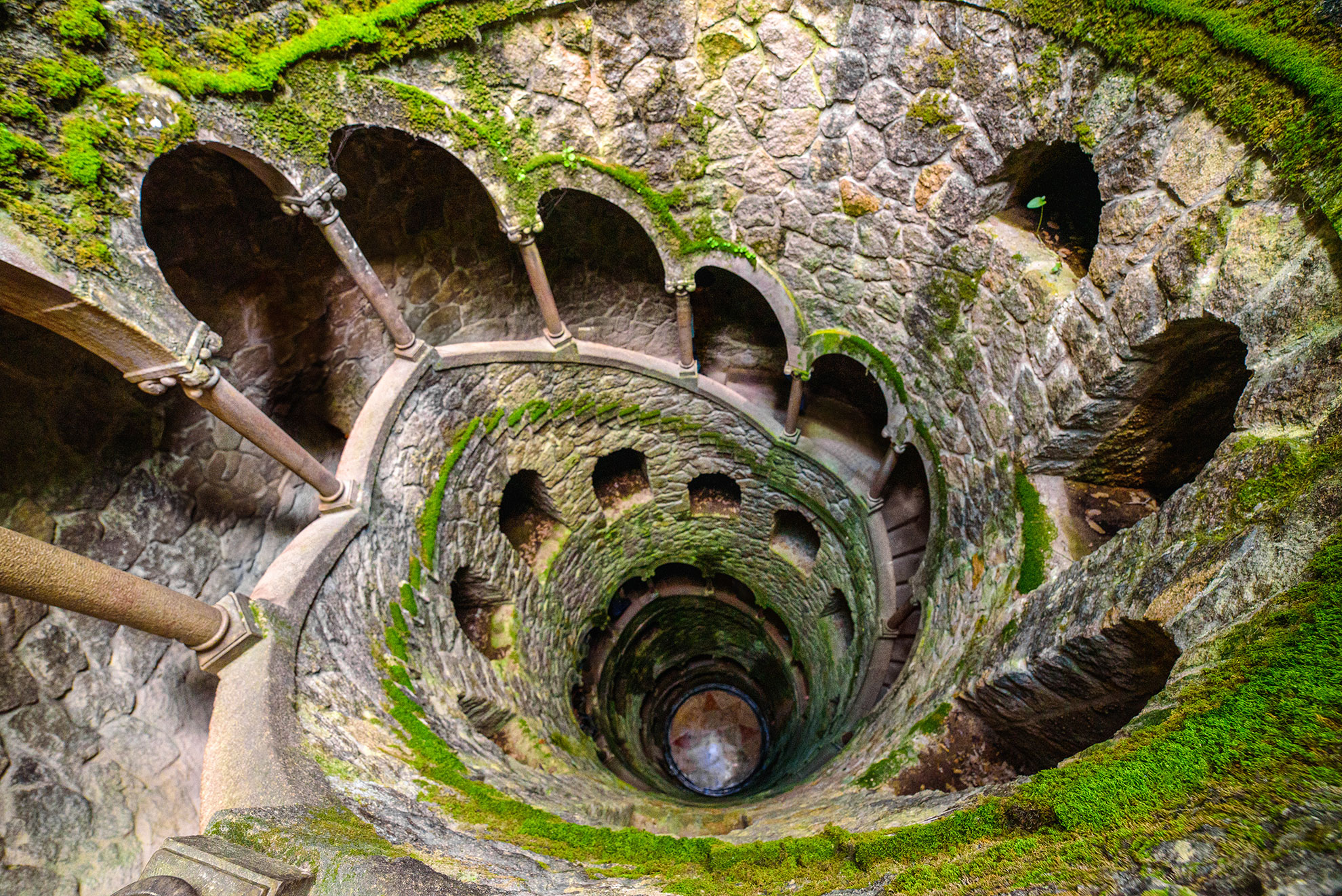
Quinta da Regaleira's poço iniciático — a nine-level spiral well built for ceremonial rather than practical use, connected to the gardens by a network of underground passages.
What the UNESCO Designation Actually Covers
The 1995 inscription encompasses the Cultural Landscape of Sintra — a boundary that runs from the historic centre across the Serra de Sintra to the Estoril coast. Within it: Pena Palace (1840s Neo-Manueline and Neo-Gothic, commissioned by Ferdinand II), the Palácio Nacional (medieval origins, heavily modified under Manuel I in the early 16th century), the Moorish Castle (Alcáçova, 8th–10th century), Monserrate Palace (rebuilt 1858–1863 by James Knowles Jr. for Francis Cook), and Quinta da Regaleira. Each site is independently ticketed and managed; the UNESCO buffer zone also includes the natural park, which covers approximately 33 square kilometres of Atlantic forest, cliff, and coastal heath. Understanding this geography helps explain why the most rewarding visits tend to move between the cultural and the natural — the two are genuinely inseparable in Sintra.
Whether you're planning a private day with the Atlantic coast or a focused walk through the UNESCO old town, ToursXplorer's full Sintra listings cover the complete range of formats and group sizes.
Explore all Sintra tours →Frequently Asked Questions
How far is Sintra from Lisbon, and what's the best way to get there on a tour?
Sintra is approximately 28 kilometres northwest of central Lisbon — around 35–40 minutes by road depending on traffic. Most guided tours depart from central Lisbon and include door-to-door transport, which removes the need to navigate Sintra's parking restrictions and limited bus network independently.
Is one day enough to see Sintra's main UNESCO sites?
One full day covers two to three major sites comfortably if you start early. Attempting all five UNESCO-listed properties in a single day leaves little time for genuine engagement with any of them. A full-day tour with a guide who can prioritise based on your interests tends to be more satisfying than a self-directed sprint through all the ticket queues.
When is the best time of year to visit Sintra?
March to May and September to October offer the best balance of mild temperatures, lower crowds, and open sites. July and August are peak season — sites are busier, prices are higher, and timed-entry slots at Pena and Regaleira fill quickly. Sintra's microclimate means it can be overcast even in summer, which some visitors find adds rather than subtracts from the atmosphere.
What's the difference between a private tour and a group tour in Sintra?
Private tours offer a dedicated vehicle, a flexible itinerary, and a guide focused entirely on your group. They typically cost more but allow access to sites and routes — including the Colares vineyards, Cabo da Roca, and the Natural Park's coastal paths — that standard group tours don't include. Group tours follow a fixed itinerary and are better suited to solo travellers or those who prefer a lower price point.
Are there tours that combine Sintra with Cascais on the same day?
Yes — several tours listed above cover both. The Sintra-to-Cascais route follows the Atlantic coast through the Natural Park, and the contrast between the forested serra and the sun-facing seafront town makes for a coherent day geographically. Cascais itself is not UNESCO-listed but sits within the same coastal cultural landscape and functions well as an afternoon destination after a morning in Sintra.
What food and drink is Sintra known for?
Queijadas (small cheese and egg tarts with a pastry shell) and travesseiros (almond-cream puff pastries) are Sintra's signature confections, sold in dedicated shops in the historic centre. The Colares DOC wine region, within the UNESCO buffer zone, produces rare red wines from ungrafted Ramisco vines grown in sand — available at local estates and on dedicated food and wine tours.