




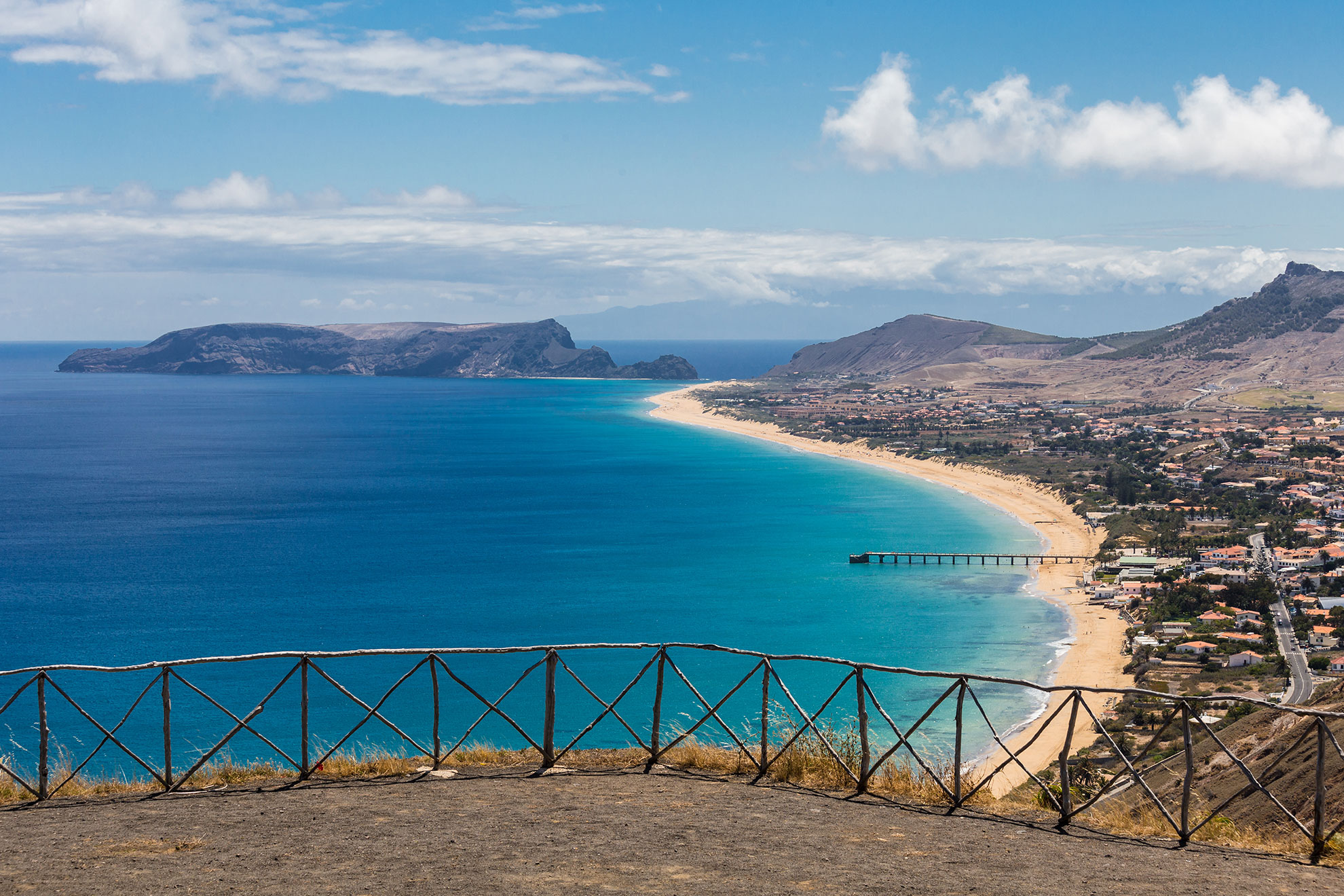
Porto Santo's velvet strand stretches unbroken for nine kilometres along the island's southern coast.
The Golden Island
Nine Kilometres of Gold: Why Porto Santo Is the Atlantic's Ultimate Wellness Retreat
Volcanic silhouettes, mineral-rich sands, and turquoise clarity — Porto Santo asks only that you slow down long enough to feel it.
Forty kilometres north-east of Madeira, a small island sits in the Atlantic like a quiet footnote to history. Porto Santo is just 11 kilometres long, home to fewer than 5,000 permanent residents, and yet it holds one of the most remarkable beaches in Europe — a continuous amber arc of fine, mineral-laden sand that has been drawing visitors seeking restoration since the 18th century. What makes it unusual is not just the scale of the beach, but the science behind it.
The sands of Porto Santo are composed of a particular blend of shell fragments, coral, and volcanic minerals that researchers have documented for their therapeutic effect on joints and skin — a practice known locally as geotherapy. Visitors bury themselves up to their waists in the warm sand during low tide, a ritual that has been prescribed by Portuguese physicians for conditions ranging from arthritis to psoriasis. But you don't need a medical referral to appreciate the ritual. Walking barefoot along nine kilometres of undisturbed velvet sand, with volcanic silhouettes rising behind you and the Atlantic stretching ahead, is its own kind of medicine.
Porto Santo does not compete with Madeira's drama. It offers something quieter — the long amber afternoon, the sound of water on warm stone, the sense that the day has more hours than you remembered.
The island's interior is a different landscape entirely. Stripped of Madeira's dense laurel forests, Porto Santo's terrain is drier, more exposed, and geologically raw. Ancient basalt formations, eroded hillsides, and volcanic peaks define the horizon. The island's highest point, Pico do Facho at 517 metres, offers a panorama that extends from the islets of Ilhéu de Baixo all the way to the coast of Africa on a clear morning. These are not ornamental viewpoints — they are windows into a landscape shaped over 14 million years of volcanic activity.
Into the Volcanic Interior: Hiking Porto Santo's Peaks and Caves
The island rewards those who leave the beach behind, even briefly. Its rocky terrain conceals prismatic basalt formations, eroded lava tubes, and ridge-top trails with unobstructed sea views. The Pico de Ana Ferreira, on the western edge of the island, is where the geology becomes most visually distinct: columns of basalt fan outward like a natural pipe organ, dark and geometric against a pale sky. Guides who lead groups here typically explain the volcanic process that produced these formations — slow cooling of lava under specific pressure conditions — which transforms an otherwise aesthetic spectacle into something genuinely legible.
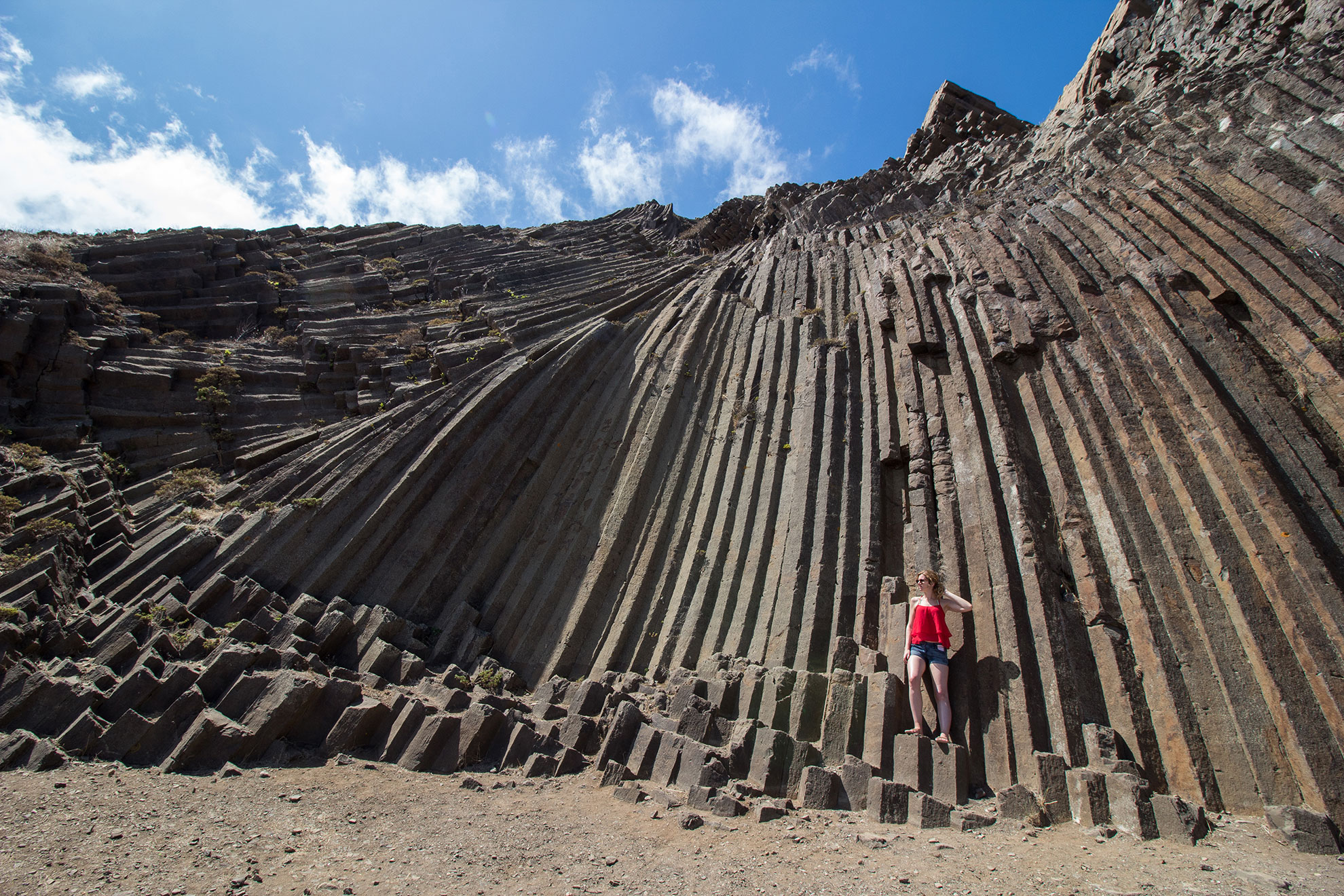
The basalt columns at Ana Ferreira are among the most geometrically precise volcanic formations in the Atlantic islands.
Trails, Peaks & Cave Explorations
On and Under the Water: Porto Santo's Coastal Life
The turquoise clarity of Porto Santo's coastal waters is a function of the island's geology and limited agricultural runoff. There are no rivers feeding sediment into the bays, and the sea floor transitions from pale sand to volcanic rock with a sharpness that makes snorkeling particularly rewarding. The island's most-discussed underwater feature is the Madeirense shipwreck, an intentionally sunk ferry that now rests at 27 metres and has been colonised by moray eels, grouper, and occasional octopus — a draw for divers but also visible in outline from the surface on calm days.
For those who prefer to stay closer to the surface, the coastline's sea caves and islets — particularly around the western end of the island — offer kayak routes through arches and into partially enclosed chambers where the water takes on amber tones from the reflected basalt. After dark, the same clarity that makes daytime snorkeling productive becomes something else entirely: bioluminescent plankton, hunting squid, and the disorienting sensation of open water lit only by a diver's torch.
The sea here holds fewer secrets than the ocean normally does. The water is transparent enough that you feel less like you are visiting the underwater world and more like you are reading it.
Water Adventures: Kayak, Snorkel & Island Coast
Looking for the full picture? Browse every guided tour, coastal excursion, and island experience available on Porto Santo — from volcanic treks to night snorkeling.
Explore all Porto Santo tours →The Island in a Day: Full-Day Circuits
Porto Santo is compact enough that a single day of guided exploration can cover the island's main viewpoints, coastal edges, and interior terrain without feeling rushed. The classic full-day circuit moves from the eastern lighthouse point past Portela, up toward Pico do Facho, across to the basalt formations on the western end, and back along the southern coast — a route that reads as a cross-section of the island's geological history. Some operators offer Jeep or minibus versions of this circuit; others structure the day around a combination of hiking and water activities.
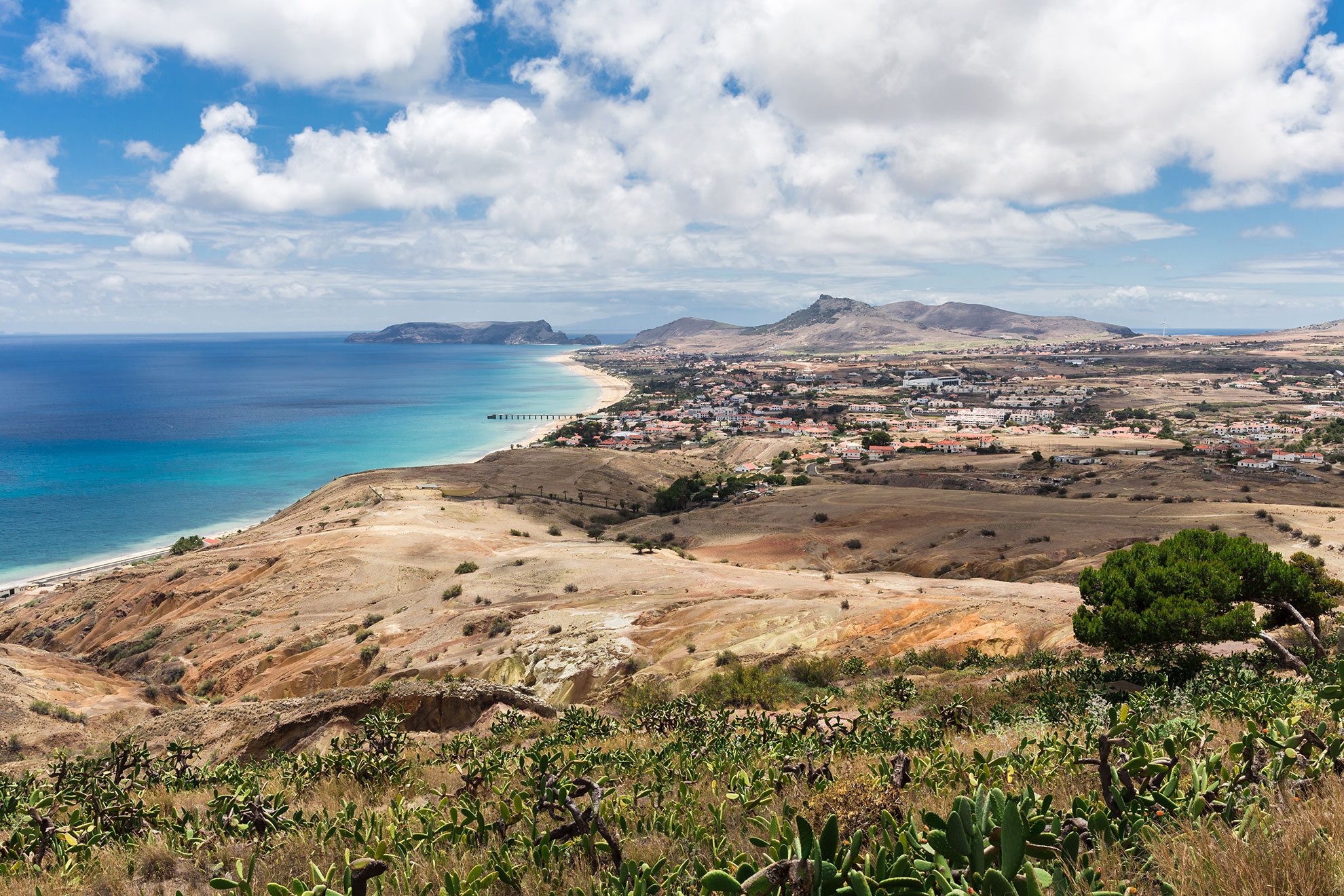
The Portela viewpoint sits at the island's interior ridge, offering a clear east-to-west perspective across the terrain.
Full-Day Island Experiences
Porto Santo and the Weight of History
Christopher Columbus lived on Porto Santo for a period in the 1470s, when he was married to Filipa Moniz Perestrelo, daughter of the island's first governor. His house, now a small museum in the main village of Vila Baleira, holds reproductions of navigation instruments and early Atlantic charts — modest exhibits that nonetheless connect this quiet island to the beginning of a century of European maritime expansion. It is worth an hour of anyone's time, if only to stand in a house where the ocean outside was still, in practical terms, unmapped. The contrast with the present — ferries, GPS, package tourism — is quietly disorienting.
The village itself moves at a pace appropriate to a settlement of fewer than 4,000 people. The main square has a handful of cafés where fresh Bolo do Caco — the flat, garlic-buttered bread that serves as Porto Santo's default meal accompaniment — is available throughout the day. It is worth eating at least once by the sea, where the smell of salt air and the warmth of the bread operate in simple, reliable combination.
Porto Santo's guided tours book up quickly during peak summer months, particularly the smaller-group hiking and night snorkeling options. Reserve your place early to avoid missing the experiences best suited to your time on the island.
View all available Porto Santo tours →Frequently Asked Questions
How do I get to Porto Santo from Madeira?
There are two main options: a 2.5-hour ferry operated by Porto Santo Line, departing from Funchal's harbour, or a 20-minute flight with SATA Air Açores connecting Madeira International Airport to Porto Santo Airport. The ferry is the more scenic option and allows you to bring a bicycle or luggage more easily. Flights are faster but more weather-dependent in winter months.
Is Porto Santo suitable as a day trip from Madeira?
Yes, and the full-day guided tours on this list are specifically designed for visitors arriving on the morning ferry and departing in the evening. However, most people who make the crossing find they wish they had stayed longer. A minimum of two nights allows you to explore the hiking trails and experience the beach at different times of day.
What is geotherapy and how does it work at Porto Santo?
Geotherapy refers to the therapeutic use of the island's mineral-rich sands, which contain magnesium, calcium, and trace elements from volcanic and shell-derived material. The practice involves burying the lower body in warm sand near the shoreline during the warmer months, typically in the afternoon when the sand has absorbed maximum heat. It has been studied by the University of Madeira and is recommended by some rheumatologists for joint inflammation and skin conditions.
What fitness level do the hiking tours require?
The trails vary considerably. The Pico do Facho panoramic trail involves a steady ascent on well-marked paths and is accessible to most walkers with reasonable fitness. The Ana Ferreira trek and the Terra Chã to Pico Branco route involve some uneven ground and exposure on ridges. None require technical climbing, but comfortable footwear with grip is important on the volcanic rock surfaces.
Is night snorkeling safe for beginners?
The private night snorkeling tour is conducted in sheltered bays with calm conditions, and guides assess participants before entering the water. Basic swimming ability and comfort in open water are required, but prior snorkeling experience is not essential. Group size is kept small to allow close supervision. Wetsuits and torches are provided.
When is the best time of year to visit Porto Santo?
The island has a warm, dry climate year-round with significantly less rainfall than Madeira. Sea temperatures are comfortable for swimming from June through October. July and August bring the largest crowds and the warmest conditions for beach activities. Spring and autumn offer quieter trails, pleasant temperatures for hiking, and the best visibility for snorkeling. Winter remains mild and is well-suited to walking tours.