




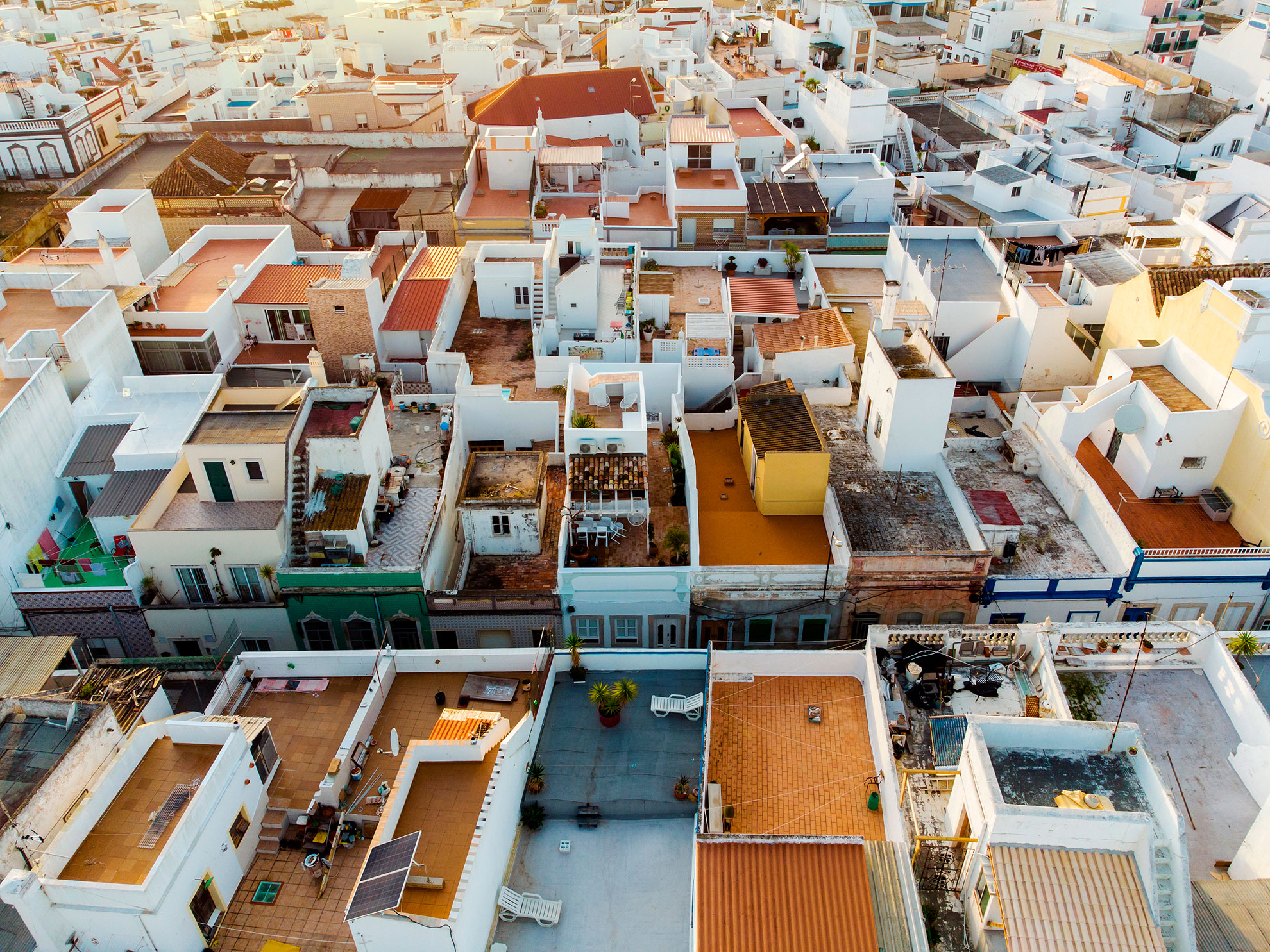
The açoteias — flat rooftop terraces of Olhão's Bairro dos Pescadores — echo the architectural traditions of North Africa across the water.
The Cubist City
Salt, Scales, and Secret Alleys: Uncovering the Raw Beauty of Olhão
While the Algarve sells sunbeds and cocktails to the masses, Olhão keeps its back turned to the postcard — a working port city where the fish market opens before dawn and the labyrinthine streets still carry the salt of centuries.
Olhão is the kind of place that resists easy description. It is not a resort. It is not a museum town. It is a dense, textured, living settlement of roughly 45,000 people who have fished the Ria Formosa for generations — and who continue to do so, quietly and without fanfare, while the tourists stream west toward Albufeira and Lagos.
The city sits on the eastern Algarve coast, separated from the Atlantic by a chain of shifting sandbank islands that form the outer edge of the Ria Formosa Natural Park — one of Portugal's most ecologically significant wetland systems. From the waterfront, those islands look deceptively close. The crossing takes ten minutes by boat, but the world you arrive in feels entirely removed from the mainland. No cars. No resorts. Wooden fishing boats, narrow sandy paths, and water so clear you can count the shells on the seabed.
Back on the mainland, the city holds its own quiet drama. The Bairro dos Pescadores — the old Fishermen's Quarter — is a tightly woven grid of whitewashed, flat-roofed houses whose geometry and scale owe more to North Africa than to the Iberian Peninsula. The flat-topped rooftops, known as açoteias, were traditionally used to dry fish and keep watch over incoming boats. Sailors who had worked the Morocco route brought back architectural memory alongside their cargo, and it settled into the plaster of every wall.
"In Olhão, the streets are not made for wandering — they are made for knowing. The traveler who enters without a map will find what the traveler with one will miss entirely."
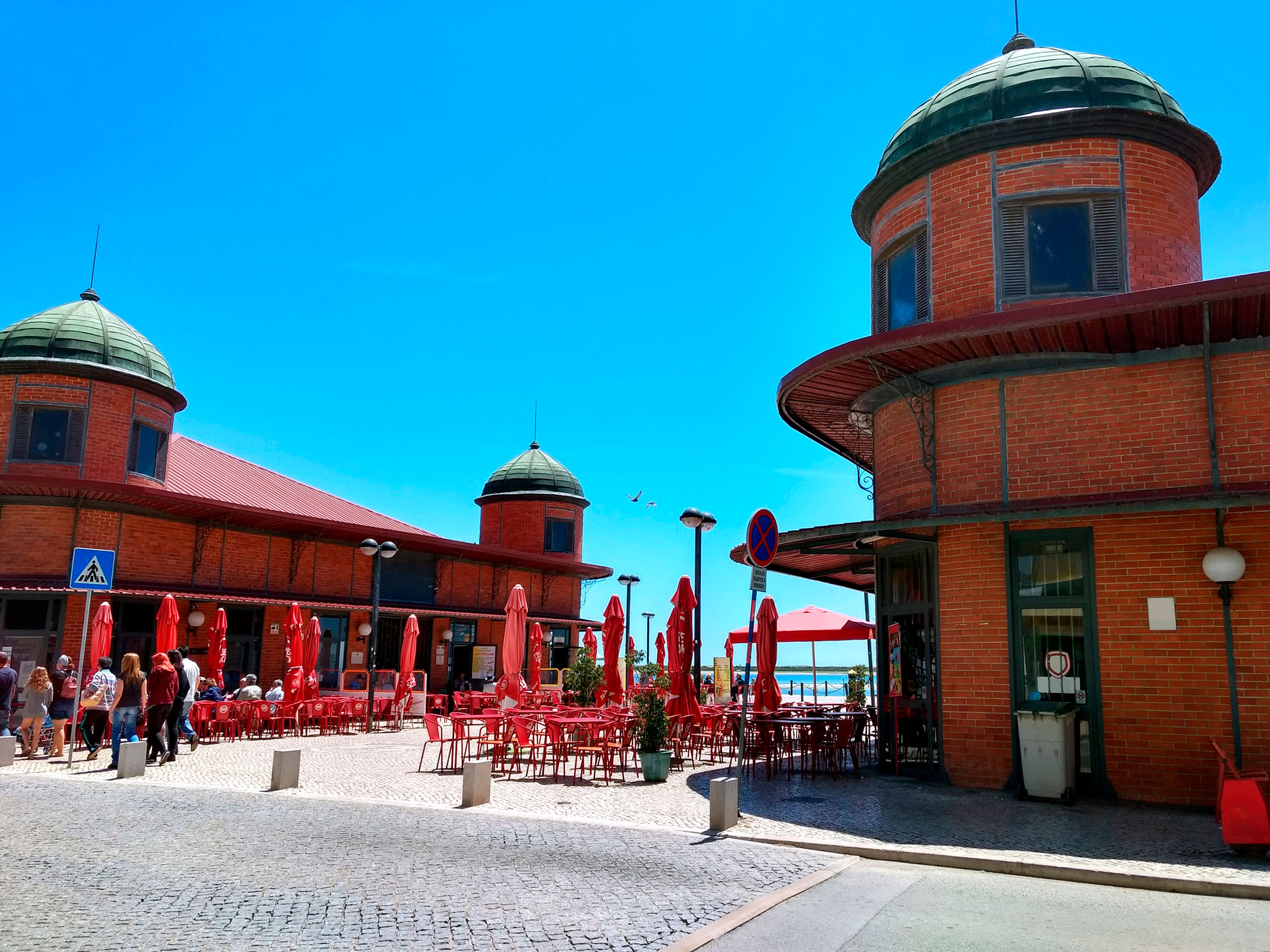
Olhão's twin markets — the Mercado de Pescado and Mercado de Levante — were built in 1912 and remain the social and gastronomic core of the city.
The Markets: Where the City's Pulse Is Loudest
The twin red-brick market pavilions on the waterfront are the most cited symbol of Olhão, and for good reason. Built in 1912 in a Moorish-revival style that mirrors the city's own architectural identity, the Mercado de Pescado (fish market) and the adjacent Mercado de Levante (fruit and vegetable market) are not tourist attractions — they are functional, crowded, and chaotic in the best possible sense. Arrive before nine in the morning if you want to watch the fish vendors arrange their displays: bream, sea bass, clams, razor clams, octopus, and whatever the trawlers brought in overnight. The smell is not for the faint-hearted. The energy is.
The surrounding streets fill quickly with locals doing their daily shopping, and the cluster of tascas and petisco bars nearby begin setting out tables around midday. This is where you eat in Olhão — not in the tourist-facing restaurants along the promenade, but in the narrow-fronted spots where the menu is handwritten on a chalkboard and the arroz de lingueirão (razor clam rice) arrives in a terracotta pot still bubbling. The city's petisco culture is distinctive: small shared plates of cured fish, pickled vegetables, and salt cod fritters, eaten slowly over cold wine at unhurried pace.
On the Water: Navigating the Ria Formosa
The Ria Formosa Natural Park is the reason most visitors end up in Olhão rather than simply passing through. The lagoon system stretches for 60 kilometres along the Algarve coast, sheltering a mosaic of salt marshes, tidal channels, mudflats, and barrier islands behind its outer dune ridges. The biodiversity is significant: the park hosts over 200 bird species, the largest concentration of seahorses in the Iberian Peninsula, and serves as a crucial overwintering ground for wading birds from northern Europe and sub-Saharan Africa.
Island & Lagoon Boat Tours
Wildlife & Nature on the Lagoon
Private & Sunset Experiences
All tours listed here depart from Olhão or the surrounding Ria Formosa waterfront. Browse the full range of experiences — from half-day island hops to specialist wildlife excursions — on the ToursXplorer Olhão search page.
View all Olhão tours →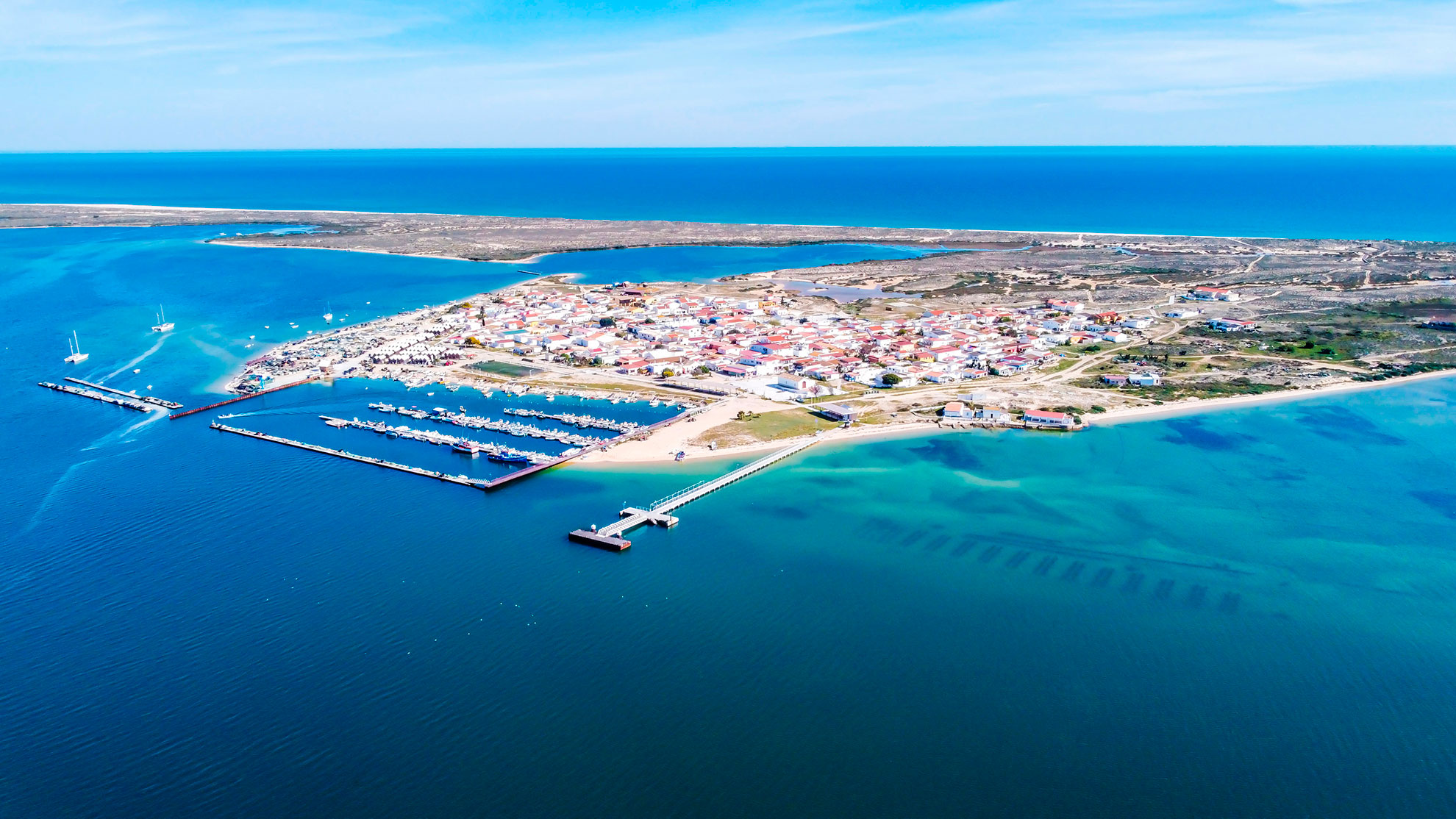
Ilha da Culatra supports a permanent community of around 700 residents who live without road access — supplies arrive by boat, as they always have.
The Islands: Life Without Roads
Ilha da Armona and Ilha da Culatra are separated by a few hundred metres of channel and several worlds of character. Armona is the more visited: a long, low sandbank with a small seasonal settlement on the lagoon side and a wide Atlantic beach on its outer shore. The water in the channels between the mainland and the island is shallow and warm, and the absence of development beyond a handful of summer cafés gives it a stripped quality that the more accessible beaches of the central Algarve have long since lost.
Culatra is more complex. It has a permanent population — roughly 700 people — living in a dense cluster of single-storey houses painted in primary colours, served entirely by boat. There are no cars, no bus stops, and no chain establishments. The residents fish, repair nets, and maintain a community that has functioned this way for generations. Visitors who step off the ferry and walk into the village's interior rather than straight to the beach will find a way of living that feels anachronistic in the best sense — not preserved artificially, but simply continuing because it has not needed to change.
"The barrier islands are not beaches with amenities. They are ecosystems with sand — and the distinction matters to everyone who has spent an afternoon on them."
Legends in the Plaster: The Folklore of the Fishermen's Quarter
Olhão's historic core carries a weight of maritime legend that the city's residents neither dismiss nor aggressively promote. The most persistent is the story of Floripes — a spectral figure said to move through the Bairro dos Pescadores after dark, her presence announced by the sound of shuffling on cobblestones in empty alleys. Whether she is the ghost of a fisherman's wife who waited too long for a boat that never returned, or a older piece of pre-Christian folklore absorbed into local Catholic tradition, depends on who is telling the story and how late it is.
More documented, if no less strange, is the episode of 1808 when Olhão's residents — without formal military backing — launched their own uprising against Napoleonic occupation, eventually sending a handmade vessel called the Bom Sucesso across the Atlantic to inform the exiled Portuguese royal family in Brazil that their country was fighting back. The city has a particular pride in this episode that surfaces in conversation with older residents in a way that feels personal rather than historical. The narrow streets where those events unfolded are still there, largely unchanged: sun-bleached facades, heavy wooden doors, azulejo panels faded to near-illegibility, and the occasional açoteia terrace visible from the street below.
Whether you are arriving for the markets, the islands, or the wildlife of the Ria Formosa, the best way to understand Olhão from the water is through one of the guided experiences departing from its pier. Find the tour that fits your pace and interests below.
Explore all Olhão experiences →Practical Questions About Visiting Olhão
How do you get to the barrier islands from Olhão?
Public ferries operate from Olhão's waterfront pier to Ilha da Armona and Ilha da Culatra year-round, with more frequent services in summer. Guided boat tours offer a structured alternative that includes multiple island stops and commentary on the Ria Formosa ecosystem. The crossing to Armona takes approximately ten minutes; Culatra around twenty.
When is the best time of year to visit Olhão?
Olhão functions year-round as a working city, which means it is worth visiting in any season. Spring (April–May) and autumn (September–October) offer the most manageable temperatures and the best conditions for birdwatching in the Ria Formosa. Summer is busy on the islands but the markets remain active and the petisco bars open their terraces. Winter is quiet, cold at night, and particularly atmospheric in the Bairro dos Pescadores.
Are there cars on Ilha da Armona and Ilha da Culatra?
No. Both islands are car-free. On Culatra, this reflects the island's permanent settlement structure — all goods and residents arrive by boat. On Armona, the absence of vehicles is simply a function of the island's size and seasonal character. Visitors walk or cycle on hired bikes during summer.
What wildlife can be seen in the Ria Formosa Natural Park?
The park is one of the most biodiverse coastal wetlands in southern Europe. Birdwatchers can expect flamingos, spoonbills, avocets, black-winged stilts, and a wide range of waders and wildfowl depending on the season. The seagrass beds support seahorses — both short-snouted and long-snouted species — as well as seahorse relatives like pipefish. Dolphin watching excursions move into open Atlantic waters where common dolphin pods are regularly encountered.
Where should you eat in Olhão beyond the tourist waterfront?
The streets immediately behind the twin markets are where most locals eat. Look for handwritten daily menus offering arroz de lingueirão (razor clam rice), cataplana (a sealed copper pot dish of shellfish and cured sausage), or grilled bream with boiled potatoes. Petisco bars serving shared plates of pickled fish, cured meats, and bacalhau fritters operate from late morning and are best visited at a slow pace with cold local wine.
Is Olhão suitable for travellers who are not interested in beach tourism?
Entirely. The city's appeal is primarily architectural, culinary, and ecological. The Bairro dos Pescadores rewards slow walking. The markets are a destination in themselves. The Ria Formosa wildlife tours cover a different register of the Algarve's natural environment than anything beach-adjacent. Olhão is one of the few towns in the Algarve where the interior of the place is as interesting as what surrounds it.