




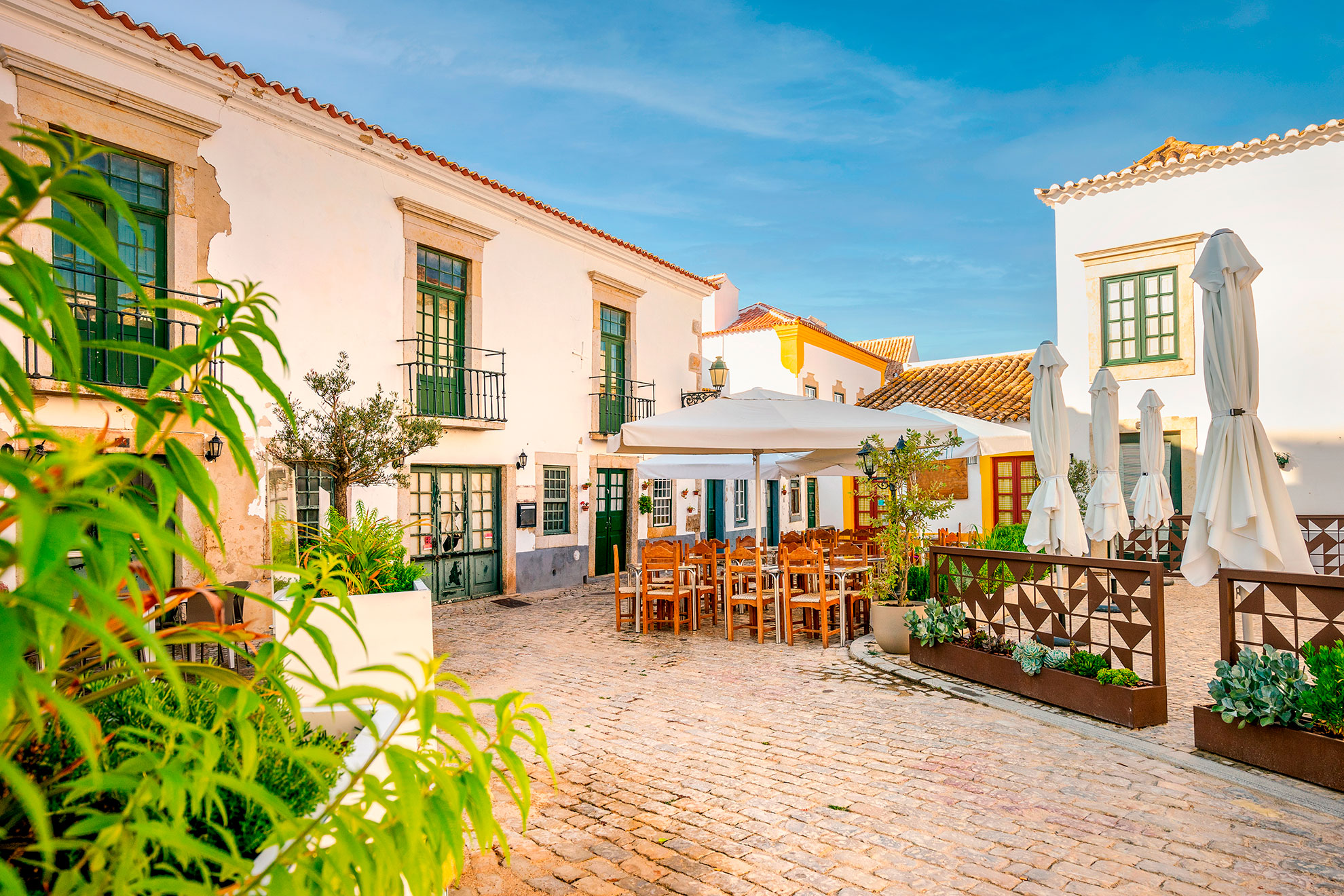
The Vila Adentro sits at the edge of the Ria Formosa — a town that has always looked outward across the water.
Gateway to the Ria
Beyond the Airport: Discovering the Historic Heart and Salt-Laced Soul of Faro
Where Moorish echoes meet tidal lagoons — Faro rewards those who linger long enough to look past the departure boards.
Most visitors to the Algarve encounter Faro only in transit: a conveyor belt, a taxi rank, the blurred scenery between plane and resort. But the city that has served as the regional capital since the 18th century carries a quiet insistence that it is worth pausing for — in its labyrinthine medieval streets, its cathedral rising above Roman foundations, and the vast, bird-threaded wetlands that begin almost at the end of the old town walls.
The Vila Adentro — the walled inner city — is small enough to cross on foot in twenty minutes, yet layered enough to occupy an entire afternoon. Moorish archways give onto sun-drenched plazas where feral cats sleep on warm flagstones. The Sé, Faro's cathedral, is a peculiar architectural palimpsest: a Gothic nave here, a Renaissance chapel there, Baroque azulejo tiles lining the interior walls, and a rooftop terrace from which the full geography of the Ria Formosa unfolds below. It is a building that refused to settle on a single century, and is more interesting for it.
"Faro is the Algarve for those who find the coast insufficient on its own — a place where the interior life of a city meets the fluid, tidal world of the lagoon."
Beyond the walls, the city proper has the unhurried rhythm of a provincial capital that has never quite chased its own tourist potential. The Jardim Manuel Bivar, running along the harbour, is where locals take their evening passeio — slow circuits, newspapers folded under arms, the smell of salt drifting in from the water. Restaurants along Rua de Santo António serve clams harvested that morning from the Ria's tidal beds; the oysters, grown in the salt pans further east, arrive unadorned on beds of ice, tasting precisely of where they came from.
The Ria Formosa: A Labyrinth Worth Getting Lost In
The Ria Formosa Natural Park stretches for 60 kilometres along the coast, a shifting mosaic of salt pans, tidal channels, mudflats, and barrier islands that together form one of Europe's most significant avian sanctuaries. More than 20,000 waterbirds winter here, including the rare purple gallinule and significant populations of greater flamingo. Below the waterline, the channels shelter one of the world's few remaining strongholds for the short-snouted seahorse — a species whose presence is considered an indicator of water quality that most European estuaries can no longer claim.
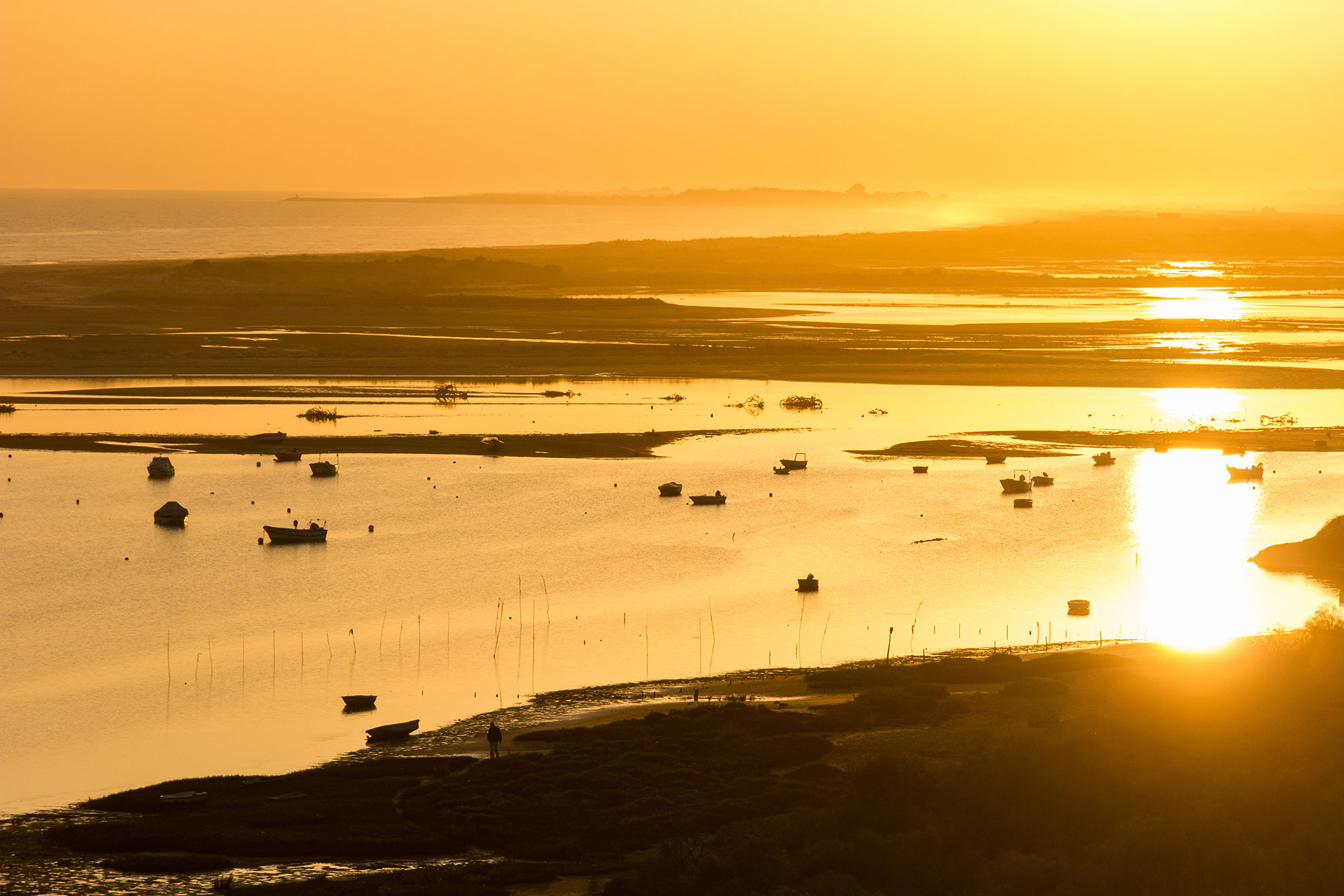
Navigating the channels of the Ria by boat reveals a parallel geography largely invisible from the shoreline.
Ria Formosa Boat Tours — Dolphins, Islands & Wildlife
Faro has a wider range of experiences than most visitors realise — from wildlife-focused lagoon cruises to walking tours of the walled city. Browse the full selection to find what fits your pace.
Explore all Faro tours →Two Islands, Two Very Different Silences
The contrast between Ilha de Faro and Ilha Deserta captures something essential about the Ria Formosa's range. Ilha de Faro is reached by a causeway bridge from the mainland — a narrow strip of sand lined with low summer houses, beach bars, and the particular atmosphere of a place that has been a local retreat for generations. It is accessible, sociable, and in summer, reliably lively. The beach facing the open Atlantic is long and straight; the lagoon side is shallow and warm, ideal for children and anyone whose idea of the sea involves standing in it rather than swimming through it.
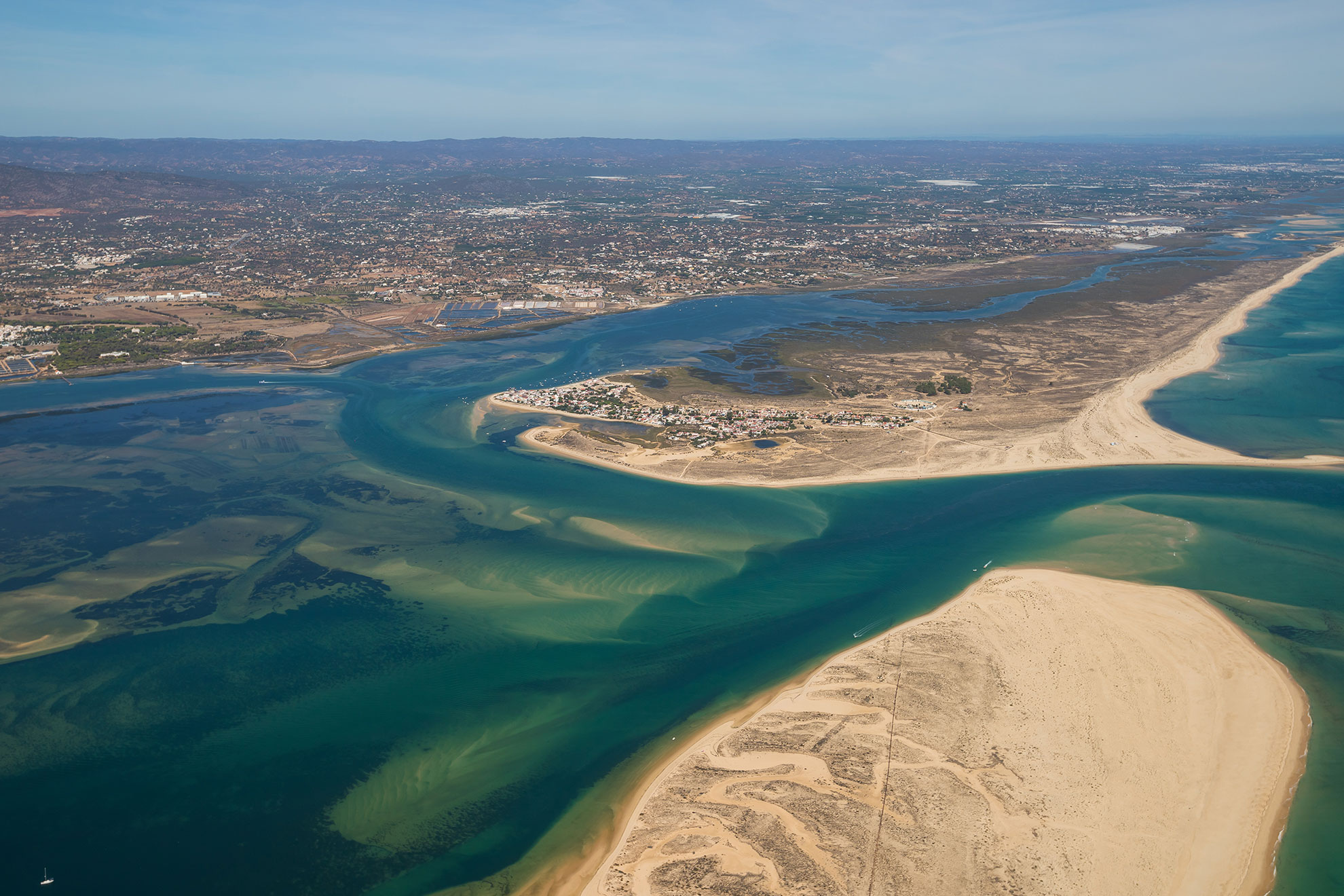
Ilha Deserta — the uninhabited barrier island accessible only by boat — carries a stillness that the Algarve's more visited coastline rarely offers.
Ilha Deserta requires a boat. That fact alone ensures its character: uninhabited, protected as a nature reserve, its only permanent structure a small restaurant operating under a concession from the natural park authority. The dune system here is among the largest on Portugal's southern coast. Walking its length — roughly 11 kilometres — is a commitment, but the reward is the kind of coastal solitude that has become genuinely rare in this part of Europe. The only sounds are wind, the occasional wading bird, and the surf audible from the Atlantic side of the island.
"The barrier islands of the Ria Formosa exist in a kind of geographical suspense — always in the process of being reshaped by tide and wind, never quite the same place twice."
The City Beyond the Lagoon: Faro's Old Town and Wider Horizons
Faro's inland dimension is often overlooked by visitors whose attention is drawn immediately to the water. The Roman ruins of Milreu, seven kilometres north of the city centre, represent one of the most complete villa complexes surviving in the Algarve — a fish-sauce producing estate that gives a concrete sense of how thoroughly the Romans understood this stretch of coast as an economic resource. The mosaic floors, still partially in situ under protective shelters, show fish and marine motifs that echo the Ria's own preoccupations two millennia later.
Within the city, the Museu Municipal de Faro, housed in a former convent adjacent to the cathedral, holds an unexpectedly rich archaeological collection — Phoenician, Roman, Visigothic, and Moorish objects that map the successive civilisations that found the lagoon worth settling beside. The building itself, with its Gothic cloister and long refectory, is worth the visit independent of what it contains.
City Tours — Old Town, Landmarks & Coast
Whether your interest is in the city's Moorish architecture, the tidal channels of the natural park, or the Atlantic coastline beyond, Faro serves as a practical and rewarding base for the eastern Algarve. See what's available across all categories.
View all experiences in Faro →Frequently Asked Questions
Is Faro worth visiting, or is it just an airport city?
Faro is genuinely worth a day or two of independent attention. The walled old town, the cathedral, and the direct access to the Ria Formosa Natural Park make it a substantively interesting destination. Most visitors who spend time here find that it has considerably more texture than the coastal resort towns further west.
What is the best time of year to take a boat tour in the Ria Formosa?
Boat tours operate year-round. Spring (April–May) and early autumn (September–October) offer the most comfortable combination of warm weather, calmer seas, and reduced visitor numbers. Birdwatching is particularly rewarding in winter, when migratory species swell the lagoon's resident populations. Summer tours are lively but should be booked well in advance.
How do I get to Ilha Deserta from Faro?
Ilha Deserta is accessible only by boat. Several tour operators run scheduled ferry services from Faro harbour, with the crossing taking approximately 30–45 minutes depending on conditions and the route taken through the lagoon channels. There are no private vehicles, no accommodation, and only one food concession on the island.
Are dolphins reliably seen on the dolphin-watching tours from Faro?
Common dolphins and bottlenose dolphins are resident in the waters off the Algarve coast and are sighted on the majority of departures. No sighting can be guaranteed, as these are wild animals in open water, but reputable operators will offer a return trip or partial refund if no dolphins are observed. The outer waters of the Ria Formosa also provide interest independent of dolphin sightings.
What food is Faro particularly known for?
Faro's seafood reflects the direct connection between the city and the Ria Formosa. Clams (ameijoas) prepared à Bulhão Pato — with olive oil, garlic, coriander, and white wine — are a staple of local restaurant menus. Oysters from the Ria's salt-water beds are served throughout the city. Cataplana, a sealed copper pot dish, is the regional centrepiece for longer, more ceremonial meals.
Can the Benagil cave be reached directly from Faro?
Yes. Several operators run coastal boat excursions that depart from Faro harbour and travel along the western Algarve coastline to reach Benagil. The journey takes longer than tours departing from Carvoeiro or Lagos, but it provides a more complete sense of the Algarve's limestone coast. The cave itself is accessible only by sea — the beach inside is too small and the swell too unpredictable for swimmers to reach it reliably from shore.