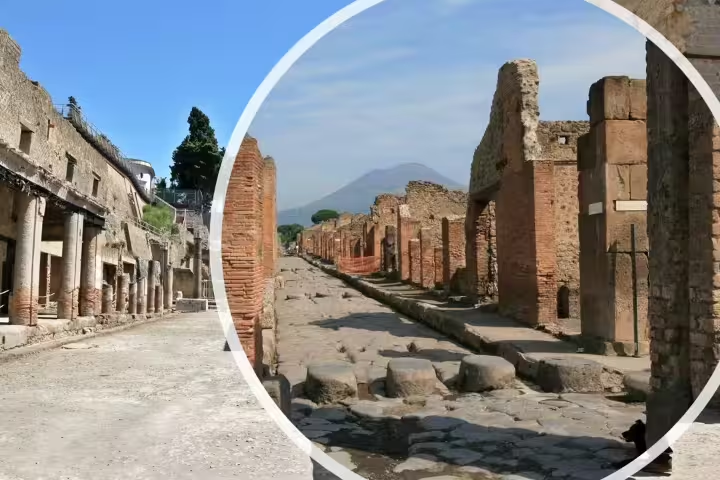
A Self Guided Tour is a flexible way to explore at your own pace, using a mapped route, an audio narration, or a mobile experience that helps you discover top sights and quieter corners without a fixed schedule. It suits travelers who value control over timing, prefer to pause for photos or breaks, and want a practical structure for independent travel while still uncovering hidden gems. Whether you are planning a quick stroll or a full day out, this format supports flexible travel for couples, solo travel, and family friendly tours.
This experience is designed to work wherever you are staying, since a Self Guided Tour typically starts from a central landmark or a convenient point you choose. If you are using an app guided tour or mobile tour app, confirm your starting pin on the map before you set off; for a downloadable tour map, save it to your phone for easy reference. Public transport and walking usually pair best with a walking tour route, while drivers should plan a sensible parking location before starting.
Ticketing varies by route and platform, many options are free, while paid versions commonly bundle richer narration, offline access, or bonus stops. Reservations are usually not required, which makes a Self Guided Tour ideal for last minute plans and shifting schedules. Opening hours depend on the specific sights on your route; plan around museum hours if your itinerary includes a self guided museum tour, and allow about 1 to 3 hours for a typical city loop, longer for hikes or road routes.
Accessibility depends on the route you choose; the best experiences offer step free alternatives, clear surface notes, and options to shorten or bypass stairs. If available, choose an audio guide tour with adjustable playback speed and text support, and look for routes that flag accessible toilets and elevators at major stops. For mobility needs, prioritize compact loops and avoid steep gradients unless the tour is designed as a self guided hiking tour with clear difficulty ratings.
Explore at your own pace with a mapped route or audio narration, stop whenever you like, and tailor the experience to your interests and schedule. Emphasize top sights and hidden gems, while keeping the flow practical and easy to follow.
A typical Self Guided Tour begins with a quick setup, confirm your route, download any needed files, and check that your phone battery and location services are working. Start with the most time sensitive stops first, such as a museum segment in a self guided museum tour or a viewpoint that is best in early light, then follow the route in a logical loop to reduce backtracking. Common pitfalls include relying on live data without a backup, underestimating walking time between stops, and forgetting to plan short breaks; a simple travel route planner mindset, with buffer time, keeps the day relaxed and on schedule.
For city routes, public transport is often the simplest option; ride to a central stop near your chosen start point, then continue on foot to keep the experience smooth and uninterrupted. If you are driving, park once and complete the route as a loop to avoid relocating the car mid tour; this is especially helpful when following a walking tour route in busy areas. In hot or wet weather, shorten the route, prioritize indoor stops, and carry water, sun protection, or a light rain layer; if your plan is a self guided road trip, check road conditions and daylight hours before setting off.
Because a Self Guided Tour is built around clustering sights, it pairs well with nearby points of interest in the same neighborhood. Consider grouping your route with:
Most routes take about 1 to 3 hours, depending on distance, elevation, and how often you stop. Build in extra time for photos, breaks, and any indoor visits along the way.
Many options are free, while paid versions may include richer narration, extra stops, or offline access in a mobile tour app. Entry tickets for specific attractions on your route are typically separate unless clearly stated.
A Self Guided Tour usually starts at a mapped landmark or a location you select in the app, so there is no in person meeting point. Check the starting pin and read any access notes, especially if the first stop is inside a venue.
Choose shorter loops in extreme heat or rain, and prioritize indoor stops like museums when conditions are poor. In peak seasons, start earlier in the day to enjoy popular areas before they get crowded.
Accessibility depends on the route design, but many tours can be adapted by choosing step free streets and avoiding stairs. Language options vary by provider; check in advance if you need a specific language or prefer an audio guide tour with text support.