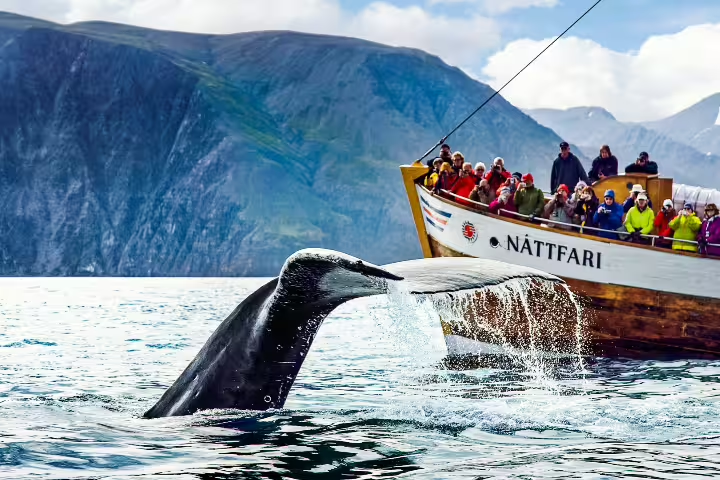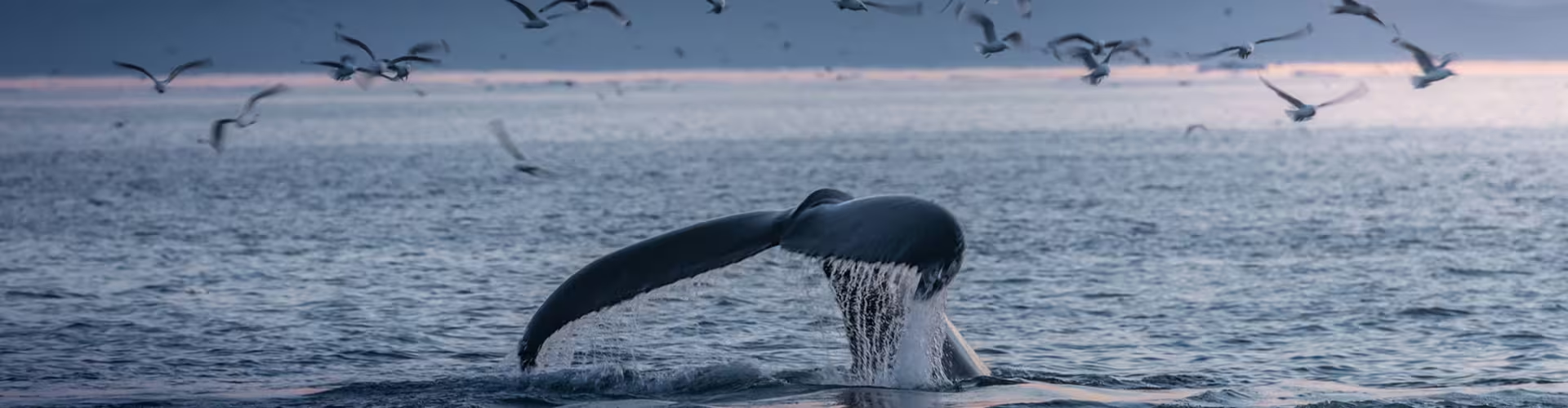
Dolphin and whale watching offers one of travel’s most stirring experiences. Out on open water, guided by the rhythm of the swell, visitors witness marine wildlife where it belongs, free and expressive. A sudden plume of spray appears like a signal, a broad tail lifts in a graceful arc, a pod of dolphins races the bow with effortless speed. These moments feel intimate and rare, yet they occur within ancient patterns of migration and feeding that span entire oceans. For travelers who value authenticity, responsible wildlife experiences, and a deeper connection with the sea, this attraction delivers both wonder and meaning.
The ocean holds well mapped corridors where whales and dolphins travel seasonally. These migration routes link feeding grounds with breeding lagoons, forming living highways that have existed for millennia. Watching along these routes matters because it aligns with the animals’ natural rhythm. Humpbacks move between cool, nutrient rich waters and warm tropical bays; orcas track prey across coastal shelves; spinner dolphins rest in sheltered coves by day, then forage offshore at night. Understanding the seasonality behind a sighting transforms a lucky glimpse into a story, one chapter in a long ocean journey.
Many tours time departures to coincide with peak migration season. Early mornings often offer calmer seas and soft light for photography. In the right conditions, travelers may witness behaviors such as breaching, spy hopping, tail slapping, and coordinated hunting. Each action serves a purpose, communication, play, courtship, or feeding, and the sight of a whale lifting its flukes before a deep dive is equal parts data point and poetry.
Dolphin and whale watching is entwined with coastal culture. Fisher communities read the water like a book, pilots and naturalists share local knowledge, and marine researchers collaborate with responsible operators to collect sightings that support conservation. The experience gains depth when guides interpret behaviors, explain threats such as noise and plastic pollution, and show how marine protected areas safeguard critical habitats. For many travelers, the encounter becomes a turning point that inspires lifelong advocacy for ocean conservation.
Responsible practice elevates the entire experience. Reputable tours follow cetacean friendly guidelines, including slow approaches, respectful distances, and limited observation times. Engines idle instead of chase, vessels never encircle pods, and animals control the interaction. Guests learn simple etiquette that reduces disturbance, keep voices low, avoid sudden movements, and let wildlife set the pace. Choosing eco friendly tours supports sustainable livelihoods and helps ensure that future generations can meet these animals in the wild.
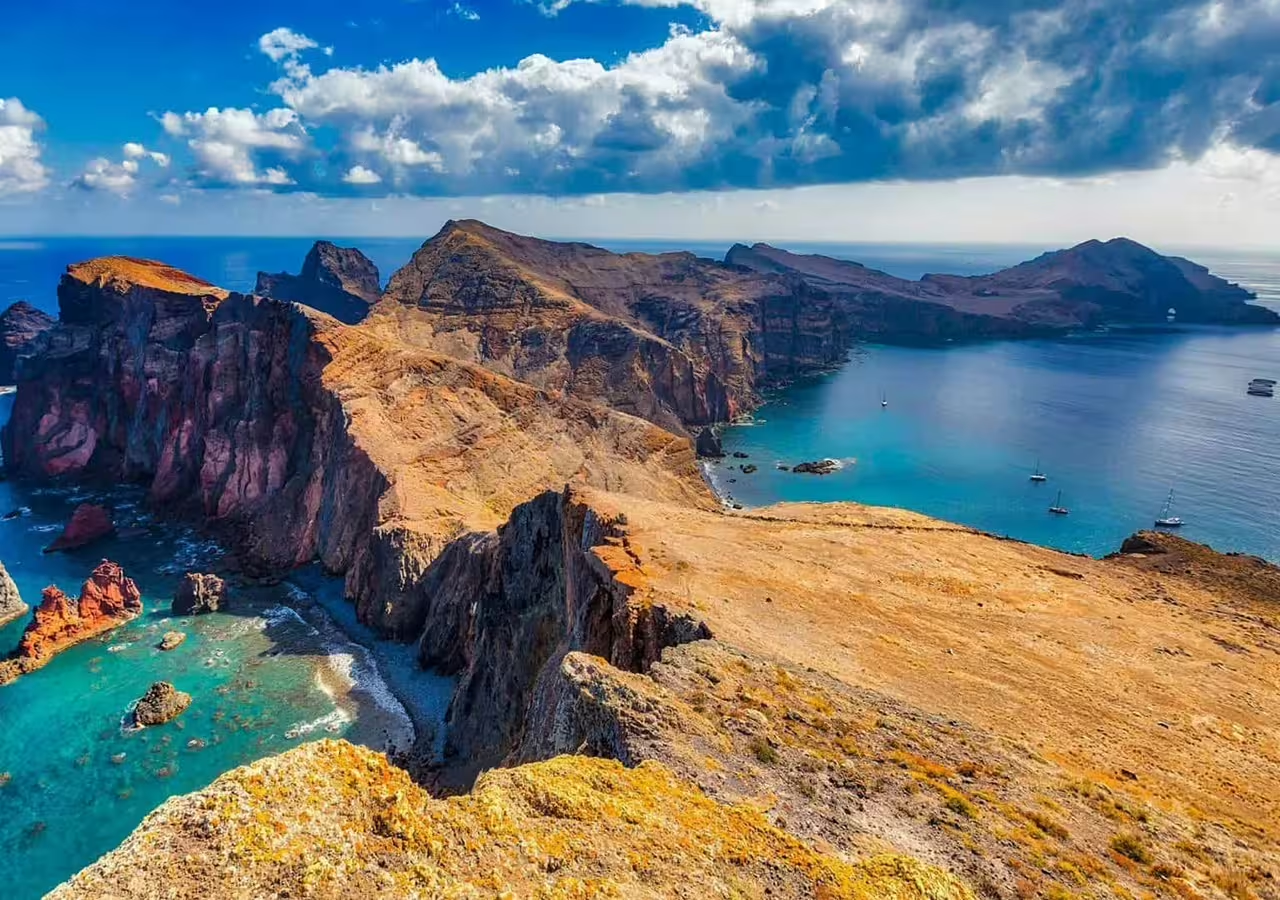
The setting is half the magic. Many sightings unfold against dramatic backdrops, volcanic headlands, towering cliffs, sapphire bays, and island chains where upwellings carry nutrients to the surface. These physical features create reliable feeding zones, which in turn create reliable viewing opportunities. Travelers not only spot dolphins surfing the pressure wave near the bow, they also admire nesting seabirds, flying fish, and the subtle color shifts of deep water canyons beneath the keel. Calm days reveal the ocean as a mirror; windy days paint it with texture and spray. Either way, the scene remains cinematic.
Some itineraries pair wildlife encounters with coastal highlights, sea caves illuminated by midday sun, historic lighthouses standing sentry, and beach arcs that invite a swim after the tour. Others add snorkeling stops in clear lagoons where guests may observe reef life, always under guidance and within strict rules that protect fragile ecosystems. The blend of scenic landscapes and marine life amplifies the sense of place.
Famous for acrobatics and complex songs, humpback whales capture imaginations with full body breaches and aerial pectoral slaps. Their migrations are among the longest of any mammal. Seeing a humpback rise from the water is a pure adrenaline moment, quickly followed by calm as the animal slides back into the depths, leaving only concentric ripples and a memory that lingers.
Orcas, also called killer whales, are apex predators with sophisticated social structures. Distinct pods have distinct hunting techniques and dialects. Encounters can be brief and electrifying, a sharp dorsal fin cuts the surface, a coordinated pursuit unfolds, and then only silence and horizon. Respectful distance is essential, as these intelligent animals must never be pressured or harassed.
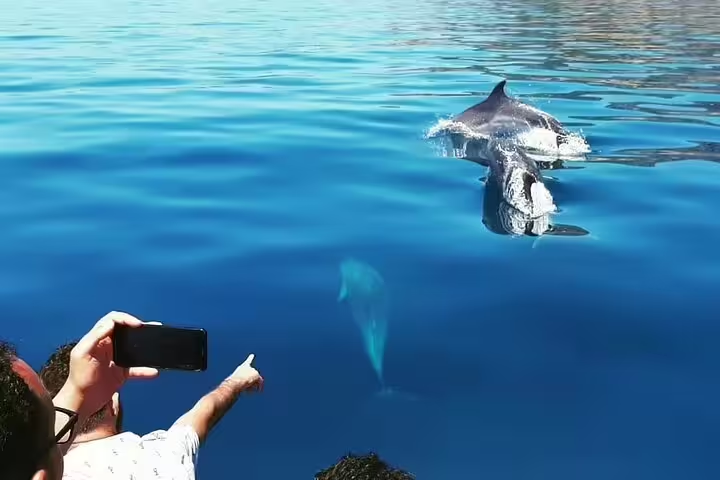
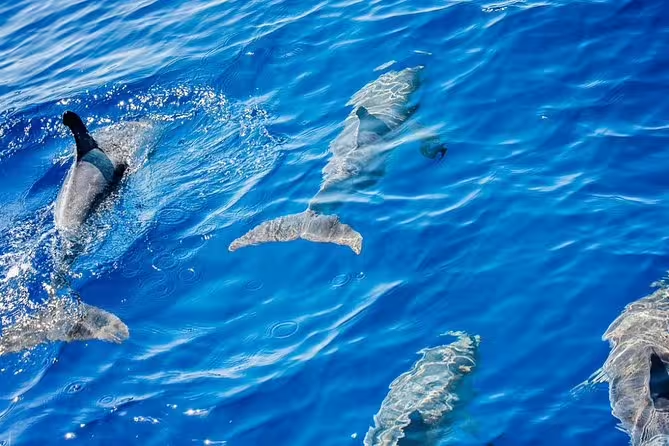
From bottlenose to spinner, dolphins showcase speed, coordination, and curiosity. They often appear first as silver arcs in peripheral vision, then as a pod weaving through the bow wave with graceful efficiency. Their presence lifts the mood on board, a reminder that joy is a kind of intelligence. Every sighting invites us to consider how acoustics, currents, and social bonds shape life below the surface.
Experienced crews elevate trips from sightseeing to learning. Look for tours with certified naturalists who interpret behaviors, identify species by dorsal fin shape or blow pattern, and explain how regulations protect wildlife. Good interpretation turns a splash into a narrative.
Different boats suit different preferences. Rigid inflatable boats offer agility and proximity to the surface, excellent for photography when seas are calm. Larger catamarans provide stability, shade, and restrooms, ideal for families. Whichever you choose, check for safety briefings, quality life jackets, and clear protocols for viewing distances.
Seek operators committed to responsible tourism, fuel efficient routes, recycling on board, and partnerships with local researchers or marine parks. Your booking becomes a vote for the ocean you want to see.
Morning light brings clarity and often calmer conditions. Overcast skies can be excellent for photography because contrast softens and glare reduces. If the wind rises, expect a livelier ride and plan accordingly with motion comfort strategies. Tours rarely guarantee sightings, nature sets the schedule, yet skilled crews maximize the odds by reading currents, seabird activity, and recent logs.
Pack layers, a windproof outer shell, a hat with a secure strap, polarized sunglasses that cut glare, and reef safe sunscreen. If you plan to photograph, use a fast shutter speed, bring a soft cloth for sea spray, and keep straps secured. Hydration matters offshore, bring water in a reusable bottle.
Follow crew instructions at all times, keep to designated viewing areas, and stow loose items. Move with care, the deck can shift unexpectedly. Remember that quiet patience often yields the best encounters. Give wildlife space, let the animals decide if they wish to approach, and cherish even brief sightings as gifts rather than guarantees.
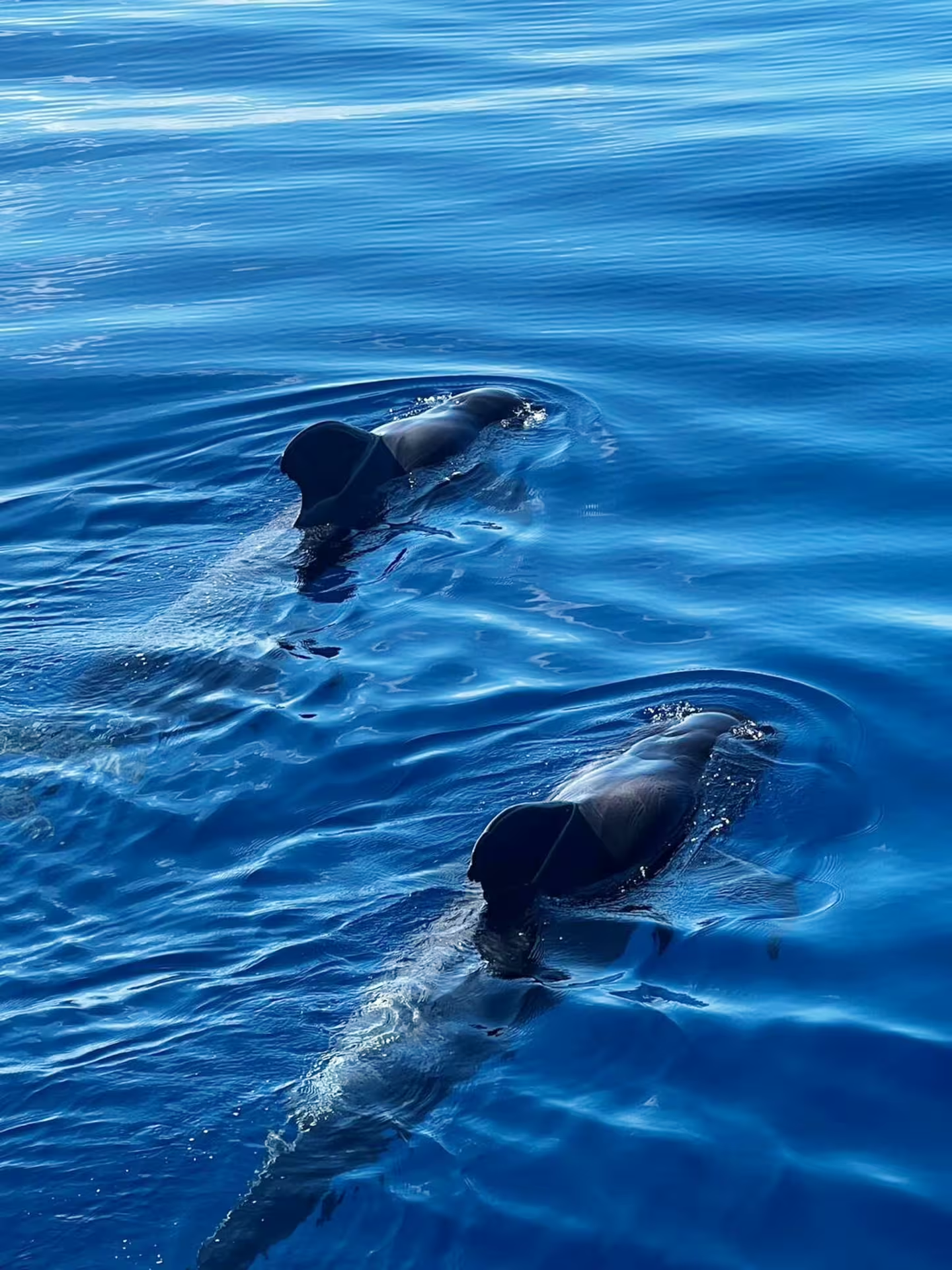
Part of the appeal lies in how dolphin and whale watching blends emotion with understanding. There is awe in witnessing a forty ton animal lift into sunlight; there is serenity in drifting with engines at idle while a pod passes quietly beneath the hull. There is satisfaction in learning how currents and climate shape migrations; there is hope in seeing communities protect nurseries and feeding grounds. These experiences tether travelers to a planet defined by ocean, and they remind us that responsible travel can both delight and do good.
Whether you come for the spectacle of breaching humpbacks, the choreography of dolphins drafting the bow, or the subtle elegance of a distant spout against a blue horizon, you leave with something more than photographs. You carry a renewed sense of scale, a respect for wild places, and a story worth sharing.
When you are ready to meet the sea’s most charismatic residents, Toursxplorer.com can connect you with curated, eco friendly tours that align with best practices and local seasons. Choose your vessel, set your expectations with nature’s calendar, and step aboard confident that your experience will be thoughtfully guided and responsibly delivered. The ocean is vast and alive, your seat is waiting.