Three groups of islands
The Autonomous Region of the Azores is made of three groups: the Eastern Group (Santa Maria and São Miguel), the Central Group (Terceira, Graciosa, São Jorge, Pico and Faial) and the Western Group (Corvo and Flores).
What to see in the Azores
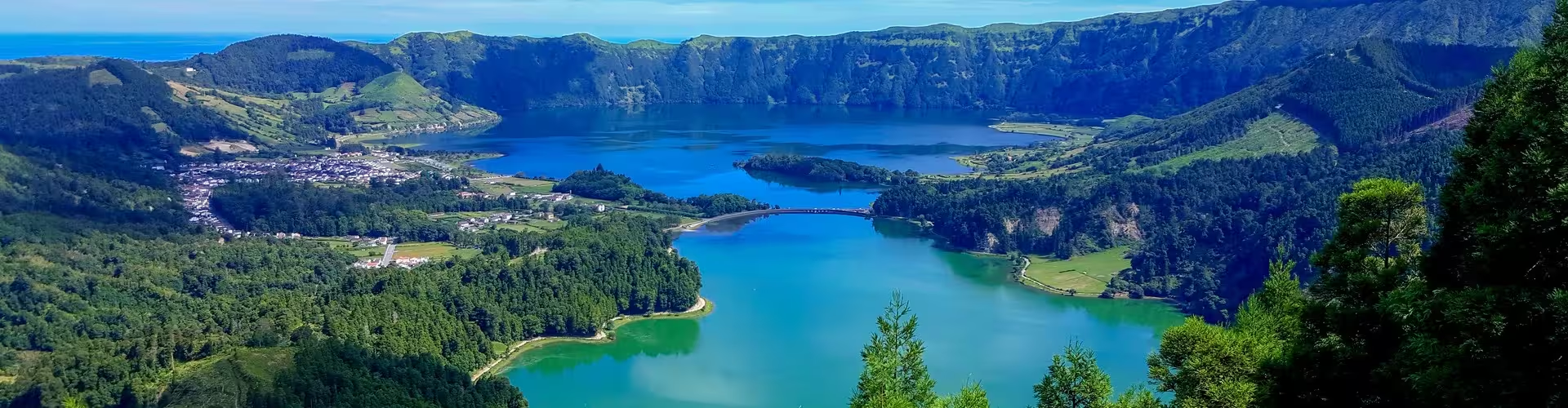
On São Miguel, the largest island, the Vista do Rei Lookout looks over the twin Green and Blue lakes of Sete Cidades, joined by a bridge. The same island's Furnas Valley is home to dozens of thermal springs and fumaroles, and the Cozido das Furnas stew is cooked underground by geothermal heat.
Mount Pico, on Pico island, rises to 2,350 m (7,700 ft), the highest point in Portugal. Below it, the island's vineyard landscape, where stone walls form thousands of small plots that protect the crops from wind and salt spray, has been a UNESCO World Heritage Site since 2004.
Angra do Heroísmo, whose historic centre UNESCO listed as World Heritage in 1983, was from the 15th century until the age of steamships an obligatory port of call for fleets sailing to and from Europe. At the western tip of Faial, the Capelinhos Volcano marks the last volcanic eruption in the Azores, which threw out ash and lapilli between 1957 and 1958 and added new land to the island.
Whale season
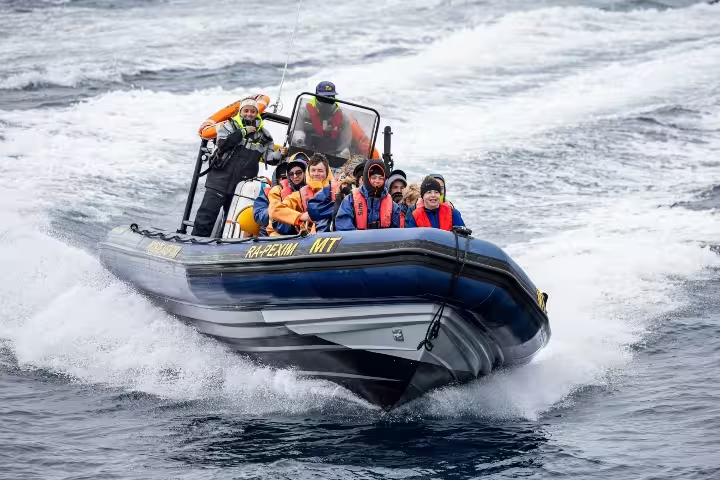
The Azores are one of the world's largest whale sanctuaries, and whale and dolphin watching is possible all year: blue whales are easiest to spot at the end of winter, while sperm whales and sei whales are frequent in summer.
Getting there
The Azores are about two hours by air from Lisbon and Porto and less than six hours from the USA, and between the islands you can travel by boat or on regional flights.
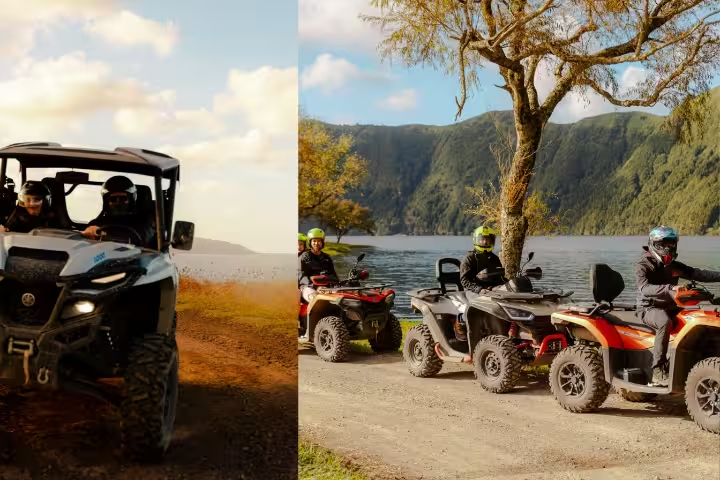
Day trips leave from São Miguel, such as the Full-Day Jeep Tour: Seven Cities & Lagoa do Fogo, Azores, and on Terceira there are the Full day Guided Tour of Terceira Island Highlights and the Terceira Island Half-Day Whale & Dolphin Boat Tour.
Frequently asked questions
What is there to do in the Azores?
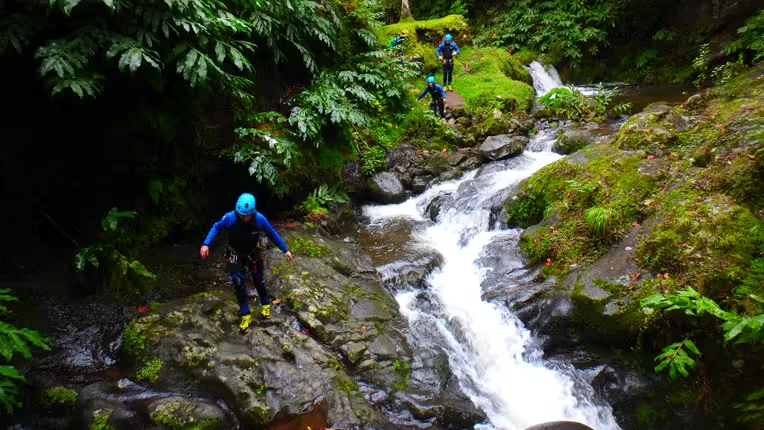
Hiking, whale-watching, birdwatching, scuba diving and canyoning, and themed routes based on wines, volcanoes and spas.
How likely are you to see whales or dolphins?
Very likely: more than 20 types of cetaceans can be seen, and whales or dolphins are spotted on 98% of trips.