




Destination Guide: Rhodope Mountains, Bulgaria
Smolyan Province: Rhodope Highlands, Ancient Gorges, and Mountain Culture
Where mist-covered peaks, deep river gorges, and centuries-old traditions converge in the heart of the Bulgarian Rhodopes.
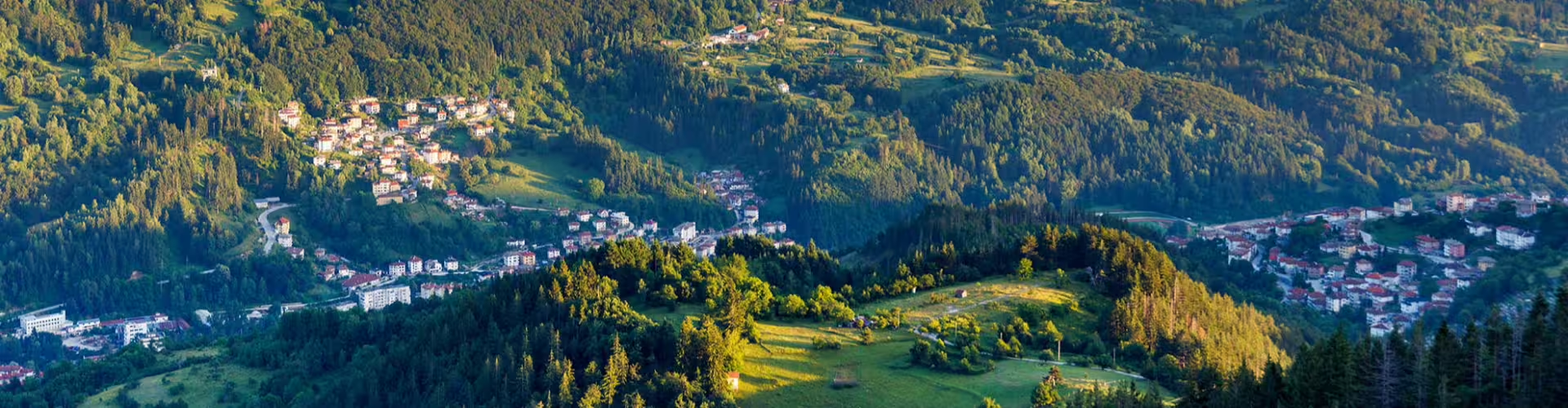
Smolyan Province rises across the central and western Rhodope Mountains in southern Bulgaria, offering travellers a rare combination of dramatic alpine landscapes, Thracian history, and living folk heritage. The region anchors itself around the high-altitude city of Smolyan, one of the highest administrative centres in Bulgaria, sitting at roughly 1,000 metres above sea level. Visitors arrive for the gorges, the ski slopes, the pomak villages, and a hospitality culture that has remained largely unchanged for generations.
Smolyan Province Geography and Logistics
Essential Things to Do
Curated Itineraries
The Highlights: 1 Day
Begin the day with a walk around the Smolyan Lakes before visitor numbers rise. The 45-minute loop trail offers views across the water and into the surrounding ridgeline, setting the tone for a day in the mountains.
Drive approximately 40 kilometres southwest to Trigrad Gorge and visit the Devil's Throat Cave. Allow 90 minutes for the gorge road and cave tour combined.
Stop at one of the small mehanas in Trigrad village for a lunch of grilled meats, bean soup, and local sheep cheese. The servings are generous and prices are low.
Drive back toward Smolyan via Shiroka Laka for a walk through the historic village lanes. Browse the craft workshops and listen for music from the school if classes are in session.
Return to Smolyan city for an evening observatory session at the planetarium. End the day with dinner at a traditional restaurant in the city centre.
Deep Dive: 2 to 3 Days
Spend the first day exploring Smolyan city, including the Regional History Museum, the Planetarium, and a late-afternoon walk at the lakes. Overnight in the city.
Head west to combine a tour of Yagodinska Cave with a walk through Trigrad Gorge and a visit to the Devil's Throat Cave. Both sites are within 15 kilometres of each other.
Drive back through Shiroka Laka in the afternoon and, if visiting in winter or early spring, check snow conditions at Pamporovo for the following morning.
Drive south to Zlatograd for a morning at the ethnographic complex. Budget two hours for the workshops, architecture, and any demonstrations by local artisans.
Return north through secondary roads passing through pomak villages and forested ridges. Stop at roadside stalls for local honey, dried herbs, or handwoven textiles before heading to your departure point.
Flavors of Smolyan Province
Local Dishes
- Kavarma: A slow-cooked clay pot dish of pork or chicken with vegetables, onions, and spices, served bubbling hot at the table.
- Rhodope Bean Soup (Bob Chorba): A thick, smoky soup made with local white beans, dried peppers, and savory herb, a staple in mountain households.
- Banitsa: Flaky pastry filled with sheep cheese and eggs, eaten fresh from the oven as a breakfast or snack throughout the day.
- Katuk: A traditional Rhodope dish of cornmeal or flour cooked with sheep butter and cheese, dense and warming on cold mountain evenings.
- Grilled Lamb Ribs: Locally raised lamb is a centrepiece of festive and mehana menus, usually served with roasted peppers and fresh bread.
- Sheep Cheese (Ovche Sirene): Sharp, crumbly, and made from local flocks, served in salads, pastries, or on its own with walnuts and honey.
Drinks and Ordering Tips
- Rhodope Rakia: Fruit brandy distilled in home stills across the province, often made from plums or grapes, and offered as a welcome drink in guesthouses.
- Ayran: A cold, salted yogurt drink that pairs naturally with grilled meats and is found on every mehana menu in the province.
- Bilkovi Chai (Herbal Tea): Blends of locally gathered mountain herbs including thyme, mint, and St. John's Wort, served hot and often unsweetened.
- Local Spring Water: The Rhodope mountains supply some of Bulgaria's purest spring water, and most villages have public fountains with drinkable water.
- Ordering Tips: Point to dishes on other tables if menus lack English translation. Say "bez lyutenina" (without spice) if you prefer milder food, and always ask for the daily special as it is typically the freshest option.
Navigation and Transport
The most practical way to explore the province independently is by rental car, as public transport connections between villages and natural sites are infrequent and often timed around local school or market schedules rather than tourist convenience. Rental cars can be collected in Plovdiv, which is the nearest major city with an airport and international rail connections, approximately 120 kilometres north of Smolyan city.
Direct bus services connect Smolyan city with Sofia (approximately 3.5 hours), Plovdiv (approximately 2 hours), and several regional towns. Within the province, minibuses serve larger villages on scheduled routes, but gaps between services can be several hours. Taxis are available in Smolyan city and can be pre-arranged for longer journeys to specific sites at a negotiated flat rate.
Mountain roads are generally well-paved on main routes but can be narrow, winding, and icy in winter. Snow chains or winter tyres are legally required on certain mountain passes between November and March, and signage in English is limited outside major routes. A downloaded offline map is a practical necessity for driving in the more remote parts of the province.
Beyond the Center: Day Trips
Bachkovo Monastery, located about 70 kilometres north near Asenovgrad, is the second-largest monastery in Bulgaria and a UNESCO-listed cultural monument. The 11th-century complex sits in a gorge above the Arda River and contains significant Byzantine frescoes and a revered icon of the Virgin Mary.
The town of Xanthi in northern Greece lies just 80 kilometres south of Zlatograd via the border crossing at Zlatograd-Thermen. It is a striking Ottoman-era market town with a well-preserved old quarter, colourful mansions, and a vibrant cafe culture that makes for a genuinely different half-day experience.
The Wonderful Bridges near Chepelare are natural rock arches formed by erosion over thousands of years, rising to 15 metres in height and set within a pine forest at around 1,450 metres elevation. A short circular trail of about 1.5 kilometres connects the two main arches.
Plovdiv, Bulgaria's second city and a 2019 European Capital of Culture, is within a two-hour drive and offers a striking contrast to the mountain landscapes of the province. The Old Town's Roman theatre, colourful Revival-period mansions, and contemporary art scene reward a full day of exploration.
Insider Tips for Travellers
Save the number of a local taxi driver in Smolyan city from your guesthouse host. Drivers who work the mountain routes know the roads well, speak enough English for basic communication, and charge far less than app-based services.
Purchase local honey, dried mushrooms, and handmade wool socks directly from village markets or roadside sellers rather than tourist shops in the city. The quality is higher and the price is a fraction of packaged alternatives.
Travel insurance with mountain rescue coverage is worth arranging before any hiking in the higher elevations. Trails above 1,800 metres can be unmarked or poorly signed, and weather can change rapidly, particularly in spring and autumn.
Photography inside caves requires a dedicated flash or a camera with strong low-light performance. Phone cameras struggle in the darkness of Yagodinska and Devil's Throat Cave, and tripods are not permitted in most areas due to the narrow passages.
Learning five to ten basic Bulgarian phrases, including greetings, thank you, and how to order food, is appreciated far beyond the effort involved. In smaller Rhodope villages, English is rarely spoken and a few words of Bulgarian open doors that remain otherwise closed.

