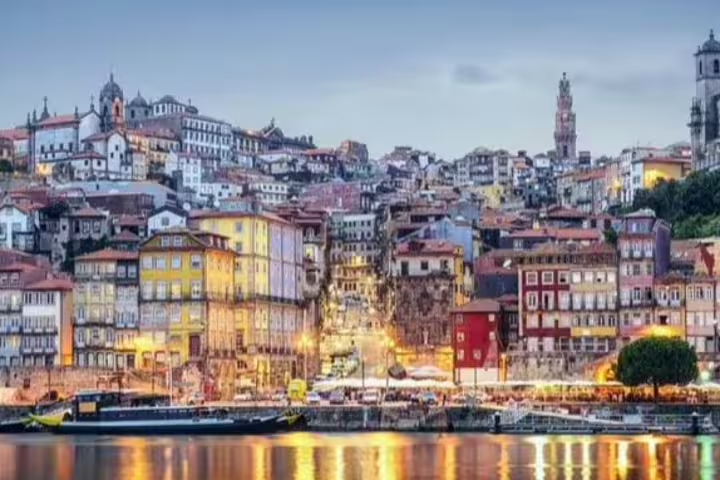




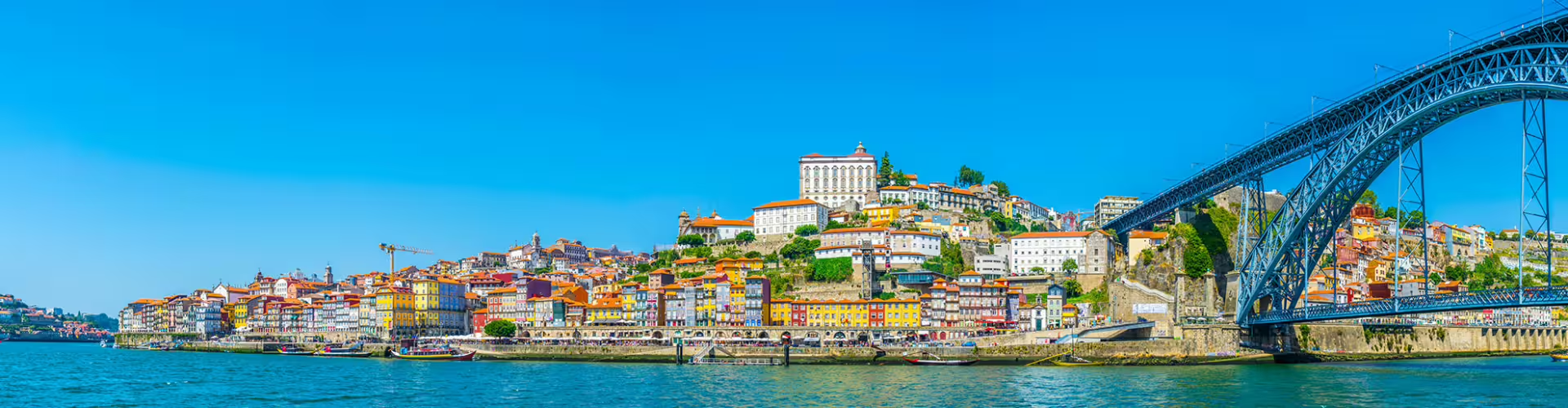
Porto is Portugal’s soulful northern city, where riverfront charm, blue and white tiles, and centuries of port wine heritage come together in a walkable, photogenic setting. This Porto travel guide helps you connect the essentials, from Ribeira Porto to the Dom Luís I Bridge, and across to Vila Nova de Gaia for port wine tasting. It is ideal for first time visitors who want a practical plan, and for return travelers looking to sharpen their Porto itinerary around viewpoints, cellars, and the Douro.
Porto is a riverside city on the Douro in northern Porto Portugal, known for its UNESCO listed historic center, tiled streets, and iconic wine lodges across the water. Travelers who enjoy scenic walks, architecture, local flavors, and relaxed sightseeing will find plenty of things to do in Porto within compact neighborhoods. Expect memorable panoramas from bridges and hilltop terraces, plus easy add ons like a Douro River cruise and a classic francesinha.
Central Porto spreads along the Douro River, with the historic core around Ribeira Porto, Batalha, and Aliados, and the wine lodges in Vila Nova de Gaia just across the river. The easiest base for most visitors is the city center near São Bento and Aliados, where metro and trains connect quickly to riverfront areas.
Porto itself is free to explore, while individual attractions are paid. Timed entry is common for Livraria Lello, and guided visits are typical at Porto wine cellars; booking ahead is strongly recommended in peak season. Many highlights are best enjoyed over one full day or two days, with early mornings offering calmer streets, clearer photos, and easier bridge crossings.
Porto is built on steep hills and cobbled lanes, so accessibility varies by neighborhood. Many major sites offer step free access or elevators, but routes between them can be demanding; consider taxis or funiculars for the steepest climbs. Look for attractions with accessible toilets and lifts, and plan extra time for slopes around Ribeira and the cathedral area.
Focus on the riverfront atmosphere, tiled streets, and port wine heritage. Prioritize walking Ribeira Porto, crossing the Dom Luís I Bridge, visiting Gaia cellars for port wine tasting, taking a Douro River cruise, and ending with a traditional francesinha.
A typical day in Porto starts in the upper city around São Bento Station, then continues downhill toward Ribeira Porto for riverfront wandering and photos. Cross the Dom Luís I Bridge to Vila Nova de Gaia for a cellar tour and port wine tasting, then return by river cruise or on foot depending on energy levels. Common pitfalls include underestimating hills, wearing slick shoes on cobbles, and arriving at Livraria Lello without a timed entry, so plan key reservations and keep your route flexible.
Arrive by metro or train to central hubs near Trindade, Aliados, or São Bento, then explore on foot with short transit hops between hilltop viewpoints and the river. To reach the Gaia wine lodges, cross on foot via the Dom Luís I Bridge or use metro to Jardim do Morro, then walk down toward the cellars. If driving, expect limited parking and narrow streets in the historic center; park outside the core and use public transport to reduce stress. Weather can change quickly near the river, so carry a light layer and choose shoes with good grip for wet stone.
Clerigos Tower, A classic climb for skyline views, best earlier in the day to avoid queues and heat on the stairs.
Porto Cathedral, A powerful viewpoint area with historic atmosphere, easy to combine with a downhill walk toward Ribeira.
Bolsa Palace, A strong choice for interiors and guided visits, practical to pair with Ribeira and the riverfront.
Mercado do Bolhão, A central market stop for local produce and a quick cultural snapshot between sightseeing blocks.
Jardins do Palácio de Cristal, A calmer green escape with river views, ideal for a late afternoon reset.
For a first visit, plan one full day to cover the historic center, the riverfront, and a cellar visit, but two days gives a more comfortable pace. If you add a Douro River cruise and timed entry to Livraria Lello, allow extra time for queues and walking on hills.
Many city viewpoints and neighborhoods are free, but popular sites often use timed entry or limited capacity. In Porto, booking ahead is especially helpful for Livraria Lello and for guided tours at Porto wine cellars in Vila Nova de Gaia.
Start at São Bento Station for the tile halls, then head toward the cathedral area and continue downhill to Ribeira Porto. Cross the lower level of the Dom Luís I Bridge for a quick taste of Gaia, then return along the river.
The best time to visit Porto for lighter crowds is typically in spring and early autumn, when weather is pleasant and lines are shorter. Within a day, mornings are calmer in Ribeira and at major photo spots, while sunsets are popular at bridge and hilltop viewpoints.
Porto has accessible features at many major attractions, but the historic center includes steep gradients and uneven cobblestones, so route planning matters. Portuguese is the local language, and English is widely used at visitor sites, tours, and cellars, with multilingual options often available.
Build your Porto itinerary around geography to minimize repeated climbs. Start high near Clérigos and Batalha, then move downhill to the river, and finish with Gaia and viewpoints; this approach reduces fatigue and makes the most of photo light. If you are comparing Porto viewpoints, the upper deck of the bridge, the cathedral surroundings, and the gardens at Jardins do Palácio de Cristal each offer a different angle, cityscape, river bends, and sunset friendly terraces.
For food planning, treat a francesinha as a main meal and schedule lighter stops around it, especially if you are walking long distances. If rain is forecast, prioritize indoor highlights like Bolsa Palace, São Bento Station, and a cellar tour, then return to the riverfront when the weather clears.
If you have extra time, Porto day trips are straightforward thanks to rail and tour options. A classic choice is the Douro Valley from Porto, which pairs vineyard landscapes with river scenery and tastings, best as a full day to avoid rushing. For a coastal change of pace, head to Foz do Douro for ocean views where the river meets the Atlantic, a refreshing contrast to the historic center.