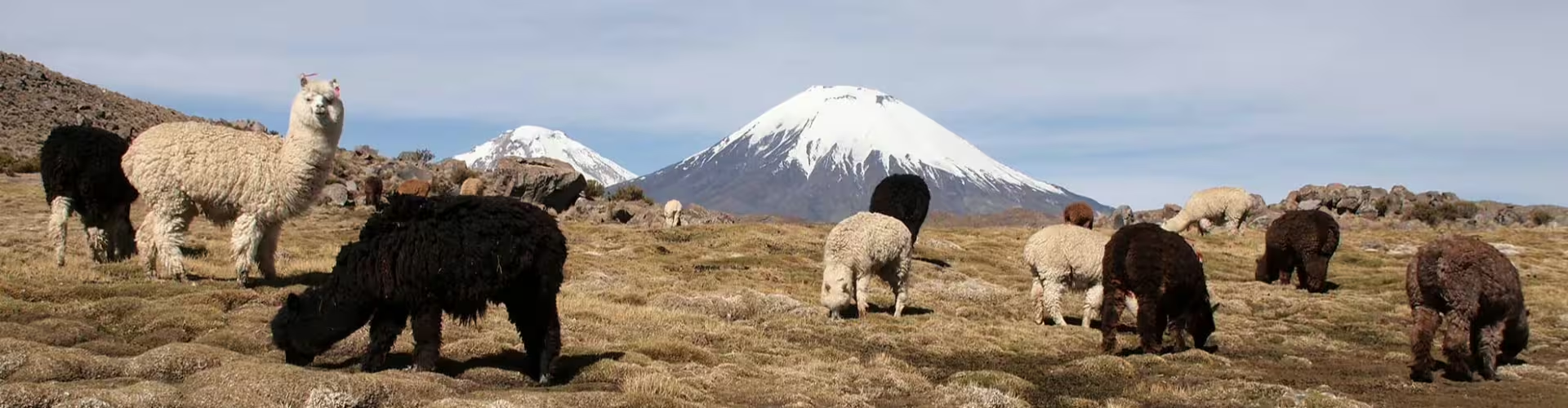
Chile stretches along South America's western edge, a country defined by dramatic contrasts and natural wonders. From the otherworldly landscapes of the Atacama Desert to the glacial majesty of Patagonia, Chile offers some of the world's most striking geography. The iconic peaks of the Andes Mountains run the entire length of the country, shaping both its terrain and culture.
What to see in Chile
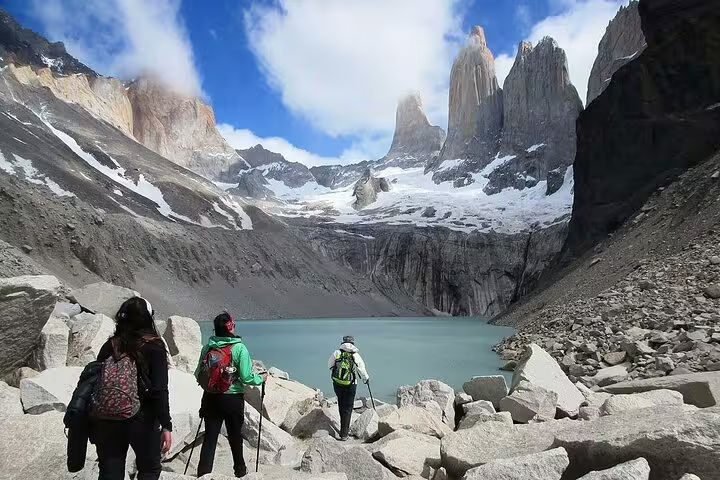
Visitors should not miss the otherworldly salt flats and geysers of the Atacama Desert in the north, one of Earth's driest places. Torres del Paine National Park in Patagonia showcases granite peaks and turquoise lakes that define Chilean landscapes. The vibrant street art and coastal charm of Valparaiso, combined with the wine regions of the Central Valley, offer cultural and culinary exploration.
Things to do in Chile
Experience guided treks through Patagonia's pristine wilderness or kayak among icebergs in the fjords. Wine tours showcase Chile's renowned vineyards and tastings in regions like Maipo and Casablanca. Adventure seekers can climb volcanoes, explore Easter Island's mysterious moai statues, or hike the famous W Trek in Torres del Paine.
Chile's Wine Heritage
Chile has become a world-class wine destination, with the Maipo Valley and Casablanca Valley producing exceptional Cabernet Sauvignon and Sauvignon Blanc. The country's unique terroir, shaped by the Andes and Pacific influences, creates ideal conditions for viticulture that attract oenophiles globally.
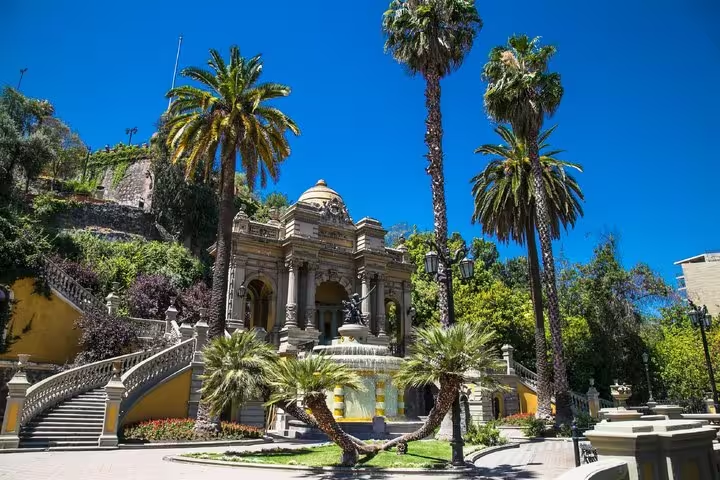
Chile is a long, narrow country on South America's western coast, stretching over 2,670 miles from north to south. It is bordered by Peru and Bolivia to the north, Argentina to the east, and the Pacific Ocean to the west. The country is renowned for its extreme geographical diversity, including the Atacama Desert, the Andes Mountains, and Patagonian wilderness. Major cities include Santiago (the capital), Valparaiso, and Concepcion. Chile's unique geography makes it one of the most geographically diverse countries in the world.