Texas

logoBlack

Build your dream
experience

dreamimg

More to know about Texas


Texas Travel Guide

Texas feels like several trips in one, big-sky landscapes, design-forward cities, music-first nights, and food that rewards curiosity. The scale is the point here, drives are part of the experience, and every region has its own pace, accent, and flavor. If you plan with intention, you can balance iconic highlights with quieter moments that make the state feel personal.


Snapshot

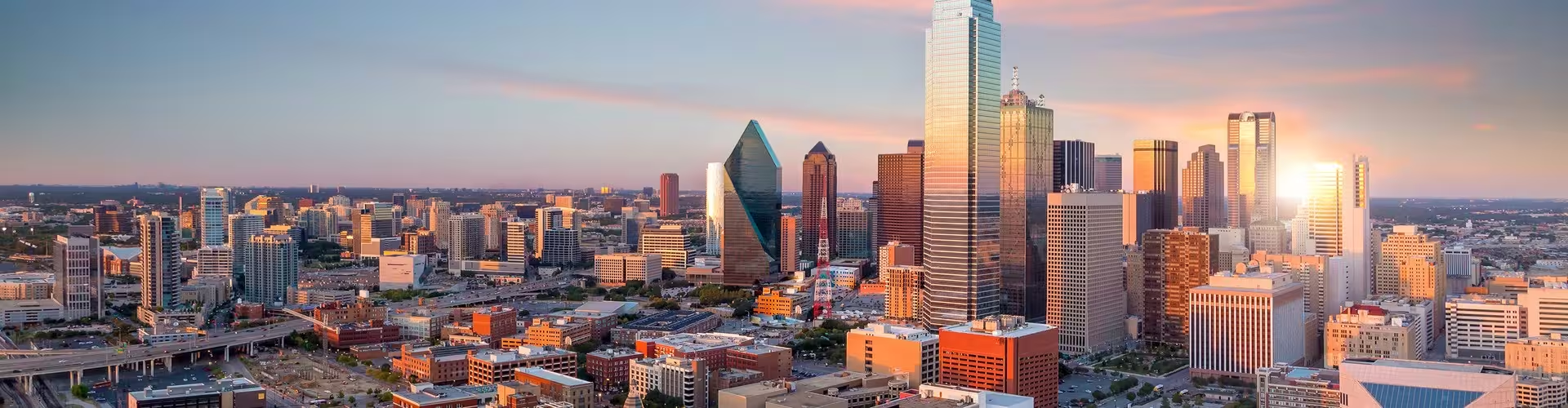
Texas is defined by contrast, desert horizons in the west, piney woods in the east, Gulf Coast breezes in the south, and energetic city scenes in the middle. Go now for the mix of outdoor space and year-round culture, then build your days around weather, distances, and what you want most, music, history, or nature. The signature vibe is confident and welcoming, with a strong sense of local pride that shows up in food, festivals, and friendly small talk.


🗺️ Geography and Logistics

📍 Orientation: Where is it within United States of America and United States?

Texas sits in the south-central United States, bordering Mexico to the south and the Gulf of Mexico to the southeast. Major gateway airports and hubs include Dallas Fort Worth, Houston, Austin, and San Antonio, which can reduce drive time depending on your route. Because the state is vast, choose your base by region, not just by reputation, then cluster activities to avoid spending entire days in the car.

🕒 When to Go: Seasonal breakdown

Timing in Texas is mostly about heat, storms, and event calendars rather than a single peak season. Spring and fall often feel easiest for road trips, city walking, and outdoor parks, with generally more comfortable conditions and strong festival energy. Summer brings higher temperatures in many areas, which can be great for water-focused trips and indoor cultural stops, while winter can be appealing for city breaks and mild-weather exploring in some regions.

💰 Budget & Currency: Practical money tips

The currency is the US dollar, and cards are widely accepted across cities and most tourist areas. Cash is still useful for smaller vendors, tips, and rural stops, so keep a small amount on hand for flexibility. For budgeting, plan for long distances, fuel, parking, and the occasional toll, then prioritize paid attractions that match your interests, since many of the best moments are free, sunsets, scenic drives, and neighborhood wandering.


⭐ Essential Things to Do

Live music nights. Music is a living tradition here, from intimate singer-songwriter sets to bigger venues that turn a night out into a cultural lesson. Why it matters, you get a direct line into local identity through sound and storytelling. Practical tip, arrive early for better seating and consider weeknights for a less crowded vibe.

Barbecue crawl. Barbecue is not one thing in Texas, it is a set of regional styles and strong opinions that make eating feel like an adventure. Why it matters, it is one of the clearest ways to understand local pride and craft. Practical tip, go earlier in the day when popular spots are most likely to have the full menu available.

Walkable city neighborhoods. The state’s major cities offer distinct districts where murals, coffee shops, boutiques, and parks create an easy rhythm. Why it matters, neighborhoods show daily life beyond headline attractions. Practical tip, pick one area per half day and explore on foot to avoid constant parking and traffic.

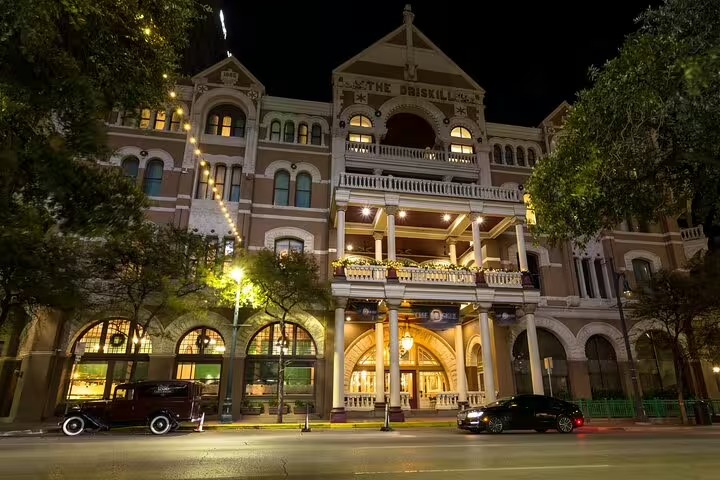
Historic missions and heritage sites. Spanish colonial history and regional heritage appear in architecture, place names, and preserved landmarks. Why it matters, it adds depth to the modern story and connects the state to broader North American history. Practical tip, visit earlier in the day for softer light and a calmer experience.

Gulf Coast beach time. Along the coast, sea breezes and wide horizons shift the pace into something slower and more relaxed. Why it matters, it is a different side of Texas that pairs well with seafood and sunset walks. Practical tip, check local conditions before you go and pack sun protection even on cloudy days.

Hill Country scenic drives. Rolling landscapes, small towns, and open roads make this an ideal region for a classic road trip feel. Why it matters, the journey becomes the highlight, with overlooks, roadside farms, and local diners. Practical tip, start with a full tank and download offline maps for stretches with weaker signal.

Desert and canyon landscapes. West Texas brings dramatic skies and a sense of space that resets your perspective. Why it matters, it is where you feel the scale of the American Southwest most clearly. Practical tip, carry extra water and plan your hikes around cooler parts of the day.

Rodeo and Western culture experiences. Western heritage is part performance, part community tradition, and often tied to seasonal events. Why it matters, it connects you to ranching history and a living cultural scene. Practical tip, read venue guidelines in advance and arrive early for parking and seating.


🚶 Curated Itineraries

⏰ The Highlights (1 Day)

Start with a morning neighborhood walk and a local coffee stop, then choose one major cultural anchor, a museum, historic district, or landmark that matches your interests. Midday, commit to a focused food experience, like a barbecue lunch, then take a slower afternoon in a park or along a riverfront trail to balance the pace. End with live music and an easy dinner nearby so you are not driving late across town.

⏰ Deep Dive (2-3 Days)

Day one, pick a city base and explore two adjacent neighborhoods on foot, mixing architecture, local shops, and a signature meal. Day two, add a regional drive, Hill Country routes, a coastal stretch, or a heritage-focused loop, then return for an evening show or a relaxed patio dinner. Day three, lean into one theme, history, nature, or food, and leave open time for spontaneous stops, because some of the best Texas moments happen between the planned pins on your map.


🍽️ Flavors of Texas

Brisket barbecue. Rich, smoky, and pepper-forward, brisket is often the benchmark of craft and patience. Ordering tip, ask for a mix of lean and moist if available to compare textures.

Breakfast tacos. Soft tortillas filled with eggs and regional add-ins create a simple meal with endless variations. Ordering tip, try one classic and one adventurous filling to find your favorite style.

Tex-Mex enchiladas. Comforting, saucy, and often topped with melted cheese, this is a staple that feels both familiar and distinct. Ordering tip, ask about heat level if you prefer mild.

Chili. Hearty and boldly seasoned, chili is part food and part identity debate depending on where you try it. Ordering tip, pair it with something cooling if you are sensitive to spice.

Chicken-fried steak. Crispy, savory, and served like a classic diner favorite, it is a reliable choice when you want something filling. Ordering tip, consider sharing if you want room for dessert later.

Pecan pie. Sweet, nutty, and rich, it is a dessert that matches the state’s love of big flavors. Ordering tip, ask if it is served warm and consider adding coffee to balance the sweetness.


🚌 Navigation & Transport

In Texas, driving is often the most practical way to connect regions, especially if your itinerary includes small towns, parks, or wide-open landscapes. In major cities, you can combine walking in compact districts with ride-sharing to avoid parking stress, then use public transit where it fits your route. For safety and comfort, plan breaks on long drives, keep water in the car, and build your day around realistic travel times, since distances can look deceptively short on a map.


🌄 Beyond the Center: Day Trips

Hill Country small towns. A classic day trip for scenic roads and a slower pace, ideal when you want local shops and countryside views. Travel time depends on your starting city, so choose the closest cluster and keep your route tight.

Gulf Coast escapes. Great for beach walks and seafood-focused meals, especially when you want a change from inland heat. Travel time varies by departure point, so consider an early start for more shoreline time.

West Texas landscapes. Best for travelers who want dramatic skies and a sense of solitude that is hard to find elsewhere. Travel time can be significant, so treat it as a full-day commitment and prioritize one main stop.

Heritage loops. Missions, historic districts, and regional museums can fit into a day if you group sites by area. Travel time stays manageable when you focus on one corridor rather than zigzagging across a metro.


✅ Insider Tips for Travelers

  • Plan by region, not by a checklist, because Texas is too large to do everything in one trip.
  • Start earlier than you think for popular meals and headline attractions, then use afternoons for parks or indoor culture.
  • Build buffers for traffic and parking in big cities, and avoid scheduling back-to-back commitments across town.
  • Pack for sun and temperature swings, including sunscreen, a hat, and a light layer for strong air conditioning indoors.
  • Keep water with you, especially on long drives and outdoor days.
  • Use ride-sharing for nightlife to reduce stress, then choose walkable districts for daytime exploring.
  • Respect local etiquette, be friendly, tip appropriately, and ask before photographing people at cultural events.

❓ Frequently Asked Questions, FAQ

What is the best way to plan a first trip?

Choose one region and one city base, then add one day trip rather than trying to cover the whole state. This keeps driving time realistic and leaves room for spontaneous stops.

Do I need a car to travel around Texas?

For multi-region travel in Texas, a car is usually the most practical option because distances are large. In major cities, you can mix walking in key districts with ride-sharing and selective public transit.

When should I visit to avoid extreme heat and crowds?

Spring and fall are often the most comfortable for outdoor plans and road trips. Summer can still work if you prioritize water activities and indoor attractions during the hottest hours.

Is cash necessary, or can I rely on cards?

Cards are widely accepted, especially in cities and tourist areas. Carry some cash for small vendors, tips, and rural stops where options can be limited.

How can I make long drives more comfortable in Texas?

Keep water in the car, schedule breaks, and avoid stacking too many far-apart stops in one day. Download maps for areas with weaker signal and start with a full tank when heading into rural regions.