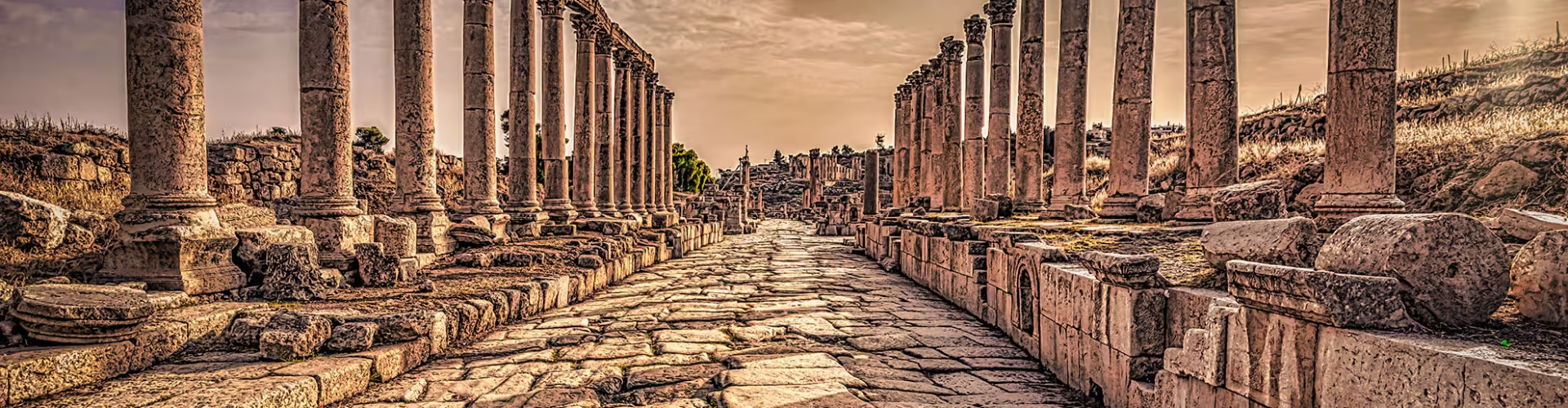
Jerash is one of Jordan’s most rewarding destinations for travelers who want history you can walk through, plus a relaxed city rhythm that feels more local than the capital. The main draw is the vast Greco Roman archaeological area, where colonnaded streets and monumental gates create a cinematic sense of scale. Plan well and you can pair the ruins with markets, cafés, and countryside viewpoints, all in a single easy trip.
Jerash delivers a high impact day of ancient architecture, photogenic stonework, and an atmosphere that shifts from quiet mornings to lively afternoons. The signature vibe is open air exploration, where you move between grand public spaces and smaller details like carvestone textures and worn steps. Go now if you want a destination that feels iconic yet manageable, especially if you are building a Jordan itinerary beyond Amman and Petra.
Jerash sits in northern Jordan within Jerash Governorate, and it is commonly visited as a straightforward trip from Amman. Many travelers use Amman as the main hub for transport, hotels, and onward connections across the country. If you are arriving by air, most international arrivals route through Queen Alia International Airport near Amman, then continue overland to reach Jerash.
Seasonality in northern Jordan is shaped by temperature swings and how comfortable it feels to walk outdoors for several hours. Cooler periods tend to suit long site walks and photography, while hotter stretches can make open stone areas feel intense at midday. Crowd levels often follow the same logic, with more visitors arriving when walking conditions are easiest, so planning your start time can matter as much as the month you choose.
Jordan uses the Jordanian dinar, and it is smart to carry some cash for smaller purchases like snacks, quick rides, or simple souvenirs. Cards are commonly used in larger cities and at established businesses, but cash can still smooth the day in smaller shops or informal settings. For budgeting, think in terms of a paid entry experience for the archaeological area, plus transport costs from Amman, then set aside extra for food stops and small shopping.
Explore the Ancient City of Jerash
The archaeological site is the core reason most people come, and it rewards slow wandering as much as headline highlights. You will see how a Roman era city organized public life through streets, plazas, and performance spaces. Practical tip, start earlier in the day if you want cleaner photos and a calmer pace before groups arrive.
Walk the Colonnaded Street Experience
A long colonnaded street is one of the most memorable features of Jerash, because it turns a simple walk into a time travel moment. The repetition of columns creates strong perspective lines for photography and helps you understand the city’s scale. Practical tip, look down as you walk, stone surfaces can be uneven, and good shoes make a big difference.
Seek Out the Theaters and Imagine the Sound
The theaters are not just visual landmarks, they are a reminder of how public entertainment shaped daily life. Sitting for a moment helps you appreciate the acoustics and the way seating tiers frame the stage. Practical tip, pause and listen, quieter moments make it easier to sense the atmosphere and take unobstructed photos.
Photograph Arches, Gates, and Grand Entrances
Monumental arches and gateways create the most iconic frames in Jerash, and they also help you understand how the city marked civic pride. These structures are best appreciated from multiple angles because the stonework changes character with light and shadow. Practical tip, circle the monument, then step back to include people in the frame for scale.
Build a Mini Jerash ruins itinerary for Your Pace
Even if you only have a few hours, a simple plan prevents you from rushing through the best sections or missing quieter corners. A good flow usually balances the big monuments with short pauses for water, shade, and photos. Practical tip, decide in advance whether you want a fast loop or a slow deep walk, then commit to it so you do not burn out early.
Pair the Site with Local Streets and Cafés
Beyond the ticketed area, the modern city gives you a more grounded sense of daily life. A café stop can reset your energy after hours on stone paths, and it is a chance to try local flavors without formal planning. Practical tip, carry small bills for quick purchases and ask for recommendations if you want something seasonal.
Shop for Simple Souvenirs and Local Goods
Shopping in Jerash is often about small, practical items or locally themed keepsakes rather than luxury retail. It can be a low pressure way to support local businesses and bring home something meaningful. Practical tip, compare a couple of stalls before buying, and keep your budget in mind to avoid impulse spending.
Travel with a Guide for Context
A guide can turn stone ruins into a story, connecting sites to the broader history of Roman Jordan and the region’s layered past. This is especially valuable if you want to understand what you are looking at, not just photograph it. Practical tip, if you prefer quiet exploration, ask for a shorter guided introduction, then continue on your own.
Start with the archaeological site while your energy is highest, and prioritize the most recognizable monuments first so you do not feel time pressure later. Follow a logical walking route that keeps backtracking minimal, then pause for a mid visit break for water and shade. After the main ruins, shift into the modern city for a relaxed meal and a short wander, then return to Amman if you are day tripping.
Use day one for a full, unhurried exploration of the ruins, including time to sit in key areas and watch how light changes on the stone. On day two, slow down and combine shorter revisits with local streets, cafés, and shopping, then add a nearby countryside viewpoint if you have transport. If you have a third day, treat it as flexibility time, either for a guided deep history focus or for a day trip to another northern Jordan highlight.
Mansaf
Jordan’s signature dish is rich and celebratory, built around tender meat, rice, and a tangy fermented yogurt sauce. It is filling and often served in generous portions. Ordering tip, ask about portion size if you are solo, then plan to share or take it slow.
Falafel
Crisp outside and herbaceous inside, falafel is a reliable, budget friendly option for a quick bite between walks. It pairs well with pickles and tahini for a balanced salty, creamy bite. Ordering tip, request it fresh if possible, texture is best right after frying.
Hummus
Creamy, nutty, and lemon bright, hummus is a staple that works as breakfast, snack, or side. It is ideal when you want something satisfying without feeling heavy. Ordering tip, look for places that serve it warm, then add olive oil and bread for the full experience.
Mutabbal and Baba Ghanoush Style Dips
Smoky eggplant dips bring depth and a gentle char flavor that complements grilled foods. They are great for sharing and for building a small table of dishes. Ordering tip, ask for a mixed plate so you can compare flavors without over ordering.
Shawarma
Shawarma is savory, spiced, and convenient, making it a smart choice after a long site walk. The best versions balance juicy meat with sharp pickles and garlic sauce. Ordering tip, ask what is most popular that day, turnover often signals freshness.
Arabic Coffee and Mint Tea
Arabic coffee is aromatic and lightly bitter, while mint tea is sweet, soothing, and social. Both are part of the rhythm of travel breaks and conversation. Ordering tip, if you prefer less sugar, ask for it lightly sweetened.
Most visitors approach Jerash from Amman, either with a private driver, taxi, or organized tour, depending on comfort and time. Within the main archaeological area, walking is the default, so plan for uneven stone underfoot and limited shade in open sections. For accessibility, expect steps and rough surfaces in parts of the site, and consider pacing your visit with seated breaks. Standard travel safety applies, keep water with you, protect against sun, and stay aware of your footing on worn stone.
Amman
Travel time varies by traffic and route, but Amman is the most common pairing with Jerash because it is the main hub for hotels, dining, and transport. The reason to go is variety, from city life and museums to food culture and neighborhoods.
Ajloun
Ajloun is often combined with Jerash in northern Jordan itineraries. The key reason is its greener landscapes and historic character, which contrast nicely with the stone ruins experience.
Umm Qais
Umm Qais appeals to travelers who want more ancient history and big views. It is a strong add on if you are building a northern circuit and want a second archaeological perspective beyond Jerash.
Dead Sea
The Dead Sea is a classic Jordan highlight for a completely different sensory experience. The main reason to visit is the unique floating feeling and the resort style downtime after active sightseeing.
Many travelers find that a half day allows for a satisfying walk through the key monuments and photo stops. If you like slow exploration, plan longer so you can rest, revisit viewpoints, and avoid rushing.
Yes, Jerash is commonly visited from Amman using a taxi, private driver, or organized tour. The simplest approach is to go early, explore the ruins, then return for dinner in Amman.
Choose comfortable walking shoes with grip, and wear sun protection since much of the site is exposed. Light layers help if temperatures shift between morning and afternoon.
Cards are useful in larger, established businesses, especially in major hubs. In and around smaller purchases, cash is still very practical for snacks, small shops, and quick transport.
Yes, Jerash is often paired with another northern destination like Ajloun if you have efficient transport. Keep your schedule realistic so you still have time to walk the main site at a comfortable pace.