
El-Balyana is a historic town area in Sohag Governorate that appeals to travelers who want a slower, more local Upper Egypt rhythm paired with access to major heritage sites nearby. Use this guide to plan practical logistics, shape a realistic itinerary, and choose experiences that match your time and comfort level. The focus is on decision support, how to get around, what to prioritize, and how to travel respectfully in the region.
El-Balyana feels grounded and authentic, with an everyday Nile Valley pace and a strong sense of place shaped by Upper Egypt’s rural life and ancient history. It is a smart base for travelers who want meaningful cultural context without the intensity of larger tourist centers. Go now if you want calmer sightseeing days, flexible planning, and a trip that balances heritage, food, and local routines.
El-Balyana sits within Sohag Governorate in Upper Egypt, a region defined by the Nile Valley corridor and towns that connect farmland, river life, and archaeological landscapes. For most travelers, the practical gateways are regional transport hubs in Sohag Governorate and major Egyptian hubs that connect onward by road or rail. Plan your routing around where you are coming from in Egypt, then choose the most direct combination of train, private car, or bus for the final leg.
Upper Egypt is typically hottest in summer and milder in the cooler months, which affects how comfortable it feels to explore outdoors and how long you can stay at open-air sites. For a smoother experience, aim for seasons when daytime temperatures are more forgiving, then schedule walking and site visits in the morning and late afternoon. If you travel during hotter periods, build in midday rest time, carry water, and prioritize shaded stops and shorter transfers.
Expect a practical travel budget approach in this part of Upper Egypt, where many everyday purchases are easier with cash and small change. Carry enough local currency for transport, tips, and quick food stops, and keep a backup plan if card payment is not available. To stay organized, separate daily spending money from your main funds, and confirm totals before paying when language or signage is limited.
Note: Experiences below focus on high-confidence, non-speculative planning value for El-Balyana and its immediate travel context in Sohag Governorate, with practical tips you can apply even when specific venue details vary.
1) Use El-Balyana as a calm base for Upper Egypt exploration
Why it matters, staying in or near El-Balyana can reduce daily transit stress compared with hopping between larger cities. It supports early starts and flexible pacing, which is especially helpful when heat or transport timing affects your day. Practical tip, confirm your next day transport the evening before and keep an offline map saved for spotty connectivity.
2) Plan a heritage-focused day toward Abydos
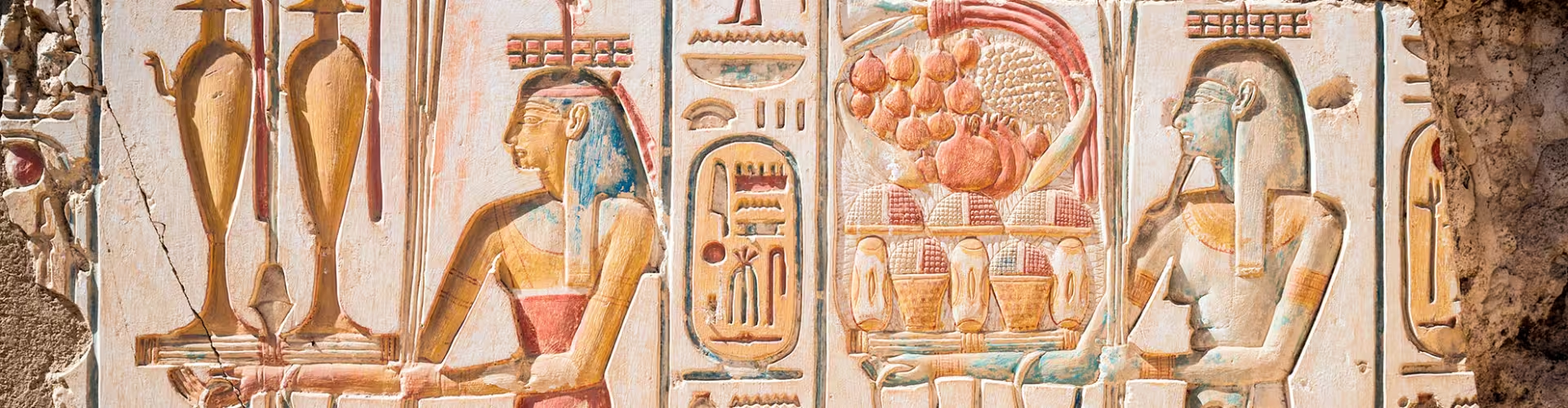
Why it matters, Abydos is one of Egypt’s most important ancient sacred landscapes, strongly associated with Osiris worship and royal pilgrimage traditions. It is the kind of place where context transforms the visit, inscriptions, processional ideas, and temple layout become more meaningful when you slow down. Practical tip, go early for softer light and a quieter atmosphere, then keep your guidebook notes or downloaded references handy for on-site reading.
3) Add a second heritage day toward Dendera
Why it matters, Dendera is widely valued for its temple architecture and the way it preserves a strong sense of ancient Egyptian religious space. Pairing it with Abydos helps you understand how different sacred sites express power, myth, and community. Practical tip, build extra buffer time for the return trip, and avoid overpacking your schedule so you can linger where details are most compelling.
4) Take a Nile Valley slow walk for daily-life texture
Why it matters, the Nile Valley is not just a backdrop, it is the living system that shapes agriculture, markets, and social rhythms in Upper Egypt. A simple walk can add depth to your trip, especially if your itinerary is heavy on temples. Practical tip, dress modestly, keep your camera discreet around homes and people, and ask before photographing anyone.
5) Build a food-first evening around local staples
Why it matters, food is one of the fastest ways to understand place, and Upper Egypt has a distinct home-style comfort profile compared with coastal areas. Even a casual meal can become a highlight when you order well and pace it with tea or seasonal fruit. Practical tip, choose busy spots where turnover is high, and start with one or two dishes, then reorder if you love it.
6) Shop small for practical travel needs
Why it matters, everyday errands, water, snacks, tissues, and batteries, are easier when you know where to restock. This reduces friction on day trip mornings and avoids last-minute searching. Practical tip, buy water the night before a long outing, and keep small bills for quick purchases.
7) Create a photo plan that respects people and light
Why it matters, strong sun can flatten images at midday, while early and late light adds depth to streetscapes and landscapes. Respectful photography also helps you avoid uncomfortable interactions and keeps the trip smooth. Practical tip, aim for morning and late afternoon, and prioritize architecture, landscapes, and details over close-up portraits unless invited.
8) Add a culture-and-context session
Why it matters, reading about Upper Egypt’s history, religious geography, and Nile-based settlement patterns will make your day trips more rewarding. This is a high-impact upgrade that costs little and improves decision-making in the moment. Practical tip, download references in advance, and keep a short list of themes to look for, deities, processions, royal names, and building phases.
Start with an early morning departure for a heritage site day trip, then spend the first part of the day on your highest-priority temple or archaeological stop while temperatures are lower. Break for a simple lunch and a rest period, then return for a relaxed late afternoon walk and a food-focused evening. Keep the day intentionally light on transfers so you can absorb details rather than rush between points.
Day 1, settle in and do a practical orientation loop, cash, supplies, and confirming transport for your next days. Day 2, prioritize Abydos for a full heritage day with time for context and unhurried exploration. Day 3, add Dendera or a second cultural day, then close with a slower evening that highlights local flavors and a calm street-level experience around El-Balyana.
Food in Upper Egypt often leans hearty, filling, and built for sharing, with familiar Egyptian staples that vary slightly by household and town. Use these ideas as a practical ordering framework rather than a fixed menu.
Getting around typically combines short walks for local errands with road transport for longer distances. For day trips, many travelers prefer a private driver or arranged transport to reduce uncertainty and maximize time on site. If you use public transport, build in extra buffer time, confirm departure points locally, and keep your plan flexible in case schedules shift.
For safety and comfort, carry water, sun protection, and a charged phone, and avoid walking long distances in peak heat. Accessibility can vary, so travelers who need step-free routes should plan conservatively and ask in advance where possible.
These nearby heritage areas are commonly paired with a stay in this part of Upper Egypt. Travel times depend on your exact start point, traffic, and transport type, so treat them as planning targets rather than fixed promises.
Yes, it can work well as a calmer base in Sohag Governorate for planning day trips and early starts. It is especially useful if you prefer a slower pace and fewer daily transfers.
One day can cover a simple local orientation plus a relaxed evening. Two to three days gives you room for at least one major day trip and a more comfortable pace.
Mornings and late afternoons are typically more comfortable for walking and outdoor exploration. Midday is better reserved for lunch, rest, and short indoor stops when possible.
Carrying cash is a practical choice for small purchases and transport. In El-Balyana, having small change can make day-to-day transactions smoother.
Many travelers choose a private driver or arranged transport to reduce uncertainty and save time. If using public options, build buffer time and confirm departure points locally.