Last updated:


Geneva suits a trip built around the Old Town, Lake Geneva and its international institutions. Saint-Pierre Cathedral gives the history a focus, while the Jet d'Eau and the meeting of the Rhône and Arve bring a different reason to spend time by the water.
Two days make a useful plan: devote the first to the Old Town and the Reformation, then the second to Lake Geneva and La Jonction. On the first day, link Place du Bourg-de-Four, Saint-Pierre Cathedral and the Reformation Wall; on the second, make the Jet d'Eau and the contrasting river waters your focus.
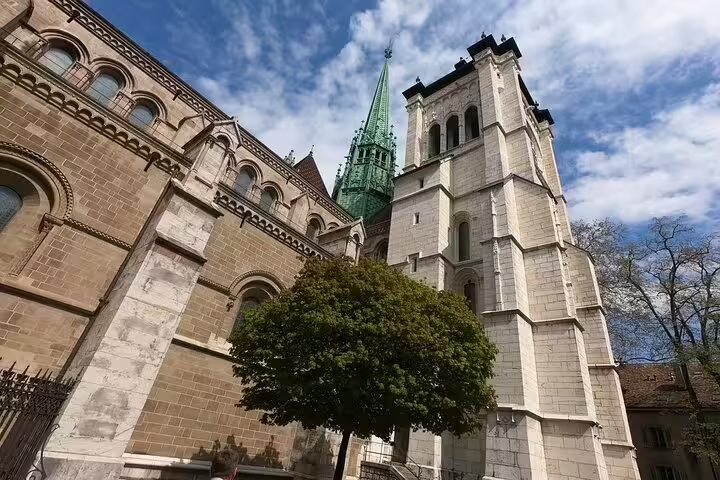
The Old Town is a sensible base if your priority is history, with Place du Bourg-de-Four as an entry point and Saint-Pierre Cathedral above it.
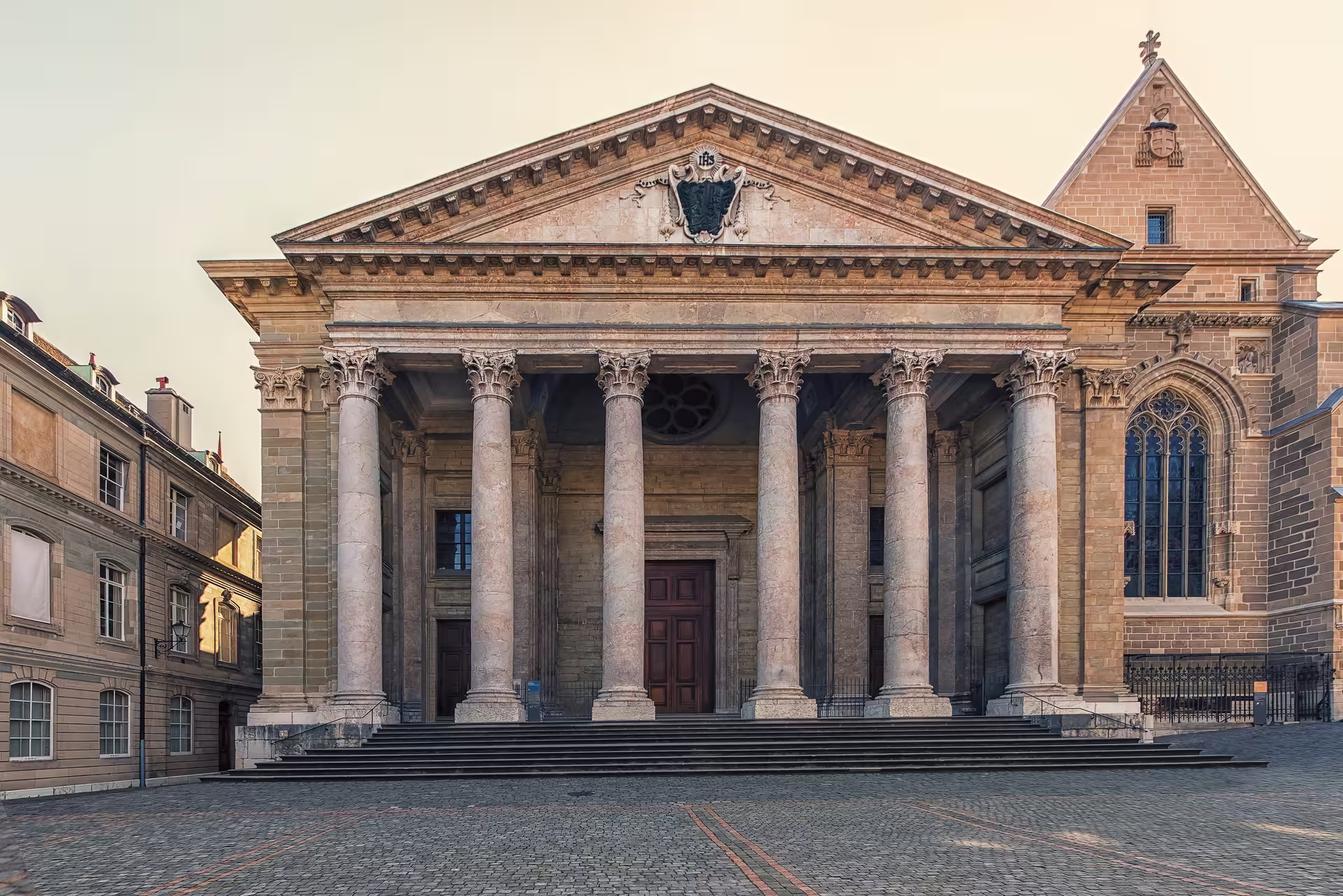
Saint-Pierre Cathedral and the Reformation Wall make a connected visit for understanding Geneva's religious history. The cathedral began taking shape around 1160 in Romanesque style, with Gothic additions following in the 13th century. Calvin preached here from 1536 until his death in 1564, apart from his years of exile, and a wooden chair associated with him is displayed inside. The north tower involves a narrow spiral climb of 157 steps, so the staircase is worth weighing up before adding it to your visit.
In the Parc des Bastions, the Reformation Wall commemorates Calvin, William Farel, Theodore Beza and John Knox and bears the city motto, Post Tenebras Lux. For a game-based walk, the Geneva dark history quest lasts 2 hours and 30 minutes, with mobile access, a story across 12 locations, directions, clues and challenges.
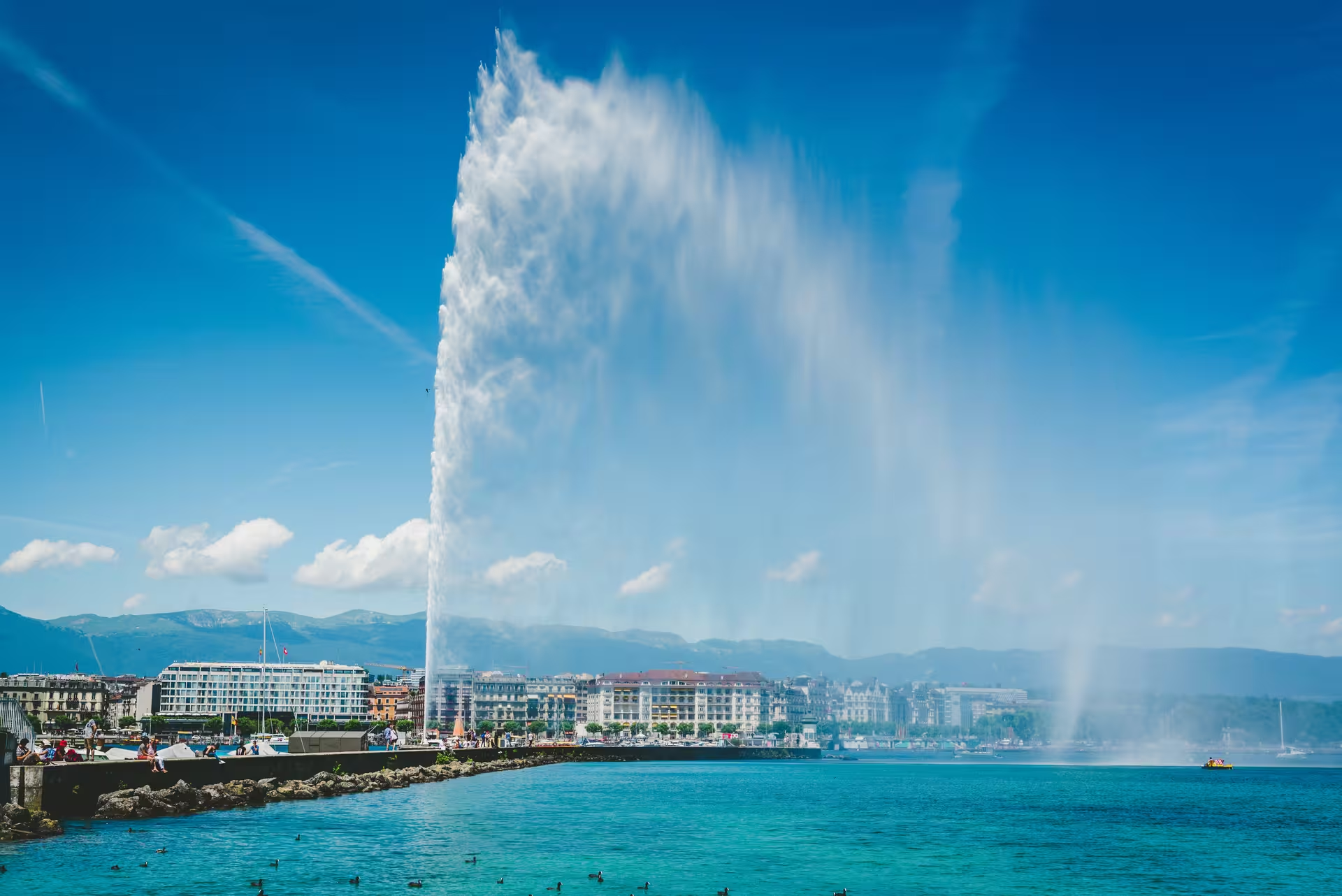
The Jet d'Eau and La Jonction offer different reasons to linger: a fountain at the harbour and a visible meeting of rivers. Lake Geneva supplies the Jet d'Eau through a pumping station, sending its water up to 140 metres. At La Jonction, the clearer Rhône meets the cloudier Arve, leaving a visible boundary between their waters. The contrast is the reason to add this stop alongside the harbour rather than treating every waterside visit as the same experience.
The Palais des Nations gives a focus to Geneva's international history. The League of Nations established its headquarters there in 1936; Geneva is also home to the United Nations Office at Geneva and the ICRC, and CERN lies on its outskirts at Meyrin, on the Franco-Swiss border. For a different historical thread, the committee that became the International Committee of the Red Cross held its initial meeting in Geneva in February 1863.
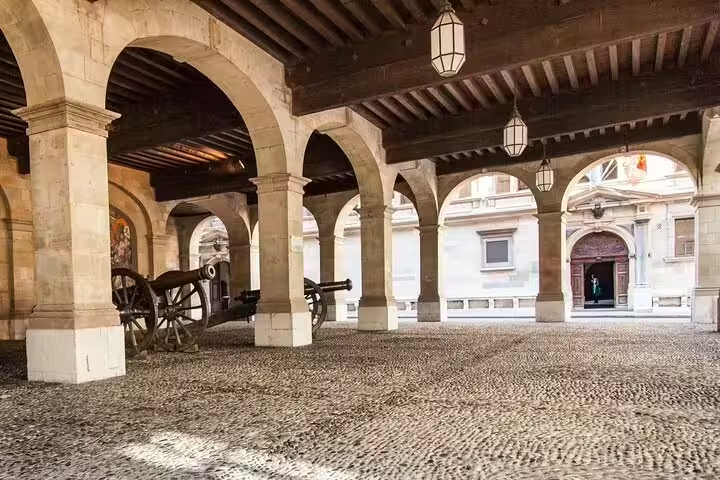
A self-guided walk is an option for exploring Geneva: the audio walking tour with 24 commentaries lasts 2 hours and 10 minutes and includes offline audio, an interactive map with geolocation and unlimited replay. For an excursion to the Salève, a bus from the centre takes you towards the border at Veyrier, and a cable car ride of about five minutes from the French side at Étrembières reaches the summit.
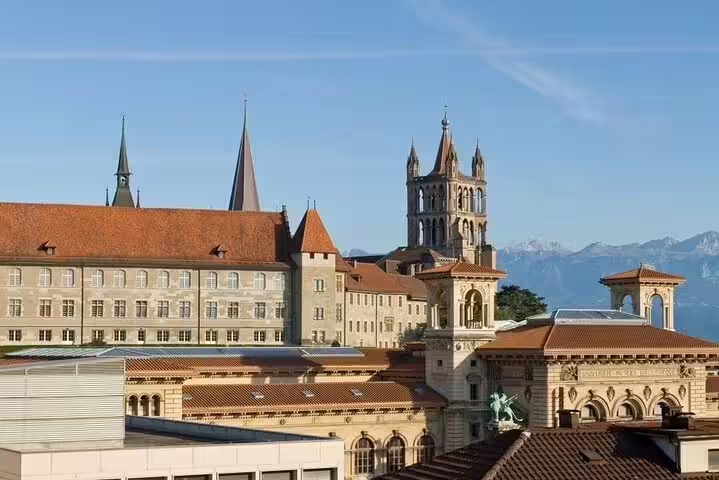
The Salève suits a mountain outing, with the bus connection and cable car giving it a clear place in your plans. For a day shared between cities, the private Geneva and Lausanne tour with lake views lasts 8 hours and includes a chauffeur-driven vehicle, a customisable itinerary, guided Old Town exploration, the United Nations headquarters area, Lausanne's Olympic Museum and lakefront stops in both cities.
The distance between Geneva Airport and the city centre is about 4 km.
The shoreline around Lake Geneva measures 200.2 kilometres.
Yes, more than 800 participants wear period costumes in Geneva's Escalade procession.