



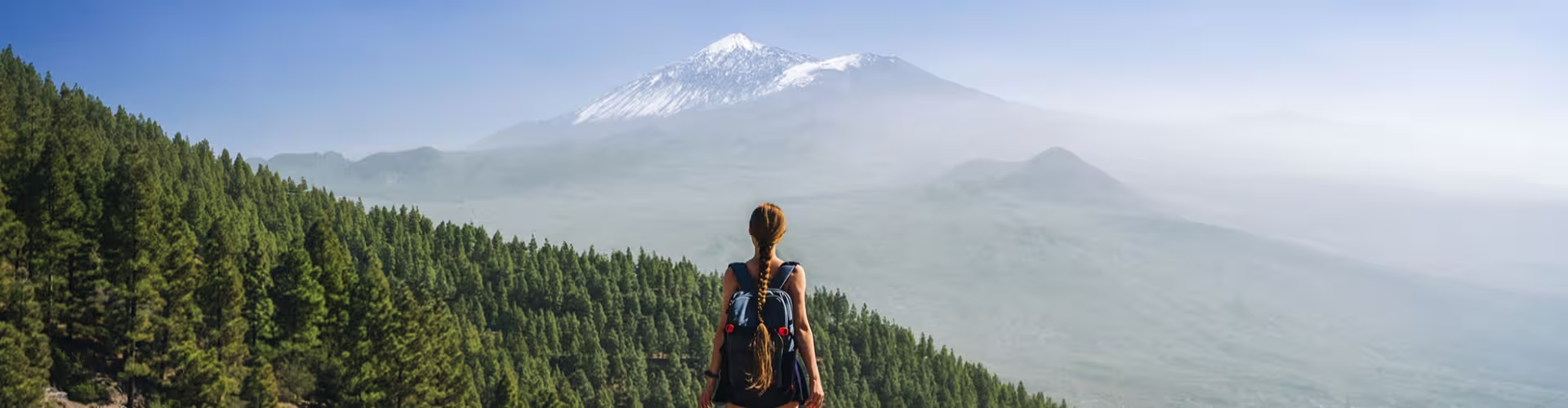


Mount Teide stands as Spain's highest peak, dominating the landscape of Tenerife in the Canary Islands with its snow-capped summit and volcanic majesty. This UNESCO World Heritage Site rises 3,718 meters above sea level, creating a dramatic contrast between the barren volcanic terrain and the surrounding coastal vistas. The mountain's otherworldly landscape has made it one of Europe's most visited natural attractions.
Visitors can explore the Teide National Park, home to unique volcanic formations, colorful mineral deposits, and the iconic Pico del Teide crater. The park features the Roques de García rock formations and numerous hiking trails that showcase diverse volcanic geology. Cable car rides to the summit provide panoramic views across Tenerife and neighboring islands on clear days.
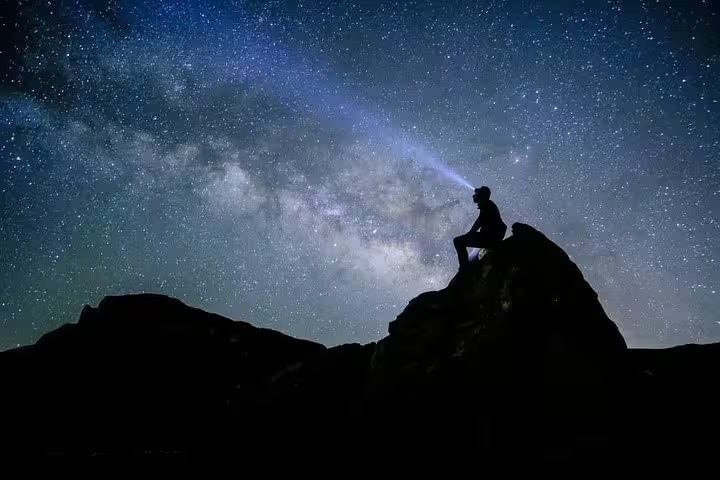
Adventure seekers can hike volcanic trails ranging from easy walks to challenging summit climbs, while photographers capture the dramatic landscape throughout the day. Stargazing is exceptional at higher elevations due to minimal light pollution, making Mount Teide a premier destination for astronomy enthusiasts. Guided tours offer insights into the park's geological history and unique flora adapted to extreme volcanic conditions.
Mount Teide represents one of the world's most accessible high-altitude volcanic environments, featuring distinctive pumice fields and sulfurous vents. The mountain's geological formations have attracted scientific researchers studying volcanic processes and atmospheric phenomena for centuries.