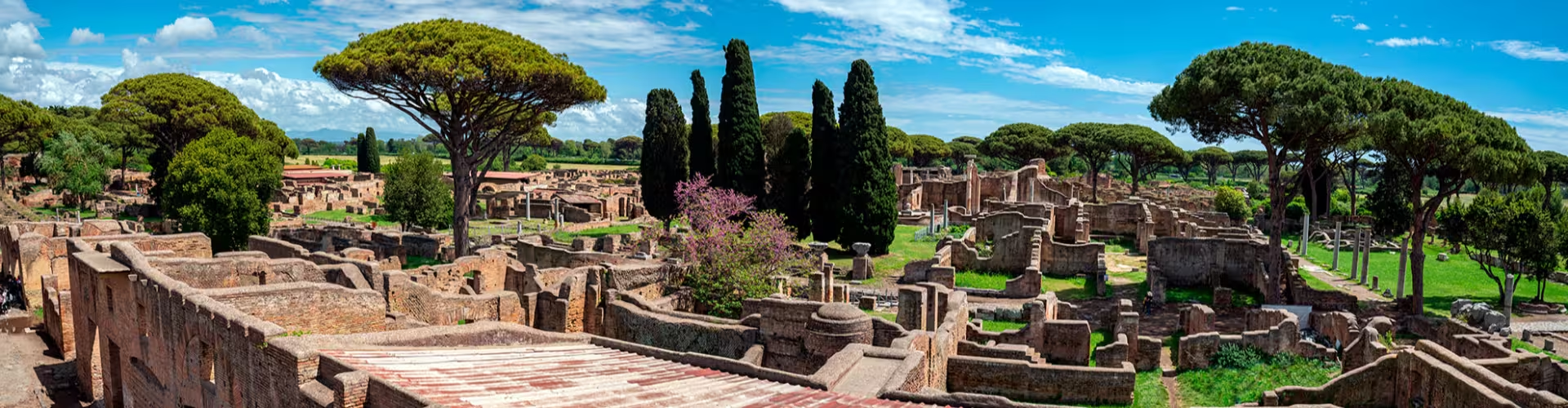


Just outside Rome, Ostia Antica is one of Italy’s most atmospheric archaeological parks, an ancient port city where streets, mosaics, and houses still feel remarkably intact. It is compact enough for a relaxed half day, yet layered with history that rewards curious travelers planning the Best things to do in Ostia Antica. With easy access from central Rome, it is an ideal escape from the crowds, combining ruins, greenery, and a taste of daily life in the Roman Empire.
Ostia Antica lies in the Lazio region of Italy, between Rome and the Tyrrhenian Sea, close to the modern coastal town of Lido di Ostia. It is easily reached from central Rome by suburban train toward Ostia, and it also sits a short drive from Rome Fiumicino Airport, making it convenient to slot into city or airport transfer days.
Spring and autumn are the most comfortable seasons, with mild temperatures and fewer crowds, ideal for slow walks through the ruins. Summer brings strong sun and higher heat, so early morning or late afternoon visits are better, while winter can be cooler and quieter, with shorter opening hours to check in advance.
Entry tickets to the archaeological park are generally moderate compared with central Rome attractions, and costs on site focus mainly on admission and simple refreshments. Cards are often accepted, though carrying some cash is useful, and combination tickets or guided tours can help structure Ostia Antica sightseeing tips into a single, efficient visit.
Use this section as a practical checklist when planning the Best things to do in Ostia Antica, from headline monuments to quieter corners that many visitors miss.
Explore the Decumanus Maximus
Walk the main ancient street that cuts through the site, lined with shops, houses, and public buildings that once served a bustling port city. Allow at least an hour to wander slowly, using Ostia Antica travel tips like bringing a simple map or audio guide to understand what you are seeing.
Climb the Roman Theatre
The semicircular theatre is one of the most striking structures, with tiered seating you can still climb for a sweeping view over the ruins and surrounding greenery. It is a core stop in any Best things to do in Ostia Antica list, so visit early if you prefer quieter photo moments.
Admire the Mosaics of the Piazzale delle Corporazioni
Behind the theatre, this large square is paved with black and white mosaics that once advertised traders and shipping companies from across the Mediterranean. Take time to look closely at the designs, a highlight among Ostia Antica archaeological tours for travelers who enjoy art and symbolism.
Step Inside Ancient Apartment Blocks
Ostia Antica is famous for its remarkably preserved multi storey insulae, or apartment buildings, which give a rare sense of everyday Roman urban life. Many visitors consider these residential areas one of the Best things to do in Ostia Antica, so allow time to explore courtyards, stairways, and upper level views where access is permitted.
Visit the Baths and Thermopolium
Public baths and ancient snack bars show how Romans relaxed and ate, with counters, serving areas, and decorative floors still visible. These stops are especially engaging for families using Ostia Antica travel tips to make history feel tangible for children.
Pause at the Forum and Temples
The central forum area, with its temples and public buildings, reveals Ostia’s civic and religious heart. Sit for a few minutes to imagine ceremonies and markets, a reflective moment that balances more structured Ostia Antica archaeological tours.
Seek Out Quiet Backstreets
Beyond the main axis, smaller lanes and lesser known houses offer peaceful corners away from the busiest paths. Adding these detours to your Best things to do in Ostia Antica plan helps you experience the site’s quieter, more atmospheric side.
Combine With Modern Ostia or the Coast
Many travelers like to pair the ruins with a stroll or meal in the nearby coastal area of Lido di Ostia for sea air and a different vibe. This combination is a practical way to extend Ostia Antica sightseeing tips into a full day that mixes archaeology and the present day shoreline.
Start your day by arriving soon after opening, when light is soft and temperatures are lower, and head straight to the theatre and the Piazzale delle Corporazioni before groups build up. Continue along the Decumanus Maximus, exploring side streets, houses, and baths, then take a midday break in a shaded area or nearby café. In the afternoon, revisit favorite spots for photos, then, if you still have energy, consider a short transfer to the modern coast to round off your Best things to do in Ostia Antica plan.
On day one, follow the one day structure, focusing on the main monuments and using Ostia Antica travel tips such as pacing yourself with regular water and sun breaks. On day two, return to less visited sectors, including residential blocks and quieter backstreets, and consider joining one of the Ostia Antica archaeological tours to deepen your understanding of trade, religion, and daily life. In the late afternoon, spend time in Lido di Ostia or nearby areas to experience the modern coastal setting that replaced the ancient harbor.
With three days, you can explore Ostia Antica at a slow pace, revisiting key zones at different times of day to appreciate changes in light and atmosphere. Dedicate one day to a detailed circuit with a guide or structured Ostia Antica sightseeing tips, another to independent wandering and photography, and a final day to nearby coastal or countryside areas for a contrast of landscapes. This longer stay suits travelers who want to weave the Best things to do in Ostia Antica into a broader Lazio itinerary without rushing.
While Ostia Antica is primarily an archaeological destination, its proximity to Rome and the sea means you can enjoy a mix of Roman classics and coastal dishes before or after your visit.
Ostia Antica is typically reached from Rome by suburban train, followed by a short walk to the archaeological park entrance. Once inside, movement is entirely on foot over uneven ancient streets and paths, so comfortable footwear is essential. There is no complex local transport network within the site itself, which makes Ostia Antica travel tips about pacing and hydration more important than route planning. Visitors with mobility concerns should be aware that some areas may be difficult to access due to historic surfaces and steps, and it is advisable to check current accessibility information before traveling.
Ostia Antica fits naturally into a wider exploration of Lazio, with several realistic day trip combinations.
Most visitors spend between three and five hours exploring the main streets, theatre, mosaics, and residential areas. If you want to cover the Best things to do in Ostia Antica at a relaxed pace or add a coastal stop, consider a full day.
Ticket procedures can change, and some visitors prefer to secure entry ahead of time, but specific booking rules are not detailed here. It is sensible to check current information before you finalize your Best things to do in Ostia Antica plan.
The site includes uneven surfaces, ancient paving, and steps, so some areas may be challenging for visitors with mobility limitations. Because detailed accessibility data is not provided here, travelers should seek up to date information before their visit.
Ostia Antica is largely an outdoor site, and conditions vary by season, from hot summers to cooler winters. Since precise temperature ranges are not listed in this guide, it is best to check a local forecast shortly before you travel.
Italian is the local language, and visitors may also find information in other languages, but exact signage details are not specified here. Bringing your own guide material can help you follow Ostia Antica sightseeing tips even if multilingual panels are limited.