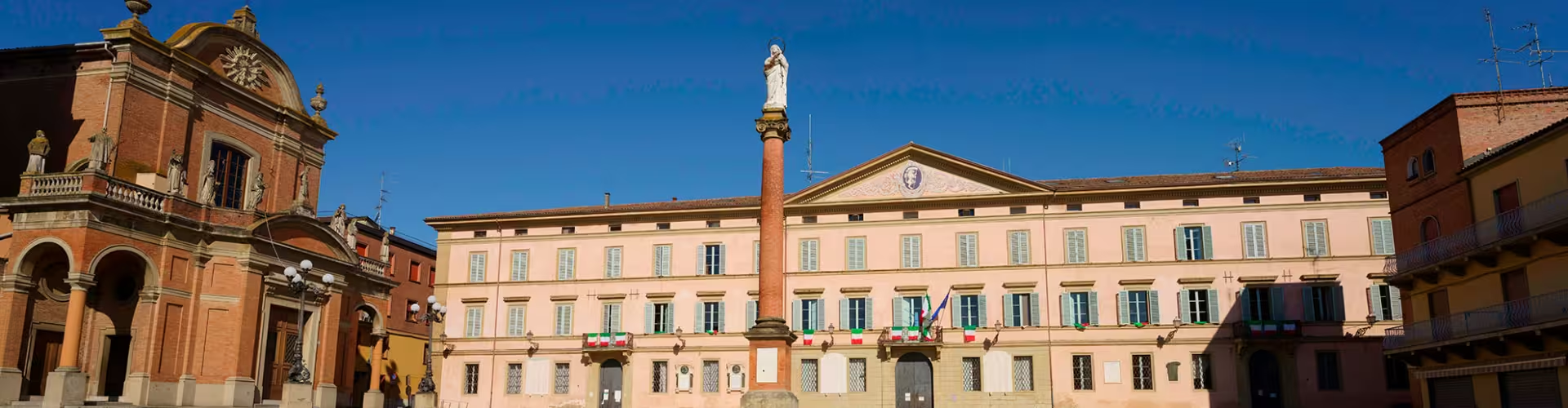
Castel San Pietro Terme is a small Emilia Romagna town with a calm, restorative rhythm, known for its thermal tradition and an easy connection to Bologna. It suits travelers who want Italian everyday life, walkable streets, and a base that feels local rather than staged. Use this guide to plan a practical, experience-led stay in Castel San Pietro Terme with smart logistics, food cues, and nearby add-ons.
Castel San Pietro Terme feels like a gentle pause between the energy of Bologna and the softer countryside mood of the region. The signature vibe is slow travel, thermal wellness, and unfussy dining that leans into Emilia Romagna’s love of pasta, cured meats, and convivial tables. Go when you want a lower-key base with day-trip range, and prioritize mornings and evenings for the most relaxed atmosphere.
Castel San Pietro Terme sits in the Bologna area of Emilia Romagna, making it a convenient stop if you are building an itinerary around Bologna and its surrounding towns. For long-distance arrivals, the most practical hub is Bologna, which functions as the region’s key rail and road gateway. Plan your trip around Bologna as the main connection point, then branch out to Castel San Pietro Terme for a quieter pace.
Emilia Romagna has distinct seasons, so your timing can shape the experience. Warmer months support longer walking days and outdoor meals, while cooler periods can feel more intimate and better suited to slower sightseeing and thermal-style relaxation. If you prefer fewer crowds, aim for shoulder-season travel patterns, and build flexibility into your schedule so you can adjust plans around weather shifts.
Italy uses the euro, and in towns like this you will often find a mix of card-friendly businesses and smaller spots where cash is useful for quick purchases. Keep a small amount of cash for cafés, markets, and small transactions, then use cards for most meals and accommodation. For budgeting, think in terms of a mid-range Italian town rather than a major city, and set aside extra for standout meals and any wellness-focused experiences.
1) Thermal town atmosphere and wellness pacing
The name signals a thermal tradition, and the town’s mood aligns with restorative travel rather than checklist tourism. Even without locking into a strict schedule, you can plan your days around slower mornings, long lunches, and early evenings. Practical tip: build in downtime between activities so the trip feels like a reset, not a sprint.
2) A slow walk through the historic center
A compact center rewards wandering, because the best moments are often simple, a quiet street, a local bar, or a small square where daily life unfolds. This is where you will feel the difference between a commuter town and a visitor-focused destination. Practical tip: go early in the day for calmer streets, then return around aperitivo time for a livelier feel.
3) Food-first exploration of Emilia Romagna classics
The region is a powerhouse for Italian cuisine, and Castel San Pietro Terme is a good place to enjoy it without the intensity of a big-city dining scene. Meals tend to be rooted in tradition, with pasta, cured meats, and local cheeses forming the backbone. Practical tip: choose one meal to go all-in on a multi-course format, then keep other meals simple to balance your budget.
4) Use the town as a base for Bologna area exploration
Staying here can be a strategic move if you want access to Bologna while sleeping somewhere quieter. It is a decision-support choice, you trade nightlife and dense attractions for calmer evenings and an easier pace. Practical tip: plan your Bologna time in focused blocks, then return to town for dinner and decompression.
5) Photography walks with a “details” mindset
This destination is less about grand monuments and more about textures, street scenes, and everyday Italy. Look for architectural details, doorways, signage, and the rhythm of local life. Practical tip: shoot in the softer light of morning or late afternoon for warmer tones and fewer harsh shadows.
6) A café routine, not just a coffee stop
A bar in Italy is a social space, and building a small ritual helps you connect with place. Even a short stay feels more grounded when you have a familiar counter, a preferred espresso style, and a sense of local timing. Practical tip: take your coffee standing at the counter when you want a fast, local-style pause.
7) Market-style browsing for edible souvenirs
Emilia Romagna is ideal for bringing home flavors, and smaller towns can make shopping feel less rushed. Focus on shelf-stable items like packaged pasta, preserves, and regional specialties. Practical tip: pack a foldable tote, and keep fragile items protected in your luggage.
8) Evenings built around aperitivo and conversation
The town’s charm shows in the early evening, when people gather for a drink and a small bite before dinner. This is a cultural rhythm as much as a meal, and it is a simple way to feel part of local life. Practical tip: arrive a little earlier than peak time if you want a quieter table and more attentive service.
Start with a slow morning walk through the center, keeping your first hour unstructured so you can follow whatever looks interesting. Plan a long lunch focused on regional staples, then take a rest to match the town’s relaxed cadence. Finish with an early evening aperitivo, followed by dinner at a place that feels busy with locals rather than optimized for visitors.
On day one, anchor yourself with a center walk, a café routine, and a food-first dinner that introduces Emilia Romagna flavors. On day two, use Castel San Pietro Terme as a base for the Bologna area, and keep your return evening free for a slower meal and a second aperitivo stop. If you have a third day, keep it deliberately light, repeat your favorite spots, shop for edible souvenirs, and leave space for spontaneous discoveries.
Tortellini
Small filled pasta that is closely associated with the Bologna area, often served in broth or with a simple sauce. Expect a savory, comforting profile that feels especially satisfying in cooler weather. Ordering tip: ask what the house style is, then follow the local recommendation rather than customizing.
Tagliatelle al ragù
A rich, slow-cooked meat sauce paired with egg pasta, built for depth rather than sharp acidity. The texture is hearty and the flavor develops over time, making it a classic choice for a long lunch. Ordering tip: choose this when you want a reliable regional benchmark, and keep the rest of the meal simple.
Lasagne
Layered pasta with a structured, baked richness, typically more mellow and balanced than overly tomato-forward versions. It is a satisfying option when you want comfort food with regional identity. Ordering tip: if you see it as a house specialty, it is often a good sign the kitchen takes pride in tradition.
Mortadella
A signature cured meat from the Bologna area, delicate, aromatic, and easy to snack on. It works well as part of a mixed board or a simple sandwich. Ordering tip: try it as part of an antipasto, and pair it with something acidic or crisp to balance the richness.
Prosciutto and other salumi
Cured meats are a regional strength, and tasting a small selection helps you understand local flavor preferences. Expect a range from sweet and delicate to more robust styles. Ordering tip: ask for a mixed plate, and request guidance on the best order to taste them.
Parmigiano Reggiano
Nutty, savory, and complex, with a texture that can be crystalline depending on aging. It can appear as a finishing ingredient or as a simple tasting with a drizzle of something sweet. Ordering tip: if offered multiple ages, choose one younger and one older to compare intensity.
Castel San Pietro Terme is well suited to walking, especially if your plans focus on the center and food stops rather than a packed list of attractions. For trips beyond town, use Bologna as your main transport hub, then connect onward based on your itinerary style. If you are traveling with limited mobility, prioritize a central base so you can keep distances short, and build in breaks during the warmest parts of the day.
Bologna
Travel time varies by your chosen connection, but it is the most logical nearby city hub. Go for historic streets, food culture, and a more energetic urban pace. Primary reason: a high-impact cultural and culinary day that contrasts nicely with quieter evenings back in town.
Emilia Romagna countryside towns
Short hops can reveal a slower landscape of small communities and local producers. This is ideal if you want scenic drives or low-key exploration rather than major-ticket attractions. Primary reason: texture and atmosphere, with a focus on regional identity.
Other towns in the Bologna area
Use Castel San Pietro Terme as a base to sample nearby towns for markets, cafés, and everyday Italian life. These outings work best when kept light and flexible. Primary reason: variety without changing hotels.
Is Castel San Pietro Terme a good base for visiting Bologna?
Yes, it can work well if you want day access to Bologna while returning to a quieter place at night. Plan your Bologna sightseeing in focused blocks so you are not spending the whole day in transit.
How many days do you need in Castel San Pietro Terme?
One day is enough for a relaxed taste of the center and local dining. Two to three days is better if you want to add day trips and keep the pace restorative.
What is the best time of year to go?
Timing depends on whether you prefer warmer walking weather or a cooler, calmer feel. Shoulder-season travel patterns can help you balance comfortable days with fewer crowds.
Do you need cash, or can you pay by card?
A mix is best, cards are widely useful, but cash helps for small purchases and quick stops. Keep small bills on hand for flexibility.
Is Castel San Pietro Terme easy to explore on foot?
Yes, the town is suited to walking, especially if you stay near the center. Build in breaks during the warmest hours and keep your daily plan simple for the best experience.