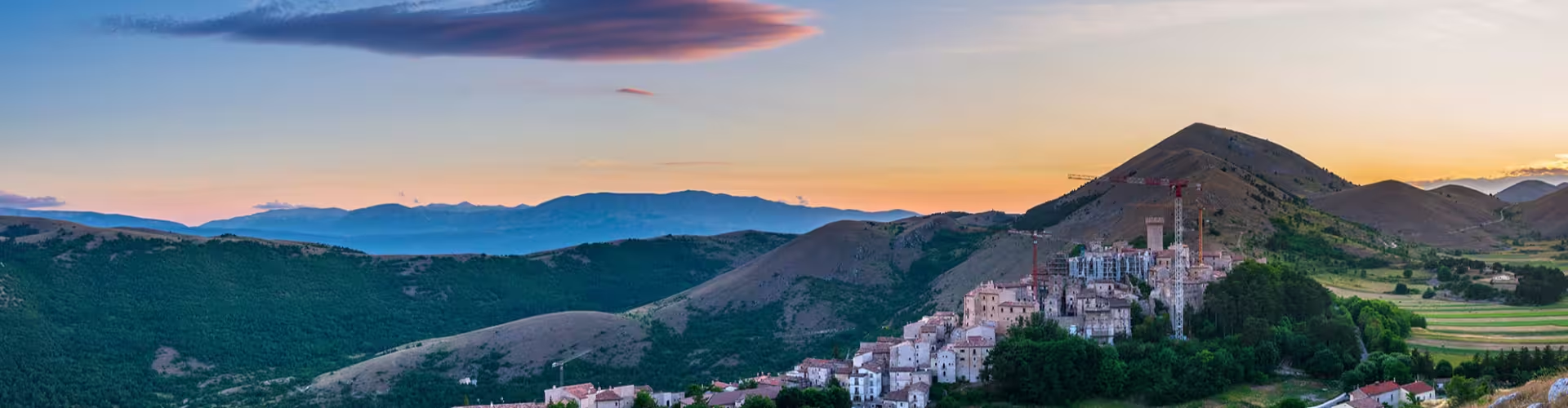
Santo Stefano di Sessanio

A practical, evocative guide to Santo Stefano di Sessanio with the best things to do, when to go, what to eat, how to get around, and easy day trip ideas in Abruzzo.

logoBlack

Build your dream
experience

dreamimg

More to know about Santo Stefano di Sessanio


Santo Stefano di Sessanio Travel Guide

Santo Stefano di Sessanio is a stone built hill village in Abruzzo that rewards travelers who value silence, texture, and authentic mountain culture over checklists. It is the kind of place where the streets feel like a living museum, with archways, small squares, and views that shift with the light. Use this guide to plan a smooth visit, choose the right season, and build an itinerary that fits your pace.


Snapshot

Santo Stefano di Sessanio delivers a medieval village atmosphere with a calm, cinematic feel, especially in the early morning and around sunset. Go now if you want a slower Italy experience that centers on walking, landscape, and local flavors rather than big city crowds. The signature vibe is rustic and refined at the same time, with a strong connection to the surrounding mountains and traditional food culture.


🗺️ Geography and Logistics

📍 Orientation: Where is it within L'Aquila and Italy?

Santo Stefano di Sessanio sits in the province of L'Aquila in the Abruzzo region of central Italy. It is part of an Apennine mountain setting, which shapes everything from the crisp air to the walking focused experience. For gateways, plan around major hubs in central Italy, then continue by road into the L'Aquila area, since mountain villages typically rely on car based connections rather than dense rail networks.

🕒 When to Go: Seasonal breakdown

Expect a mountain climate pattern, with cooler evenings and more variable weather than coastal Italy. Warmer months typically bring easier walking conditions and longer daylight, while colder months can feel atmospheric and quiet, with a stronger emphasis on indoor meals and slow travel. If you prefer fewer people and softer light for photos, aim for shoulder season timing and plan layers for temperature swings.

💰 Budget & Currency: Practical money tips

Italy uses the euro, and small villages often run on a mix of card and cash. Carry some cash for quick purchases, small family run spots, and situations where connectivity can affect card payments. Budget expectations vary by travel style, but you can keep costs controlled by focusing on walking, choosing a simple lunch, and saving sit down dining for one special meal.


⭐ Essential Things to Do

1) Wander the historic lanes and archways
The biggest attraction is the village itself, because every turn reveals stone staircases, small courtyards, and quiet viewpoints. This is where you feel the medieval footprint and the mountain village rhythm. Practical tip, start early for empty streets and bring shoes with grip since stone can be slick.

2) Photograph the village at golden hour
Light transforms the stone, warming the textures and pulling detail out of doorways and walls. It is an easy, high impact experience that does not require tickets or planning. Practical tip, pick one viewpoint and wait, because the best frames often appear when the light shifts for a few minutes.

3) Slow down in a small piazza
A pause in a small square helps you tune into local life, even if it is subtle and quiet. In mountain villages, the atmosphere is part of the value, and time spent observing often becomes the memory. Practical tip, take a short break mid walk, then continue exploring with no fixed route.

4) Explore the surrounding mountain landscape
The Abruzzo Apennines are a major reason to come, adding wide horizons and a sense of scale that cities cannot match. Even a short walk outside the core changes the perspective from village detail to open scenery. Practical tip, pack a light layer and water, because conditions can change quickly in higher elevations.

5) Prioritize local food experiences
Food in this part of Italy often leans rustic and ingredient driven, which pairs well with the mountain setting. Trying regional dishes is a direct way to understand place and season. Practical tip, ask what is typical today, then choose one local specialty rather than defaulting to familiar options.

6) Plan a relaxed evening stroll
Evenings can feel especially peaceful, with fewer day visitors and a softer soundscape. This is a great time to revisit your favorite lane and notice details you missed earlier. Practical tip, keep a small light on your phone available for darker corners and uneven steps.

7) Build a micro itinerary with photo stops
Because the village is compact, you can create a loop that includes viewpoints, architectural details, and a food stop without rushing. It is ideal for travelers who want depth in a small area. Practical tip, mark two or three must see corners, then let the rest be spontaneous.

8) Use the village as a base for the L'Aquila area
Staying nearby helps you experience mornings and nights, which are often the most atmospheric moments. It also makes it easier to branch out to nearby towns and landscapes without cramming everything into one day. Practical tip, cluster nearby stops by direction to reduce backtracking on mountain roads.


🚶 Curated Itineraries

⏰ The Highlights (1 Day): A fast paced best of route

Start with an early walk through the historic center while the lanes are quiet, then pause in a small square for a coffee style break. Spend late morning on a gentle loop that includes viewpoints and architectural details, then take a simple lunch focused on regional flavors. In the afternoon, step outside the core for landscape views, then return for golden hour photos and a relaxed dinner plan.

⏰ Deep Dive (2 to 3 Days): Slow travel and local texture

Day one, focus on the village itself, repeating key lanes at different times of day to see how the light and mood change. Day two, dedicate time to the surrounding mountains and nearby villages in the L'Aquila area, balancing scenery with a long meal. If you have a third day, keep it flexible, revisit your favorite photo spots, and prioritize a slower pace that fits the calm identity of Santo Stefano di Sessanio.


🍽️ Flavors of Santo Stefano di Sessanio

Arrosticini
These small skewers are a classic Abruzzo flavor, savory and direct, perfect after a long walk. Ordering tip, ask if they are served in batches so you can pace the meal.

Pecorino
Sheep milk cheese is a regional staple, typically rich and salty with a firm bite. Ordering tip, request a small tasting portion if available, especially if you want to pair it with other starters.

Polenta
A mountain friendly comfort dish, polenta tends to be warm, filling, and ideal in cooler weather. Ordering tip, choose it when temperatures drop, it matches the seasonal mood.

Lentils and legumes
Central Italy mountain cuisine often highlights legumes for hearty, earthy flavor. Ordering tip, ask what is typical today, soups and stews can change with season.

Wild herb and mushroom flavors
Apennine cooking frequently leans on forest notes, giving dishes a deeper, aromatic profile. Ordering tip, if you see a seasonal special, consider it over a standard pasta choice.

Montepulciano d'Abruzzo
A common regional red wine, usually fruit forward and easy to match with grilled or savory plates. Ordering tip, ask for a local glass option rather than defaulting to an international label.


🚌 Navigation & Transport

The most enjoyable way to experience Santo Stefano di Sessanio is on foot, since the appeal is in the lanes, stairways, and small spaces where cars are not the focus. For reaching the village and moving between nearby towns, road travel is typically the practical option in mountain areas, so plan for driving, taxis, or arranged transfers depending on your style. Wear stable shoes for uneven stone, and take extra care in wet or low light conditions.


🌄 Beyond the Center: Day Trips

1) L'Aquila
Travel time varies by route, but it is the key nearby hub for broader services and a deeper look at the province. Go for a contrast to village scale and to add urban history to your itinerary.

2) Gran Sasso area
A natural extension of the mountain setting, ideal for scenery focused travelers. Go for expansive views and an immersive Apennine atmosphere, especially if you want time outdoors.

3) Campo Imperatore
Known for wide open landscapes and dramatic horizons, it adds a sense of vastness to a trip built around stone villages. Go for photography and big sky views, then return to the village for dinner.

4) Other Abruzzo hill towns
Small towns in this region often share a stone built character but each has its own layout and viewpoints. Go to compare atmospheres and build a slower, discovery based route.


✅ Insider Tips for Travelers

  • Carry cash alongside cards, small village purchases can be easier with cash.
  • Wear shoes with grip, stone lanes and steps can be uneven and slippery.
  • Plan layers, mountain weather can shift between sun and cool air quickly.
  • Photograph early and late, midday light can flatten the texture of stone.
  • Keep your itinerary light, the value here is atmosphere, not speed.
  • Ask for seasonal dishes, local kitchens often shine when you order what is typical today.

❓ Frequently Asked Questions, FAQ

Is Santo Stefano di Sessanio easy to explore on foot?
Yes, the village experience is walking first, with compact lanes and short distances between viewpoints. Wear stable shoes because stone steps and uneven surfaces are common.

How much time should I plan for Santo Stefano di Sessanio?
A day trip covers the highlights, but two days gives you the best rhythm for photos, meals, and quieter moments. A longer stay also makes day trips into the L'Aquila area easier.

When is the best time of day for photos?
Early morning and golden hour tend to bring softer light that enhances stone textures. Midday can be bright, so shade and contrast may be stronger than you want.

Do I need cash in Santo Stefano di Sessanio?
Carrying some cash is a smart backup for small purchases and situations where card payments are less convenient. Use cards when possible, but do not rely on them for every transaction.

What should I pack for a visit?
Bring layers for changing mountain conditions, plus water for walking. A light rain layer is useful if the forecast looks mixed.