Last updated:


Djúpivogur suits travellers who want a coastal village where outdoor art, an old trading house and birdlife can fill a short, unhurried visit. The village belongs to Cittaslow, the international network of slow-living towns, which sets the pace for the time you spend here.
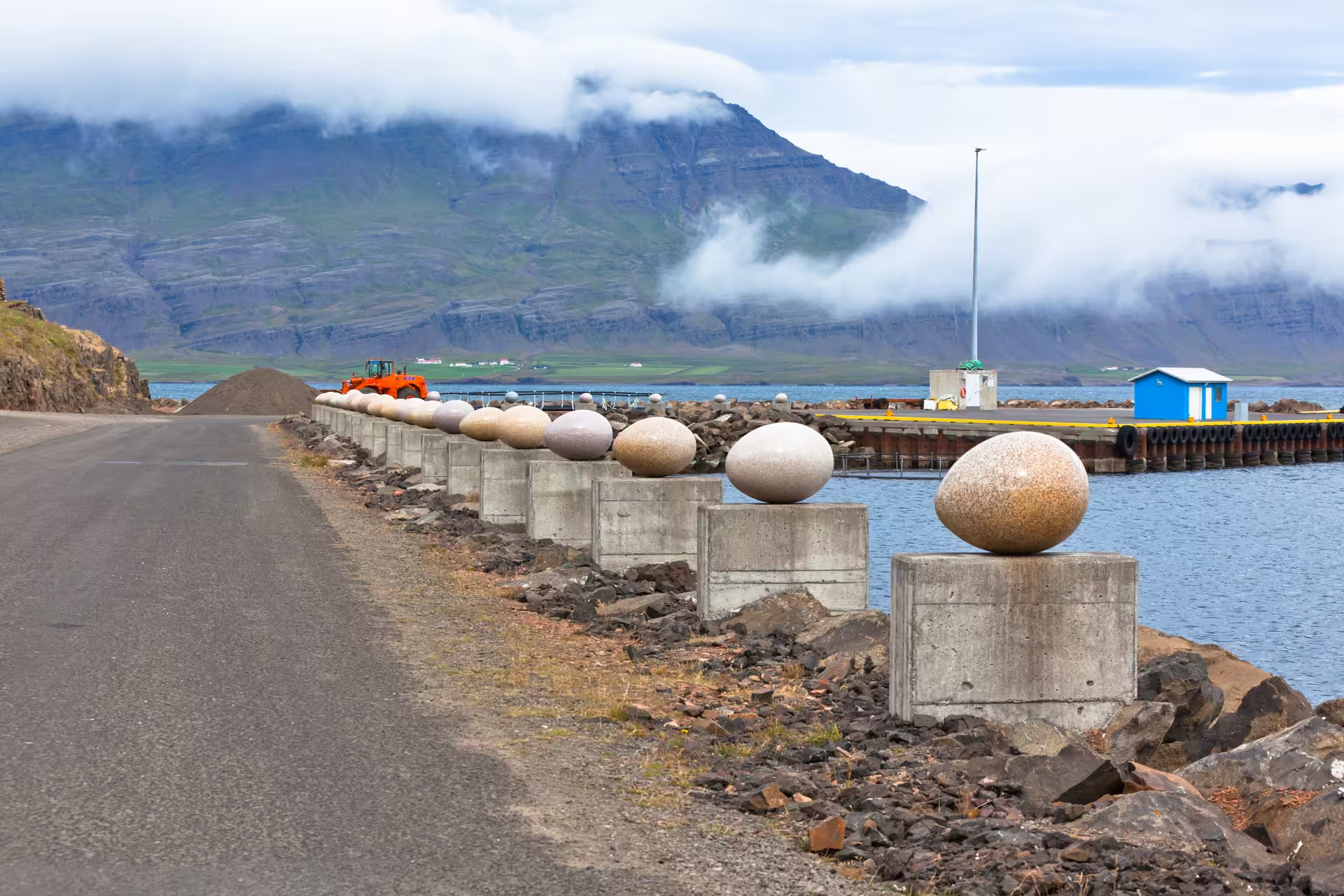
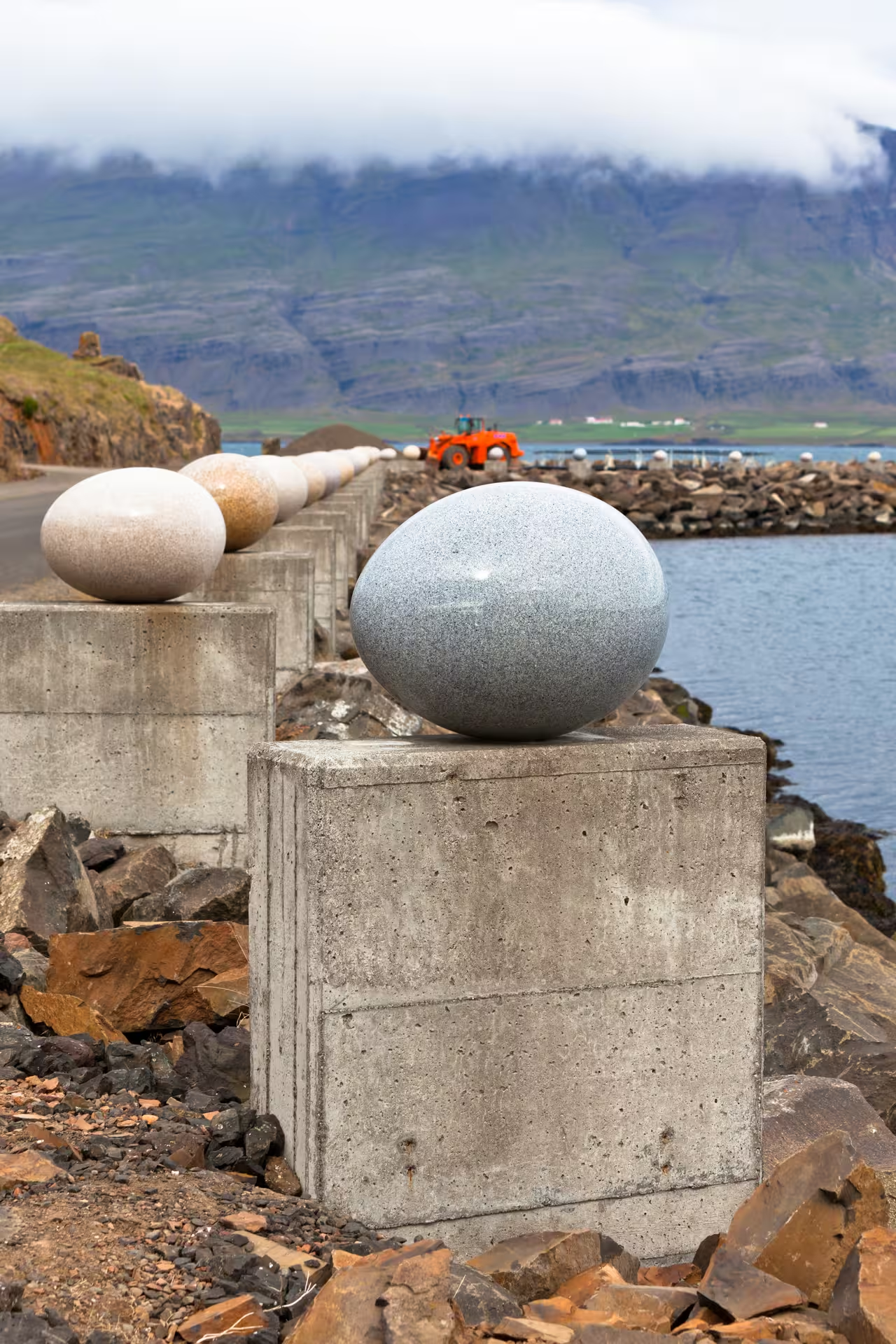
Start with Eggin í Gleðivík, the Eggs in Merry Bay, if you only have an hour or two. This outdoor artwork by Sigurður Guðmundsson places 34 oversized replicas of the eggs of birds that nest near Djúpivogur along the waterfront, so it also works as an introduction to the local birdlife. The eggs stand on concrete pillars that once supported a landing pipe between the pier and the smelter, a detail that ties the artwork to the village's working past.
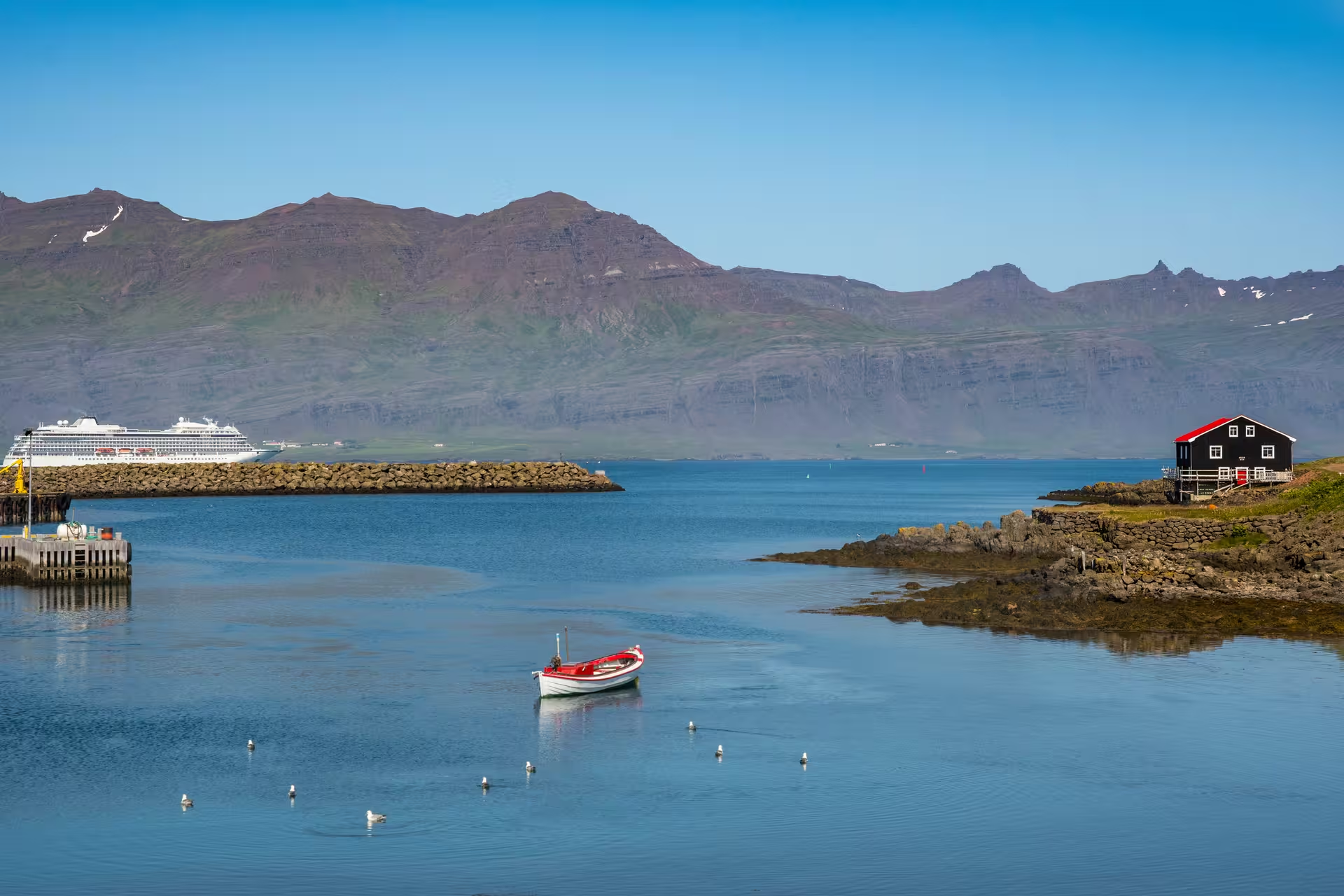
Langabúð deserves the next stop if you want history and art under one roof. Built in 1790, it is the oldest house in Djúpivogur, and it now holds sculptures, a heritage museum in its loft and a coffee shop. Its museums present the life and work of the sculptor and artist Ríkarður Jónsson, so allow time inside rather than treating it as a quick photograph.
For art and music, Tankurinn shows how the village has reused its industrial past: an old fish oil tank is now an exhibition space.
Djúpivogur rewards a history-minded visit because its trading story goes back to 1589, long before Langabúð was built. A more recent chapter is marked by a memorial to Hans Jonathan, who is believed to have been the first black person to settle in Iceland. Prime Minister Katrín Jakobsdóttir unveiled the memorial at a ceremony in Djúpivogur in 2021, so it is worth looking for if you are interested in how the village tells its own past.
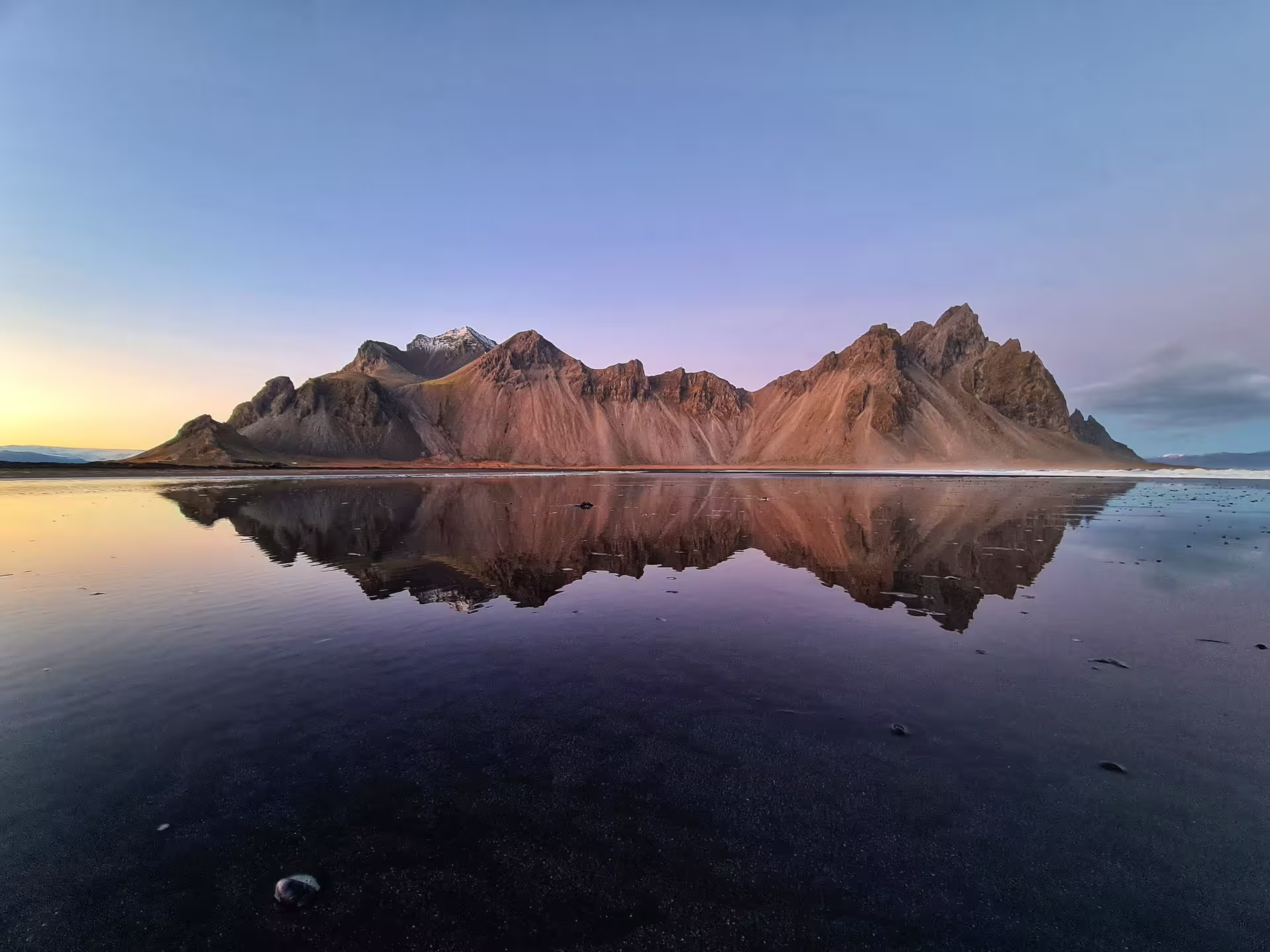
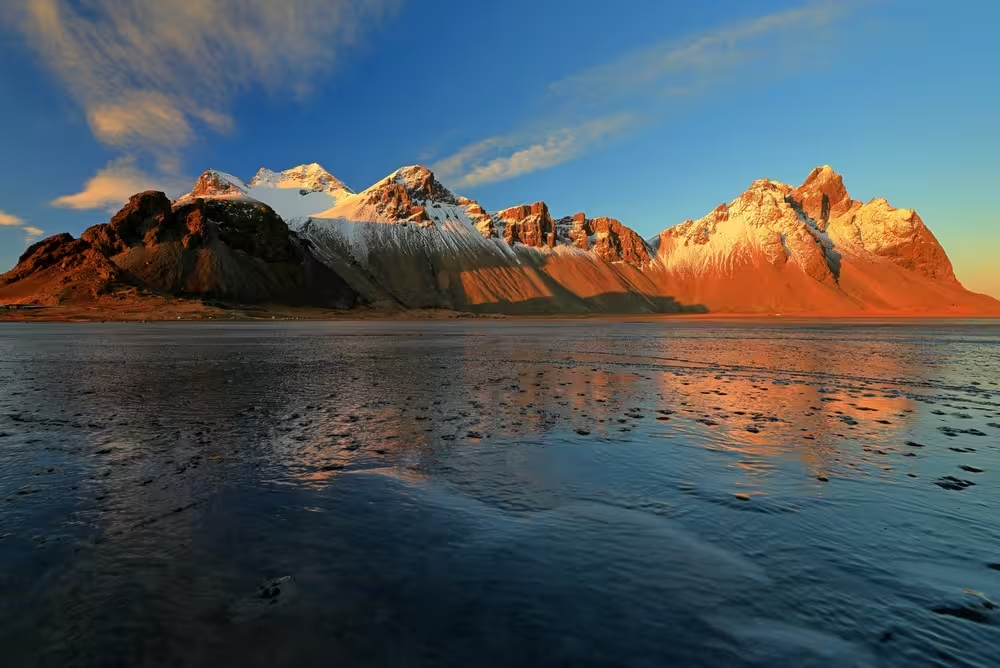
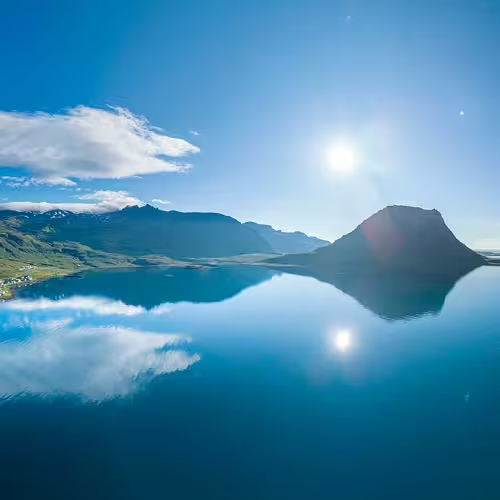
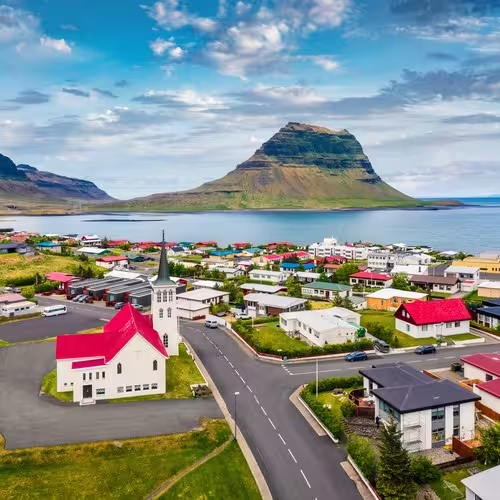
Búlandstindur is the landmark to plan your views and walks around: the pyramid-shaped peak dominates the landscape and reaches 1069 metres. It is a basalt mountain believed to be about 8 million years old. If you are thinking about the summit, plan for demanding ground, because the eastern slope is steep and rocky and the summit itself is a narrow, steep cliff, although it is known for its view. Local legend gives another reason to look up at it in midsummer, as Búlandstindur is said to make wishes come true during the summer solstice.
Birdwatchers have two clear choices. The Búlandsnes sanctuary is renowned among bird lovers, and offshore from Djúpivogur lies Papey, a small, uninhabited island that is a favourite place for puffin-watching. Papey sits off the mouth of Hamarsfjörður, and kittiwakes breed there as well as puffins. The island is on Iceland's nature conservation register and on the register of Important Bird Areas, which is a good reason to treat it as more than a boat ride.
Teigarhorn is an easy addition if you arrive from the north: the area comes around 3 km before the Djúpivogur exit. It has been protected as a natural monument since 1975 and is best known for zeolites such as scolecite, stilbite, epistilbite, analcime and heulandite.
Plan to look rather than collect, since removing zeolites without the permission of the Environment Agency of Iceland is prohibited. The old house at Teigarhorn, built in 1880 to 1882 for Niels Weywadt, adds a historic building to a visit focused on geology.
If Djúpivogur is one stop on a longer journey, a multi-day guided tour can take you to other parts of Iceland. The 8-day Iceland Ring Road guided tour with a volcano hike includes a professional licensed guide throughout and a volcano hike at Fagradalsfjall on day 8. For a winter trip, the 6-day Iceland winter minibus adventure includes a glacier hike, an ice cave tour with an experienced glacier guide and whale watching in Hauganes. If you prefer travelling privately, the 7-day private guided tour of Iceland's nature spots includes a private guide, a private vehicle and six nights of accommodation.
In 2013. The Cittaslow movement itself was launched in 1999.
The Papey area holds a large puffin colony, counted at 132,750 pairs in 2014. The island covers 267 hectares, rises 20 metres and is mostly ringed by low cliffs.
30.5 °C, measured at Teigarhorn, close to Djúpivogur, on 22 June 1939. Weather observations have been made systematically at Teigarhorn since 1881.