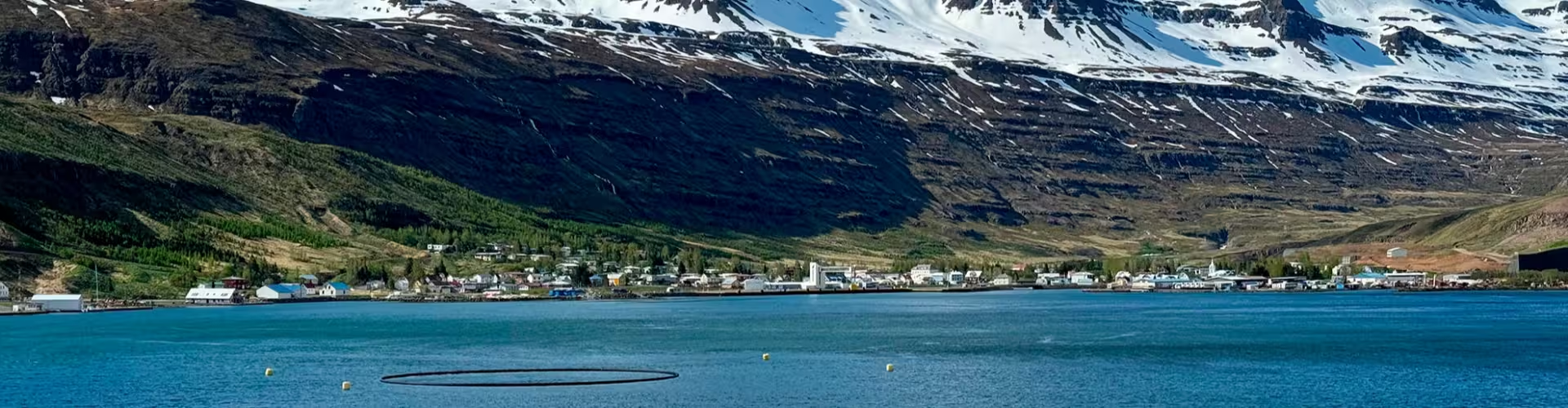


Fellabær is a small community in East Iceland that works well as a calm base for exploring the wider region at your own pace. The appeal is the everyday Icelandic rhythm, open landscapes, and quick access to the Ring Road for flexible sightseeing. This guide focuses on practical planning, what to prioritize, and how to build an itinerary that fits your season, budget, and driving comfort.
Fellabær feels like a quiet pause between big East Iceland landscapes, where the scenery is the headline and the pace is unhurried. Go now if you want a less crowded side of Iceland and a base that supports day trips without constant hotel changes. It is especially appealing for travelers who value road trip freedom, scenic drives, and simple logistics.
Fellabær is located in the Eastern Region of Iceland, a part of the country known for long distances, dramatic coastlines, and wide valleys that reward slow travel. Most travelers connect through Iceland’s main transport corridors, then continue by road into the east. For planning, treat the area as a road trip destination, where your route choices matter as much as the stops.
Summer generally brings longer daylight and easier driving conditions, which helps you fit more viewpoints and short walks into a single day. Shoulder seasons can feel quieter and more atmospheric, but weather can be more changeable, so buffer time becomes essential. Winter travel can be rewarding for those comfortable with limited daylight and winter roads, but it requires conservative planning and a willingness to adjust plans.
Iceland is widely considered a higher-cost destination, so build your Fellabær plan around smart tradeoffs like self-catering when possible and prioritizing a few standout experiences. Card payments are common across Iceland, but it is still wise to keep a small amount of cash for edge cases and to avoid relying on a single payment method. Keep an eye on fuel strategy on longer driving days, since distances in the Eastern Region of Iceland can make timing and refueling discipline important.
Use these experiences as building blocks. They are designed to be flexible, so you can adapt them to weather, daylight, and your driving pace. Where relevant, fold in things to do in Fellabær and nearby highlights as part of a wider East Iceland route.
1) Scenic Ring Road Drives
The east rewards travelers who treat the drive as part of the experience, not just the transfer. The shifting light, open vistas, and frequent pull-offs make it easy to create a day of small, memorable moments. Practical tip, start earlier than you think so you can stop often without feeling rushed.
2) Slow Exploration of East Iceland Landscapes
The signature vibe around Fellabær is space, quiet, and a sense of scale that photographs rarely capture. Even short walks and roadside viewpoints can feel immersive because the environment is so dominant. Practical tip, pack layers and a windproof outer shell even on days that begin calm.
3) Photography Loops in Soft Light
East Iceland’s atmosphere changes quickly, which is ideal for photographers who enjoy chasing light and weather. Low sun angles can add depth to valleys and highlight textures in the terrain. Practical tip, keep your camera accessible, and plan a loose loop rather than a rigid schedule.
4) Build a Flexible Fellabær itinerary Around Weather
The best days in Iceland often come from adapting, not forcing a checklist. Use clearer windows for longer drives, then keep local, low-commitment stops for uncertain weather. Practical tip, decide each morning which direction has the best conditions, then commit to that corridor.
5) Road Trip Picnics and Self-Catering Breaks
A picnic stop can be one of the most satisfying ways to experience the landscape, especially when you are not racing between reservations. It also helps manage costs in a destination known for higher prices. Practical tip, stock up when you have access to a good selection, and keep a simple kit in the car.
6) Evening Drives for Calm Roads
If you prefer quieter roads and a calmer feel, evening can be a great time to do a short scenic drive. It is often less hectic, and the mood can be more reflective, especially in summer with long daylight. Practical tip, always keep your return route and daylight in mind, especially outside peak summer.
7) Use Fellabær as a Base for East Iceland Day Trips
Staying in one place can reduce packing fatigue and give you a more grounded travel rhythm. It also makes it easier to adjust when weather changes, since you are not locked into a one-way route. Practical tip, plan two “big” day trips and keep one day intentionally open.
8) Quiet Time, Reading, and Rest as a Feature, Not a Gap
East Iceland is ideal for travelers who want their itinerary to include real downtime. Rest becomes part of the experience when the setting is this expansive and the pace is naturally slower. Practical tip, schedule a low-effort afternoon so you do not feel like you are “wasting” time when weather turns.
Start your day with a scenic drive focus, aiming to spend more time at viewpoints than in the car without stops. Keep the middle of the day flexible for short walks, photo breaks, and a relaxed meal plan. End with an evening loop if conditions are good, then return early enough to avoid fatigue, since East Iceland distances can make days feel longer than expected.
Day 1, anchor your plan around a longer scenic corridor and treat the drive as the main event, with frequent stops and a slower pace. Day 2, choose a different direction to diversify landscapes, then keep the afternoon open for rest or a short local loop. Day 3, use as your weather buffer day, revisit the best light locations, and finalize your route onward with a conservative driving plan.
Dining in Iceland often combines comfort, simplicity, and high-quality ingredients. Use these ideas as a tasting checklist, and adjust based on what is available where you are staying or stopping.
Most travelers explore the Eastern Region of Iceland by car, which gives the flexibility needed for weather changes and spontaneous scenic stops. Walking works best for short local strolls and viewpoint breaks, rather than point-to-point travel between towns. If you are driving, prioritize rest, conservative speeds, and a simple daily plan, since long distances can compound fatigue.
For safety, treat changing weather as normal and plan with buffers. For accessibility, a car-based itinerary can be adapted by focusing on viewpoints and short, low-commitment stops rather than long hikes.
Use Fellabær as a base to explore East Iceland at a comfortable pace. Actual travel time varies with route choice, road conditions, and how often you stop for photos.
One day can cover a highlights-style driving loop with frequent stops, but it will feel fast-paced. Two to three days gives you flexibility for weather and more time for slow scenic breaks.
Fellabær works well as a base if you want to reduce hotel changes and build day trips around road conditions. It can also fit as a quick stop on a longer East Iceland route if your schedule is tight.
A car is the most practical way to explore the Eastern Region of Iceland, since distances are long and plans often change with weather. If you do not drive, you will need to build a more limited itinerary around available connections.
Bring layers, a windproof outer layer, and comfortable shoes for short walks and viewpoint stops. Add a simple car kit for snacks and hot drinks so you can pace long driving days.
Start earlier, choose fewer corridors, and plan for frequent short stops rather than one long push. A loose plan with buffer time usually feels better than a packed checklist.