Last updated:


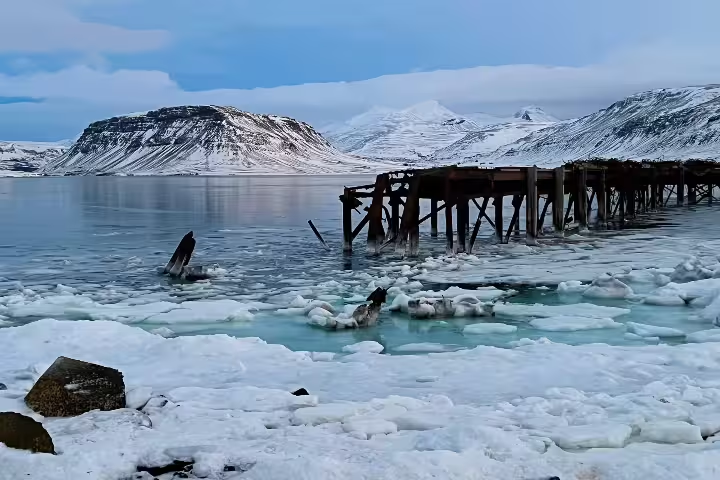
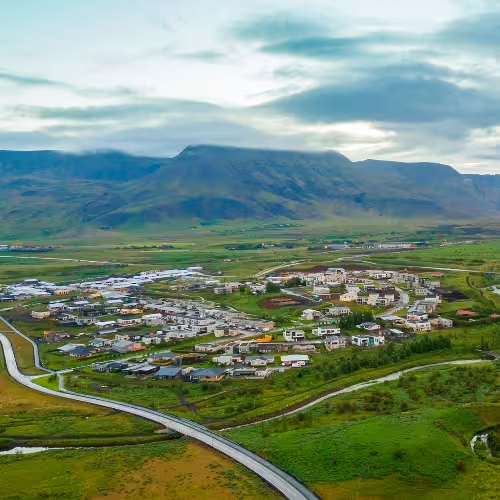
Hvalfjordur, or Hvalfjörður, rewards a visit built around its landscape: a waterfall, tidal bays and mountains shaped by Ice Age glaciers. Glymur can be the focus of a walking day, while the War and Peace Museum and church art at Saurbær offer reasons to look beyond the waterfall.
The inner fjord is worth including for its bays and mountain setting, rather than making Glymur your only stop. Brynjudalsvogur and Botnsvogur form the two branches at its head, with Múlafjall, Hvalfell and Botnssúlur rising beyond them. Shallow water and broad mudflats give this part of the shore a different character from the surrounding mountains.
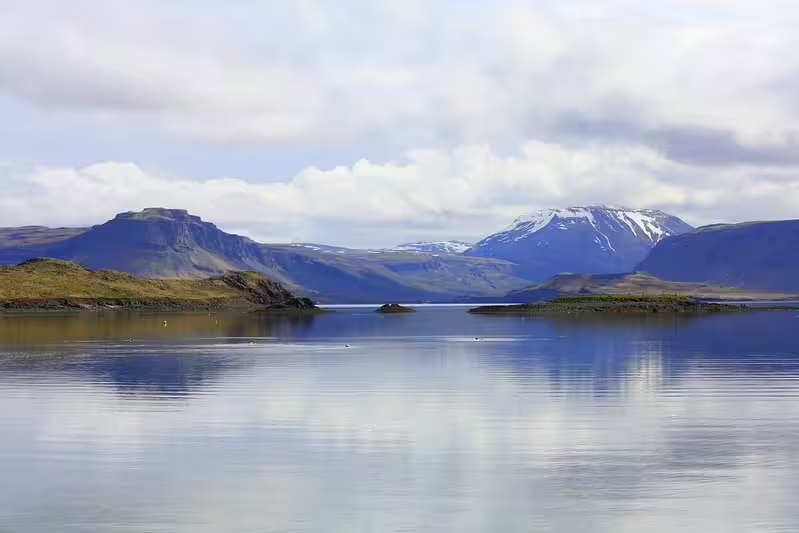
Geirshólmi is a rocky islet in the inner fjord, while Þyrill stands on the northern side. The steep slopes and vertical cliffs of this basalt headland make it a feature to look for if the shape of the landscape interests you. Birds, seals and the habitats along the tidal shore were the reasons Hvalfjörður was put forward for nature conservation, so leave room for the shoreline as well as the mountain scenery.
Two days would let you devote one day to Glymur and the other to the fjord, the War and Peace Museum and Saurbær. That separates a waterfall walk from stops focused on the coast, history and church art, instead of trying to fit them all into the same outing.
If you want hiking and hot springs arranged over two days, the guided Hvalfjordur tour with hot springs and hiking includes a photographer guide throughout.
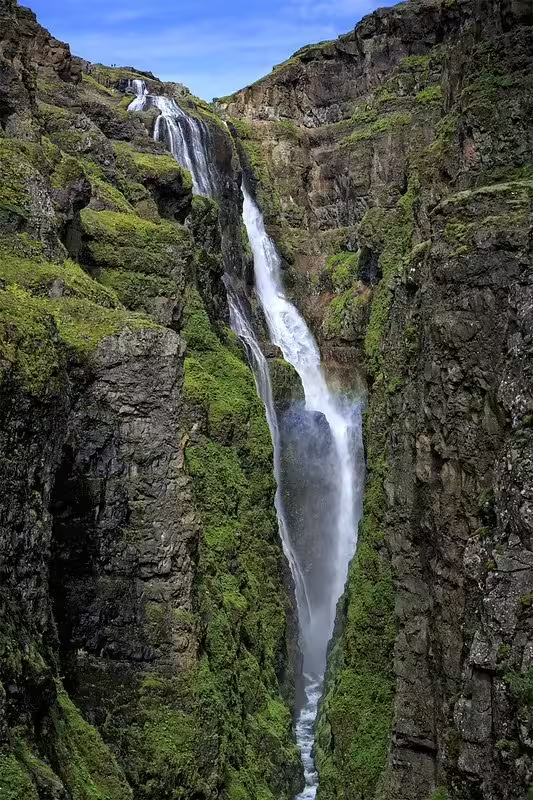
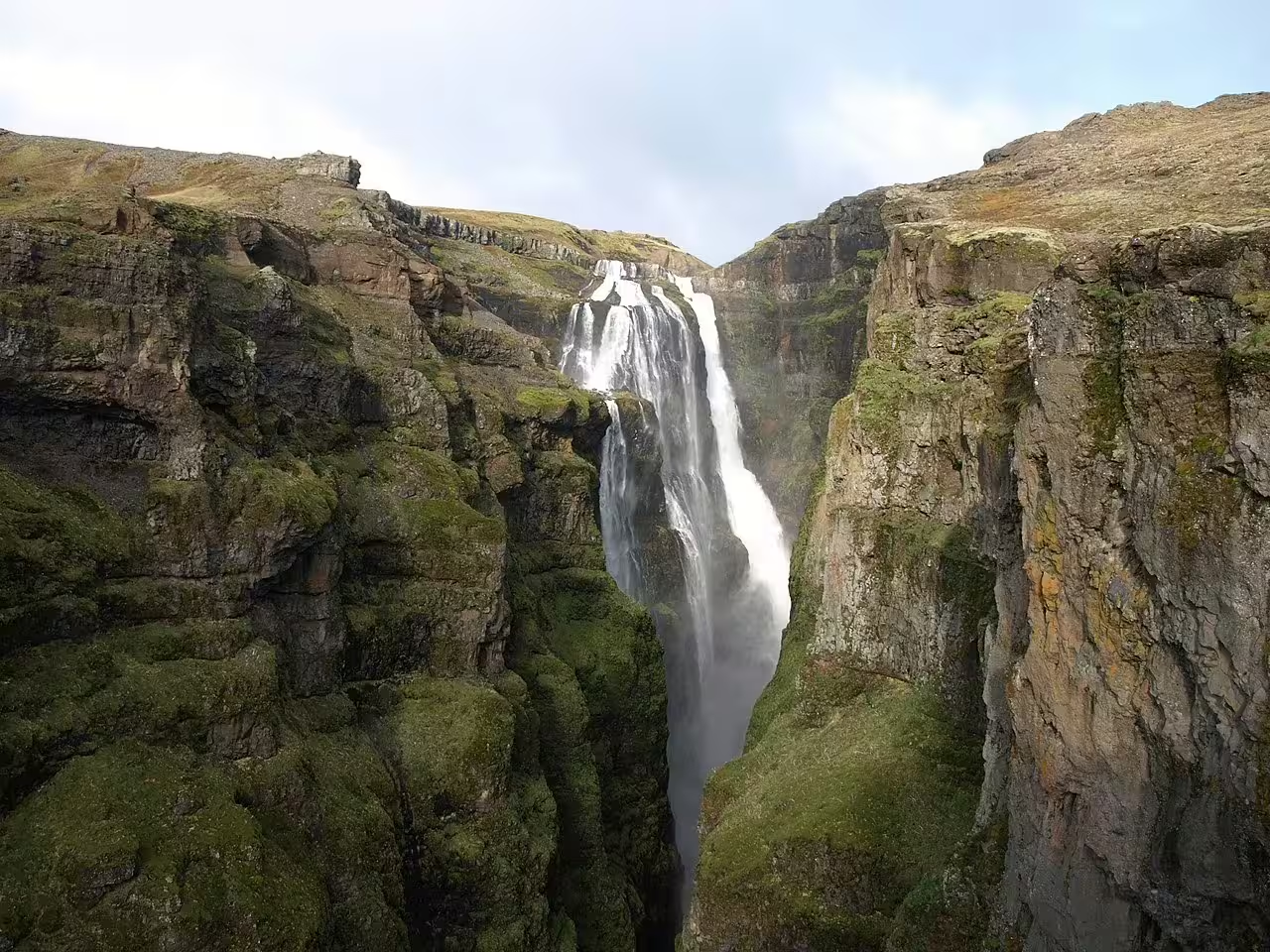
Glymur is the option for a waterfall hike; Síldarmannagötur is a separate choice for a longer route linking Hvalfjörður with Skorradalur. Glymur drops 198 metres in Botnsdalur, within Hvalfjarðarsveit, making the waterfall the focus of a visit to this valley. Its water comes from Hvalvatn, above Hvalfell, connecting the falls with the mountain landscape around them.
If you want to combine the waterfall walk with bathing, the guided Glymur waterfall hike and Hvalfjordur baths tour pairs those activities in an eight-hour outing.
Síldarmannagötur calls for a walking plan of its own: the route covers 15.56 km and involves 500 metres of ascent, rather than a short stroll beside the fjord.
The War and Peace Museum and Hallgrímskirkja in Saurbær are the stops to include when you want history and art alongside the landscape. At the museum on Hvalfjarðarströnd, the focus is Iceland's occupation during 1940 to 1945, giving your visit a specific historical subject.
At Hallgrímskirkja, a fresco stands where an altarpiece would normally be. The work is by the Finnish artist Lennart Segerstråle, so the church is worth including if painting interests you as much as architecture.
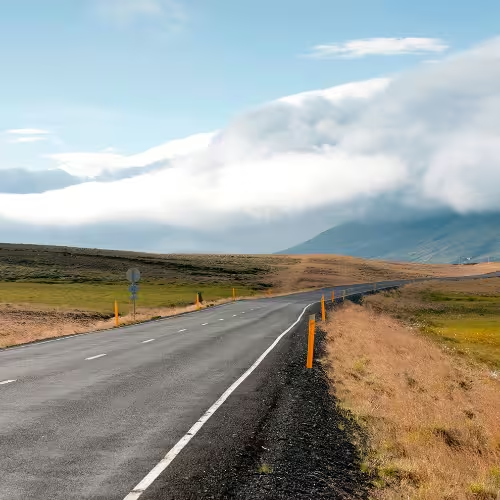
The tunnel is the shorter option for continuing along the Ring Road; a visit to the fjord needs to be a deliberate part of your plan. It cut 42 km from the Ring Road, so passing through the tunnel and spending time around Hvalfjörður are different travel choices.
Yes, the Hvalfjörður Important Bird Area covers approximately 6,800 hectares, with shallow bays and extensive mudflats.
Yes, Brynjudalsskógur formally opened as an Open Forest in 2017, and Christmas trees have been cultivated in Brynjudalur since about 1990.
It is cool: at Grundartangahöfn in Hvalfjörður the annual mean temperature in 2023 was 5.1°C, and the mean from April to October was 9.1°C.