logo-imgwhitelogo
Location
  • About
  • Terms and Conditions
  • Contact us
    clickIconcloseIcon
    logo-imgwhitelogowhitelogo
      clickIconcloseIcon
      • About
      • Terms and Conditions
      • Contact us
      Location
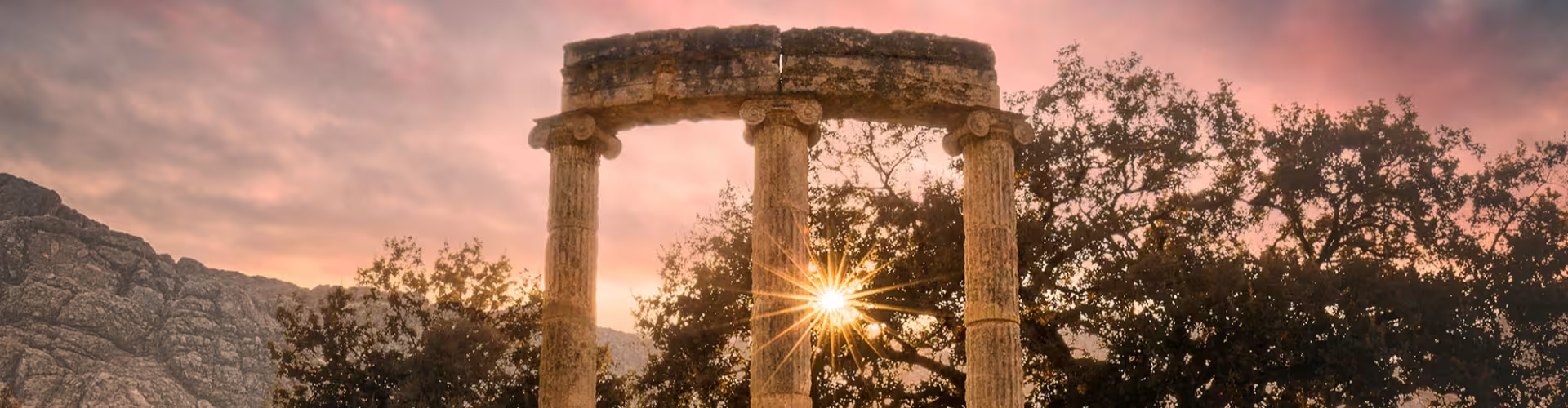
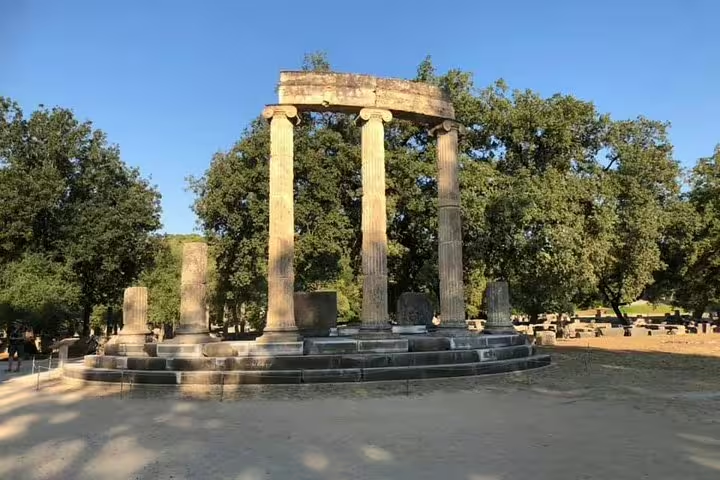
        Sunrise over the ancient Temple of Hera columns at Ancient Olympia, Greece, iconic archaeological site in the Peloponnese

        Olympia

          Explore Tours

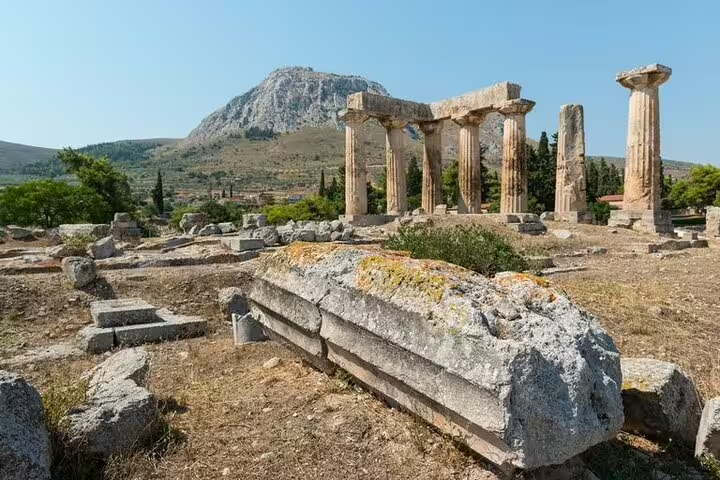
          Ancient Olympia archaeological site ruins with Doric columns, featured on a full-day private tour from Athens

           Athens, Greece

          Full-Day Private Tour to Ancient Olympia from Athens

          Step into the birthplace of the Olympic Games on a private full-day journey from Athens to Ancient Olympia, where athletic legends, sacred temples, and timeless history await you at every turn.


            Check Availability
          From € 80.00
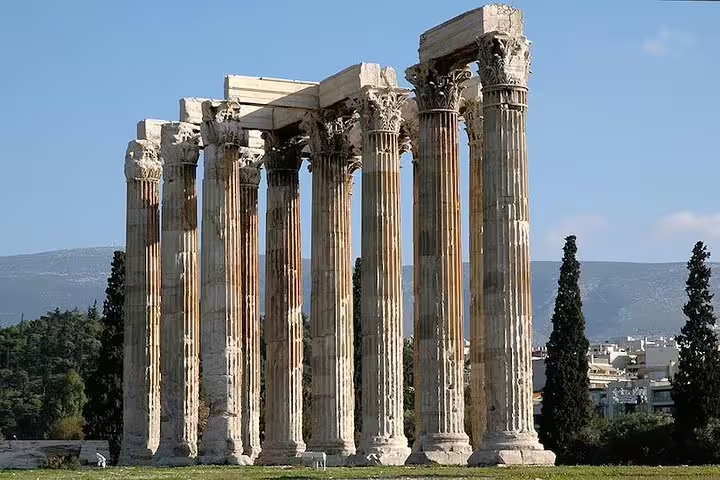
          Ancient columns at the Archaeological Site of Olympia, Greece, highlight of an Olympia full day tour

           Athens, Greece

          Full-Day Tour to Ancient Olympia from Athens

          Step onto the track where the ancient Olympics began and walk among temples that shaped Western civilization — all in one unforgettable day from Athens.

            Check Availability
          From € 710.00
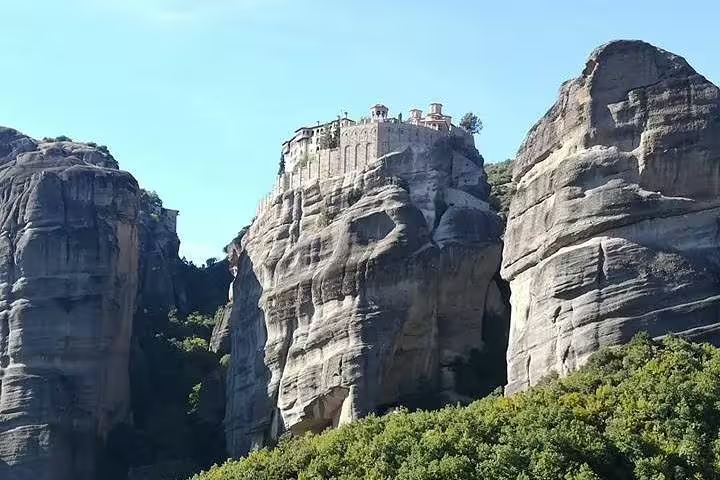
          Meteora cliff-top monastery view, scenic stop on a 2-day private Greece tour from Athens to Delphi and Olympia

           Athens, Greece

          2-Days Private Tour of Delphi, Mycenae and Ancient Olympia

          From the battlefield of Thermopylae to the birthplace of the Olympic Games — cover seven legendary Greek sites in just two days on a fully private tour from Athens.

            Check Availability
          From € 357.00
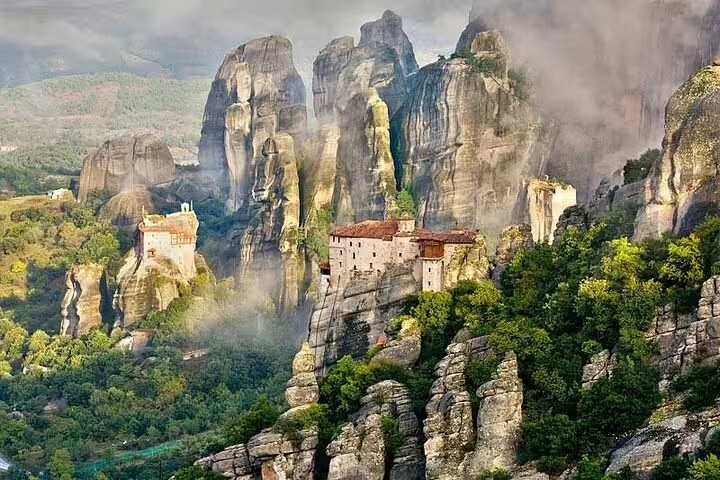
          Meteora monasteries perched on towering rock pillars in Greece, featured on the Vergina, Meteora and Olympia tour

           Athens, Greece

          2-Days Guided Tour: Vergina, Meteora and Ancient Olympia

          From the royal tombs of ancient Macedonia to the cliff-top monasteries of Meteora and the birthplace of the Olympic Games — this 2-day tour from Athens rewrites what a Greek adventure looks like.

            Check Availability
          From € 250.00
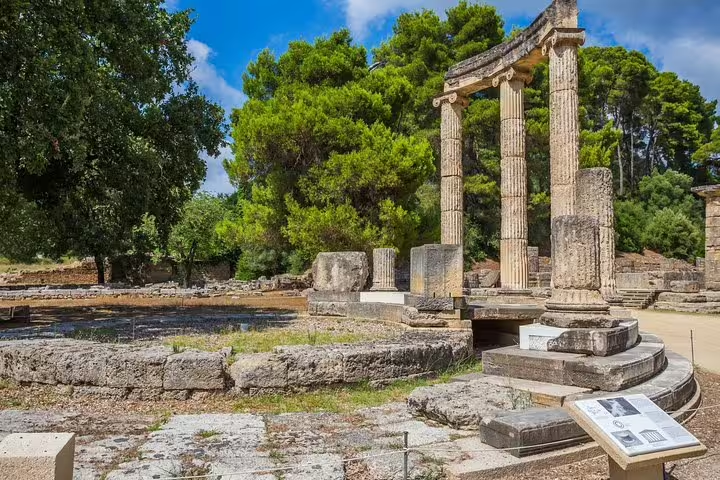
          Olympic flame ceremony reenactment at Ancient Olympia ruins on a private day tour from Athens, Greece

           Athens, Greece

          Private Tour to Ancient Olympia & Corinth Canal from Athens

          From the site of the first Olympic Games to a 19th-century engineering wonder — this private Athens day tour covers 2,800 years of history in a single unforgettable journey.

            Check Availability
          From € 65.50
          Delphi Sanctuary ruins and Tholos of Athena Pronaia with Parnassus views on a 3-day Classical Greece tour

           Athens, Greece

          Classical Greece in 3 Days: Olympia and Delphi Guided Tour

          Walk in the footsteps of ancient kings, athletes, and oracles on a three-day journey through the most legendary sites in Greece. From the Lion's Gate of Mycenae to the sacred slopes of Delphi, this tour brings the ancient world to life.

            Check Availability
          From € 470.00
          logoBlack

          Build your dream
          experience

          dreamimg

          More to know about Olympia

          Destination Guide

          Olympia, Greece

          Birthplace of the ancient Games, cradle of athletic glory, and one of the most evocative archaeological sites in the Mediterranean world.

          Published byToursXplorer Editorial TeamTXDATE

          Olympia is where human ambition, religious devotion, and athletic competition converged for more than a thousand years in ancient Greece. Today, visitors walk among the ruins of a sanctuary that shaped Western civilization, feeling the weight of history beneath every olive tree and broken column. Few archaeological sites in the world carry this combination of scholarly importance and raw emotional resonance.

          Olympia Geography and Logistics

          Orientation
          The site sits in the western Peloponnese, nestled in a green valley where the Alpheios and Kladeos rivers meet. The modern village of Archaia Olympia borders the archaeological zone and contains most visitor facilities. The ancient sanctuary, known as the Altis, is compact enough to explore on foot in a single focused visit.
          When to Go
          Spring (April to June) and autumn (September to October) offer the most comfortable temperatures and manageable crowds. July and August bring intense heat and peak tourism, which can make the open archaeological site demanding to visit. Winter visits are quieter and green, though some services in the village operate on reduced hours.
          Budget and Currency
          Greece uses the euro. A combined ticket for the archaeological site and the Archaeological Museum costs around 12 euros per adult, with reductions for EU students and seniors. Budget travelers can manage comfortably in Archaia Olympia on 60 to 80 euros per day, including accommodation, meals, and entry fees.

          Essential Things to Do

          The Temple of Zeus
          Once one of the largest Doric temples in the ancient world, the Temple of Zeus now lies in dramatic ruin, its massive drums toppled by earthquakes over the centuries. Inside stood Pheidias's chryselephantine statue of Zeus, counted among the Seven Wonders of the Ancient World. The scale of the fallen columns still communicates the original ambition of the structure. Practical Tip: Stand among the fallen drums and look back toward the Altis to appreciate the temple's commanding position within the sanctuary.
          The Archaeological Museum
          This museum ranks among the finest in Greece, housing sculptures, bronzes, and artifacts recovered from the Altis over two centuries of excavation. The central hall displays the original pediment sculptures from the Temple of Zeus in breathtaking condition. The Hermes of Praxiteles and the Nike of Paionios are highlights that justify a dedicated hour of slow looking. Practical Tip: Visit the museum before the open site to gain visual context for the ruins you will encounter afterward.
          The Ancient Stadium
          Passing through the original vaulted tunnel into the ancient stadium is one of the most atmospheric moments available to any traveler in Greece. The running track, flanked by earth embankments that once held up to 45,000 spectators, stretches 192 meters before you. Many visitors run the track themselves, completing a sprint along the same ground where ancient athletes competed. Practical Tip: Arrive early in the morning to have the stadium largely to yourself before tour groups arrive.
          The Heraion (Temple of Hera)
          The Temple of Hera predates the Temple of Zeus by several centuries, making it one of the oldest monumental temples in Greece. Its surviving columns display the transition from wooden to stone construction visible in the varying drum profiles. This is also where the Olympic flame is ceremonially lit before each modern Games. Practical Tip: Photograph the temple from the south side in morning light for the most dramatic angle against the wooded hill behind.
          Workshop of Pheidias
          This rectangular building, identified by a jug inscribed with the sculptor's name, is where Pheidias assembled the gold and ivory statue of Zeus. The workshop was later converted into a Christian church, and its walls preserve layers of ancient and Byzantine history. Molds, ivory fragments, and glass tesserae found here confirmed the identification beyond reasonable doubt. Practical Tip: Look for the informational panel that reconstructs the statue's assembly process, it adds depth to an otherwise plain structure.
          The Palaestra and Gymnasium
          The Palaestra was the training ground for wrestling, boxing, and jumping, and its colonnaded courtyard still reads clearly in the landscape. Adjacent to it, the larger Gymnasium provided a covered track for runners to train in poor weather. Walking through these spaces gives a sense of the daily routines of ancient athletes who gathered here months before the Games. Practical Tip: The Palaestra courtyard is shaded and a good place to pause during midday heat before continuing to the sun-exposed stadium.

          Curated Itineraries

          The Highlights: 1 Day

          1
          Morning: Archaeological Museum

          Begin at the museum when it opens to absorb the sculptural program and key artifacts. Spend 60 to 90 minutes here before the heat builds and tour groups fill the galleries.

          2
          Mid-Morning: The Altis Sanctuary

          Enter the archaeological site and visit the Temple of Zeus, the Heraion, and the Workshop of Pheidias in sequence. This core loop takes approximately 90 minutes at a comfortable pace.

          3
          Late Morning: The Ancient Stadium

          Walk through the vaulted entrance tunnel and into the stadium. Allow time to run the track and take in the scale of the spectator embankments before the site fills with visitors.

          4
          Afternoon: Village and Museum of the History of the Olympic Games

          Lunch in Archaia Olympia village, then visit the Museum of the History of the Olympic Games in Antiquity for additional context on the competitive events and their cultural significance.

          Deep Dive: 2 to 3 Days

          1
          Day 1: Full Site and Main Museum

          Spend the first day covering the archaeological site and Archaeological Museum thoroughly, without rushing. Evening meals in the village allow time to absorb the day's impressions.

          2
          Day 2: Smaller Museums and Context

          Visit the Museum of the History of the Olympic Games in Antiquity and the Museum of the Modern Olympic Games. These smaller collections are often overlooked but add considerable historical depth.

          3
          Day 2 Afternoon: Ancient Elis

          Take a short drive north to the site of ancient Elis, the city-state that administered the Games. The agora and theatre ruins are rarely visited and offer a quieter counterpoint to the main site.

          4
          Day 3: Kyllini Coast or Bassae

          On the third day, either head west to the Kyllini coastline for a beach break or south to the remote Temple of Apollo Epikourios at Bassae, a UNESCO World Heritage Site set in dramatic mountain scenery.

          Flavors of Olympia

          Local Dishes

          • Lamb kleftiko: slow-cooked lamb with herbs, typical of western Peloponnese tavernas and served with roasted potatoes.
          • Horiatiki salad: the classic Greek village salad with tomato, cucumber, olives, and a thick slab of feta cheese.
          • Souvlaki: grilled meat skewers served with pita, tzatziki, and onion, a reliable and affordable option throughout the village.
          • Spanakopita: a flaky phyllo pastry filled with spinach and feta, widely available as a snack or starter.
          • Loukoumades: deep-fried dough balls drizzled with honey and cinnamon, a traditional Greek sweet with ancient roots.
          • Fresh grilled fish: the Alpheios river valley and nearby Ionian coast supply local restaurants with seasonal fish options.

          Drinks and Ordering Tips

          • Greek coffee: ordered as sketo (no sugar), metrio (medium sweet), or gliko (sweet), always served with a glass of cold water.
          • Rakomelo: a warm blend of raki and honey, popular in cooler months and often offered complimentary after a meal.
          • Local wine: the Peloponnese produces notable wines including Agiorgitiko red and Moschofilero white, often available by the carafe.
          • Frappe: a frothy iced instant coffee drink that remains the everyday choice for Greeks and is served at every cafe.
          • Water: always order bottled water in restaurants; tap water is generally safe but mineral water is standard practice.
          • Tipping: rounding up the bill or leaving 5 to 10 percent is appreciated but not obligatory in casual taverna settings.

          Navigation and Transport

          The nearest major transport hub is Patras, approximately 110 kilometers to the northeast, with regular bus (KTEL) connections to Archaia Olympia several times daily. From Athens, the journey by intercity bus takes around four hours via Patras, or travelers can take the train to Pyrgos and transfer to a local bus for the final 24 kilometers.

          Within the village, all key sites are reachable on foot, and no internal transport is needed once you arrive. Renting a car in Patras or Kalamata gives the most flexibility for exploring surrounding sites such as Bassae or ancient Elis, which are not served by public transport.

          Taxis are available in the village and can be arranged through accommodation for day trips. There is no public bike-share system, but the flat terrain around the village makes cycling a practical option if you bring or hire a bicycle.

          Beyond the Center: Day Trips

          The Temple of Apollo Epikourios at Bassae, roughly 60 kilometers to the south, is one of the best-preserved ancient temples in Greece and a UNESCO World Heritage Site set in isolated mountain scenery above 1,100 meters.

          The Kyllini coastline to the northwest offers sandy beaches and the medieval Frankish castle of Chlemoutsi, which commands sweeping views across the Ionian Sea toward Zakynthos and Kefalonia.

          Ancient Elis, the administrative capital of the region that organized the Games, lies about 35 kilometers north and preserves an agora, theatre, and bathhouse in a rarely visited pastoral setting.

          Pyrgos, the regional capital of Elis, is 24 kilometers away and serves as a practical transport hub with a covered market, neoclassical architecture, and connections to the wider Peloponnese rail and road network.

          Insider Tips for Travellers

          Arrive at the archaeological site at opening time, typically 8:00 AM in summer, to experience the ruins in cool morning air before large tour groups begin arriving around 10:00 AM.

          The combined ticket covers both the main archaeological site and the Archaeological Museum. Purchase it at the museum entrance rather than the site gate to start there first without doubling back.

          Shade inside the Altis is limited. Carry a hat, sunscreen, and at least one liter of water per person, especially between June and September when temperatures frequently exceed 35 degrees Celsius.

          State museums in Greece are typically free on the first Sunday of each month between November and March. Check the Greek Ministry of Culture website for current free-entry dates before your visit.

          Photography is permitted throughout the site and museum without a flash. The best light for photographing the Temple of Zeus falls in the morning from the eastern approach, and the stadium is best photographed in the late afternoon.

          Frequently Asked Questions

          How long does it take to visit the archaeological site?▼
          Most visitors spend two to three hours in the open archaeological site. Adding the main Archaeological Museum brings the total to a full half-day of four to five hours.
          Is the site suitable for children?▼
          Yes, the site is family-friendly and the ancient stadium is a particular highlight for children who enjoy running the track. The terrain is mostly flat and manageable for young visitors, though strollers may find some gravel paths uneven.
          Can you stay overnight in Archaia Olympia?▼
          Yes, the village has a range of accommodation from budget guesthouses to mid-range hotels, most within walking distance of the site entrance. Staying overnight is recommended, as it allows you to visit at opening time and avoid day-trip crowds.
          What is the best way to get to Olympia from Athens?▼
          The most common route is by KTEL intercity bus from Athens to Pyrgos, then a local bus connection to Archaia Olympia, with a total journey of approximately four to five hours. Renting a car gives greater flexibility, especially if you plan to visit surrounding sites.
          Is there an entrance fee and are there discounts available?▼
          The combined ticket for the site and main museum costs approximately 12 euros for adults at the time of writing. Reduced rates apply to EU citizens over 65 and students with valid ID, and entry is free on certain national and cultural holidays.
          Ancient GreeceArchaeological SitesPeloponneseOlympic HistoryGreek TemplesCultural TravelHistory TourismGreece TravelUNESCO HeritageMuseum VisitsDay Trips Greece
          Last updated: 2025 | Destination: Olympia
          Olympia is located in the western Peloponnese region of Greece, in the Elis regional unit, at the confluence of the Alpheios and Kladeos rivers. The archaeological site and associated museums are administered by the Greek Ministry of Culture and Sports. Content is based on publicly available heritage documentation and established travel knowledge as of 2025.
          Ancient Greece | Peloponnese | Archaeological Tourism | Olympic Heritage | Cultural Destination