
Build your dream
experience

More to know about Gortyn
Gortyn Travel Guide
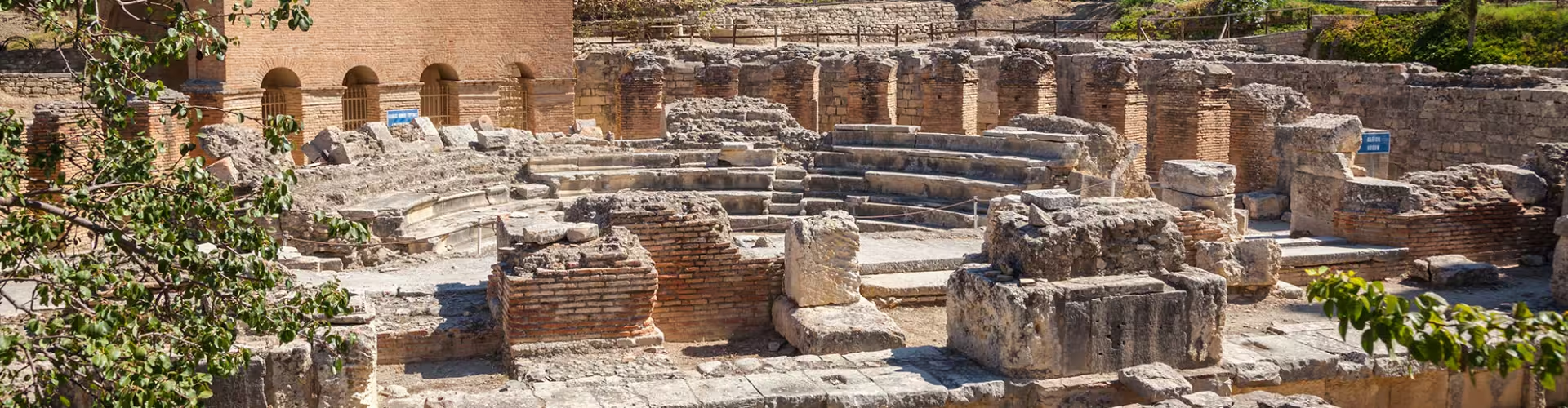
Gortyn is one of Crete’s most atmospheric archaeological landscapes, where stone inscriptions, Roman era ruins, and open countryside create a quiet, contemplative day out from Heraklion. The experience feels spacious and unhurried, with big-sky views and a sense of walking through layered history rather than a single “must see” monument. If you like places that reward curiosity, especially sites where you can connect mythology, law, and empire in one setting, Gortyn is an easy win.
Snapshot
Gortyn delivers a signature vibe of rural Crete meets classical history, with ruins spread across fields and footpaths instead of crowded corridors. Go now if you want a calmer alternative to the island’s headline attractions, and you enjoy slow travel, photography, and reading the landscape. It is also a strong choice for travelers building a culture-focused loop through the Heraklion region.
🗺️ Geography and Logistics
📍 Orientation: Where is it within Heraklion and Greece?
Gortyn sits in the Heraklion regional unit on Crete, within reach of Heraklion city and the island’s main transport links. The most common gateway is Heraklion, using the city as a base for day trips into the interior. If you are planning a broader itinerary, it pairs naturally with central and southern Crete routes, especially drives that connect archaeological sites, villages, and coastal stops.
🕒 When to Go: Seasonal breakdown
Crete’s seasons strongly shape the feel of an open-air site. In warmer months, aim for earlier starts and slower pacing, since shade can be limited across exposed ruins and paths. In cooler months, conditions can be more comfortable for lingering, reading signage, and taking photos without harsh light. Shoulder seasons often balance manageable crowds with pleasant temperatures, which suits travelers who want time to absorb details.
💰 Budget & Currency: Practical money tips
Greece uses the euro, and your day budget will depend on transport choices and how you structure meals around the visit. For small purchases and rural stops, carrying some cash is practical, even if cards are widely used in larger towns. Plan for incidental costs like snacks, water, and parking, and keep a buffer if you combine the site with a longer drive through villages or the south coast.
⭐ Essential Things to Do
Explore the archaeological site. The core experience in Gortyn is walking through a wide, open complex where ruins appear in clusters, encouraging you to connect the dots across time. The scale helps you imagine the city’s footprint rather than focusing on a single landmark. Practical tip, wear sturdy shoes and pace your route, since surfaces can be uneven and distances feel longer in the sun.
Look for ancient inscriptions and “read the city”. One of the most memorable aspects of Gortyn is the way history is literally carved into stone, creating a rare, tangible link to everyday governance and public life. Even if you do not read Greek, the presence of text changes the mood, it feels like standing inside a public archive. Practical tip, bring a small guidebook or save offline notes so you can interpret what you are seeing without relying on mobile signal.
Photograph textures, columns, and landscape lines. This is a site where details matter, weathered stone, inscriptions, and partial structures framed by fields and distant hills. It suits travelers who like composition and quiet observation more than rapid sightseeing. Practical tip, shoot in softer light when possible, and use a wide lens for context, then switch to close-ups for carved surfaces.
Pair it with a countryside drive. The setting makes the journey part of the value, with rural roads, agricultural scenery, and a sense of moving through Crete’s interior. This is ideal if you want your day to feel like an excursion rather than a single stop. Practical tip, keep your fuel topped up before heading inland and download maps in advance for smoother navigation.
Build a culture loop through the Heraklion region. If you are planning a broader Heraklion itinerary, Gortyn works well as a counterpoint to busier highlights, offering space, silence, and scale. It can also be a smart way to break up a travel day between north and south Crete. Practical tip, cluster your stops geographically so you spend more time exploring and less time backtracking.
Slow down for a picnic style break. The open landscape lends itself to a simple pause, water, fruit, and something local from a bakery or market. Taking a break on-site helps you notice how the ruins sit in the environment, which is part of the story. Practical tip, pack out all trash and bring more water than you think you need.
Connect myth and history in context. Crete’s identity blends mythology, Minoan heritage, Greek city-states, and Roman influence, and Gortyn is a place where those layers feel close together. Even without a guided tour, you can sense how power and daily life shifted across centuries. Practical tip, consider a short audio guide or a private guide if you want the “why it matters” narrative without rushing.
Visit with a mindful, low-noise approach. The site’s atmosphere is part of its appeal, and quiet behavior improves the experience for everyone. It is also better for photography and for hearing any guide commentary you may have. Practical tip, silence notifications and avoid speaker audio, especially in areas where other visitors are reading or taking photos.
🚶 Curated Itineraries
⏰ The Highlights (1 Day)
Start early from Heraklion to arrive before the day warms up, and walk the main clusters of ruins at a relaxed pace. Focus on the most legible structures and inscriptions first, then loop back for photos once you understand the layout. Finish with a countryside meal stop nearby, keeping the rest of the afternoon flexible for a scenic drive or a short additional cultural stop.
⏰ Deep Dive (2-3 Days)
Day one, give Gortyn the time it deserves, walking slowly, taking notes, and revisiting key points for different light and angles. Day two, expand into the wider Heraklion interior, combining villages, viewpoints, and another history focused stop to build context across eras. Day three, shift toward the south coast for a different Crete mood, sea air and shoreline scenery, while keeping your route efficient so the travel feels smooth rather than rushed.
🍽️ Flavors of Gortyn
Dakos. A crunchy, satisfying Cretan bite built around barley rusk, tomato, and olive oil, often finished with cheese. Ordering tip, ask for it as a starter to share, it pairs well with a long, slow meal.
Horiatiki salad. The classic Greek salad tastes especially bright in Crete, with ripe vegetables and assertive olive oil. Ordering tip, request extra bread so you can mop up the dressing.
Grilled meat plates. Simple grilling is a staple, delivering smoky, straightforward flavor with lemon and herbs. Ordering tip, if you are hungry after walking the site, choose a mixed plate so you can sample more than one cut.
Local cheeses. Cretan cheeses bring a salty, creamy profile that works as a meze or part of a larger spread. Ordering tip, ask what is local that day, and pair with a light salad for balance.
Olives and olive oil. Crete’s olive oil culture shows up in everything, from salads to grilled dishes. Ordering tip, notice how many dishes are finished with oil at the table, it is part of the intended flavor.
Seasonal fruit. After a warm walk, fruit can feel like the perfect reset, juicy, refreshing, and easy. Ordering tip, if you see fruit offered as a simple dessert, it is often a good value and very local.
🚌 Navigation & Transport
Most travelers reach Gortyn by car, which gives you control over timing, comfort, and how you combine the visit with other inland stops. Walking on-site is essential, and comfortable footwear is important due to uneven ground and open terrain. If you are not driving, consider arranging a taxi style transfer or a guided excursion from Heraklion, then confirm pickup details carefully so you are not stranded in a rural area.
Safety and accessibility notes, bring sun protection and water in warm weather, and move slowly on worn stone surfaces. If you have mobility concerns, plan for shorter loops and prioritize the most accessible sections first, since the site’s appeal is spread out rather than concentrated in one flat, compact path.
🌄 Beyond the Center: Day Trips
Heraklion city. Travel time varies by your base, but it is the main hub for museums, dining, and evening atmosphere. Go for an urban contrast after a countryside history day.
Central Crete villages. Short drives from the main roads can lead to quieter village life and traditional tavernas. Go to slow down, eat well, and see the everyday side of the island.
South coast beaches. Reaching the south often takes longer than north coast hops, but the payoff is a different shoreline feel and a more rugged mood. Go for sea views and a change of pace after ruins and inland roads.
Other archaeological stops in the Heraklion region. If you are building a theme, add another site to compare eras and architectural styles. Go to deepen context and make your trip feel curated rather than random.
✅ Insider Tips for Travelers
- Start early for cooler walking conditions and calmer photos.
- Bring water, sun protection, and a hat, open sites can feel hotter than expected.
- Download offline maps and any notes you want to reference, rural signal can be inconsistent.
- Wear closed-toe shoes with grip, uneven stones and dusty paths are common.
- Keep some cash for small rural purchases, even if you mainly use cards elsewhere.
- Plan your route as a loop to reduce backtracking, then revisit highlights for better light.
- Respect the site by staying on clear paths and avoiding climbing on ruins.
- If you are pairing multiple stops, cluster them by direction, interior first, coast later, to reduce drive fatigue.
❓ Frequently Asked Questions, FAQ
Is Gortyn suitable for a half-day trip from Heraklion?
Yes, it can fit comfortably into a half-day, especially if you start early and keep your route focused. If you enjoy photography or reading context on-site, plan closer to a full day.
Do I need a car to visit Gortyn?
A car makes the visit significantly easier because the site is in a rural area and pairs well with other inland stops. Without a car, arrange a reliable transfer or a guided excursion and confirm return logistics in advance.
What should I wear for visiting Gortyn?
Wear sturdy walking shoes and pack sun protection, since you will be on uneven ground with limited shade. Bring water and consider light layers depending on season and wind.
When is the best time of day to visit Gortyn?
Earlier in the day is often more comfortable for walking and tends to be quieter. Softer light can also improve photos of stone textures and inscriptions in Gortyn.
Can I combine Gortyn with the south coast in one day?
Yes, many travelers link an inland cultural stop with a coastal break, as long as you keep driving time in mind. Build in flexibility so the day does not feel rushed, especially in warmer months.
This guide explains how to plan a visit to Gortyn in Crete, focusing on practical logistics, on-site pacing, and how to combine it with nearby routes. It is designed to help travelers make confident decisions about timing, transport, and day trip planning.
Europe, Greece, Crete, Heraklion, Gortyn