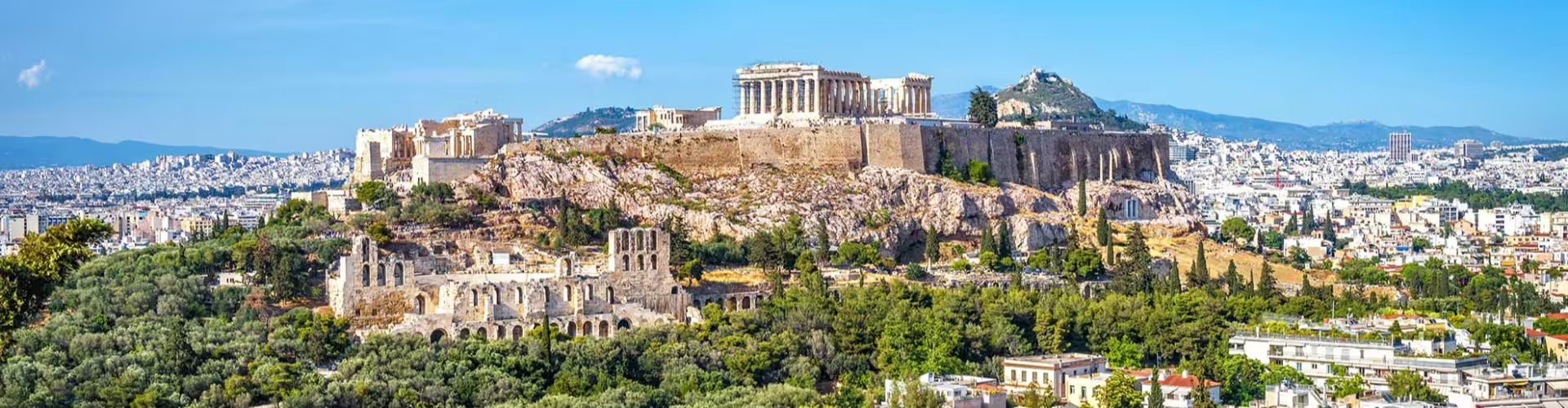
Attica is the region surrounding Athens, Greece's vibrant capital and home to some of the world's most significant ancient monuments. This historic area encompasses the city and its surrounding countryside, featuring the iconic Parthenon on the Acropolis and the ruins of the Ancient Agora.
What to see in Attica
Visitors should not miss the Acropolis and its crown jewel, the Parthenon, a masterpiece of classical Greek architecture. The National Archaeological Museum houses one of the finest collections of ancient Greek art, while the Temple of Poseidon at Cape Sounion offers dramatic coastal views and ancient grandeur.
Things to do in Attica
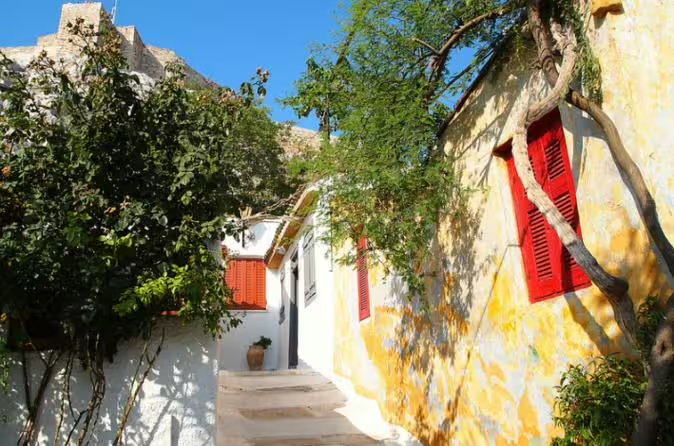
Explore the ancient Temple of Poseidon at sunset, take a day trip to the nearby islands of Hydra or Aegina by ferry, or wander through the charming Plaka district with its winding streets and traditional tavernas. Cultural enthusiasts can visit world-class museums or attend performances at the Odeon of Herodes Atticus.
Ancient Historical Significance
Attica served as the birthplace of Western democracy and philosophy in classical Athens. The region remains an open-air museum where Socrates once taught, Plato founded his Academy, and the foundations of democratic governance were established, making it essential for anyone interested in ancient history and cultural heritage.
Attica is the region encompassing Athens and its metropolitan surroundings in central Greece. Located on the eastern coast of mainland Greece, it extends from the Acropolis in Athens to coastal areas including Cape Sounio. The region is easily accessible via Athens International Airport and serves as the primary gateway for visitors exploring classical Greek civilization and ancient historical sites.
Ancient History, Classical Greece, Museums, Day Trips, Mediterranean Culture