Le Mans
Le Mans blends medieval history with motorsport legend. Explore the Cite Plantagenet, visit the iconic 24 Hours Museum, and savour regional rillettes in this compelling French city just 55 minutes from Paris.

Le Mans blends medieval history with motorsport legend. Explore the Cite Plantagenet, visit the iconic 24 Hours Museum, and savour regional rillettes in this compelling French city just 55 minutes from Paris.

Le Mans is a city that wears two faces with equal confidence: a medieval heart layered in centuries of French history, and a global reputation forged on the world's most famous endurance race. Located in the Sarthe department of northwestern France, this mid-sized city draws motorsport pilgrims and history lovers in equal measure. Whether you arrive for the roar of engines or the silence of ancient cathedral stones, Le Mans delivers an experience that is genuinely hard to replicate.
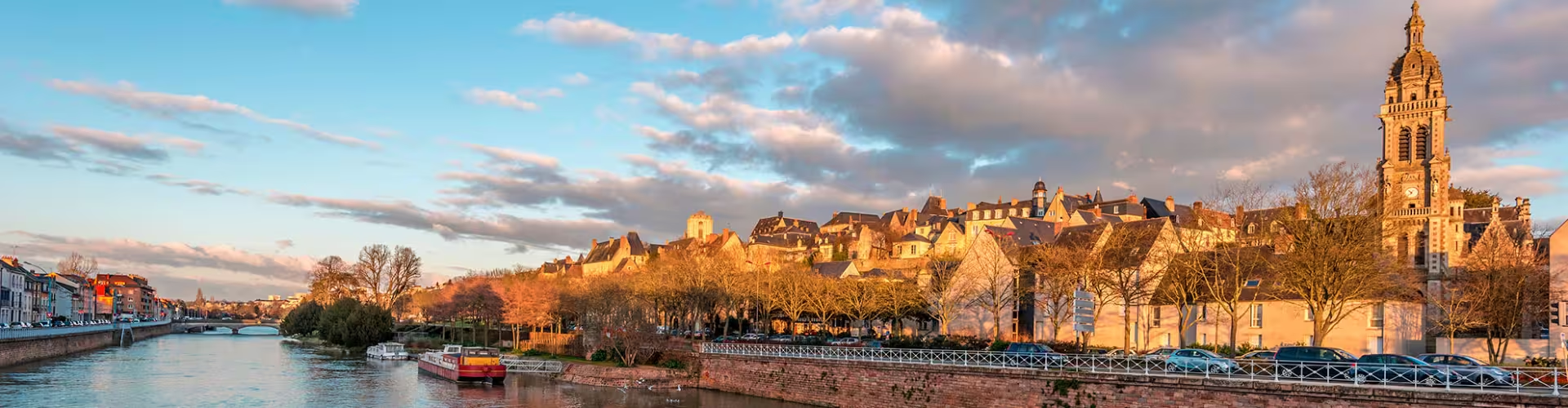
Le Mans sits approximately 200 kilometres southwest of Paris in the Pays de la Loire region. The city is bisected by the Sarthe and Huisne rivers, with the medieval old town, known as the Cite Plantagenet, rising on a hilltop above the modern commercial centre. The famous Circuit de la Sarthe, home of the 24 Hours race, lies just south of the urban core and is easily reachable by local transport or on foot from the outskirts.
Late spring and early summer, from May through June, offer the most energetic atmosphere, culminating in the legendary 24 Hours of Le Mans race typically held in June. Autumn brings cooler temperatures, fewer crowds, and a golden light that flatters the old town's Roman walls beautifully. Winter is quiet and mild by northern European standards, making it a good option for budget-conscious travellers seeking a relaxed city break.
France uses the Euro (EUR). Le Mans is considerably more affordable than Paris, with mid-range hotel rooms averaging 70 to 120 euros per night outside of race weekend. Dining costs are reasonable, with a two-course lunch menu at a local brasserie typically costing between 12 and 18 euros. Race weekend prices spike sharply across all categories, so book well in advance if your trip coincides with June.
Explore the Cite Plantagenet
The old town is one of the best-preserved medieval quarters in all of France, enclosed by Roman walls dating back to the third and fourth centuries. Cobblestone lanes wind past half-timbered houses, Romanesque churches, and Renaissance mansions that once sheltered Plantagenet royalty. The atmosphere at dusk, when the stone glows warm and the lanes empty of crowds, is genuinely atmospheric.
Practical Tip: Pick up a free walking map from the tourist office on Rue de l'Etoile to navigate the old town efficiently.
Visit the Cathedral of Saint-Julien
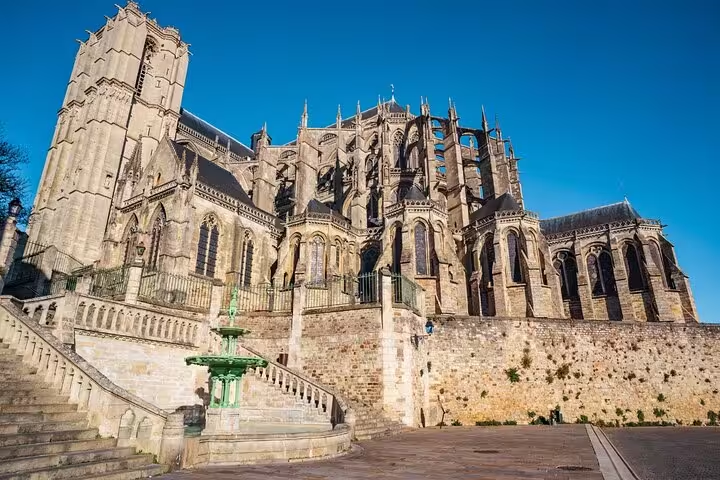
This stunning Gothic and Romanesque cathedral dominates the old town skyline and ranks among the finest in western France. Construction spanned several centuries, resulting in a layered architectural narrative that rewards slow observation. The 12th-century nave, the soaring Gothic choir, and the intricate stained glass windows are all highlights worth extended time.
Practical Tip: Visit on a weekday morning to enjoy the cathedral in near-solitude before tour groups arrive.
The 24 Hours of Le Mans Museum (Musee des 24 Heures)
Even travellers with only a passing interest in motorsport will find this museum genuinely captivating. The collection spans over a century of racing history, featuring legendary cars, interactive displays, and archival footage that places the race in its proper cultural context. The museum is open year-round and provides crucial context for understanding why this city matters so deeply to the global racing community.
Practical Tip: Allow at least two hours and consider the audio guide for the richest experience.
Walk the Circuit de la Sarthe
Outside of race weekend, portions of the legendary circuit are open public roads, allowing visitors to walk or cycle sections that witnessed motorsport history. Standing at the Dunlop Chicane or Tertre Rouge corner with no traffic is a surprisingly moving experience for any enthusiast. The pit straight and paddock area offer additional access depending on the time of year.
Practical Tip: Check the circuit's official schedule as certain sections close for test days and events throughout the year.
Discover the Maison de la Reine Berengere
This elegant 15th-century timber-framed house in the heart of the old town now serves as a local history museum with a thoughtfully curated collection of regional art, ceramics, and artefacts. The building itself is as interesting as its contents, offering a tangible sense of domestic life in medieval France. Entry is inexpensive and the staff are notably knowledgeable.
Practical Tip: Visit in conjunction with the nearby Musee de Tesse for a full afternoon of cultural immersion.
Musee de Tesse
Housed in a former bishop's palace, this fine arts museum contains an impressive collection of paintings, sculptures, and decorative arts spanning several centuries. A highlight is the Plantagenet enamel plaque depicting Geoffrey of Anjou, one of the most important surviving medieval enamels in existence. The museum's peaceful gardens are also worth a slow stroll.
Practical Tip: The museum is closed on Mondays, so plan your visit accordingly.
Stroll the Jardin des Plantes
Le Mans' main botanical garden provides a leafy, unhurried counterpoint to the intensity of the racing heritage. The well-maintained grounds include a small zoo, themed flower beds, and shaded walkways ideal for a relaxed afternoon. It is a favourite spot for local families and offers a genuine glimpse into the everyday rhythm of city life.
Practical Tip: The garden is free to enter and opens early, making it an excellent morning warm-up before the museums open.
Begin the morning with a walk through the Cite Plantagenet, pausing at the Roman walls and the Cathedral of Saint-Julien. Take a mid-morning coffee at one of the cafe terraces along Place Saint-Michel before heading to the Musee de Tesse for a focused cultural hour. After lunch at a local brasserie on Rue des Bouchers, spend the afternoon at the 24 Hours Museum and, if time allows, drive or take a taxi past the circuit for a brief look at the iconic infrastructure. End the evening with dinner in the old town.
Day one covers the medieval core in depth, including the Maison de la Reine Berengere, the cathedral, and the Roman walls at your own pace. Day two is dedicated to motorsport heritage: the museum in the morning, a walk along the accessible circuit sections in the afternoon, and a visit to the surrounding Sarthe countryside in the early evening. Day three opens up day trip possibilities to the Loire Valley or the town of Alencon, with a final evening meal in Le Mans' most characterful bistro district near Place de la Republique.
Rillettes du Mans: This slow-cooked potted pork preparation is the defining dish of the region and a protected geographical indication product. Rich, spreadable, and deeply savoury, it is served on toasted bread and pairs perfectly with a glass of local Jasnières white wine. Order it as a starter in virtually any traditional restaurant in the city.
Frites de la Sarthe: While fries are universal in France, local brasseries in the Sarthe take particular pride in thick-cut, double-fried preparations served alongside grilled meats and andouillette sausage. Ask for them well-done for the best texture.
Andouillette: A robust, offal-based sausage that divides opinion but is considered a regional staple. Grilled and served with mustard sauce, it appears on almost every traditional menu in the city. Approach with an open mind and a cold glass of local Coteaux du Loir wine.
Tarte Tatin: Though associated with the Loire Valley broadly, this caramelised upside-down apple tart is a fixture on dessert menus throughout the region and should not be skipped. Order it warm with a generous spoonful of creme fraiche.
Jasnières Wine: This rare and elegant white wine from the Sarthe's Jasnières appellation is produced from Chenin Blanc grapes and offers a crisp, mineral profile that pairs beautifully with local charcuterie and fish dishes. It remains little-known outside France, making it a genuine discovery for wine lovers.
Local Cider: The Norman influence extends into the Sarthe, and local producers craft excellent dry ciders that appear on menus across the region. A glass with a charcuterie board makes for an ideal casual lunch pairing.
Le Mans is exceptionally well connected by rail. TGV services from Paris Montparnasse reach the city in approximately 55 minutes, making a day trip viable, though an overnight stay rewards more deeply. The city centre is compact and walkable, with the old town, main museums, and commercial district all reachable on foot from the central train station. Local bus services operated by SETRAM cover the broader urban area, and the circuit is accessible via dedicated shuttle services during race events. Car hire is recommended for day trips into the surrounding Sarthe countryside.
The Loire Valley: The UNESCO-listed Loire Valley begins just south of Le Mans, placing iconic chateaux such as Chambord, Chenonceau, and Cheverny within comfortable day trip range. The scenic drive south through the Sarthe countryside adds to the experience considerably. Allow a full day and prioritise one or two chateaux rather than rushing through several.
Alencon: This elegant town to the north is famous for its exquisite needle-point lace tradition, recognised by UNESCO as intangible cultural heritage. The Musee des Beaux-Arts et de la Dentelle houses a world-class lace collection and is well worth the 45-minute drive. The town's handsome market square and Gothic church of Notre-Dame add further appeal.
Fresnay-sur-Sarthe: This quiet medieval village perched above the Sarthe river offers a peaceful half-day excursion with its ruined castle, Romanesque church, and riverside walking paths. It represents the slower, rural side of the Sarthe that many visitors overlook entirely. A picnic lunch by the river is highly recommended.