



Sarthe

Sarthe in northwestern France blends motorsport legend, medieval old towns, Cistercian abbeys, and rural gastronomy. From Le Mans to the Alpes Mancelles, it offers authentic French culture year-round.

logoBlack

Build your dream
experience

dreamimg

More to know about Sarthe


Sarthe Travel Guide

Snapshot

Sarthe is a captivating department in the Pays de la Loire region of northwestern France, best known for the legendary Le Mans 24-hour race and its rolling pastoral landscapes. It offers an exceptional blend of motorsport heritage, medieval history, and rural French charm that few destinations in the country can match. Whether you are a racing enthusiast, a history lover, or simply seeking authentic countryside experiences, Sarthe delivers on every front.


Geography and Logistics

Orientation

Sarthe sits between the Loire Valley to the south and the Normandy region to the north, with Le Mans serving as its vibrant departmental capital. The landscape is defined by gentle hills, dense forests, river valleys, and patchwork farmland that give it a quintessentially French rural character. The Sarthe River itself winds through the department, lending the territory both its name and a scenic backbone for exploration.

When to Go

Late spring and early summer, from May through June, offer the best combination of warm weather and lively atmosphere, coinciding with the famous Le Mans race weekend. Autumn brings golden foliage and harvest festivals that showcase local produce and traditions. Winter is quiet and atmospheric, ideal for visitors who prefer uncrowded museums and cozy village bistros.

Budget and Currency

France uses the Euro (EUR). Sarthe is notably more affordable than Paris or the Riviera, with mid-range hotels averaging 70 to 120 euros per night. Dining at local brasseries typically costs 15 to 30 euros per person for a full meal with wine.


Essential Things to Do

Circuit de la Sarthe and the 24 Hours of Le Mans Museum
The permanent racing circuit is a pilgrimage site for motorsport fans worldwide and hosts the legendary endurance race each June. The on-site Musee des 24 Heures du Mans houses an extraordinary collection of racing cars, trophies, and archival footage spanning over a century of competition. Even outside race season, driving or cycling part of the Bugatti circuit within the complex is a thrilling experience.
Practical Tip: Book the museum visit in the morning to avoid afternoon coach-tour crowds.

Old Town of Le Mans (Cite Plantagenet)
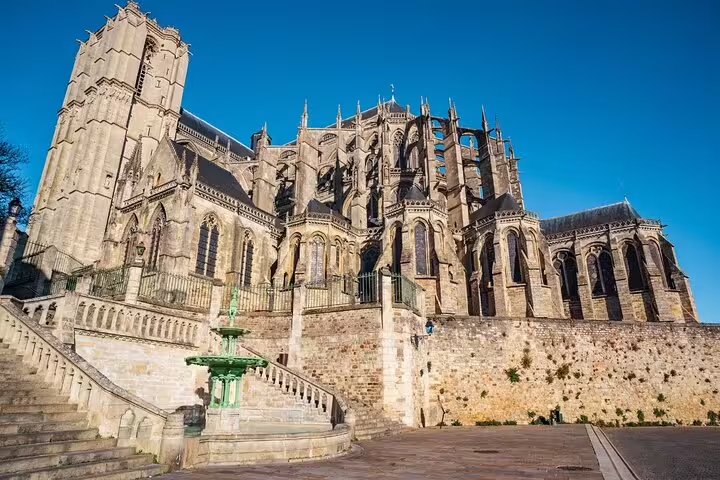
The medieval old quarter of Le Mans is one of the best-preserved in France, its winding cobblestone lanes flanked by Renaissance timber-framed houses and Roman-era walls. The area inspired Ridley Scott's filming of key scenes from Robin Hood, and wandering through it feels genuinely cinematic. Do not miss the Cathedral of Saint-Julien, whose nave blends Romanesque solidity with soaring Gothic elegance.
Practical Tip: Visit on a Saturday morning when the old town market is in full swing.

Cathedral of Saint-Julien du Mans
This remarkable cathedral has been under continuous development since the 4th century, resulting in a layered architectural masterpiece that spans multiple styles and eras. The stained-glass windows, some dating to the 12th century, are considered among the finest in France. The south porch features intricate Romanesque carved capitals that reward close inspection.
Practical Tip: Entry is free; guided tours in English are available on weekend afternoons.

Abbaye de l'Epau
Founded in 1229 by Queen Berengaria of Navarre, widow of Richard the Lionheart, this Cistercian abbey sits serenely on the banks of the Huisne River just outside Le Mans. The abbey church preserves its medieval austerity beautifully, and the cloisters are particularly photogenic. Cultural concerts and exhibitions are regularly held within its historic walls.
Practical Tip: Combine a visit with a riverside walk along the Huisne for a peaceful half-day.

Musee de Tesse
This fine arts museum in Le Mans holds an impressive collection spanning Egyptian antiquities, Renaissance paintings, enamels from Limoges, and 19th-century French canvases. The building itself, a former episcopal palace, adds grandeur to the experience. It is an underrated gem that most passing visitors overlook entirely.
Practical Tip: Free entry on the first Sunday of each month.

Ferte-Bernard and its Notre-Dame-des-Marais Church
The town of La Ferte-Bernard in the eastern part of the department boasts one of the finest late-Gothic churches in the Pays de la Loire. The church's flamboyant facade and its rose window are stunning achievements of 15th and 16th-century craftsmanship. The town's medieval market halls and canal-side streets make it worth an extended afternoon.
Practical Tip: Park near the canal for easy access to both the church and the old marketplace.

Parc de Beaumont
This tranquil urban park in the heart of Le Mans features a Victorian-era greenhouse, themed gardens, and pleasant walking paths ideal for an afternoon stroll. It serves as a green lung for the city and a charming place to observe local daily life. Families with children will find it especially welcoming.
Practical Tip: The park is free and open daily; ideal for a post-lunch walk.


Curated Itineraries

The Highlights (1 Day)

Begin your morning with a walk through the Cite Plantagenet old town, allowing at least two hours to explore the Roman walls, the Cathedral of Saint-Julien, and the Renaissance facades. Head to the 24 Hours of Le Mans Museum after lunch for an immersive afternoon in motorsport history. End the day with dinner at a traditional brasserie in the city center, sampling local rillettes and a glass of regional wine.

Deep Dive (2 to 3 Days)

On day two, dedicate the morning to the Abbaye de l'Epau and a riverside walk, then visit the Musee de Tesse in the afternoon. On day three, take a day trip east to La Ferte-Bernard to explore its Gothic church and medieval town center. If time permits, loop back through the forested Perseigne massif for scenic countryside driving and a picnic among the trees.


Flavors of Sarthe

Rillettes du Mans are the undisputed culinary ambassador of the department: a slow-cooked pork spread with a rich, fibrous texture that bears little resemblance to the smoother, blander versions found elsewhere. Order them on toasted country bread as a starter in virtually any restaurant in Le Mans.

Frites de veau, veal sweetbreads, appear frequently on traditional restaurant menus and reflect the region's strong livestock farming heritage. They are typically pan-fried with butter and herbs to golden perfection.

Rillons are chunks of braised pork belly caramelized until they develop a deep, sticky exterior. They are often served cold as a charcuterie component and pair beautifully with cornichons and mustard.

Andouille de Vire influence crosses into the northern parts of the department, making offal-based charcuterie a common and proudly served item at local markets and butcher shops.

Tarte Tatin variants appear on many regional dessert menus, made with local apples harvested from orchards throughout the department. Ask for a version warmed and served with creme fraiche.

Local cider and sparkling wines from the neighboring Loire Valley are the preferred accompaniments at the table. Some producers in the Sarthe itself make small-batch farmhouse ciders worth seeking out at weekly markets.


Navigation and Transport

Le Mans is excellently connected to Paris by TGV high-speed train, with journey times of approximately 55 minutes from Gare Montparnasse, making it a very practical day trip or weekend destination from the capital. Within the department, a car is strongly recommended to access abbeys, rural villages, and the racing circuit comfortably. The city of Le Mans itself has a modern tram network and bus system that serve the main urban attractions efficiently. Cycling infrastructure has improved significantly in recent years, with dedicated paths linking the old town to riverside areas and the circuit.


Beyond the Center: Day Trips

Loire Valley Chateaux are accessible within 45 to 60 minutes by car southward, with Chambord and Chenonceau among the most iconic. The contrast between the racing legacy of Le Mans and the aristocratic grandeur of the Loire chateaux makes for a compelling two-destination trip. Many visitors combine both regions in a single extended weekend from Paris.

Alpes Mancelles, a surprisingly rugged micro-region in the northern part of the department near the Normandy border, offers hiking trails, picturesque granite villages, and the scenic Vezins lake. The village of Saint-Ceneri-le-Gerei is listed among the most beautiful villages in France and rewards the short drive with exceptional medieval charm. It is a favorite retreat for French city dwellers seeking unspoiled countryside.

Le Perche Natural Regional Park to the northeast straddles the borders of Sarthe, Orne, and Eure-et-Loir, offering deep forest walking, historic manor houses, and the famous Percheron horse-breeding farms. It is an ideal destination for nature lovers and those interested in traditional rural French life.


Insider Tips for Travellers

  • Book accommodation many months in advance if your visit coincides with the 24 Hours of Le Mans race weekend in June, as rooms across the entire department sell out rapidly.
  • The old town of Le Mans is compact and best explored entirely on foot; leave your car at one of the peripheral car parks near the city center.
  • Local markets, particularly the Saturday market near the old town, are excellent places to buy authentic rillettes, charcuterie, and regional produce to take home.
  • Many of the smaller chapels, abbeys, and historic sites have limited opening hours and may close on Mondays; always verify ahead of your visit.
  • French is the dominant language throughout the department; a few basic French phrases will be warmly received, especially in smaller villages away from Le Mans.
  • The Alpes Mancelles area is best visited midweek to avoid weekend hiking crowds from nearby cities.

Frequently Asked Questions

What is Sarthe most famous for?
Sarthe is most famous for hosting the 24 Hours of Le Mans, one of the world's oldest and most prestigious endurance motorsport races, held annually on the Circuit de la Sarthe each June.
How do I get to Le Mans from Paris?
Le Mans is accessible from Paris Gare Montparnasse by TGV in approximately 55 minutes, making it one of the easiest regional day trips or weekend getaways from the French capital.
Is Sarthe worth visiting outside of race season?
Sarthe is absolutely worth visiting year-round. Its medieval old town, Cistercian abbey, fine arts museum, and scenic countryside offer rich experiences in every season without the crowds of the race weekend.
What local food should I try in Le Mans?
Rillettes du Mans is the essential dish to try: a slow-cooked pork spread that has been a culinary trademark of the region for centuries. Rillons, veal dishes, and locally made charcuterie are also highly recommended.
Are there good hiking or outdoor activities in the area?
Yes, the Alpes Mancelles sub-region in the north of the department offers excellent hiking trails, scenic river valleys, and access to the wider Normandie-Maine Natural Regional Park, ideal for active travellers.