Maine-et-Loire
Maine-et-Loire blends Loire Valley châteaux, medieval abbeys, world-class Anjou wines, and troglodyte caves into one of France's most rewarding and accessible departments for cultural travel.

Maine-et-Loire blends Loire Valley châteaux, medieval abbeys, world-class Anjou wines, and troglodyte caves into one of France's most rewarding and accessible departments for cultural travel.

Maine-et-Loire is one of France's most rewarding Loire Valley departments, combining royal château grandeur with world-class wine, medieval abbeys, and a relaxed provincial rhythm that invites slow travel. Stretching across a generous swathe of western France, this region anchors itself around the vibrant city of Angers and the gentle meanders of the Loire and its tributaries. Whether you arrive for the history, the Muscadet, or simply to cycle through sun-dappled vineyards, this corner of France rarely disappoints.
The department sits in the Pays de la Loire region, roughly two hours southwest of Paris by TGV. Angers serves as the administrative and cultural capital, positioned along the Maine River just before it meets the Loire. Smaller towns including Saumur, Cholet, and Doué-en-Anjou punctuate the surrounding countryside, each with its own distinct personality and draw.
Late spring (May to June) and early autumn (September to October) offer the most comfortable temperatures, fewer crowds, and active harvest seasons in the vineyards. July and August bring festivals, river activities, and peak tourism, so book accommodation early during these months. Winter is quieter and atmospheric, particularly around the châteaux and Christmas markets in Angers.
France uses the Euro (EUR). Angers and the wider department are generally more affordable than Paris, with mid-range hotel rooms averaging between 80 and 130 euros per night. Budget-conscious travellers can find excellent-value set menus (menus du jour) at local brasseries for 14 to 18 euros at lunch.
Château d'Angers
This formidable medieval fortress dominates the city skyline with its distinctive black and white striped towers. Inside, it houses the extraordinary Tapestry of the Apocalypse, a 14th-century masterpiece stretching over 100 metres that ranks among the world's most significant surviving medieval artworks. The castle grounds also offer panoramic views over the Maine River. Practical Tip: Book tickets online in advance during summer to avoid long queues at the entrance.
Château de Saumur
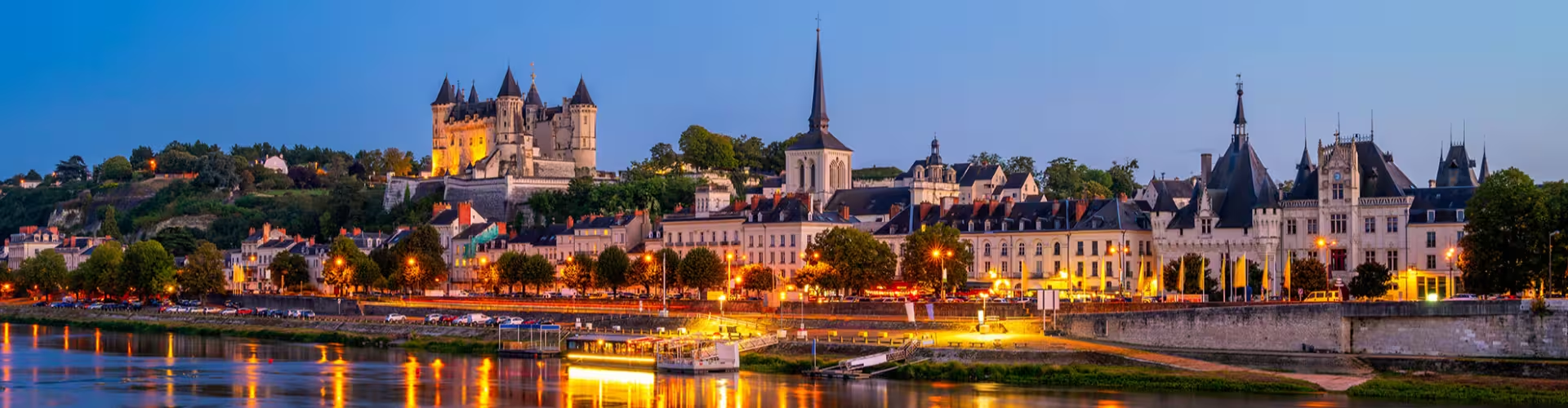
Perched dramatically above the town of Saumur, this gleaming white château appears almost fairytale-like against the Loire Valley sky. The interior hosts two museums covering decorative arts and equestrian history, reflecting the town's deep connection with horsemanship. The terrace views over the confluence of the Loire and Vienne rivers are among the finest in the region. Practical Tip: Visit on a Tuesday or Friday morning when the lively Saumur market fills the streets below.
Abbaye de Fontevraud
One of the largest monastic complexes in Europe, Fontevraud Abbey served as the spiritual heart of the Plantagenet dynasty. The tombs of Richard the Lionheart and Eleanor of Aquitaine lie here, lending the site a profound historical gravity. Today the abbey also hosts a hotel, restaurant, and a dynamic cultural programme of concerts and exhibitions. Practical Tip: Allow at least two hours to explore the abbey fully, including its remarkable Romanesque kitchens.
Vignobles de l'Anjou (Anjou Wine Route)
The rolling vineyards surrounding Angers and Saumur produce some of the Loire Valley's most celebrated wines, from crisp Muscadet and Savennieres whites to velvety Saumur-Champigny reds. Cycling or driving the wine route through villages like Saint-Lambert-du-Lattay and Beaulieu-sur-Layon connects visitors to independent domaines offering tastings. The landscape itself, with its tufa stone walls and river views, is deeply scenic. Practical Tip: Many domaines require a reservation for private tastings, especially at weekends.
Doué-en-Anjou Troglodyte Sites
The tufa-rich terrain around Doué-en-Anjou is honeycombed with ancient cave dwellings, some of which have been inhabited continuously for centuries. The town's famous zoo, partly built into cave structures, is one of the most visited attractions in the region. The nearby Les Perrières troglodyte village offers a fascinating glimpse into underground life across the centuries. Practical Tip: The Doué Zoo is particularly popular with families and benefits from early morning visits before crowds arrive.
Musée David d'Angers
Housed in a beautifully restored 12th-century abbey nave with a striking glass ceiling, this museum celebrates the work of Pierre-Jean David, Angers' most famous sculptor. The collection includes monumental plaster models, portrait medallions of historical figures, and sculptures that trace the arc of 19th-century French Romanticism. The building itself is an architectural highlight of the city. Practical Tip: Entry is free on the first Sunday of each month.
Cadre Noir de Saumur
The Cadre Noir is an elite French equestrian institution with origins dating to the 17th century, celebrated worldwide for its classical dressage performances. Visitors can tour the stables, watch morning training sessions, and attend public galas that showcase breathtaking horsemanship. The school sits within the broader Ecole Nationale d'Equitation campus. Practical Tip: Public gala tickets sell out months in advance, so check the schedule and book as early as possible.
Begin the morning at the Château d'Angers, spending a generous hour with the Tapestry of the Apocalypse. Cross the Maine River into the old quarter for a café breakfast on Place Sainte-Croix. Spend the early afternoon at the Musée David d'Angers before driving south to Fontevraud Abbey for a late afternoon visit. Close the day with dinner in Saumur's riverside town centre, perhaps with a carafe of local Saumur-Champigny.
Day one focuses entirely on Angers: the château, the fine arts museum, the vibrant covered market Les Halles, and an evening walk along the Promenade du Bout du Monde. Day two heads east to Saumur, combining the hilltop château with a morning visit to the Cadre Noir, lunch in the town centre, and an afternoon tasting at a Saumur-Champigny domaine. Day three takes in Fontevraud Abbey in the morning, the troglodyte sites of Doué-en-Anjou in the afternoon, and the Layon wine valley for a sunset drive back toward Angers.
Rillauds d'Anjou are braised pork belly pieces seasoned and slow-cooked until tender and caramelised, a true Angevin staple found at charcuteries and bistros throughout the department. Order them as a starter with crusty bread.
Fouées are small, hollow flatbreads baked in a wood-fired oven and traditionally filled with rillettes, goat cheese, or mushroom duxelles. They are a quintessential local snack best enjoyed warm from a cave-restaurant in the Saumur area.
Beurre Blanc Nantais is a classic Loire Valley butter sauce, delicate and slightly tangy, most often served over pike or shad from the river. Look for it on menus in riverside restaurants between March and June.
Cointreau was invented in Saint-Barthélemy-d'Anjou just outside Angers in 1875 and remains one of the region's most famous exports. Visit the Cointreau distillery for a guided tasting tour that illuminates its orange-peel heritage.
Muscadet and Anjou Blanc are the white wines to seek out alongside meals. The mineral-driven Savennieres appellation, grown on steep schist slopes, produces exceptional dry whites that pair beautifully with local fish and goat cheese dishes.
Cremet d'Anjou is a light, whipped fresh cheese dessert, often served with local fruit coulis or a drizzle of Cointreau. It is delicate, seasonal, and difficult to find outside the region, making it a genuine culinary find.
Angers is connected to Paris Montparnasse by TGV in approximately 90 minutes, making it an accessible base for a long weekend. Regional trains link Angers to Saumur in around 25 minutes and to Nantes in under 40 minutes. Within the city, Angers operates a modern tram network and a bike-share scheme (Velocité) ideal for exploring the riverside and central neighbourhoods. For the wider department, a rental car is strongly recommended, as many vineyards, abbeys, and troglodyte sites are not easily reached by public transport. The A11 and A85 motorways provide efficient connections to neighbouring departments.
Tours (Indre-et-Loire): Approximately one hour east by car, Tours anchors the central Loire Valley and provides access to Château de Chenonceau and Château de Chambord within a single long day.
Nantes (Loire-Atlantique): Under 40 minutes by TGV, Nantes offers a contrasting urban experience with its innovative Les Machines de l'Île mechanical sculptures, the Château des Ducs de Bretagne, and a thriving gastronomic scene.
Le Mans (Sarthe): Famous for its 24-hour motor race, Le Mans is barely an hour north of Angers and also holds one of the best-preserved medieval city centres in France, including the remarkable Cathédrale Saint-Julien.
Chinon (Indre-et-Loire): Just over 40 minutes southeast of Saumur, Chinon boasts a dramatically positioned royal fortress and a picturesque medieval town strongly associated with Joan of Arc and the Plantagenet legacy.