
Nantes
Nantes blends medieval heritage with cutting-edge arts on the Loire River. Explore the Chateau des Ducs, Les Machines de l'Ile, and a vibrant food scene in western France's most creative city.

Nantes blends medieval heritage with cutting-edge arts on the Loire River. Explore the Chateau des Ducs, Les Machines de l'Ile, and a vibrant food scene in western France's most creative city.

Nantes is a city that defies easy categorization, blending medieval heritage with a bold contemporary arts scene on the banks of the Loire River. Once a powerful maritime trading hub, today it pulses with creative energy, world-class museums, and a gastronomy culture rooted in Atlantic France. Whether you arrive for the surrealist art installations or the fresh seafood platters, this city rewards curiosity at every turn.
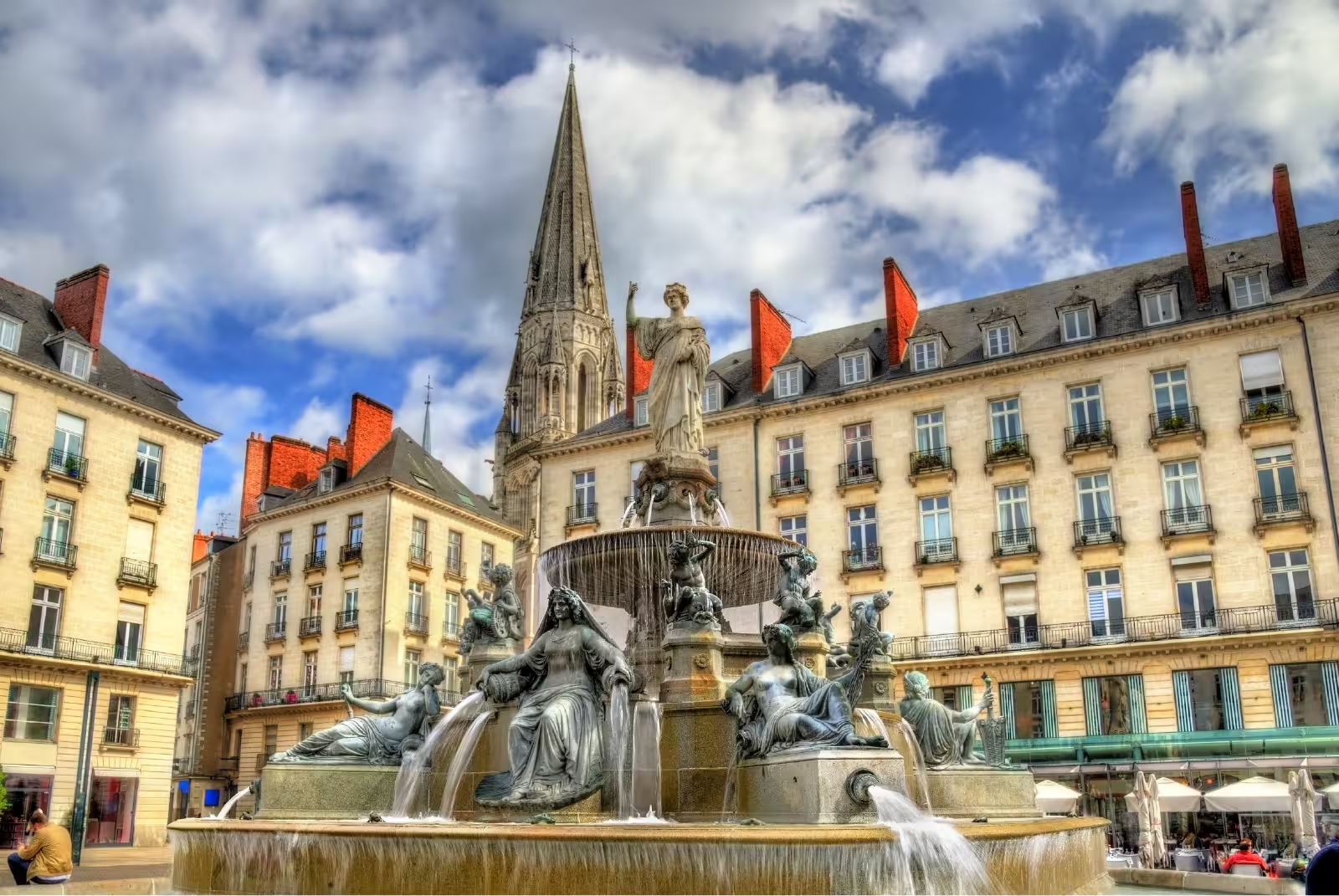
Located in western France in the Loire-Atlantique department, the city sits at the confluence of the Loire and Erdre rivers. The historic center clusters around the Cathedral of Saint Peter and Saint Paul, while the Ile de Nantes, a large island in the Loire, hosts the city's most ambitious cultural projects. Neighborhoods like Bouffay, the medieval quarter, and the elegant Graslin district each offer a distinct character worth exploring on foot.
Late spring and early summer, from May through June, offer mild temperatures and the vibrant buzz of outdoor festivals. July and August bring warmth and a lively street scene but also larger tourist crowds. Autumn is ideal for a quieter visit, with golden riverside walks and harvest-season menus in local restaurants. Winter sees fewer visitors but the Christmas market along the Cours des 50-Otages transforms the city into a festive spectacle.
France uses the Euro (EUR). The city sits comfortably in the mid-range budget category compared to Paris or the French Riviera. Budget travelers can cover daily expenses, including accommodation, meals, and transport, for around 70 to 90 EUR per day. Mid-range visitors should expect to spend between 120 and 180 EUR per day for comfortable hotels and sit-down dining.
Chateau des Ducs de Bretagne
This massive 15th-century ducal fortress anchors the city's historical identity and doubles as the Museum of History. Walk the ramparts for panoramic views of the old town, then descend into the museum's immersive exhibitions on Atlantic trade and the city's complex role in the slave trade. The surrounding moat and gardens are free to visit and beautifully lit at night.
Practical Tip: The rampart walk is free; the museum charges a modest entrance fee with free entry on the first Sunday of each month.
Les Machines de l'Ile
Housed in the former shipyards of the Ile de Nantes, this extraordinary arts and engineering project brings to life the fantastical worlds of Jules Verne and Leonardo da Vinci. The Great Elephant, a 12-meter mechanical giant, carries passengers on lumbering promenades through the shipyard grounds. The Carousel of the Marine Worlds is an intricate three-level marvel populated by luminous sea creatures you can actually ride.
Practical Tip: Book tickets online in advance, especially for the Great Elephant rides, as slots sell out quickly during peak season.
Passage Pommeraye
This 19th-century covered shopping arcade is one of the most architecturally striking in all of France. Three levels of ornate staircases, Neo-Renaissance detailing, and soft natural light filtering through a glass roof create an atmosphere closer to a stage set than a commercial space. It has appeared in several films and remains a working arcade with boutiques and cafes.
Practical Tip: Visit on a weekday morning for the best light and a quieter experience ideal for photography.
Cathedral of Saint Peter and Saint Paul
Begun in 1434, this Gothic cathedral took over 450 years to complete and contains the breathtaking tomb of Francis II, Duke of Brittany, considered one of the finest examples of French Renaissance funerary sculpture. The interior is surprisingly luminous, thanks to white Touraine stone that amplifies natural light. It was damaged by fire in 1972 and again in 2020, yet ongoing restoration work has preserved its grandeur.
Practical Tip: Entry is free. Visit early morning to see the stained glass windows at their most vivid.
Jardin des Plantes
One of the most respected botanical gardens in France, this green sanctuary dates to the early 19th century and sits adjacent to the main train station. Giant magnolias, rare camellias, and themed garden zones create a tranquil contrast to the urban buzz. The garden also features a small zoo and a children's play area, making it a favorite with families.
Practical Tip: Entry is free. The magnolia trees bloom spectacularly in late March and April.
Le Voyage a Nantes Art Trail
Every summer, this city-wide art festival transforms streets, squares, and riverbanks into an open-air gallery. A green line painted on the pavement guides visitors through dozens of site-specific installations, sculptures, and performances spread across the urban landscape. The trail integrates permanent artworks that remain throughout the year alongside seasonal commissions.
Practical Tip: Pick up a free map from the tourist office or download the official app to navigate the full trail.
Musee d'Arts de Nantes
Reopened after an extensive renovation in 2017, this fine arts museum holds a collection spanning from the 13th century to contemporary works. The 19th-century neoclassical building was seamlessly joined to a bold modern extension, creating a dialogue between the old and new that mirrors the city itself. Highlights include works by Monet, Kandinsky, and a strong collection of regional artists.
Practical Tip: Free entry on the first Sunday of each month. The museum cafe is an excellent spot for a mid-visit break.
Begin with a morning walk through the Bouffay quarter, stopping for coffee and a local pastry at one of the medieval square's cafes. Head to the Chateau des Ducs de Bretagne to explore the ramparts and history museum before lunch at a brasserie near the cathedral. Spend the afternoon at Les Machines de l'Ile, leaving enough time to ride the Great Elephant. End the evening with dinner in the Graslin district and a stroll through the illuminated Passage Pommeraye.
On day two, dedicate the morning to the Musee d'Arts, then picnic in the Jardin des Plantes. In the afternoon, cross to the Ile de Nantes to explore the Hangar a Bananes, a converted warehouse lined with galleries, bars, and restaurants along the riverfront. On day three, join the Voyage a Nantes art trail using the green line guide, weaving through neighborhoods you might otherwise miss. Allow time for a boat trip on the Erdre River, often called the most beautiful river in France by Francis I.
Beurre Blanc is the city's most celebrated culinary contribution, a delicate white butter sauce made with shallots, white wine, and vinegar, traditionally served with pike or other Loire fish. Order it at any traditional brasserie and ask for it with sandre (zander) for the most authentic experience.
Muscadet is the crisp, dry white wine produced in the vineyards surrounding the city. It pairs perfectly with the Atlantic oysters and mussels that appear on nearly every menu. Ask for a Muscadet sur lie, aged on its lees for greater depth and complexity.
Galette au Beurre is a buttery shortbread biscuit that has been produced in the region for centuries. Pick up a tin from a local patisserie as an edible souvenir. Look also for the Petit Beurre biscuit, made by the LU biscuit company, which was founded in the city in 1886.
Moules Marinieres, mussels steamed in white wine with shallots and parsley, are a fixture on menus throughout the city. The proximity to the Atlantic coast guarantees freshness. Pair with a glass of Muscadet for a quintessential local meal.
Canard Nantais (Nantes-style duck) features in many traditional restaurant menus, typically braised with olives and a rich sauce drawing on the city's southern trade connections. This dish reflects the port city's historic appetite for imported ingredients and spices.
Brioche Vendéenne is a lightly sweet, braided bread from the neighboring Vendee region that is widely available in local bakeries. It is traditionally eaten for breakfast or as an afternoon snack with butter and jam.
The city is served by Nantes Atlantique Airport, with direct connections to many European cities and several intercontinental routes. High-speed TGV trains connect the city to Paris Montparnasse in approximately two hours, making a weekend trip from the capital entirely practical. Within the city, the TAN network operates trams, buses, and a Busway rapid transit line covering all major attractions efficiently.
The tram network is the quickest way to move between the train station, city center, and the Ile de Nantes. Day passes and multi-day travel cards offer the best value for visitors planning to use public transport extensively. Cycling is increasingly popular, with an expanding network of dedicated lanes and the Bicloo bike-share scheme available throughout the city.
Saint-Nazaire lies 60 kilometers west and is accessible by train in under an hour. The port city offers an extraordinary WWII German submarine base open for tours, dramatic views of the Loire estuary, and the iconic Saint-Nazaire Bridge arching over the river mouth. It provides a compelling industrial counterpoint to the arts-focused city experience.
The Loire Valley Chateaux begin just east of the city, with Chateau de Chambord, Chateau d'Amboise, and Chateau de Chenonceau all accessible as day trips by car or organized tour. This UNESCO World Heritage region offers some of the most spectacular Renaissance architecture in Europe, surrounded by vineyards and river landscapes.
La Baule, 80 kilometers southwest, is one of France's most celebrated seaside resorts, with a sweeping 9-kilometer sandy beach and elegant Belle Epoque villas lining the seafront. Trains run regularly from the city's main station, and the journey takes around an hour.
Clisson, just 25 kilometers southeast, is a remarkably well-preserved medieval town with an Italian Renaissance soul, the result of a 19th-century transformation by the Cacault brothers and the sculptor Lemot. The ruined chateau overlooking the Sevre Nantaise River and the colonnaded Halles are highlights of a half-day excursion.