Pays de la Loire

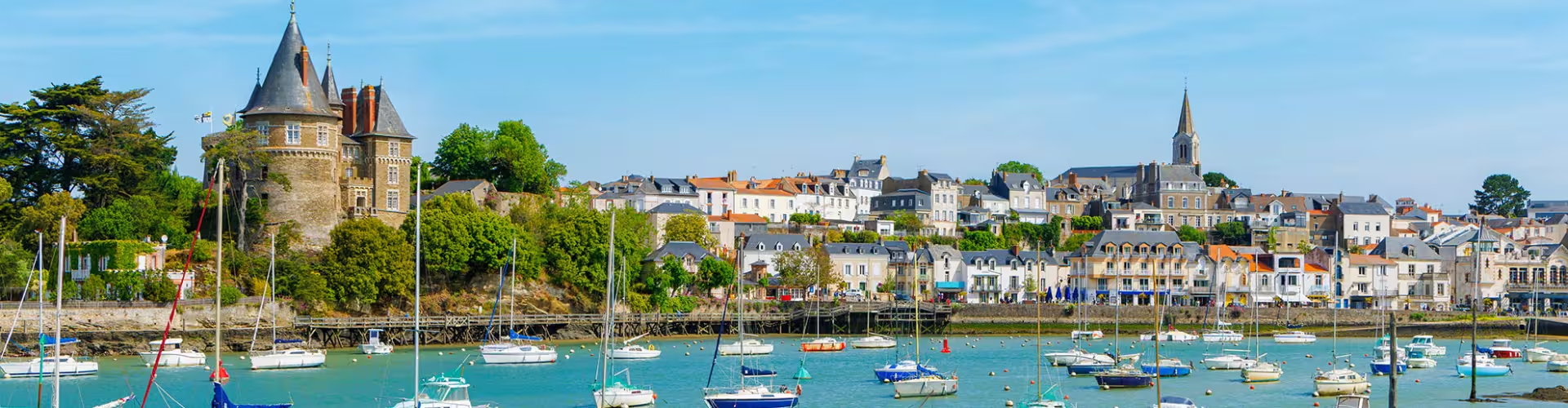
Pays de la Loire blends royal chateaux, Atlantic coastlines, world-class Loire wines, and vibrant Nantes culture. Explore medieval history, surf the Vendee, and savor beurre blanc in one of France's most rewarding regions.

logoBlack

Build your dream
experience

dreamimg

More to know about Pays de la Loire


Pays de la Loire Travel Guide

Snapshot

Pays de la Loire is one of France's most rewarding yet underrated regions, stretching from the Atlantic coast deep into the fertile Loire Valley. It blends royal history, world-class wine, dramatic coastlines, and vibrant city culture into a single, accessible destination. Whether you are chasing chateau trails, surfing Atlantic swells, or savoring Muscadet in a riverside bistro, this region delivers on every front.


Geography and Logistics

Orientation

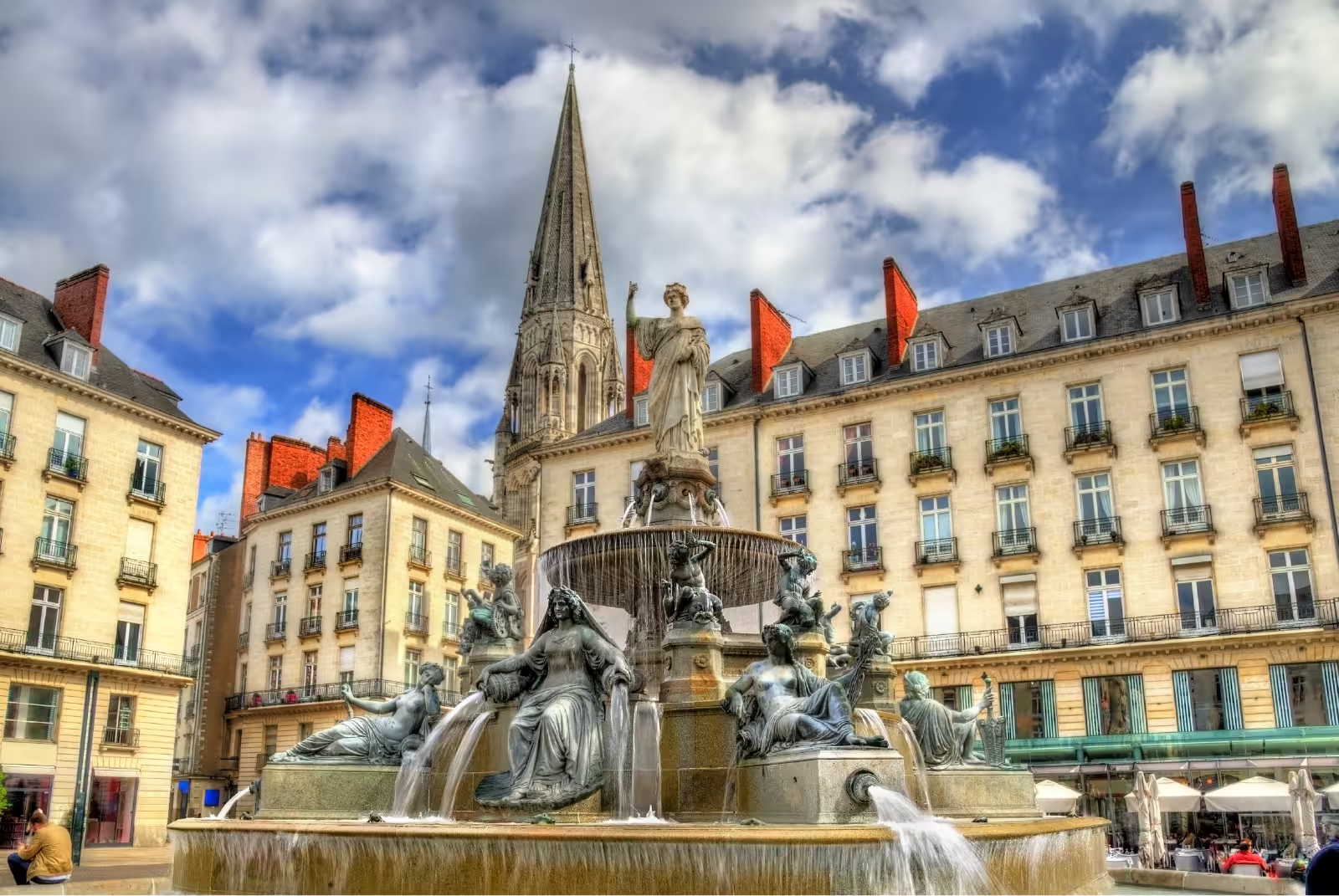
The region covers five departments: Loire-Atlantique, Maine-et-Loire, Mayenne, Sarthe, and Vendee. Nantes serves as the regional capital and main transport hub. The Loire River forms a natural spine running east to west, connecting vineyards, chateaux, and market towns before emptying into the Atlantic near Saint-Nazaire.

When to Go

Late spring (May to June) and early autumn (September to October) offer the best conditions: mild temperatures, fewer crowds, and active local markets. July and August are ideal for coastal areas like the Vendee, though beaches fill quickly. Winter is quiet but rewarding for chateau visits without the tourist rush.

Budget and Currency

France uses the Euro (EUR). Pays de la Loire is more affordable than Paris or the Cote d'Azur. Budget travelers can manage comfortably on 70 to 90 EUR per day including accommodation, meals, and local transport. Mid-range travel averages 120 to 180 EUR per day. Wine tastings and chateau entry fees are generally modest.


Essential Things to Do

Explore the Chateau des Ducs de Bretagne in Nantes
This fortress-palace in the heart of Nantes has shaped the city's identity for centuries. Today it houses the excellent Nantes History Museum, where interactive exhibits trace the city's complex past including its role in the Atlantic slave trade. The castle grounds are free to enter and beautifully lit at night.
Practical Tip: Visit the museum on a weekday morning to avoid school groups.

Visit the Chateau d'Angers
This massive medieval fortress in Angers is home to the 14th-century Apocalypse Tapestry, one of the largest surviving medieval tapestries in the world. The 17 surviving panels stretch over 100 meters and are displayed in a purpose-built gallery within the chateau walls. The surrounding gardens are a peaceful bonus.
Practical Tip: Book tickets online in advance during summer as queues can be long.

Discover Les Machines de l'Ile in Nantes
This extraordinary arts project on a former shipyard island features giant mechanical animals inspired by Jules Verne and Leonardo da Vinci. The Great Elephant carries passengers on its back through the island, while the Carousel of the Marine Worlds is a breathtaking kinetic sculpture. The workshop allows visitors to watch new creatures being built.
Practical Tip: Arrive early as elephant ride slots sell out fast, especially on weekends.

Tour the Loire Valley Chateaux
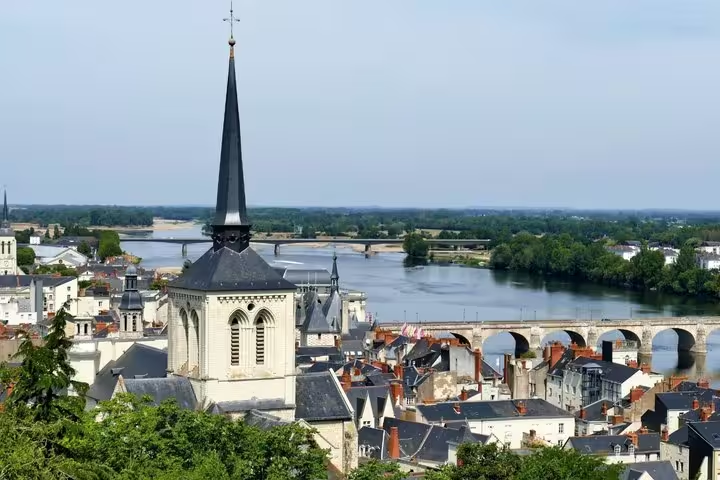
The eastern stretches of the region near Saumur and the Anjou area are dotted with magnificent Renaissance chateaux. Chateau de Saumur towers above the town and the river, offering panoramic views. Nearby Fontevraud Abbey is where English King Richard the Lionheart is buried.
Practical Tip: A rental car is the most flexible way to hop between sites along the river.

Surf and Relax in the Vendee
The Vendee coastline offers long sandy beaches, surf schools, and a laid-back Atlantic vibe. Saint-Gilles-Croix-de-Vie and Les Sables-d'Olonne are popular bases. The region hosts the Vendee Globe, the famous solo around-the-world sailing race, departing and arriving at Les Sables-d'Olonne.
Practical Tip: Rent bikes in coastal towns for car-free access to beach paths.

Discover Le Mans and the Circuit
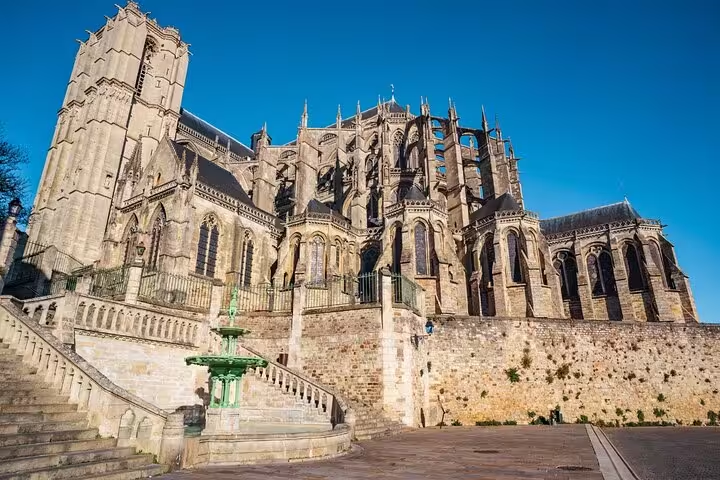
Le Mans is synonymous with motorsport, but the city also has a beautifully preserved medieval quarter called Cite Plantagenet with Gallo-Roman walls still standing. The 24 Hours of Le Mans race and the associated Sarthe Circuit museum are essential for motorsport fans.
Practical Tip: The Musee des 24 Heures du Mans is open year-round and worth a half-day visit.

Wine Tasting in Anjou and Muscadet Country
The region produces some of France's most respected wines including Muscadet, Anjou Blanc, Savennieres, and sparkling Cremant de Loire. Many domaines offer free or low-cost tastings directly at the cellar door. The Wine Route along the Loire links family-run producers with scenic cycling paths.
Practical Tip: Visit during harvest season in September for cellar open days and festivals.


Curated Itineraries

The Highlights (1 Day)

Start the morning at the Chateau des Ducs de Bretagne in Nantes, then walk through the Bouffay quarter for coffee and a traditional galette. After lunch, explore the Ile de Nantes and Les Machines de l'Ile. End the afternoon at the Jardin des Plantes, one of France's finest botanical gardens, before dinner in the Talensac market district.

Deep Dive (2 to 3 Days)

Day one in Nantes covers the chateau, the mechanical island, and the Passage Pommeraye shopping arcade. Day two heads east to Angers for the Apocalypse Tapestry and the chateau gardens, followed by a wine stop in the Anjou vineyards. Day three can go south to the Vendee coast for a beach morning, then return via Saumur for chateau views and a tasting of local sparkling wine before heading back.


Flavors of Pays de la Loire

Muscadet sur Lie: This crisp, mineral-driven white wine is the region's signature drink, aged on its lees for added complexity. Order it with seafood at any coastal restaurant.

Beurre Blanc Nantais: A silky butter sauce from Nantes, traditionally served with pike or other Loire fish. It is the city's most iconic culinary contribution.

Rillettes du Mans: A slow-cooked pork spread from the Sarthe, similar to pate but coarser in texture. Spread it on crusty bread as a starter or snack at local charcuteries.

Brioche Vendéenne: A rich, braided sweet bread from the Vendee, flavored with orange blossom water. It is sold in local bakeries and is the traditional Easter bread of the region.

Fouees: Small, puffed flatbreads baked in wood-fired ovens and traditionally filled with white bean paste or rillettes. They are a beloved snack in the Saumur and Anjou areas.

Quernon d'Ardoise: A distinctive blue-coated chocolate from Angers, filled with praline and named after the roofing slate the city was historically known for. Buy a box as an edible souvenir.


Navigation and Transport

Nantes is well connected by TGV high-speed train to Paris (about 2 hours), making it an easy add-on to a French city trip. Regional trains link Nantes with Angers, Le Mans, and La Roche-sur-Yon. For rural chateau trails and coastal villages, renting a car is strongly recommended. Cycling infrastructure is excellent along the Loire a Velo route, one of Europe's most scenic long-distance cycling paths. Local Nantes transport includes a modern tram network and Busway rapid bus lines.


Beyond the Center: Day Trips

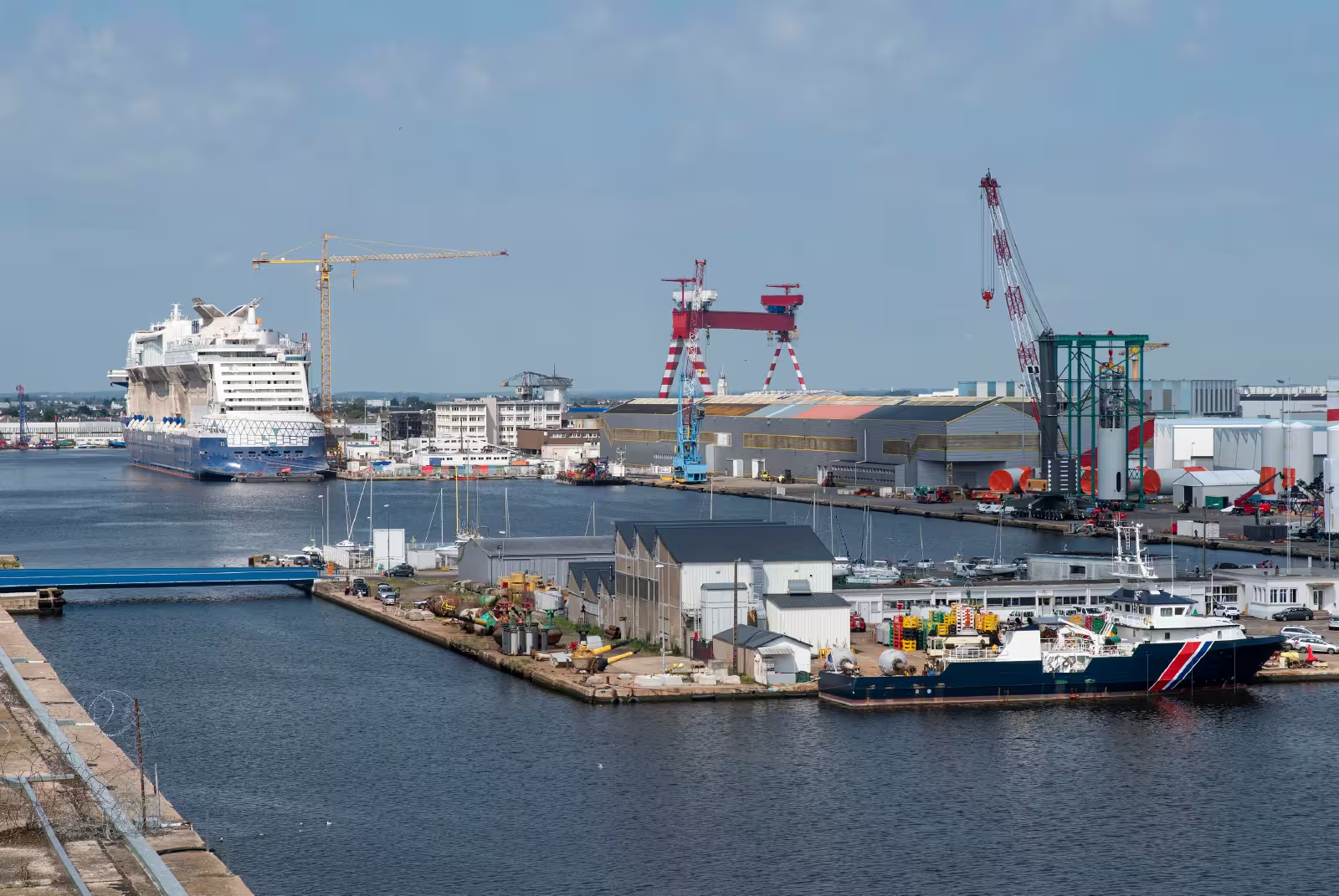
Saint-Nazaire: Just 60 kilometers west of Nantes, this port city has a remarkable wartime history. The submarine base and the Escal'Atlantic ocean liner museum are both fascinating half-day visits. The Pont de Saint-Nazaire, one of France's longest bridges, offers dramatic estuary views.

Guerande and the Salt Marshes: This medieval walled town near La Baule produces the prized Guerande sea salt (fleur de sel). Walk the ramparts, visit a salt worker, and browse the artisan salt stalls in the old town market.

Fontevraud Abbey: Located near Saumur, this vast royal abbey complex is one of the largest surviving monastic sites in Europe. It served as a prison for nearly 200 years before becoming a cultural heritage site. The Plantagenet royal tombs inside are a remarkable piece of European history.


Insider Tips for Travellers

  • Book accommodation in Nantes well in advance during July and August, as the city hosts major festivals and fills up fast.
  • The Loire a Velo cycling route is well-marked and bike rental is available at train stations, making car-free exploration easy.
  • Many wine domaines in Anjou and Muscadet country offer free tastings but appreciate a purchase if you enjoy the wine.
  • Nantes has a strong street art scene, particularly on the Ile de Nantes and in the Chantenay district. Pick up a free map at the tourist office.
  • The Passage Pommeraye in Nantes is a stunning 19th-century shopping arcade and one of the most photographed interiors in western France.
  • Markets are a regional highlight. The Marche de Talensac in Nantes operates Tuesday through Sunday mornings and is excellent for local cheeses and charcuterie.

Frequently Asked Questions

What is the best time to visit Pays de la Loire?
Late spring and early autumn are ideal for most travelers. May, June, September, and October offer pleasant weather, fewer crowds, and active local food and wine events.
How do I get to the region from Paris?
Pays de la Loire is easily reached from Paris by TGV in approximately 2 hours to Nantes, making it a practical long weekend destination from the capital.
What are the must-see attractions in the region?
The Chateau des Ducs de Bretagne in Nantes, Les Machines de l'Ile, the Chateau d'Angers and its Apocalypse Tapestry, Fontevraud Abbey, and the Vendee coastline are all essential highlights.
Is the region suitable for families?
Pays de la Loire is very family-friendly. Les Machines de l'Ile in Nantes is a particular hit with children, and the Vendee beaches and cycling routes make for excellent family holidays.
What wines should I try in the region?
Muscadet sur Lie, Anjou Blanc, Savennieres, Coteaux du Layon (a sweet dessert wine), and Cremant de Loire (sparkling) are all worth trying and available at local cave shops throughout the region.