



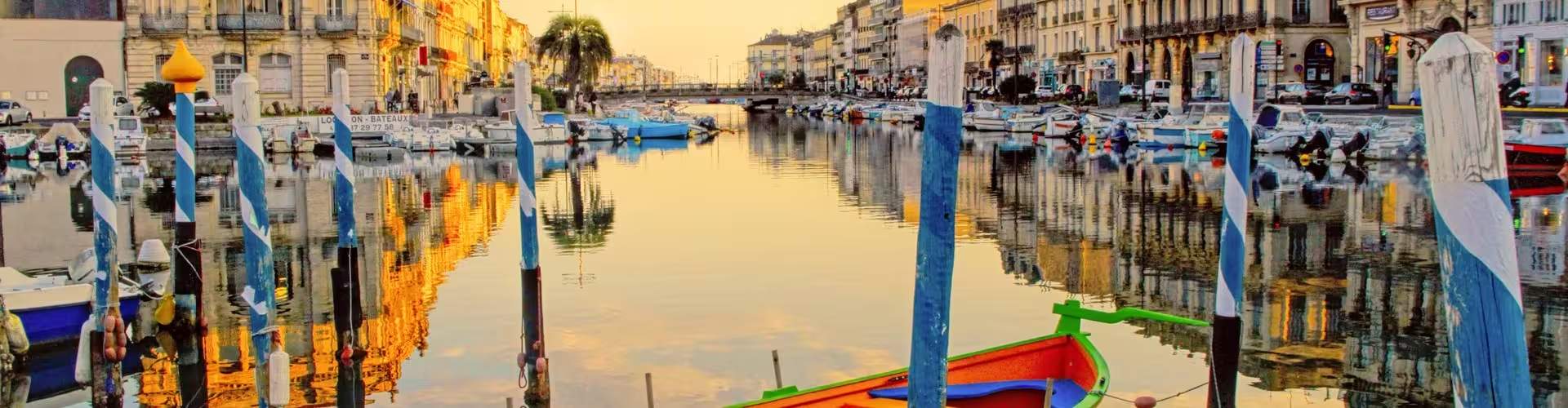


Sète can be discovered along its canals, lined with colourful façades and crossed by lift and swing bridges. Languedoc jousting tournaments are held on the canals every year from June to September, with the contests of 25 August, Saint Louis's day.
Louis XIV decided to give the Canal du Midi an outlet to the sea: that is how the port of Sète was born, on 29 July 1666.
Overlooking the Corniche and facing the sea, the Cimetière marin was created around 1680 as the Saint-Charles cemetery and renamed in 1945 after the poem by Paul Valéry, the Sète poet who immortalised it; he is buried in its upper part, and it also holds the grave of Jean Vilar.
Mont Saint-Clair, with the chapel of Notre-Dame de la Salette at its summit, is a place of pilgrimage; 183 m (600 ft) high, it looks out over the town and the ports. The 126 steps of the Saint-Louis lighthouse lead up to a view of the commercial port, the marina, the old town and the sea.
Sète has 12 km (7 miles) of golden sand (a Blue Flag beach, according to the regional tourist board). Its beaches stretch along the Lido, the dune strip that separates the sea from the Thau lagoon.
Sète has its own station, with Marseille 2 hours and Paris 3 hours 40 away by TGV, and Montpellier-Méditerranée airport is 45 minutes away.