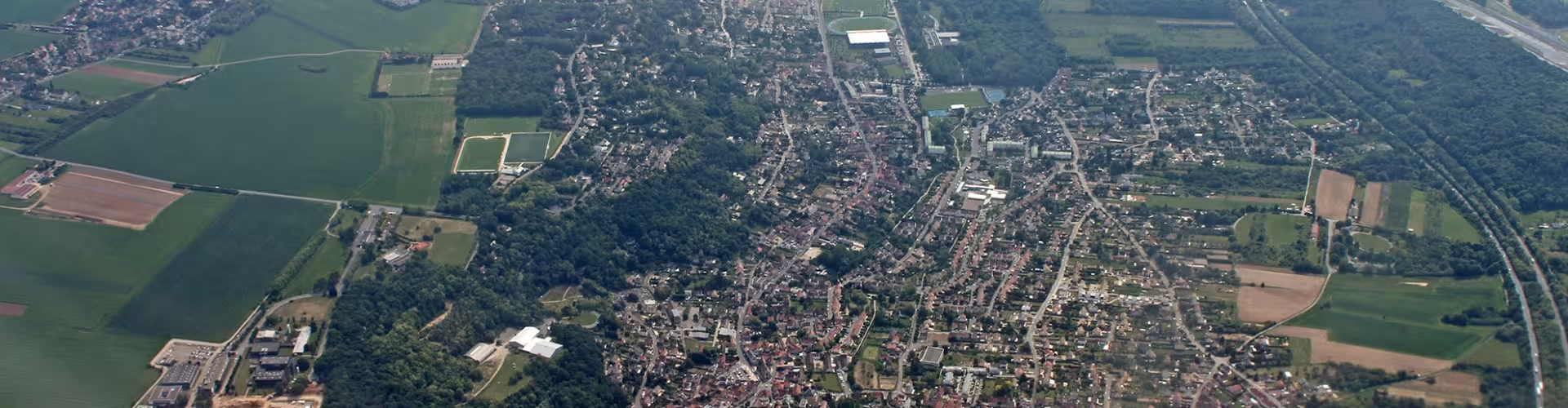
Orly
Orly is a dynamic suburb south of Paris offering multicultural food markets, easy airport connections, and access to major Ile-de-France destinations, making it a practical and rewarding base for travelers.

Orly is a dynamic suburb south of Paris offering multicultural food markets, easy airport connections, and access to major Ile-de-France destinations, making it a practical and rewarding base for travelers.

Orly is a vibrant commune in the southern suburbs of Paris, offering travelers a fascinating blend of urban energy, cultural heritage, and easy access to one of France's busiest aviation hubs. Situated just 13 kilometers from central Paris, it serves as a key gateway for millions of visitors arriving or departing through Orly Airport. Whether you are passing through or choosing to explore the area in depth, Orly rewards curious travelers with authentic local experiences beyond the typical tourist trail.
Orly sits in the Val-de-Marne department, part of the Ile-de-France region that encircles the French capital. The commune is bordered by Rungis to the south, home to the world's largest wholesale food market, and by Villeneuve-le-Roi and Thiais to the east and west. The landscape is largely urban and suburban, with pockets of greenery and open parkland providing relief from the built environment. The proximity to Paris makes it an ideal base for those who want affordable accommodation while remaining close to world-class attractions.
The best time to visit is during spring, from April to June, when temperatures are mild and the surrounding Ile-de-France region blooms with color. Autumn, from September to November, is equally appealing, with cooler air and fewer crowds at nearby Paris attractions. Summer months can be warm and busy, particularly around the airport corridors, while winter offers a quieter, more local atmosphere. Avoiding the peak August holiday period will generally result in better rates and a more relaxed experience.
France uses the Euro, and Orly itself caters to a range of budgets. Accommodation near the airport tends to be competitively priced compared to central Paris, making it attractive for budget-conscious and business travelers alike. Dining in the commune's local restaurants and markets is noticeably more affordable than eating in tourist-heavy Parisian neighborhoods. ATMs are widely available, and card payments are accepted almost universally across shops, restaurants, and transport services.
Explore Rungis International Market: Just a short distance from Orly lies the Rungis International Market, the largest wholesale fresh food market in the world. Covering over 230 hectares, it supplies produce, meat, seafood, and flowers to restaurants and retailers across France and Europe. Guided tours are available for groups and offer a rare behind-the-scenes look at global food logistics. Practical Tip: Tours must be booked in advance and usually begin in the very early morning hours.
Visit the Parc de la Vallee aux Renards: This local park offers a peaceful retreat from the urban surroundings, with walking paths, green lawns, and recreational areas popular with families and joggers. It is one of the most accessible natural spaces in the commune and a favorite among residents for weekend leisure. The park is free to enter and open year-round. Practical Tip: Bring a picnic and arrive on weekday mornings for the most tranquil experience.
Discover the Orlyval Automated Metro: The Orlyval is a fully automated light rail system connecting Orly Airport to the RER B line at Antony station. Beyond its transport function, the system itself is a marvel of French engineering and urban planning. Riding it provides elevated views over the southern suburbs and gives travelers an efficient and scenic introduction to the area. Practical Tip: Purchase a combined Orlyval and RER ticket at the airport for seamless onward travel into Paris.
Attend Events at the Salle des Fetes: The local events hall in the town center regularly hosts cultural evenings, community fairs, and seasonal celebrations that offer genuine insight into suburban Parisian life. These events are typically well-attended by locals and provide an authentic alternative to the more curated experiences found in central Paris. Checking the commune's official schedule before arrival is recommended. Practical Tip: Events are often free or low-cost and are listed on the Val-de-Marne tourism website.
Shop at the Local Weekly Market: Street markets in and around Orly operate on fixed weekly schedules and sell fresh produce, artisan goods, clothing, and imported specialties. These markets reflect the multicultural character of the suburb, with vendors and products from North Africa, West Africa, and Southeast Asia sitting alongside traditional French fare. They are an excellent place to engage with the local community and sample affordable street food. Practical Tip: Arrive early for the best selection and bring a reusable bag for purchases.
Day Visit to Choisy-le-Roi: The neighboring commune of Choisy-le-Roi, known for its vibrant Vietnamese and East Asian community, offers some of the best pho, banh mi, and dim sum restaurants in the greater Paris region. A short bus or tram ride from Orly, it provides a genuinely multicultural culinary and cultural experience. The town also has a historic chateau and riverside promenade worth exploring. Practical Tip: Visit on a weekend when the restaurants are fully staffed and the streets are most lively.
Cycling Along the Bievre Valley Greenway: The Bievre Valley offers a scenic cycling and walking trail that passes through several Val-de-Marne communes. It connects natural parks, heritage sites, and residential neighborhoods in a largely car-free environment. Rental bikes are available in nearby towns and the trail is well-marked throughout. Practical Tip: The route is relatively flat and suitable for all fitness levels, including families with children.
Begin your day with a morning visit to the local weekly market, sampling street food and browsing artisan stalls. Head to the Parc de la Vallee aux Renards for a mid-morning walk before stopping for lunch at a neighborhood brasserie. In the afternoon, take the Orlyval to explore the airport's shopping and dining facilities, then return to the commune for an early evening stroll and a meal at one of the area's multicultural restaurants.
On day one, follow the highlights itinerary above. On day two, take an early guided tour of the Rungis International Market, then spend the afternoon cycling the Bievre Valley Greenway. Reserve the evening for dinner in Choisy-le-Roi's East Asian quarter. On day three, take the RER into central Paris to visit the Louvre or Musee d'Orsay, returning to Orly for a relaxed final evening, ideally at a local community event or riverside park setting.
Couscous Royal: Reflecting the strong North African heritage of the area, couscous royal is a staple dish found in numerous local restaurants. It features semolina topped with lamb, merguez sausage, and slow-cooked vegetables in a rich, spiced broth. Order it at a family-run Algerian or Moroccan restaurant for the most authentic version.
Baguette and Pate: A classic French pairing available at every local boulangerie, fresh baguette with country-style pate is an ideal quick lunch. Look for bakeries displaying the Artisan Boulanger sign for the highest quality bread. Pair it with a small glass of house wine for a true Parisian suburban lunch.
Pho Bo: In the neighboring communes, Vietnamese pho is widely available and beloved by locals. This fragrant beef broth noodle soup is typically served with fresh herbs, lime, and chili on the side. It is especially popular on cool autumn and winter days.
Pastilla: A savory-sweet Moroccan pie made with pigeon or chicken, almonds, and a dusting of cinnamon sugar, pastilla is a rare treat available in some of the area's more specialized North African restaurants. It makes for an excellent shared starter. Ask the restaurant for the traditional version, which uses brick pastry rather than puff pastry.
Tarte Tatin: This classic French upside-down caramelized apple tart is a staple of local patisseries and brasseries. It is best enjoyed warm with a dollop of creme fraiche. Look for it as a dessert special rather than a permanent menu fixture for the freshest preparation.
Mint Tea: A sweet, intensely aromatic North African mint tea served in ornate glasses is a hospitality staple in the area's Moroccan and Algerian cafes. It is traditionally poured from a height to create a frothy top and served with almond-based sweets. Always accept if offered as a gesture of welcome.
Orly is exceptionally well-connected to Paris and the wider Ile-de-France region. The Orlyval automated metro links the airport to Antony station on the RER B line, from which central Paris is reachable in under 30 minutes. Bus services operated by Ile-de-France Mobilites connect the commune to neighboring towns and metro stations. The tramway T7, running between Villejuif and Athis-Mons, passes through the area and provides surface-level connections across the southern suburbs. Taxis and ride-share services are plentiful, especially around the airport zone, and cycling infrastructure has improved significantly in recent years.
Paris City Center (13 km): The French capital is a short RER ride away, offering the Eiffel Tower, the Louvre, Montmartre, and countless world-class museums and galleries. A day in Paris from Orly is entirely feasible and highly recommended for first-time visitors to the region.
Versailles (25 km): The Palace of Versailles and its vast formal gardens are accessible by RER C from Paris or by connecting train services. The scale and opulence of the royal estate are genuinely extraordinary and best appreciated on a weekday to avoid the largest crowds.
Fontainebleau (55 km): The forest of Fontainebleau offers exceptional hiking, rock climbing, and cycling through ancient woodland surrounding a stunning royal chateau. It is a popular escape for Parisians on weekends and is reachable by train from Gare de Lyon in under an hour.
Chartres (90 km): The medieval city of Chartres, dominated by its extraordinary Gothic cathedral, is a half-day trip by train from Paris Montparnasse. The cathedral's original stained glass windows are considered among the finest in the world and are breathtaking in morning light.