
Build your dream
experience
More to know about Perg District
Perg District Travel Guide
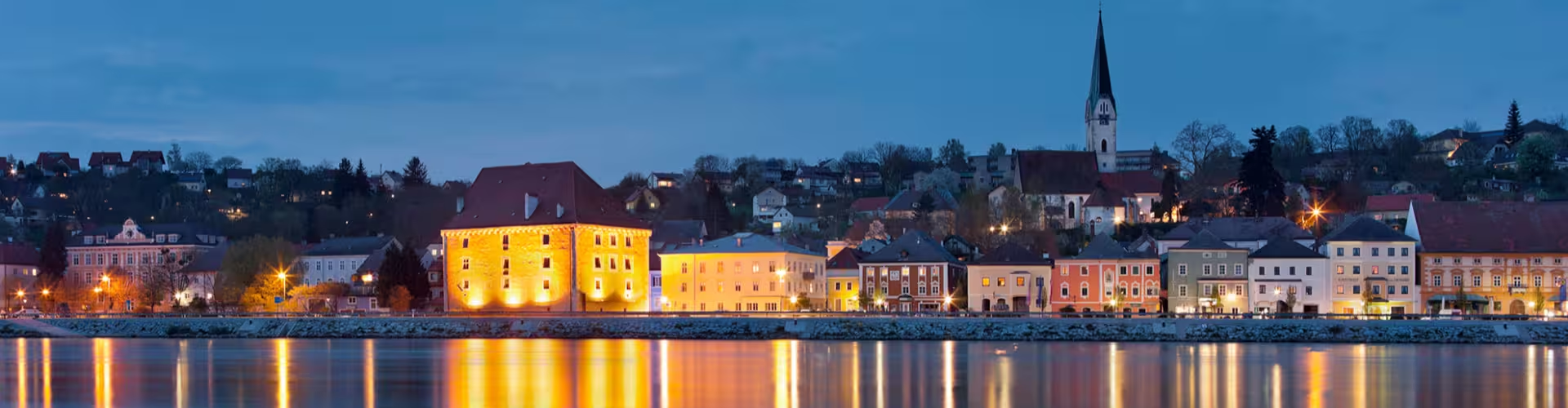
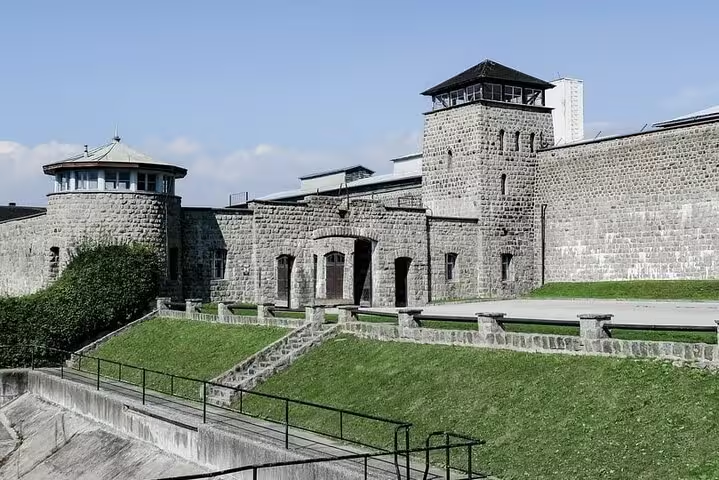
Perg District is a regional area in Upper Austria that rewards travelers who prefer a grounded pace, scenic countryside, and smaller-town culture over big city rush. Use this guide to plan a practical route, choose the right season, and build an itinerary that balances viewpoints, local flavors, and easy logistics. It is designed for decision-making, so you can quickly match your time, budget, and interests to the best experiences in Perg District.
Snapshot
Perg District feels calm, rural, and quietly historic, with a landscape shaped by Upper Austria’s rivers, rolling farmland, and small settlements. It is a strong choice when you want Austrian scenery and local life without the intensity of major tourist centers. Go now if you are planning a wider Upper Austria route and want a flexible base for short drives, gentle walks, and easy day trips.
🗺️ Geography and Logistics
📍 Orientation: Where is it within Upper Austria and Austria?
Perg District sits within Upper Austria, a northern Austrian state known for a mix of industrial hubs and countryside. For international arrivals, the most common gateway is Vienna International Airport, with onward rail connections into Upper Austria. Linz is the primary regional hub in Upper Austria, and it is typically the most practical city to connect through for trains, regional buses, and car rental before continuing into Perg District.
🕒 When to Go: Seasonal breakdown
Upper Austria has clear seasonal shifts, so your best timing depends on what you want to do. Warmer months generally support longer days for walking routes, viewpoints, and outdoor dining, while cooler months favor museums, cozy taverns, and slower itineraries. If you are sensitive to crowds, focus on shoulder periods, when it is easier to find quieter roads and a more local rhythm in Perg District.
💰 Budget & Currency: Practical money tips
Austria uses the euro. In towns and rural areas, it is smart to carry some cash for smaller purchases, bakeries, and local eateries, even if cards are widely accepted elsewhere. For budgeting, plan for mid-range Central European costs, then keep flexibility for spontaneous stops, like a café break or a local product shop, which often become the most memorable moments in Perg District.
⭐ Essential Things to Do
These experiences are curated to help you understand the area’s character and to build a route that feels varied without being rushed. Where possible, pair one outdoor stop with one cultural stop each day for balance.
-
Scenic countryside drives and village hopping. The appeal of Perg District often lies in the spaces between headline attractions, such as field patterns, wooded edges, and small town centers. Driving short segments lets you stitch together viewpoints, cafés, and local shops. Practical tip, keep your plan loose and stop when you see a promising church square, bakery, or panorama.
-
Easy nature walks for fresh air and photos. Upper Austria is well-suited to gentle outdoor time, and Perg District offers a slower, less crowded environment for it. Even short walks can feel restorative because the scenery changes quickly between farmland and forest. Practical tip, start earlier in the day for softer light and more peaceful paths.
-
Local town centers and everyday architecture. Smaller Austrian towns tend to reward slow observation, with façades, parish churches, and compact main streets that reflect regional life. This is where you get a sense of scale and routine in Perg District, not just a checklist of sights. Practical tip, pause for a coffee and watch how locals use the square.
-
Regional food stops and bakery culture. A simple snack break can become a highlight, especially when you treat it like a mini ritual rather than a quick refuel. In Perg District, food experiences often feel unforced and local. Practical tip, ask what is freshest that day and build your schedule around a relaxed lunch window.
-
Photo moments at viewpoints and open landscapes. The district’s open vistas are ideal for wide-angle shots and calm, minimal compositions. You do not need complicated plans, just patience and the willingness to stop. Practical tip, aim for late afternoon when shadows add depth to fields and hills.
-
Slow travel days with flexible pacing. Not every day needs a packed program, and Perg District is well-suited to unstructured time. A slower day lets you adapt to weather, energy levels, and spontaneous discoveries. Practical tip, set one anchor stop, then leave the rest open.
-
Connect your route to Upper Austria’s major hub, Linz. Pairing the countryside with a city day adds contrast, and Linz is the natural connector for transport and services. It also helps if you want a museum day, shopping, or a more urban dinner before returning to Perg District. Practical tip, use Linz as a logistics reset point for trains, car pickup, or onward travel.
🚶 Curated Itineraries
⏰ The Highlights (1 Day)
Start with a relaxed morning in a local town center, then take a short countryside drive to get a feel for the landscape. Build in a long lunch, since food breaks are part of the experience, not an interruption. Finish with a golden-hour viewpoint stop, then return for a simple dinner and an early night if you are continuing through Upper Austria.
⏰ Deep Dive (2-3 Days)
Day one, focus on orientation, a town center stroll, a bakery stop, and a scenic loop to understand distances and road rhythm. Day two, dedicate more time to nature walks and photo stops, then add a cultural or urban contrast by connecting to Linz for a few hours. Day three, keep it flexible for weather, repeat your favorite café, and use the extra time for a longer drive that sets you up for nearby day trips beyond Perg District.
🍽️ Flavors of Perg District
Upper Austrian food is hearty, seasonal in feel, and built for comfort. These are classic Austrian tastes you can look for in local eateries and bakeries.
-
Wiener Schnitzel. Crisp, golden breading with a bright squeeze of lemon is the signature. Ordering tip, ask what side options are typical, then choose a simple pairing to keep the focus on the schnitzel.
-
Tafelspitz. A gentle, broth-forward beef dish that feels traditional and unhurried. Ordering tip, this is a good choice when you want something filling but not fried.
-
Käsespätzle. Soft egg noodles with melted cheese, rich and comforting. Ordering tip, consider sharing if you are sampling multiple dishes, since it can be quite filling.
-
Apfelstrudel. Warm apple, cinnamon notes, and pastry layers, often served as a café classic. Ordering tip, pair it with a coffee break mid-afternoon when many towns feel at their calmest.
-
Kaiserschmarrn. Fluffy shredded pancake texture with sweetness and a cozy finish. Ordering tip, it can work as a dessert or a late lunch if you are hiking or driving between stops.
-
Austrian coffeehouse staples. Expect a slower pace, table service, and a culture of lingering. Ordering tip, choose one drink and one pastry, then give yourself time to enjoy the setting.
🚌 Navigation & Transport
For most travelers, a car is the most flexible way to explore Perg District, especially if you want to combine villages, viewpoints, and spontaneous stops. Trains and regional buses are useful for connecting to larger hubs in Upper Austria, particularly Linz, but rural coverage can be less frequent. Walking works best within town centers and for short nature routes, so plan a mix, drive for transitions and walk for the most scenic segments.
For safety and comfort, keep an eye on weather changes, especially in cooler seasons when visibility and road conditions can shift. If accessibility is a concern, prioritize town-center strolls and viewpoint stops that do not require uneven trails, then build your day around longer café breaks and shorter walks.
🌄 Beyond the Center: Day Trips
-
Linz. A practical day trip for city energy, transport connections, and a change of pace from rural scenery. Travel time depends on your exact starting point in Perg District, and it is typically best reached by road or rail via regional connections.
-
Vienna. Ideal if you want to add imperial history, major museums, and a classic city break to your Austrian route. It is best as a full day or an overnight add-on, with travel time varying by connections through Upper Austria.
-
Upper Austria countryside loops. If you prefer nature-forward travel, choose a day built around scenic driving, short walks, and café stops. The benefit is flexibility, you can adjust the route to weather and mood without needing timed entries.
✅ Insider Tips for Travelers
- Plan one anchor stop per day, then leave space for spontaneous viewpoints and cafés.
- Carry some cash for smaller purchases in rural areas, even if you mainly use cards.
- Start earlier for quieter roads and better photo light, especially if you want wide landscape shots.
- Pack layers, Upper Austria weather can shift quickly between morning and afternoon.
- Balance your itinerary, pair a town-center stroll with a nature walk to avoid travel fatigue.
- If you rely on public transport, confirm connections in advance and build buffer time for less frequent services.
❓ Frequently Asked Questions, FAQ
How do I get to Perg District using public transport?
Start by connecting through a major hub in Upper Austria, such as Linz, then continue by regional train or bus depending on your exact destination. If you are planning multiple rural stops, consider combining public transport with short taxi rides.
Is Perg District better with a rental car?
Yes, a car offers the most flexibility for village-to-village travel and spontaneous scenic stops. It also makes it easier to build day trips and adjust plans around weather.
How many days should I plan for Perg District?
One day works for highlights and a scenic loop, but 2 to 3 days gives you time for slower meals, nature walks, and a side trip to Linz. More time is useful if you prefer unstructured travel and photography.
What is the best time of year to visit Perg District?
Warmer months are best for longer outdoor days and easy walking routes, while cooler months suit a slower pace with more café time. Shoulder periods can feel calmer and help you avoid peak crowd patterns in Perg District.
Do I need cash in Perg District?
Carrying some cash is a good idea for small purchases, especially in rural settings. Cards are common, but having euros on hand reduces friction for quick stops in Perg District.
This guide to Perg District is written by Toursxplorer.com to help travelers plan routes, timing, and transport within Upper Austria. It focuses on practical decision support for itineraries, local experiences, and nearby day trips.
Europe, Austria, Upper Austria, Perg District