
Build your dream
experience

More to know about Adana
Adana Travel Guide
Snapshot
Adana is Turkey's fourth-largest city, a vibrant southern metropolis sitting on the banks of the Seyhan River with a personality as bold as its famous cuisine. This is a city of contrasts, where Roman-era bridges stand alongside modern boulevards and the scent of grilling meat drifts through ancient bazaars. Visitors who venture here are rewarded with an authentic, unhurried Turkish experience far removed from the tourist trail.
Geography and Logistics
Orientation
Adana sits in the heart of the Çukurova Plain in southern Turkey, flanked by the Taurus Mountains to the north and the Mediterranean coast to the south. The city center is compact and walkable, with most historic sights clustered near the Seyhan River and the old bazaar district. The nearby city of Mersin lies roughly 65 kilometers to the west, making the region a natural hub for exploring the broader Cilicia area.
When to Go
Spring (March to May) and autumn (September to November) offer the most pleasant temperatures, with mild days perfect for sightseeing and outdoor dining. Summers are intensely hot and humid, regularly exceeding 38 degrees Celsius, so lightweight clothing and an early-morning schedule are essential. Winters are mild by Turkish standards, rarely dropping below freezing, making this a viable year-round destination.
Budget and Currency
Turkey uses the Turkish Lira (TRY). Adana is considerably more affordable than Istanbul or coastal resort towns, with budget travelers able to eat, sleep, and explore comfortably for 400 to 600 TRY per day. Mid-range hotels and sit-down restaurants remain excellent value, and tipping around 10 percent is customary in restaurants.
Essential Things to Do
Stone Bridge (Taskopru): One of the oldest surviving Roman bridges in the world, the Stone Bridge dates back to the 2nd century AD and still spans the Seyhan River today. Walking across its weathered arches at dusk offers a striking view of the city skyline reflected in the water. The surrounding riverside promenade is lively in the evenings, popular with local families and couples. Practical Tip: Visit at sunset for the best light and cooler temperatures.
Adana Archaeological Museum: This well-curated museum houses artifacts spanning thousands of years of Anatolian history, from Hittite relics to Hellenistic sculptures and Byzantine coins. The collections provide essential context for understanding the deep layers of civilization that have called this fertile plain home. Signage is available in both Turkish and English. Practical Tip: Allow at least two hours and visit on a weekday to avoid school groups.
Grand Bazaar (Kapali Carsi): The covered bazaar district of Adana is a sensory feast of spice stalls, textile shops, copperware vendors, and tea houses packed into narrow lanes. Unlike Istanbul's tourist-heavy bazaars, this one caters almost entirely to locals, making it a far more genuine experience. Bargaining is expected, but prices are already low by comparison. Practical Tip: Arrive in the morning when stalls are freshest and vendors most relaxed.
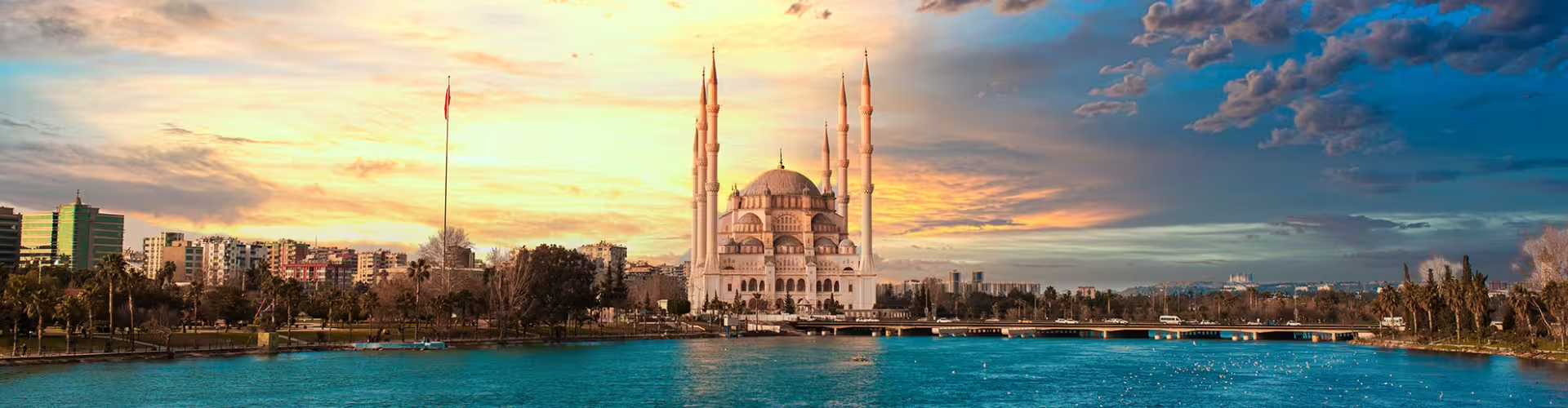
Sabanci Central Mosque: One of the largest mosques in Turkey and a defining feature of the Adana skyline, the Sabanci Mosque was completed in 1998 and can hold up to 28,500 worshippers. Its six minarets and vast central dome create a dramatic silhouette against the blue southern sky. Non-Muslim visitors are welcome outside of prayer times. Practical Tip: Dress modestly and remove shoes before entering; scarves are available at the entrance.
Yumurtalik Beach and Lagoon: Located about 60 kilometers from the city center, Yumurtalik is a calm coastal escape with a natural lagoon, sandy shores, and a Genoese castle ruin overlooking the sea. The lagoon is particularly popular with birdwatchers due to the rich wetland ecosystem. It makes for an easy and rewarding half-day trip from the city. Practical Tip: Bring your own snacks as beachside facilities are limited outside summer months.
Atatürk Museum House: This elegantly preserved mansion served as the residence of Mustafa Kemal Atatürk during his visits to the city and offers a fascinating glimpse into early republican Turkey. Personal belongings, original furnishings, and period photographs fill the rooms, creating an intimate historical portrait. The surrounding garden is peaceful and well maintained. Practical Tip: Admission is free; guided tours in Turkish are available on request.
Seyhan Dam and Lake: Just north of the city, the Seyhan Dam creates a large artificial lake that serves as a recreational escape for residents. Cafes line the waterfront, paddleboats are available for hire, and the cooler air off the water provides relief during hot months. It is a favorite spot for an evening stroll or a relaxed afternoon picnic. Practical Tip: The area gets busy on weekends; visit on a weekday for a quieter experience.
Curated Itineraries
The Highlights (1 Day)
Begin your morning at the Stone Bridge, crossing the Seyhan River as the city wakes up around you. Head into the Grand Bazaar for tea and browsing before visiting the Archaeological Museum for historical grounding. Afternoon should be reserved for the Sabanci Mosque and the riverside promenade. End the day with an Adana kebab dinner at one of the city's celebrated grill houses.
Deep Dive (2 to 3 Days)
On day two, visit the Atatürk Museum House in the morning, then take a taxi or local bus to Seyhan Lake for a relaxed afternoon. Day three is ideal for a day trip to Yumurtalik Beach and Lagoon, combining the castle ruins, the shoreline, and the wetland birdwatching area into a full excursion. Consider ending with a drive through the Çukurova countryside, famous for its cotton fields and citrus orchards.
Flavors of Adana
Adana Kebab: The city's most iconic dish, this hand-minced lamb and beef kebab mixed with red pepper flakes and grilled over charcoal is a culinary institution. It is served on flatbread with grilled tomatoes, peppers, and fresh onion salad. Order it at any of the specialist kebab houses near the bazaar for the most authentic version.
Bici Bici: A unique local dessert made from rice flour, water, and rose water, served chilled with crushed ice and sweet syrup. It is particularly refreshing during the sweltering summer months. Street vendors near the bazaar are the best source.
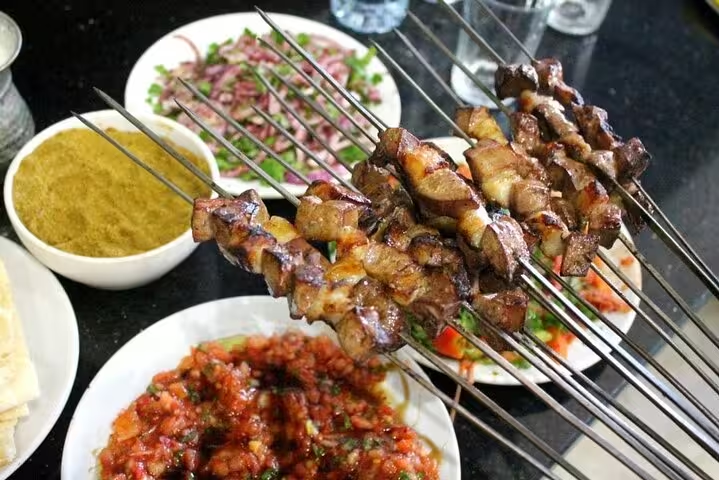
Serdengestti: A savory offal dish made from lamb liver, kidney, and heart, grilled and served with flatbread. It is an acquired taste but beloved by locals as a traditional breakfast or late-night snack.
Tantuni: Thinly sliced beef or chicken cooked in a copper pan with cumin, tomatoes, and peppers, then wrapped in thin flatbread. It is a fast and inexpensive street food staple available from dedicated tantuni stalls throughout the city.
Salgam Suyu: A deeply purple, tangy fermented turnip juice served cold, often alongside kebabs. It is an acquired taste but an essential part of the local food experience. Pair it with spicy dishes to appreciate its cooling effect.
Hummus with Meat: A regional variation of classic hummus topped with sauteed minced lamb, pine nuts, and butter. It bears little resemblance to commercial versions and is best enjoyed as a starter at a sit-down restaurant.
Navigation and Transport
Adana is served by Adana Sakirpasa Airport, located just 4 kilometers from the city center, making arrival and departure straightforward. City buses and minibuses (dolmus) cover most neighborhoods affordably, while taxis and ride-hailing apps are widely available for point-to-point travel. The intercity bus terminal (otogar) connects Adana to all major Turkish cities, including Ankara, Istanbul, and Gaziantep, with frequent overnight services. Renting a car is recommended for exploring the surrounding Çukurova region and coastal areas independently.
Beyond the Center: Day Trips
Tarsus: Just 30 kilometers west, Tarsus is the legendary birthplace of Saint Paul and home to a Roman road, an ancient well associated with Cleopatra, and the atmospheric old quarter. It is an easy and historically rich half-day excursion reachable by dolmus or bus.
Karatepe-Aslantas Open-Air Museum: Located about 130 kilometers northeast in the Taurus foothills, this Hittite open-air museum contains some of the best-preserved neo-Hittite reliefs in existence, set within a forested national park overlooking a reservoir. It is an essential stop for archaeology enthusiasts.
Kozan (Sis): A historic inland town at the foot of the Taurus Mountains, Kozan was once the capital of Armenian Cilicia and retains a well-preserved medieval castle with sweeping views across the plain. The drive through the foothills is scenic and the town itself is largely untouched by tourism.
Insider Tips for Travellers
- Carry cash in smaller denominations as many local restaurants and market stalls do not accept cards.
- The heat in July and August is extreme; schedule outdoor activities before 10am and after 5pm.
- Learn a few basic Turkish phrases as English is not widely spoken outside hotels and larger restaurants.
- Friday afternoons see many businesses close early for prayers; plan shopping and museum visits accordingly.
- The local sim cards available at the airport offer good value data packages for navigation and translation apps.
- Street food is generally safe and excellent; look for stalls with high turnover and visible cooking areas.
- Tap water is technically treated but most locals and visitors prefer bottled water, which is inexpensive and widely available.
Frequently Asked Questions
- Is Adana safe for tourists?
- Adana is generally safe for tourists. Standard urban precautions apply, such as keeping valuables secure in crowded markets. The city has a welcoming local culture and incidents involving tourists are rare.
- What is the best time to visit?
- Spring (April to May) and autumn (October to November) offer the most comfortable weather for sightseeing, with temperatures between 18 and 28 degrees Celsius.
- How do I get from the airport to the city center?
- The airport is only 4 kilometers from the center. Taxis are readily available and the fare is typically under 100 TRY. City buses also serve the route at a fraction of the cost.
- What language is spoken and do locals speak English?
- Turkish is the official language. English proficiency is limited outside of hotels and tourist-facing businesses, so a translation app is a practical travel companion.
- What should I absolutely eat in Adana?
- You must try the Adana kebab, the local tantuni wrap, and the chilled bici bici dessert. These three dishes together represent the full spectrum of the city's culinary identity.
Adana is located in southern Turkey within the fertile Çukurova Plain, bordered by the Taurus Mountains to the north and the Mediterranean Sea to the south. It is Turkey's fourth-largest city and serves as the economic and cultural hub of the Cilicia region. The city sits at a geographic crossroads with easy access to coastal areas, ancient Hittite sites, and historic towns such as Tarsus, making it a strong base for regional exploration.
City Destination, Southern Turkey, Cultural Travel, Culinary Tourism, Historical Sights, Day Trip Hub